How to Stop Online Fitness Clients from Ghosting Your Check-Ins
The silence isn’t random. Here’s what’s actually happening — and how to fix it.
How to Stop Online Fitness Clients from Ghosting Your Check-Ins
The silence isn’t random. Here’s what’s actually happening — and how to fix it.
⏱ Short on time? Get the ready-to-use templates here →
It starts with one missed check-in.
You send the weekly form on Friday. Saturday passes. Sunday. Monday morning you check your phone and there’s nothing. You send a follow-up message — casual, no pressure. Another day goes by. Then two.
Eventually you get a short reply. “Sorry, busy week.” And then it happens again the following Friday.
Three weeks later, they cancel.
Every online coach has lived this. And most assume the client lost motivation, got busy, or just wasn’t committed enough. Sometimes that’s true. But more often, the ghosting is a symptom of something the coach could have prevented.
Why Clients Actually Go Silent
The easy explanation is that ghosting means disengagement. But that’s usually the end of the story, not the beginning.
Clients start ghosting check-ins for specific, predictable reasons. As a TEEF-certified personal trainer, I’ve seen the same patterns repeat enough times to know what they are.
The check-in feels like homework. If your weekly form is long, clinical, or feels like a test they can fail, clients avoid it. Not because they don’t care — because it feels uncomfortable to confront a week where they didn’t follow through.
They don’t feel like the check-in matters. If previous replies were generic or came back two weeks late, the client learned that the check-in isn’t really being read. So they stop bothering.
Life got difficult and they don’t know how to say it. A client going through a stressful period at work, a relationship problem, or a health issue often disappears rather than explain themselves. Silence feels easier than vulnerability.
They’re losing motivation but haven’t decided to quit yet. Ghosting is often the warning sign that appears four to six weeks before a cancellation. The client is still technically enrolled but mentally already halfway out.
Understanding which of these is happening changes everything about how you respond.
The Check-In Itself Might Be the Problem
Before looking at follow-up strategies, it’s worth asking whether the check-in is actually easy to complete.
A check-in that takes more than three minutes to fill in will get skipped when life gets busy. A check-in that only has space for good news will get avoided during hard weeks. A check-in that arrives at an inconvenient time — Monday morning, or the middle of a workday — will get lost.
The structure matters as much as the content. Short questions, clear format, sent at a consistent time every week. And for clients on WhatsApp, a version they can answer in a few lines without needing to open a form.
When the check-in is easy, completion rates go up. When completion rates go up, ghosting goes down.
The Follow-Up That Actually Works
Most coaches send a follow-up that sounds like this:
“Hey, just checking in — did you get a chance to fill in the form?”
It’s polite. It’s harmless. And it almost never works, because it puts the pressure back on the client to do something they already avoided once.
A better follow-up removes the barrier entirely. Instead of asking them to complete the form, check in directly:
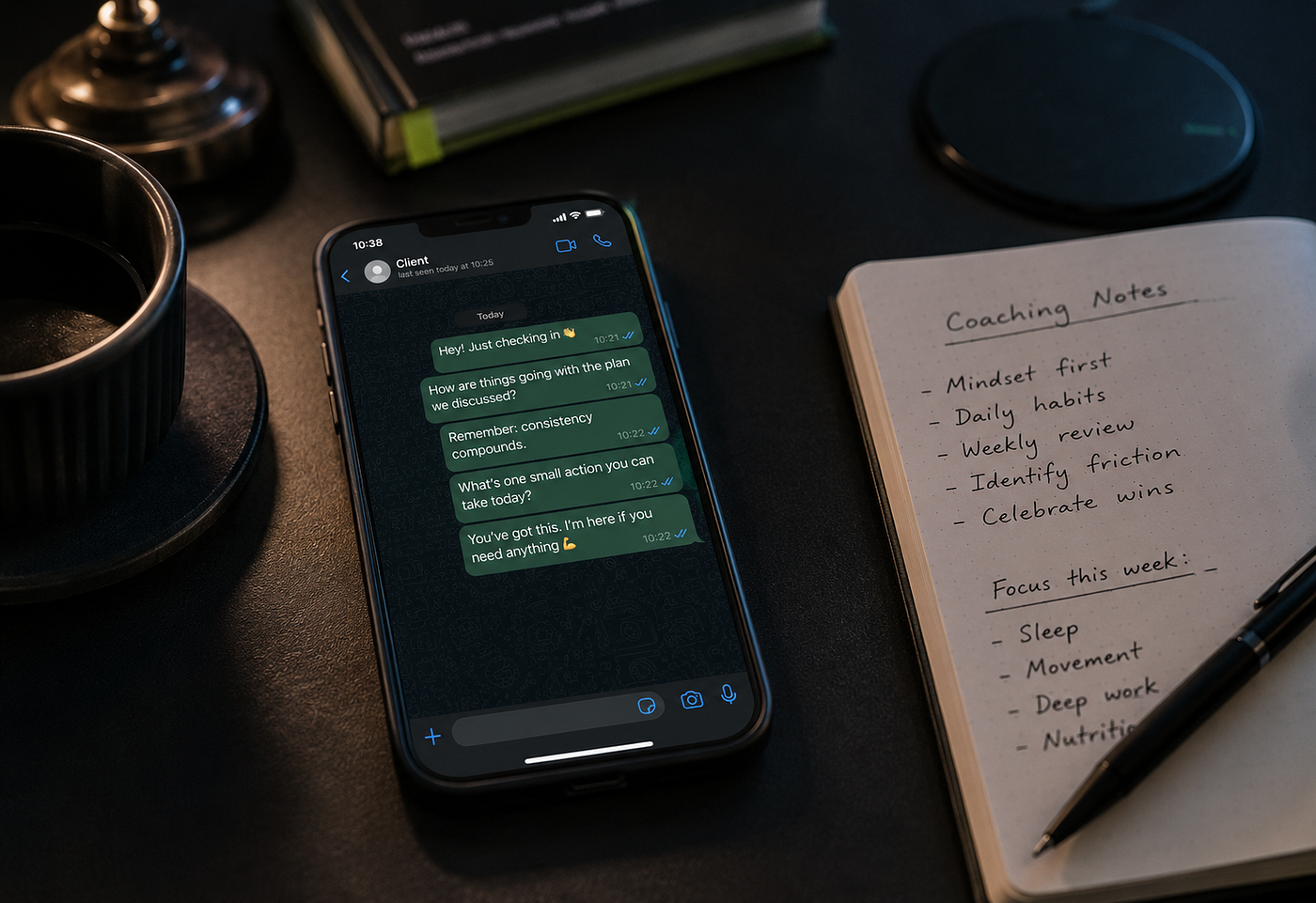
“Hey [Name], no worries about the form this week — just tell me, how did training go? One line is fine.”
This does two things. It lowers the bar to something almost anyone can clear. And it signals that you noticed the silence, without making the client feel guilty about it.
Most clients will reply to this. And once they reply, you’re back in the conversation.
The Mid-Week Accountability Message
Ghosting is easier to prevent than it is to fix.
A short mid-week message on Tuesday or Wednesday — sent to clients who tend to go quiet — keeps the connection alive between check-ins. Not a reminder to fill in a form. Just a human touchpoint.
“Hey [Name], how’s the week going so far? Any sessions ticked off?”
Ten seconds to send. For a client who’s starting to drift, it’s the difference between feeling accountable and feeling forgotten.
The coaches who retain clients longest aren’t always the ones with the best programming. They’re the ones whose clients feel noticed every week — not just on the days they show up.
When a Client Has Already Gone Quiet
If a client has missed two or three check-ins in a row, a different approach is needed.
At this point, asking about the form is the wrong move. The client knows they’ve been avoiding it and a direct reminder will make them feel worse.
Instead, address the gap directly but without pressure:
“Hey [Name], I’ve noticed you’ve been quiet the past couple of weeks — completely fine, life happens. I just wanted to check in properly and make sure everything’s okay. No agenda, just want to know how you’re doing.”
This removes the performance pressure entirely. You’re not asking about the program. You’re asking about them. Most clients who receive this message will open up about what’s actually going on — and that conversation is where retention happens.
Building a System That Prevents Ghosting
The coaches who rarely deal with ghosting aren’t luckier than everyone else. They’ve built a system that makes disappearing harder than staying engaged.
That system has three parts: a check-in that’s easy to complete, a reply that makes the client feel genuinely coached, and a mid-week touchpoint that keeps the connection alive between check-ins.
When all three are in place, clients have no reason to go quiet — because the communication never stops feeling worth engaging with.
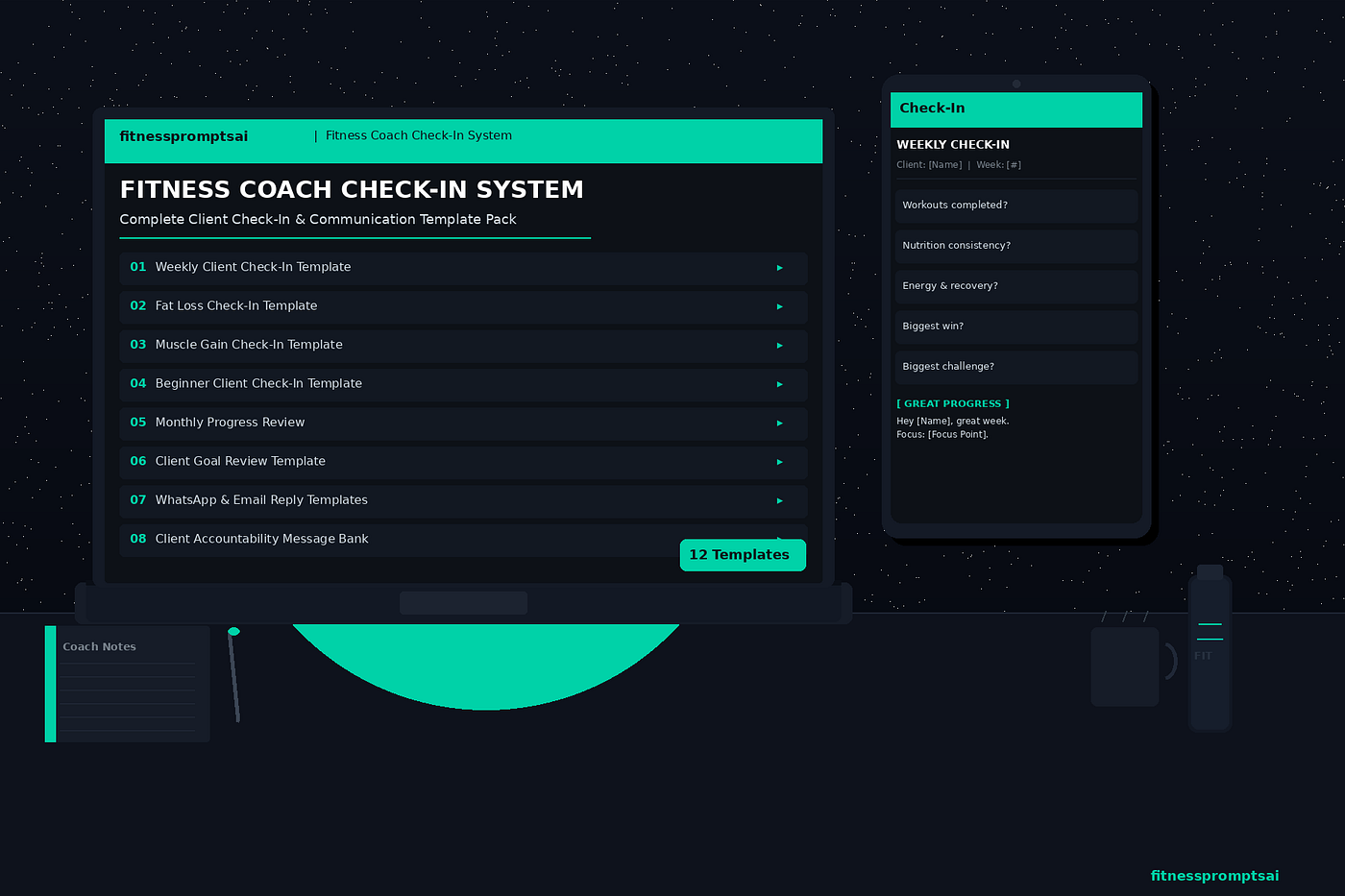
If you want a complete ready-to-use version of this system — including short WhatsApp check-in templates, follow-up messages for every scenario, mid-week accountability messages, and a full reply library for clients who are struggling, ghosting, or losing motivation — I put it all together in the Fitness Coach Check-In System.
Get the Fitness Coach Check-In System here →
Written by FitnessPromptsAI — practical tools for TEEF-certified personal trainers and online fitness coaches.
메타데이터
- post_id
- ebc2964de1c1
- slug
- how-to-stop-online-fitness-clients-from-ghosting-your-check-ins-ebc2964de1c1
- url
- https://medium.com/@fitnesspromptsai/how-to-stop-online-fitness-clients-from-ghosting-your-check-ins-ebc2964de1c1
- canonical_url
- https://medium.com/@fitnesspromptsai/how-to-stop-online-fitness-clients-from-ghosting-your-check-ins-ebc2964de1c1
- author_url
- https://medium.com/@fitnesspromptsai
- status
- ok
- fetched_at
- 2026-06-09 15:37:30