Copyright Protection for AI-Generated Works: Authorship, Ownership, and Moral Rights
The rapid deployment of generative artificial intelligence (AI) systems has challenged foundational doctrines of copyright law. At the…
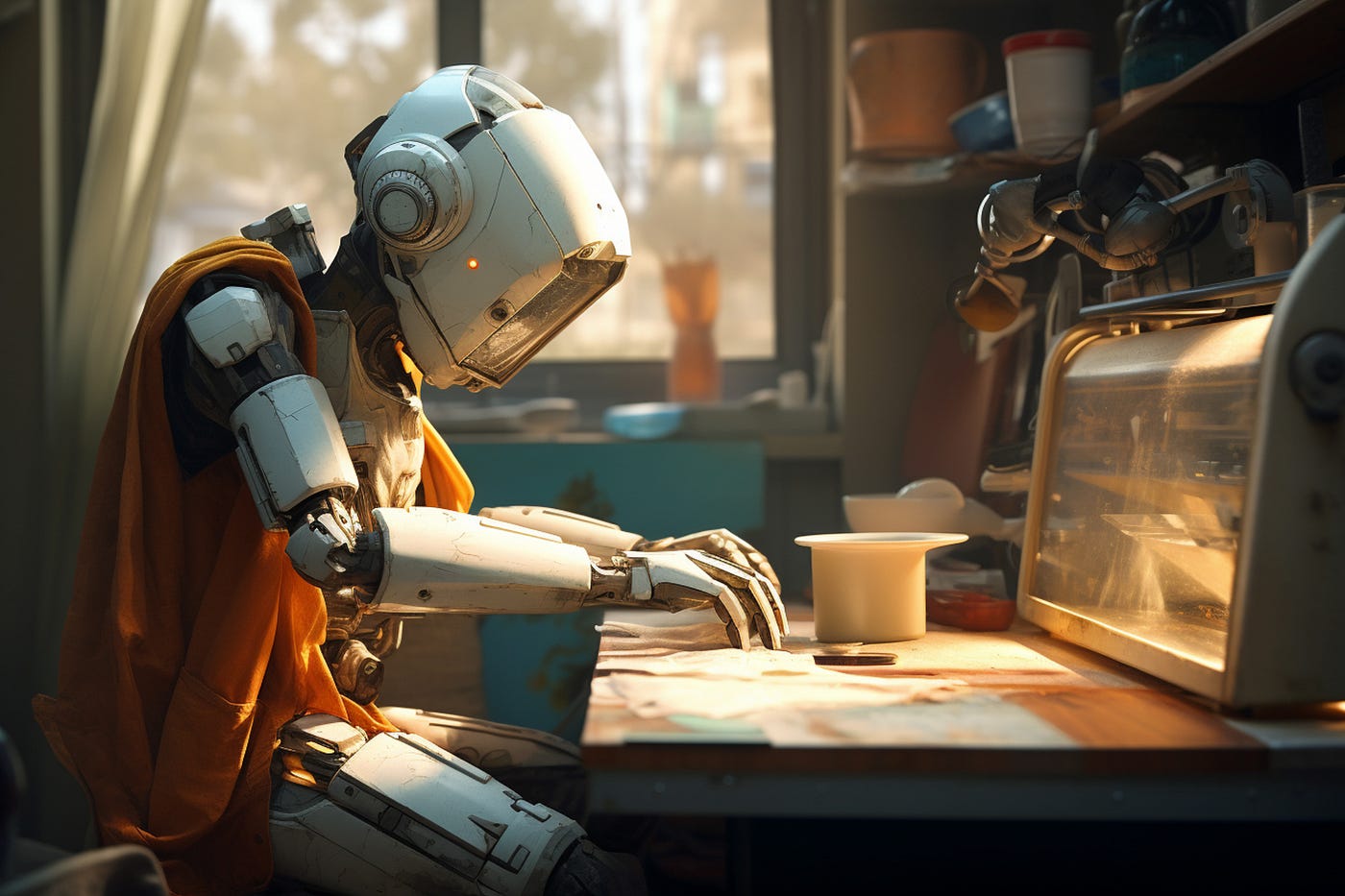
Image from the Freepik AI collection
Copyright Protection for AI-Generated Works: Authorship, Ownership, and Moral Rights
The rapid deployment of generative artificial intelligence (AI) systems has challenged foundational doctrines of copyright law. At the center of the debate lie three interrelated questions: whether AI-generated outputs qualify as “works of authorship,” who, if anyone, owns such works, and whether moral rights can subsist in creations produced without direct human creativity. This blog post examines these issues through a comparative lens, focusing on United States, United Kingdom, and European Union law. It argues that existing copyright regimes remain anthropocentric, grounded in the requirement of human intellectual creation. While some jurisdictions provide limited statutory accommodations for computer-generated works, none fully resolve the conceptual tensions posed by autonomous generative systems. The blog post concludes by outlining doctrinal and policy options for reconciling copyright’s humanist foundations with increasingly autonomous creative technologies.
Generative AI systems such as large language models and diffusion-based image generators are capable of producing text, music, visual art, and audiovisual works that resemble human-authored creations. Unlike earlier computational tools, many contemporary systems generate outputs that are not directly predetermined by human selection or arrangement. This technological shift raises fundamental legal questions: Can copyright subsist in works generated by AI? If so, who is the author? And can moral rights attach where no human creator exists?
Copyright law historically rests on the premise of human creativity. Doctrines of originality, authorship, and moral rights are embedded in philosophical traditions emphasizing personality, labor, and incentive. As AI systems operate with increasing autonomy, these assumptions face doctrinal strain.
The Requirement of Human Authorship
Most copyright regimes require that a work be “original.” In U.S. law, originality requires independent creation and a minimal degree of creativity (Feist Publications v. Rural Telephone Service Co., 1991). The U.S. Supreme Court has long linked authorship to human agency, describing an author as “he to whom anything owes its origin” (Burrow-Giles Lithographic Co. v. Sarony, 1884).
Similarly, EU law defines originality as the “author’s own intellectual creation,” emphasizing personal creative choices (Infopaq International A/S v. Danske Dagblades Forening, 2009; Painer v. Standard Verlags GmbH, 2011). The language of “intellectual creation” presupposes human cognitive activity.
In 2023, the U.S. Copyright Office reaffirmed that copyright protects only works of human authorship, refusing registration for works generated autonomously by AI systems (U.S. Copyright Office, 2023). Federal courts have endorsed this position, most notably in Thaler v. Perlmutter (2023), holding that a work “generated entirely by an artificial system absent human involvement” cannot be copyrighted under U.S. law.
The Anthropocentric Structure of Copyright
Scholars have emphasized that copyright law is fundamentally anthropocentric (Ginsburg, 2018; Lemley & Casey, 2020). Moral rights doctrines particularly in civil law systems are rooted in personality theory, linking creative works to human dignity and identity. Incentive-based justifications likewise assume that exclusive rights motivate human creators.
If AI outputs lack human intellectual input at the level of expressive determination, they fail the originality requirement under prevailing doctrinal interpretations.
Ownership and the Problem of Attribution
The User as Author?
One proposed solution is to treat the human user who prompts the AI system as the author. This argument depends on whether prompting constitutes sufficient creative control. If the user exercises meaningful control over expressive elements through iterative refinement, selection, or editing copyright may subsist in the human-authored aspects of the final output.
The U.S. Copyright Office has adopted a granular approach: copyright may protect human-authored modifications or selections, but not the AI-generated components themselves (U.S. Copyright Office, 2023). This resembles the treatment of derivative works or compilations, where protection extends only to original human contributions.
However, in cases where AI systems generate outputs with minimal user direction, attributing authorship to the user stretches the concept of creative control beyond doctrinal limits.
The Programmer or Developer?
Another theory assigns authorship to the system’s developer. Yet developers typically do not determine the specific expressive content of individual outputs. Copyright doctrine requires a nexus between the author and the expressive choices embodied in the work. The mere creation of a tool, even a highly sophisticated one does not establish authorship of its outputs. Courts have historically rejected analogous claims. For example, ownership of a camera does not make the manufacturer the author of photographs taken with it.
Statutory Solutions: The UK Model
The United Kingdom adopts a distinctive approach. Section 9(3) of the Copyright, Designs and Patents Act 1988 provides that, for computer-generated works “with no human author,” the author is “the person by whom the arrangements necessary for the creation of the work are undertaken.” This provision effectively assigns authorship to a human facilitator.
However, this solution has been criticized as conceptually artificial and increasingly ill-suited to modern AI systems. The phrase “arrangements necessary” is ambiguous, especially in contexts involving complex machine learning architectures trained on vast datasets.
The Incompatibility of Moral Rights with Non-Human Creation
Moral rights such as the right of attribution and the right of integrity are deeply connected to human personality and reputation. In civil law systems, these rights are inalienable and reflect the bond between author and work.
If no human author exists, moral rights cannot logically attach. Recognizing moral rights in favor of users or developers would dilute their theoretical foundations. Moreover, attributing authorship to a human who did not meaningfully determine expressive content may mislead the public and undermine the integrity of the authorship concept.
Collective and Corporate Attribution?
Some have suggested creating sui generis regimes or collective rights structures for AI-generated works (Abbott, 2016). However, extending moral rights to corporations or AI systems would mark a significant departure from personality-based justifications. Such reforms would require rethinking the philosophical underpinnings of authorship itself.
Incentives and Market Effects
If AI-generated works are excluded from copyright protection, they may enter the public domain immediately. This could reduce incentives for investment in generative technologies. On the other hand, granting exclusive rights over autonomous outputs may produce overprotection, enabling monopolization of machine-generated cultural production.
Lemley and Casey (2020) argue that strong rights in AI-generated works risk exacerbating concentration in creative markets, particularly where large firms control computational resources and training data.
Doctrinal Coherence vs. Technological Neutrality
Copyright law aspires to technological neutrality, yet it also depends on coherent definitions of authorship. Expanding authorship to include non-human agents may erode conceptual clarity. Conversely, rigid adherence to human authorship may render the system underinclusive in an era of algorithmic creativity.
A middle-ground approach protecting human creative contributions while leaving purely autonomous outputs unprotected preserves doctrinal coherence while accommodating collaborative human–AI workflows.
Conclusion
AI-generated works expose structural tensions within copyright law. The doctrines of originality, authorship, and moral rights presuppose human intellectual agency. While certain jurisdictions offer partial accommodations — most notably the UK’s statutory approach — the dominant paradigm remains anthropocentric.
In the near term, courts and legislatures are likely to maintain the human authorship requirement, granting protection only to human contributions within AI-assisted workflows. Over the longer term, sustained technological development may prompt reconsideration of whether copyright’s humanist foundations should be preserved, adapted, or supplemented with sui generis protections.
For now, copyright law continues to answer the question of AI authorship with conceptual restraint: creativity, in the legal sense, remains a human attribute.
Sources:
Abbott, R. (2016). I Think, Therefore I Invent: Creative Computers and the Future of Patent Law. Boston College Law Review, 57, 1079–1126.
Bently, L., & Sherman, B. (2014). Intellectual Property Law (4th ed.). Oxford University Press.
Burrow-Giles Lithographic Co. v. Sarony, 111 U.S. 53 (1884).
Feist Publications, Inc. v. Rural Telephone Service Co., 499 U.S. 340 (1991).
Ginsburg, J. C. (2003). The Concept of Authorship in Comparative Copyright Law. DePaul Law Review, 52, 1063–1092.
Infopaq International A/S v. Danske Dagblades Forening, Case C-5/08 (CJEU 2009).
Lemley, M. A., & Casey, B. (2020). Fair Learning. Texas Law Review, 99, 743–786.
Painer v. Standard Verlags GmbH, Case C-145/10 (CJEU 2011).
Samuelson, P. (2023). Generative AI Meets Copyright. Columbia Journal of Law & the Arts, 46, 1–38.
Thaler v. Perlmutter, 687 F. Supp. 3d 140 (D.D.C. 2023).
메타데이터
- post_id
- ebd4abc45eb2
- slug
- copyright-protection-for-ai-generated-works-authorship-ownership-and-moral-rights-ebd4abc45eb2
- url
- https://medium.com/taltech-legal-lab/copyright-protection-for-ai-generated-works-authorship-ownership-and-moral-rights-ebd4abc45eb2
- canonical_url
- https://medium.com/taltech-legal-lab/copyright-protection-for-ai-generated-works-authorship-ownership-and-moral-rights-ebd4abc45eb2
- author_url
- https://medium.com/@karlsaamuelh
- status
- ok
- fetched_at
- 2026-06-14 11:28:49