Working Capital Management: The Financial Plumbing Behind Every Business
Understanding the operating cycle and how businesses manage short-term liquidity to keep operations running smoothly
Working Capital Management: The Financial Plumbing Behind Every Business
Understanding the operating cycle and how businesses manage short-term liquidity to keep operations running smoothly
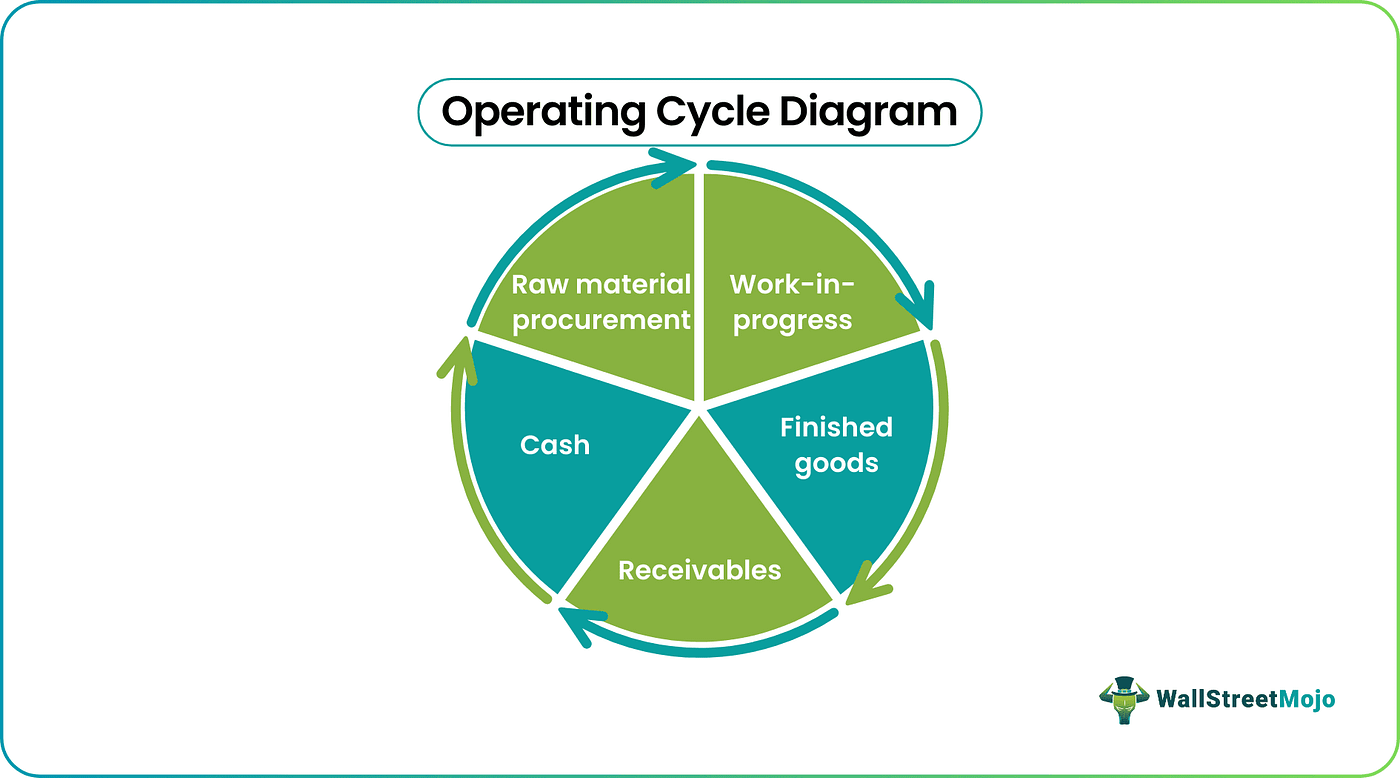
IMAGE BY: WallStreetMojo
A profitable company can still fail — not because its business model is flawed, but because it runs out of cash to pay its immediate bills. This is the risk that working capital management exists to prevent. It’s one of the least glamorous areas of finance, but arguably one of the most operationally critical, especially for businesses with physical inventory and extended customer payment terms.
What is working capital?
Working capital is simply the difference between a company’s current assets and current liabilities:
Working Capital = Current Assets − Current Liabilities
Positive working capital means a company has enough short-term assets to cover its short-term obligations. Negative working capital can be a warning sign — though, notably, some business models (like large retailers who collect cash from customers immediately but pay suppliers on delayed terms) can operate successfully with negative working capital, so context matters enormously.
The operating cycle
To understand why working capital matters, it helps to visualize the operating cycle — the journey cash takes through a business:
- Cash is used to purchase raw materials or inventory
- Inventory is processed and eventually sold, often on credit
- The sale becomes an account receivable
- The receivable is eventually collected, turning back into cash
The length of this cycle — from cash out to cash back in — determines how much working capital a business needs to fund its operations. A business with a long operating cycle (say, a manufacturer that holds inventory for months and offers 90-day payment terms to customers) needs significantly more working capital than a business with a short cycle (say, a restaurant that sells inventory within days and collects cash immediately).
The three levers of working capital
Businesses actively manage three components to optimize their operating cycle:
Inventory management: Holding too much inventory ties up cash unnecessarily and risks obsolescence; holding too little risks stockouts and lost sales. Metrics like Days Inventory Outstanding (DIO) measure how many days, on average, inventory sits before being sold.
Receivables management: The faster a company collects cash from customers, the less working capital it needs. Days Sales Outstanding (DSO) measures the average number of days it takes to collect payment after a sale. Companies manage this through credit policies, payment terms, and collections processes.
Payables management: Conversely, the longer a company can delay paying its own suppliers (without damaging the relationship or losing early-payment discounts), the less working capital it needs, since it’s effectively using supplier credit to fund operations. Days Payable Outstanding (DPO) measures this.
The Cash Conversion Cycle
These three metrics combine into one of the most useful summary measures in working capital analysis:
Cash Conversion Cycle (CCC) = DIO + DSO − DPO
This tells you, in days, how long cash is tied up in the operating cycle before it’s converted back to cash. A shorter CCC is generally better — it means a business needs less external financing to fund its day-to-day operations, and can grow more efficiently using its own operating cash flow.
Why this matters beyond the balance sheet
Working capital management directly affects a company’s cash flow statement (as changes in receivables, inventory, and payables all show up as operating cash flow adjustments), its need for short-term borrowing (companies with poor working capital management often rely on lines of credit to bridge cash gaps), and even its valuation (analysts often build working capital assumptions directly into DCF models, since changes in working capital affect free cash flow).
For credit analysts specifically, a company with rapidly increasing DSO or ballooning inventory levels — even while reporting healthy profit — is often flagged as a red flag worth investigating further, since it suggests profits aren’t converting into cash as efficiently as they should.
The takeaway
Working capital management sits at the unglamorous but essential intersection of operations and finance. It’s the discipline that ensures a business doesn’t just look profitable on paper, but actually has the cash on hand to keep running — pay suppliers, meet payroll, and fund the next cycle of inventory and sales. Understanding the operating cycle and the levers that shorten it is fundamental to reading how efficiently any business is really being run.
메타데이터
- post_id
- ebe3c0701563
- slug
- working-capital-management-the-financial-plumbing-behind-every-business-ebe3c0701563
- url
- https://medium.com/@kumbhare327/working-capital-management-the-financial-plumbing-behind-every-business-ebe3c0701563
- canonical_url
- https://medium.com/@kumbhare327/working-capital-management-the-financial-plumbing-behind-every-business-ebe3c0701563
- author_url
- https://medium.com/@kumbhare327
- status
- ok
- fetched_at
- 2026-08-19 01:12:11



