10 Gentle Parenting Scripts That Actually Stop Tantrums (Ages 3 – 5)
“Stay calm” is not a sentence you can say. These are.
10 Gentle Parenting Scripts That Actually Stop Tantrums (Ages 3–5)
By Rio — a Japanese dad of three
“Stay calm” is the most useless parenting advice ever given.
Not because it’s wrong — but because it’s not words. When your four-year-old is screaming on the floor about a broken cracker, you don’t need a philosophy. You need an actual sentence to say, right now, with your actual mouth.
I’m a dad of three in Japan, and after years of tantrum field research (not voluntary), here are ten scripts that consistently work — plus why they work, because once you understand the shape of these sentences, you can improvise your own.
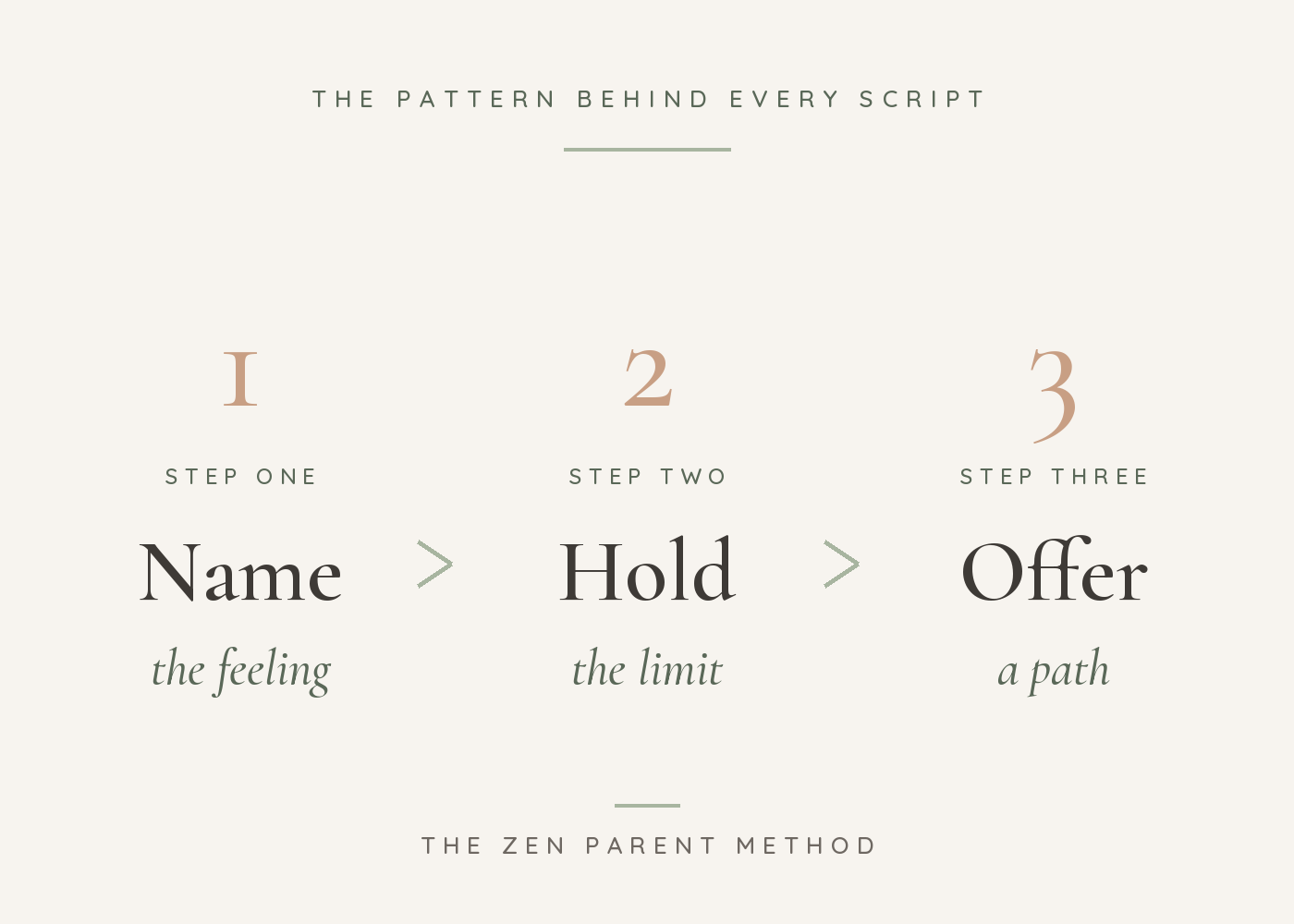
Every script below follows the same hidden structure: name the feeling → hold the limit → offer a path forward. Watch for it.
One more thing before the list. These scripts are not magic spells, and your child will probably not melt into your arms on the first try. They work through repetition, the same way a bedtime song works. Say them badly, say them tired, say them again next week.
1. When the answer is no and the volume is rising
“You really want that. And the answer is still no. You can be sad about it — I’ll stay right here with you.”
The magic word is and, not but. “I love you BUT no” erases the empathy. “You want it AND no” lets both things be true. You’re allowed to hold a boundary and a crying child’s heart at the same time.
2. When they’re mid-scream and can’t hear you anyway
“I’m here. You’re safe. I’ll wait.”
Then — silence. When a child is at peak storm, language stops landing. More words at that moment is like reading instructions to someone underwater. Three short sentences, a calm body nearby, and patience beat any speech.
3. When you feel your own storm rising
“My feelings are getting big. I’m going to breathe in the kitchen for one minute, and then I’m coming right back.”
Yes — a script for you. Stepping away (when your child is safe) isn’t giving up; it’s a live demonstration of the exact skill you’re trying to teach: when feelings get too big, there are things to do besides exploding.
4. When they refuse to get dressed / brush teeth / get in the car
“You get to choose: the green shirt or the dinosaur one. You pick, or your body can pick by pointing.”
Ages 3–5 run on autonomy. Commands start sovereignty wars; choices end them. The trick: both options lead where you need to go. The child controls the how, you control the what.
5. When screen time ends and the world collapses
“The timer sang. Tablet’s going to sleep. It’s SO hard to stop — I hate stopping my shows too. Apple slices are on the table.”
Transitions need a destination. “Stop the fun thing” fails; “move to the next okay thing” works. Bonus points if the destination was announced before the screen turned on.
6. When siblings are at war over one toy
“I see two kids and one truck. One truck… two kids. Hmm. What could we do?”
Sportscast the problem, then hand it back. The moment you play judge (“who started it?!”), someone loses and learns nothing. Preschoolers handed the problem produce surprisingly workable treaties — give them ten quiet seconds.
7. When they say “I hate you!”
“You’re really, really mad at me. That’s okay — I can handle your mad. I love you even when you’re angry.”
They don’t hate you. “I hate you” is preschooler for “my anger is bigger than my vocabulary.” Refusing to be wounded by it teaches the single most valuable emotional lesson on this list: anger doesn’t end love.
8. When the tantrum is happening in public
“I’m here. You’re safe. We’re going to find a quiet spot.”
Fewer words, lower voice, then move somewhere calmer — outside, the car, a hallway. The audience in your head doesn’t get a vote. Every parent watching has been you; the impressive thing isn’t a silent child, it’s a warm adult mid-hurricane.
9. When it’s over and they’re coming back to you
“That was a big one. You’re okay. I’m not mad.”
The post-tantrum minute is sacred: they surface small, shaky, and wondering if they broke something between you. This script tells them nothing is broken. Save any teaching for much, much later — or skip it; the reconnection is the teaching.
10. When YOU blew it and yelled
“I got really angry and I yelled. That must have felt scary. Yelling wasn’t okay, and it wasn’t your fault. I love you, and I’m working on my big feelings too.”
You will yell someday; we all do. The repair matters more than the rupture. A parent who apologizes teaches that anger doesn’t end love, that grown-ups own their mistakes — and that “sorry” is something strong people say.
The Pattern (Now You Can Freestyle)
Read the ten again and you’ll see the same skeleton everywhere:
- Name the feeling (“You really want that / You’re so mad”)
- Hold the limit (“And the answer is still no”)
- Offer a path (a choice, a destination, your presence)
Scripts are training wheels. After a few weeks, the shape lives in your bones and the words become your own.
And when a script falls flat, which some days it will, you have not failed. You have simply met a feeling that needs more time than a sentence. Stay near, stay quiet, and let the skeleton hold.
When Scripts Aren’t Enough
Two honest caveats.
First: scripts work on demand tantrums — when your child is upset but still present. In a full meltdown (eyes gone, language not landing, nervous system at capacity), no sentence works. That’s a different situation with a different playbook.
Second: the best script in the world fails if it’s delivered through gritted teeth. The real bottleneck usually isn’t what we say to our kids — it’s what happens inside us in the half-second before we speak.
Both of those are exactly what my full kit covers. **The Zen Mom’s Tantrum Kit** includes the complete six-scenario script collection (grocery store, bedtime, getting dressed, screen time, sibling fights, public meltdowns — each with the phrase we all say when we are running on empty, why it backfires, and what to say instead), how to tell a tantrum from a meltdown, and The Zen Pause: the method I use on my own rising storm, drawn from the mindfulness tradition I grew up around in Japan.
And if you’re just getting started, grab the **free Calm Down Corner Starter Kit** — a printable poster, feelings chart, calming cards, and parent guide.
This article is for general parenting support and is not medical or psychological advice. If tantrums are unusually intense or frequent, please talk with your pediatrician.
메타데이터
- post_id
- ec2182e992b2
- slug
- 10-gentle-parenting-scripts-that-actually-stop-tantrums-ages-3-5-ec2182e992b2
- url
- https://medium.com/@thezenparentmethod/10-gentle-parenting-scripts-that-actually-stop-tantrums-ages-3-5-ec2182e992b2
- canonical_url
- https://medium.com/@thezenparentmethod/10-gentle-parenting-scripts-that-actually-stop-tantrums-ages-3-5-ec2182e992b2
- author_url
- https://medium.com/@thezenparentmethod
- status
- ok
- fetched_at
- 2026-07-25 18:30:56




