The Ents Are Not Amused: Rousseau, Tree-Beards, and the Unbearable Sadness of Progress
Or, Why Your Smartphone Makes You Miserable and the Only True Happiness Comes from Speaking Old Entish at a Snail’s Pace
The Ents Are Not Amused: Rousseau, Tree-Beards, and the Unbearable Sadness of Progress
Or, Why Your Smartphone Makes You Miserable and the Only True Happiness Comes from Speaking Old Entish at a Snail’s Pace
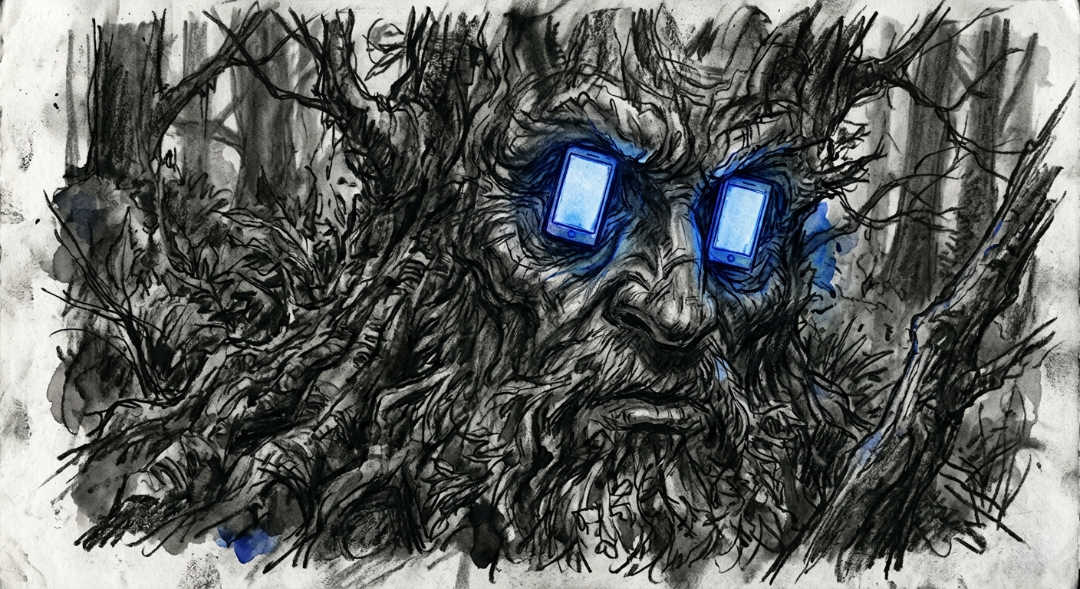
“Connected, yet disconnected.” Art Sketch by Misselbereth
Non-member=**Click!**
Let’s start with a question that has haunted philosophers, poets, and that one friend who won’t stop talking about their “digital detox”:
Does happiness decline with the progress of civilization?
“Oui, absolutely, and please stop building cities, they smell bad and make people lie,” would be the response of the Swiss-French philosopher Jean-Jacques Rousseau, who effectively invented the notion that “society is making us all miserable.”
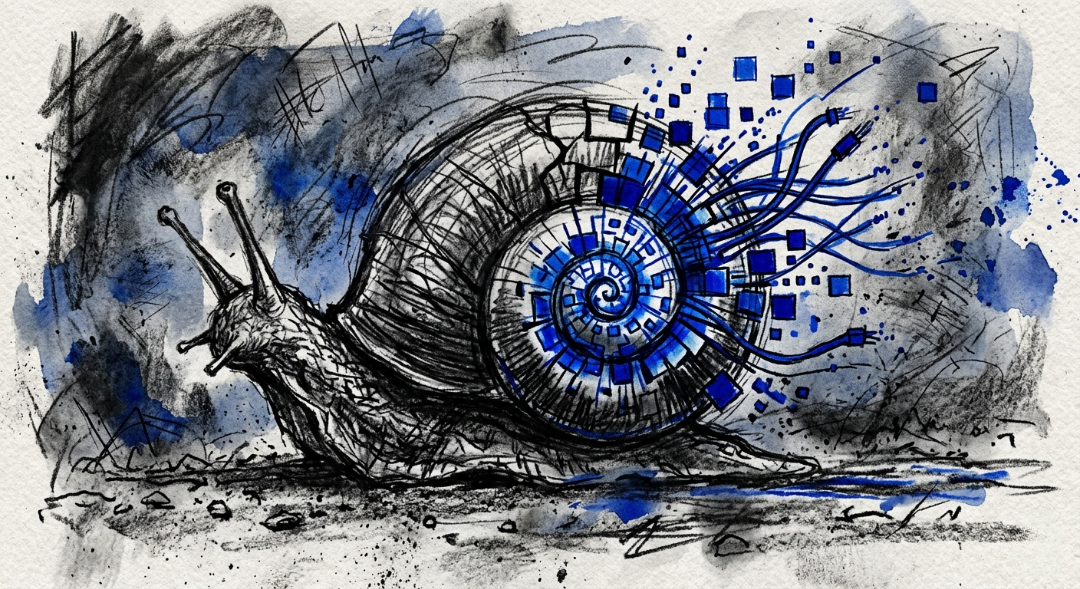
“Where the organic grind of the snail meets the high-speed flow of data.” Art Sketch by Misselbereth
In J.R.R. Tolkien’s The Lord of the Rings, Ents are slow-spoken, old giants that herd trees. They would respond to your question in about three days.
But eventually, they’d groan, “Hoom, well, now that you mention it… yes. And also, we’re very angry about Isengard, and we’d like to speak to your manager.”
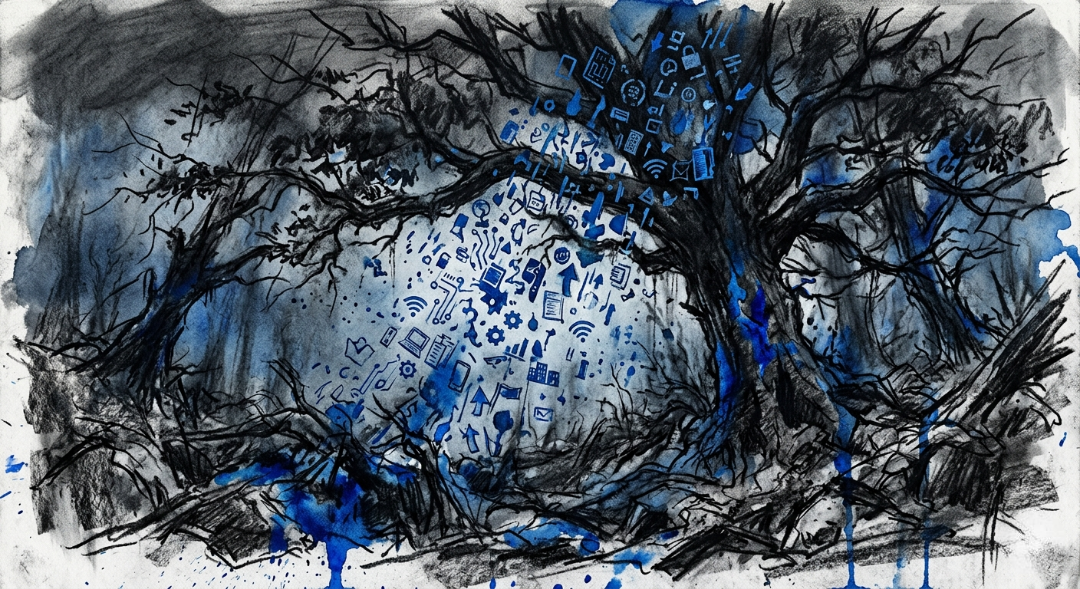
“Progress falls like rain, staining the wild in shades of digital sorrow.” Art Sketch by Misselbereth
This article is a sincere, overlong, and unnecessarily detailed exploration of how Rousseau’s Romantic critique of civilization and the Ents’ existential war against industrial destruction are essentially the same argument, except one involves a lot more bark and the other involves a lot more Geneva.
So grab a pipe, sit under a tree, and prepare to have your worldview gently dismantled at a pace that would make a glacier look impatient.
Part I: Rousseau’s Bad Day at the Office (or, Why the First Person to Build a Fence Was a Jerk)
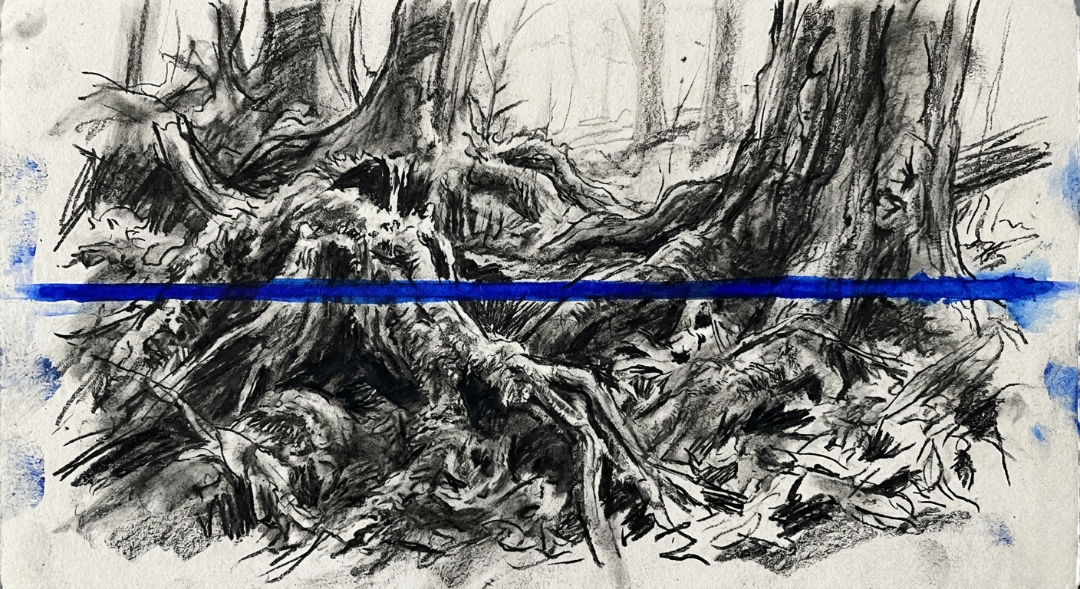
“The geometry of greed: A border drawn where nature knew no bounds.” Art Sketch by Misselbereth
Let’s begin with Rousseau, a man who was so uncomfortable in polite society that he once wrote a bestselling novel (Julie, or the New Heloise) about how awesome it is to live in a rural Swiss village, while living in Paris and complaining about the noise.
Rousseau’s big idea the one that made all the Enlightenment rationalists clutch their periwigs in horror was this: Civilization is a corrupting force. In his Discourse on the Origin of Inequality, he argued that humans in their natural state were peaceful, solitary, self-sufficient, and generally content.
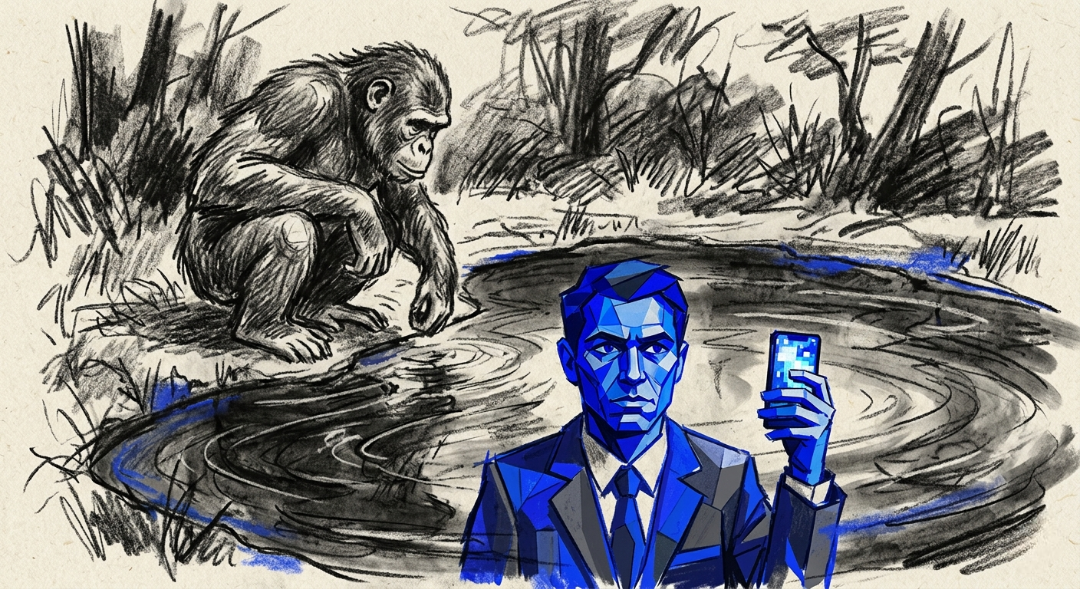
“We gaze into the pool of the present, only to find the fragmented reflection of who we have been forced to become.” Art Sketch by Misselbereth
They ate berries, napped in the sun, and had no concept of “property,” “status,” or “that guy’s goat is better than my goat.”
Then came the fateful day someone drew a line in the sand and said, “This is mine.” That, Rousseau claimed, was the original sin of society. From that moment on, we got agriculture, cities, governments, and worst of all comparison.
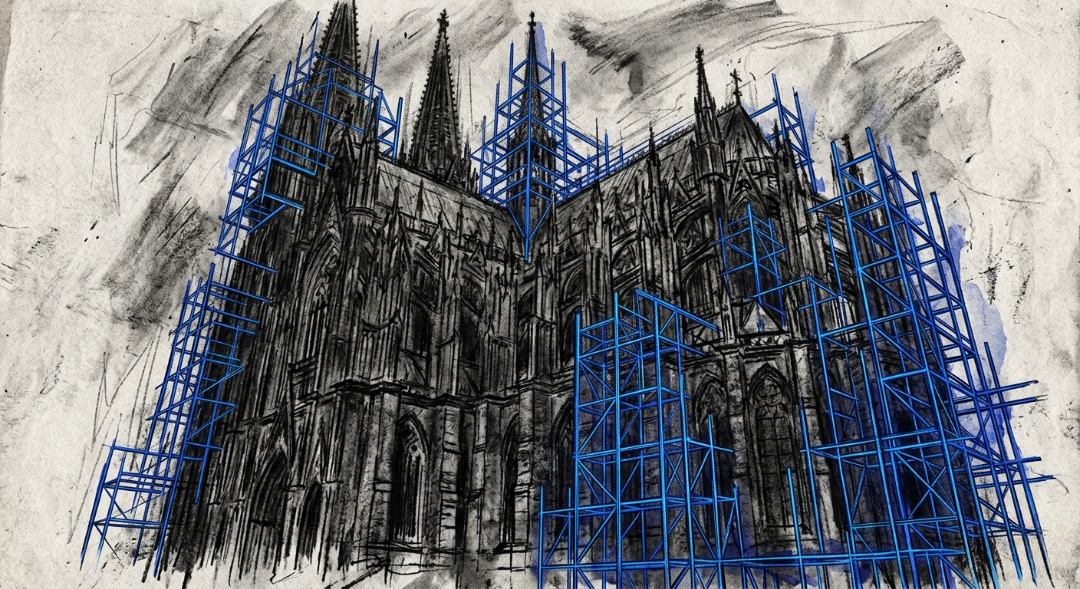
“Constructing our monuments to intellect, yet dwelling within the scaffolding of our own unease.” Art Sketch by Misselbereth
Suddenly, you weren’t just a happy ape eating a mango; you were a poor ape eating a small mango while your neighbor ate a large mango and had a nicer cave.
This, Rousseau argued, is why we’re all secretly anxious. We trade natural freedom (doing whatever we want, whenever we want) for civil freedom (following laws and paying taxes), and in return, we get… what exactly?
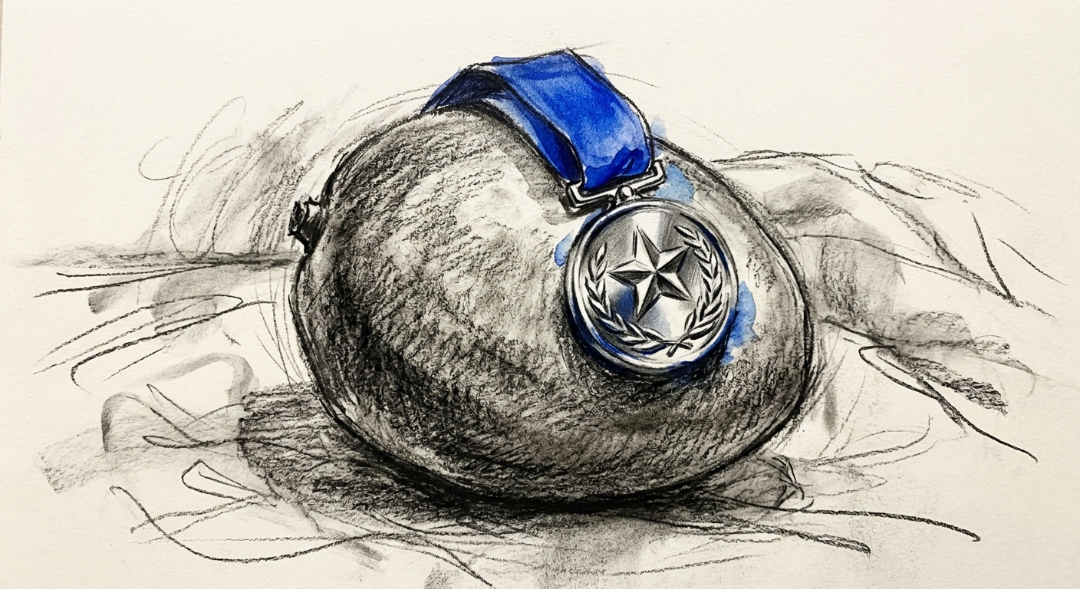
“The weight of achievement resting upon the simplicity of nature.” Art Sketch by Misselbereth
A pat on the back? A bronze medal? The ability to buy overpriced cheese at a farmer’s market?
Rousseau wasn’t saying we should all go back to living in trees (though he probably wouldn’t have hated it). He was saying that progress isn’t the same as improvement.
Just because we can build cathedrals, write sonnets, and develop gunpowder doesn’t mean we’re happier. In fact, the more we refine our arts and sciences, the more we perfect our ability to be miserable in style.
Part II: Enter the Ents (or, The Slowest Intervention in Middle-earth)
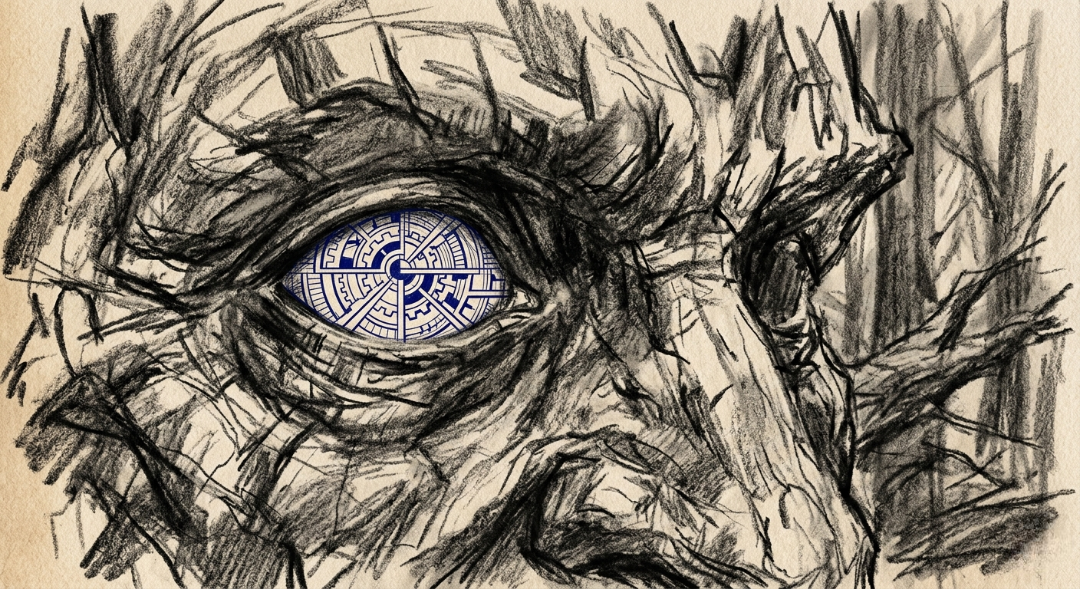
“Ancient roots met with cold, calculated precision; the forest is no longer just a home, but a resource to be measured.” Art Sketch by Misselbereth
Now, let’s cross the English Channel (and several thousand years of fictional history) to Middle-earth, where Tolkien a man who deeply distrusted machines, industry, and anyone who didn’t appreciate a good pint created the Ents.
For those who need a refresher: Ents are ancient, sentient trees that walk and talk, but very slowly.
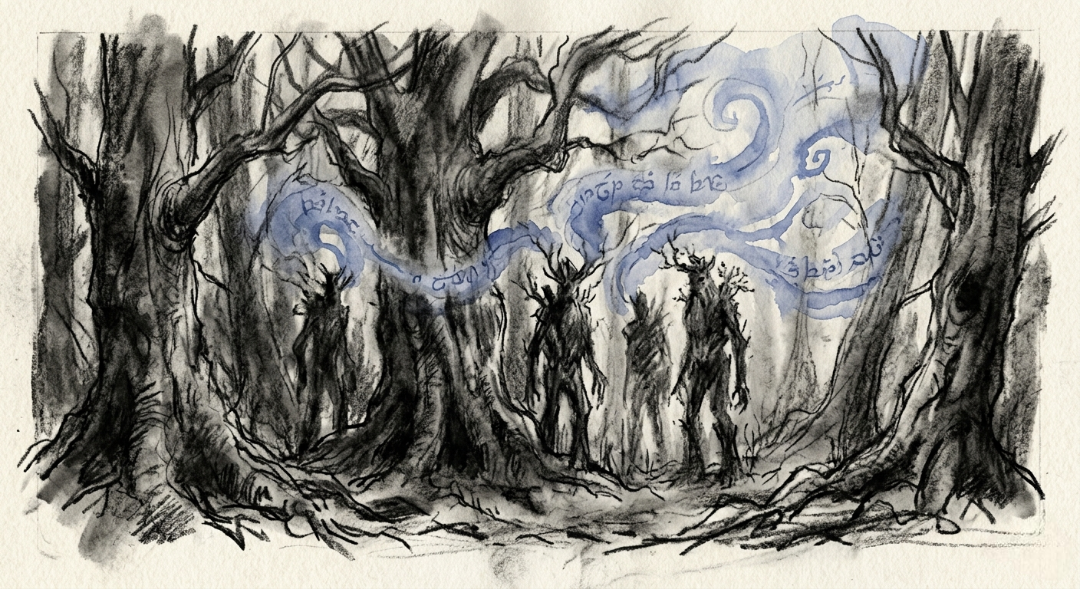
“In the deep, ancient quiet of Fangorn, words are not spoken; they are grown, uncurling like smoke from the roots of memory.” Art Sketch by Misselbereth
They are the shepherds of the forest, and they have been around since before the Elves woke up, before the Dwarves started digging too deep, and definitely before Sauron started his little “let’s cover everything in spikes” project.
The most famous Ent is Treebeard (or Fangorn in Elvish, which means “beard of the tree,” because Tolkien was nothing if not literal).
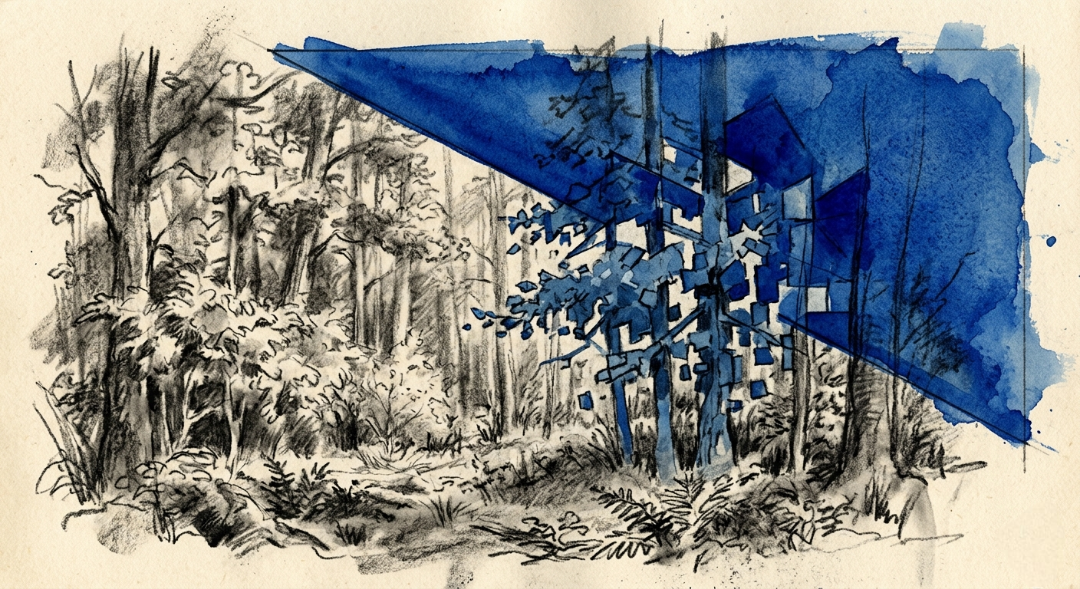
“The initial stroke of progress often leaves the deepest fracture in the natural world.” Art Sketch by Misselbereth
Treebeard is about 17 feet tall, covered in moss and bark, and speaks in a language that takes so long to say “good morning” that you could brew a pot of tea, drink it, and forget what you were asking.
The Ents are the ultimate embodiment of Rousseau’s “natural man.” They live in harmony with the forest. They don’t have kings, armies, or tax codes.
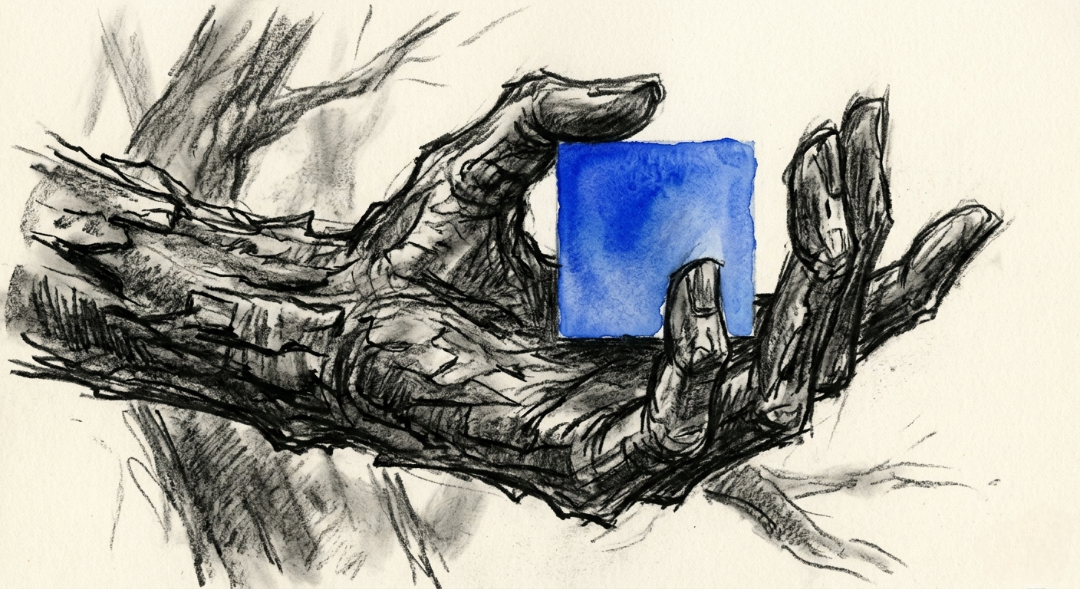
“An ancient hand, meeting an object of a world that does not know its roots.” Art Sketch by Misselbereth
They communicate with trees actual trees through a silent, ancient language that involves rustling leaves and creaking branches. They don’t measure time in seconds, hours, or even seasons.
They measure it in aeons. An Ent’s idea of a quick decision is “let’s discuss this for a few weeks and then take a vote.”
And they are happy.
Well, they were happy. Until Saruman showed up.
Part III: Isengard’s Industrial Nightmare (or, When Progress Turned Into a Chainsaw)
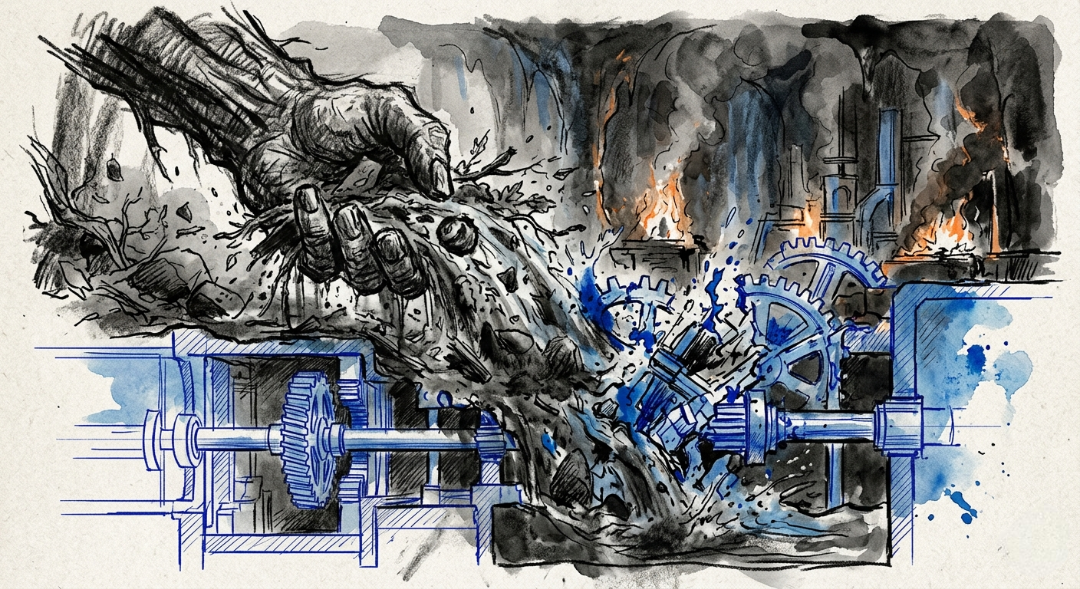
“Progress is not about how fast you move, but about how far you have come.” Art Sketch by Misselbereth
Rousseau and the Ents hate industrial civilization at its most voracious, and Saruman, the fallen wizard, is a symbol of everything. He doesn’t just build a fortress; he builds a factory.
He doesn’t just cut down trees; he grinds them into fuel to power his armies of Orcs, who are essentially the world’s ugliest unionized labor force.
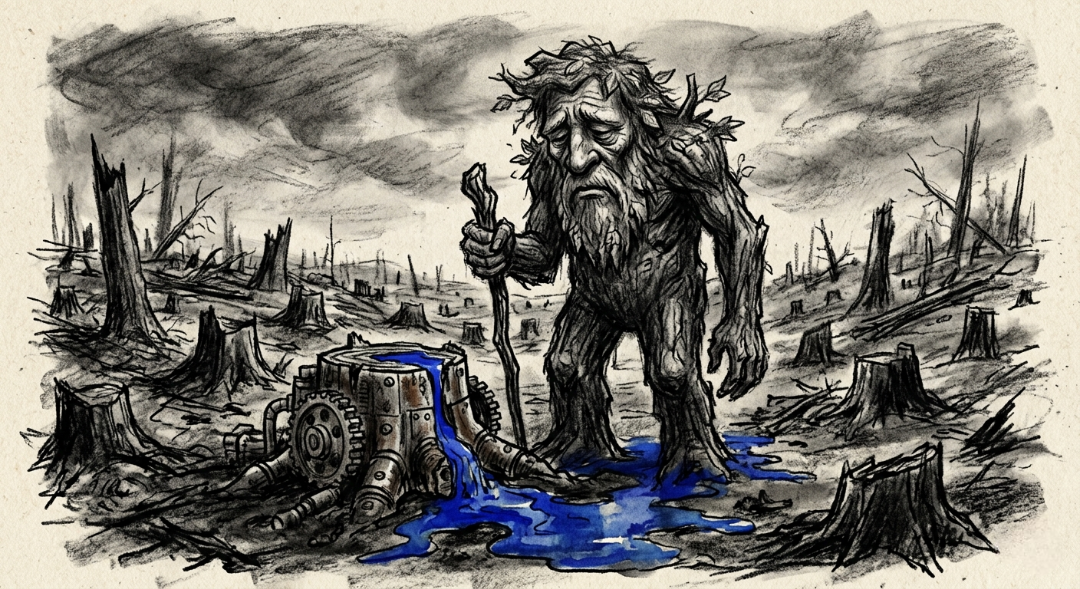
“Nature’s silent vigil: where the pulse of the forest meets the cold steel of industry.” Art Sketch by Misselbereth
Isengard is a machine, not a city. It creates nothing but weaponry, filth, and a deep sense of dread as it churns, smokes, and grinds. Saruman is more concerned with efficiency than the forest.
He doesn’t care about the Ents; he cares about resources. He is a pale, bearded villain who combines the traits of an 18th-century industrialist, a 21st-century tech tycoon, and the person who chops down your favorite tree to construct a parking lot.
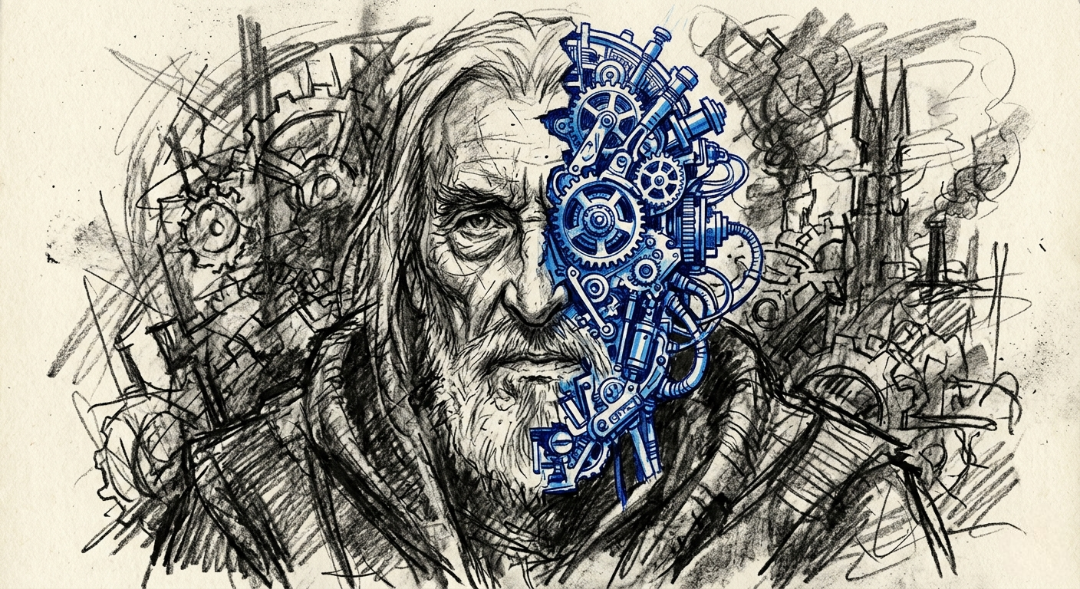
“The lines between creator and machine blur into nothingness; he sought efficiency, but found only the cold, mechanical silence of his own design.” Art Sketch by Misselbereth
Treebeard and the other Ents’ eventual march on Isengard is more than just a military operation, it’s a philosophical confrontation.
They don’t destroy the fortress with swords or catapults. They destroy it with water. They break the dam, flood the underground forges, and essentially give Saruman a very wet, very muddy lesson in what happens when you mess with nature.
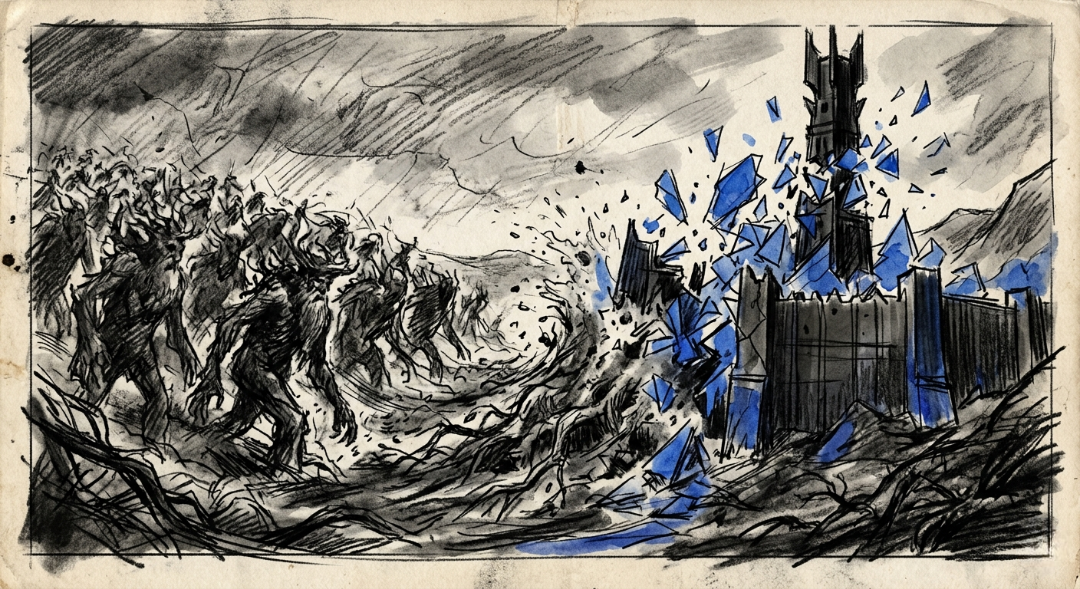
“As charcoal shadows surge forward, the fortress shatters not by water, but by the relentless power of the forest.” Art Sketch by Misselbereth
But here’s the tragic part: the Ents don’t enjoy it. Treebeard is sad. He says, “Many of these trees were my friends… creatures I had known from nut and acorn.”
The victory at Isengard is not a triumph; it’s a funeral. The Ents didn’t want to fight; they were forced to. They were the happiest beings in Middle-earth, and Saruman took that away from them.
Sound familiar, Rousseau?
Part IV: The Common Sorrow (or the Reasons Rousseau Would Have Supported Treebeard)
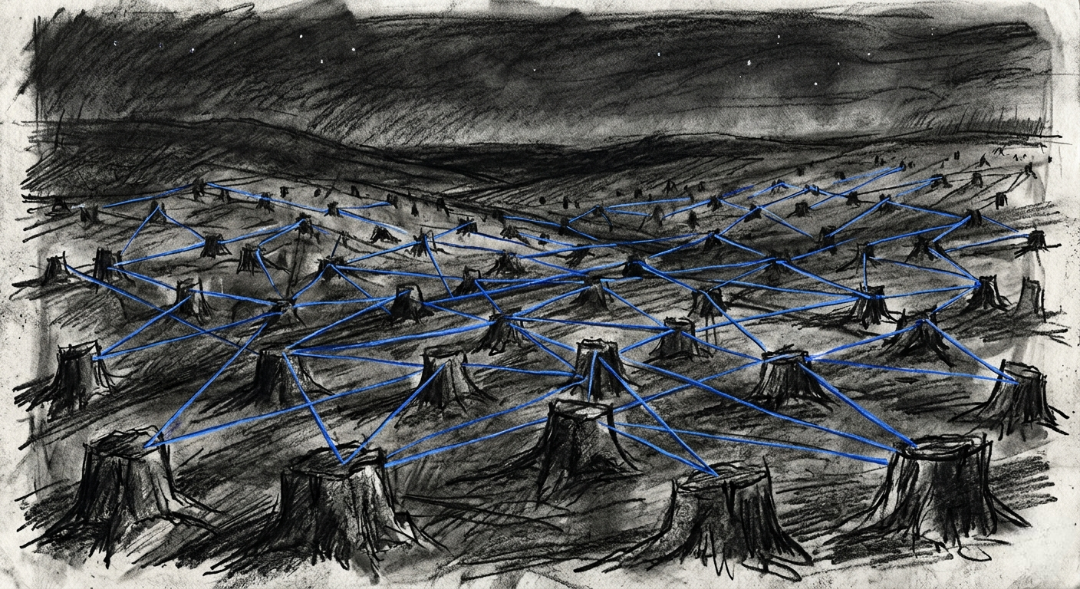
“The forest is gone, but the ghost of our disconnection remains, tethered in Royal Blue.” Art Sketch by Misselbereth
They are more than simply dots; they are a constellation of common hopelessness, so let’s make the connection.
1.The Loss of Natural Simplicity
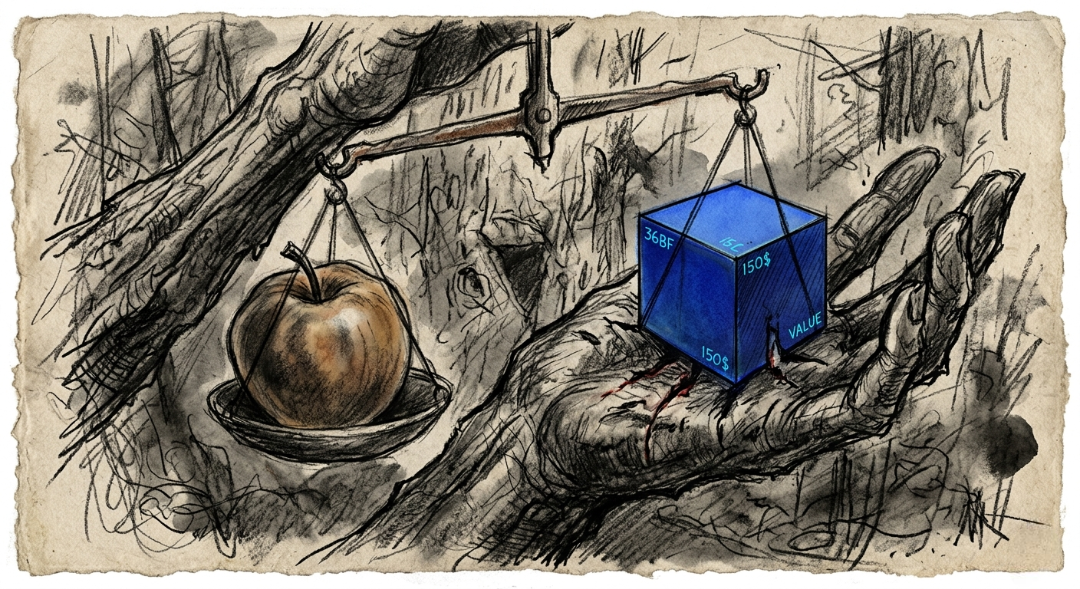
“Economic calculation: the sharp instrument that severs our connection to the earth.” Art Sketch by Misselbereth
Rousseau said that in the state of nature, humans were guided by two principles: self-preservation and pity (the instinctive aversion to seeing a fellow creature suffer).
They didn’t need reason, because reason just complicates things. The Ents, on the other hand, possess intelligence and do not require reason.
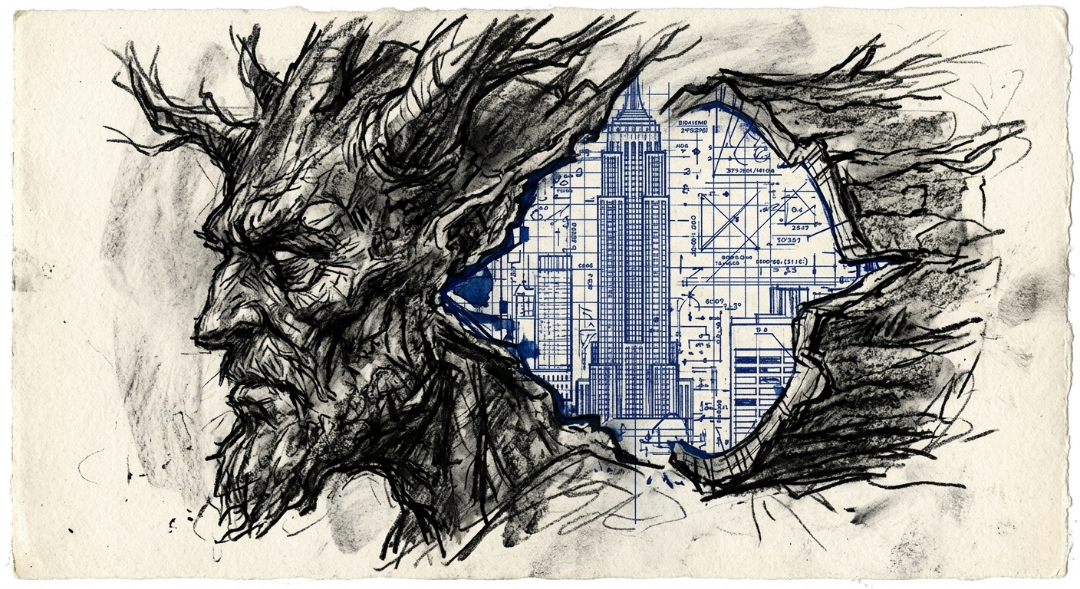
“Nature quantified: Where the organic yields to the absolute precision of the blueprint.” Art Sketch by Misselbereth
Knowing that trees are living, that water is precious, and that a long period of silence with a buddy is the best kind of communication are all examples of wisdom.
According to Rousseau, amour-propre that poisonous self-love that makes you worry about your wealth, reputation, and if your horse is superior to your neighbor’s replaces sympathy in civilization.
Civilization replaces wisdom with calculation. Saruman doesn’t pity the trees; he calculates their board-feet.
2. The Tyranny of Speed
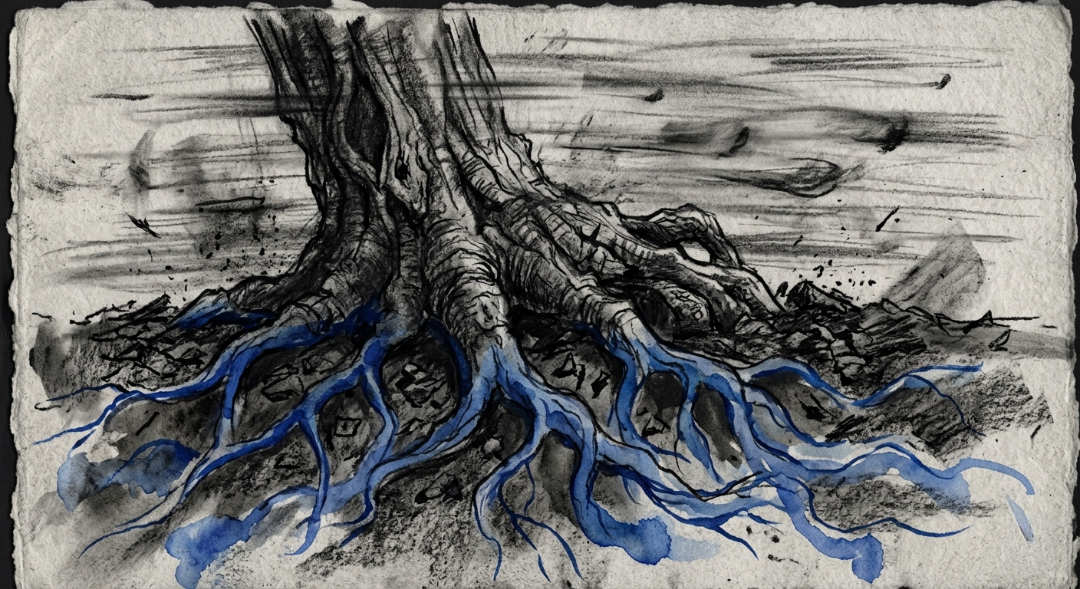
“In the heart of the frantic chaos, true stillness is found where the deepest roots anchor the soul.” Art Sketch by Misselbereth
Rousseau detested the hectic pace of city life. He described how Parisians were constantly hurrying, performing, and attempting to make an impression. They had no time to be; they were too busy appearing.
The Ents are the antidote to speed. They take their time because they understand that real things trees, friendships, deep thoughts cannot be rushed.
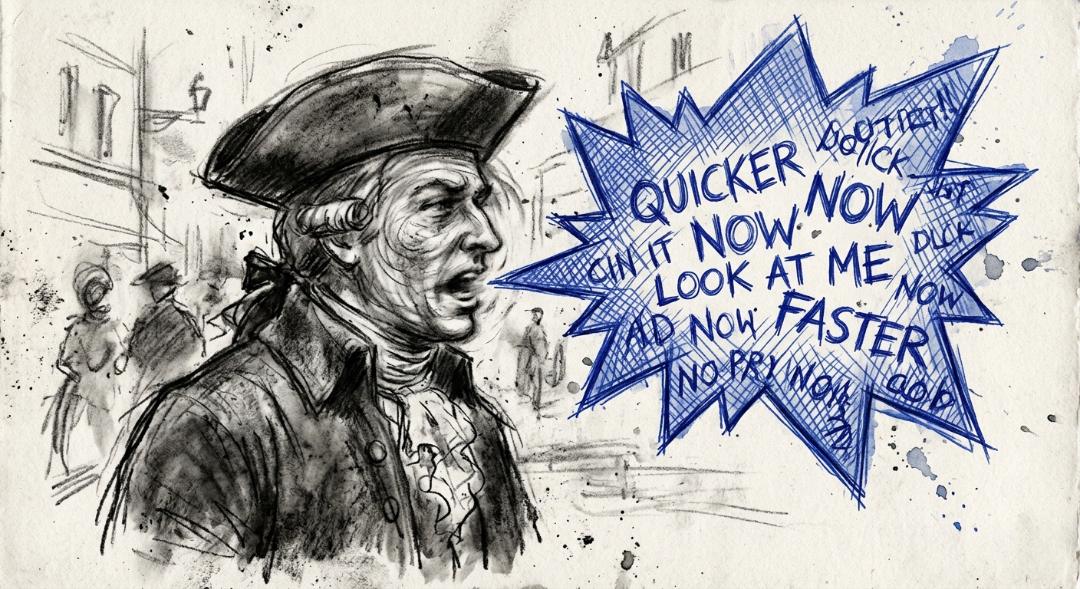
“Caught in the relentless rhythm of the city, where every second demands to be louder than the last. A mask of haste in a world that never stops moving.” Art Sketch by Misselbereth
When Treebeard says, “Do not be hasty,” he’s not just giving advice; he’s giving a moral philosophy. Haste is the enemy of happiness. Haste is what turns forests into fuel and turns free beings into cogs in a machine.
3. The Corruption of Language
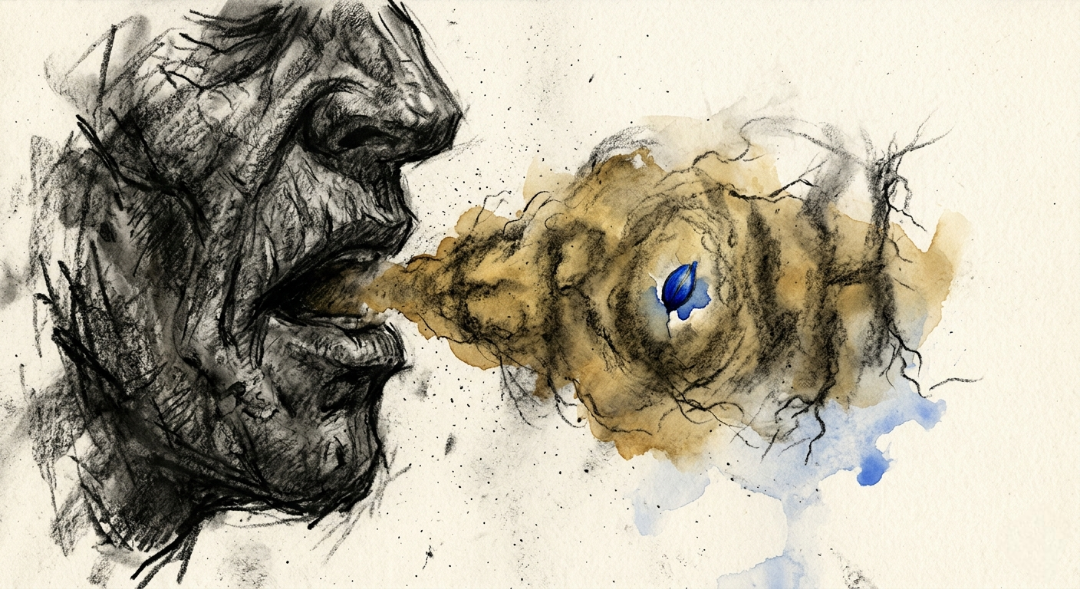
“Entish: The slow, physical architecture of thought.” Art Sketch by Misselbereth
The evolution of language from fervent, emotive outbursts to icy, logical discourse captivated Rousseau. Our use of language to deceive, manipulate, and promote commodities increased with our level of sophistication.
The Ents speak a “slow, sonorous, and repetitive” language called Old Entish. This language cannot lie since it takes too long to formulate a sentence.
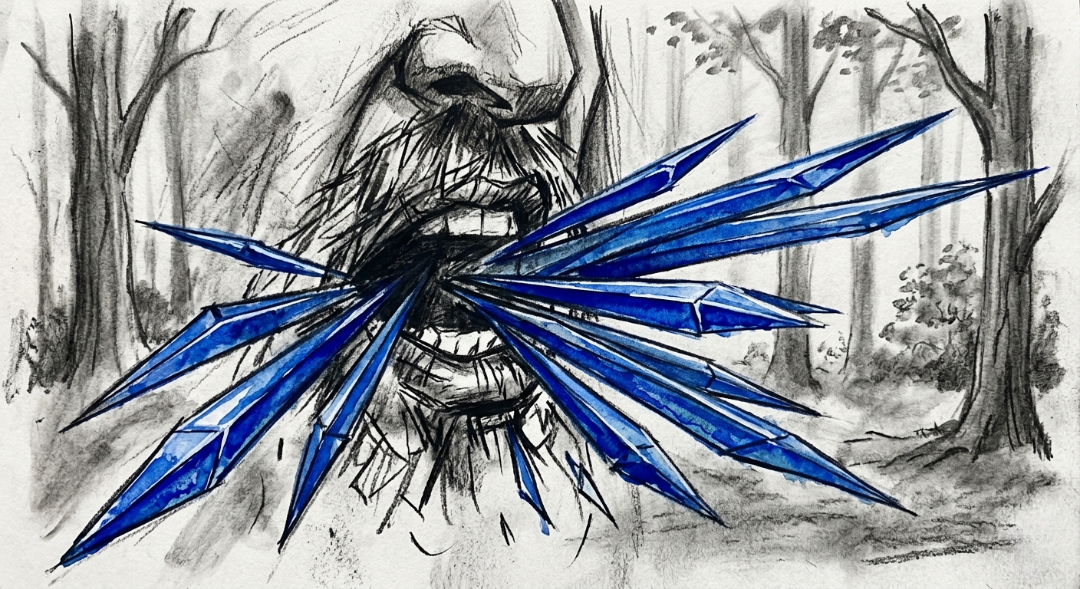
“A voice forged in steel, meant to sever, never to mend.” Art Sketch by Misselbereth
It’s a language that feels the world rather than describes it. When an Ent says “Aaaaah,” he means “I have pondered the curvature of the hills and the moisture of the soil and the migration of the birds, and I find it all quite satisfactory.”
Compare that to Saruman’s speech: smooth, persuasive, and utterly hollow. He uses words like “industry,” “progress,” and “order,” but he means “destruction,” “domination,” and “my ego.”
Part V: But Wait, Isn’t This All a Bit… Romantic?
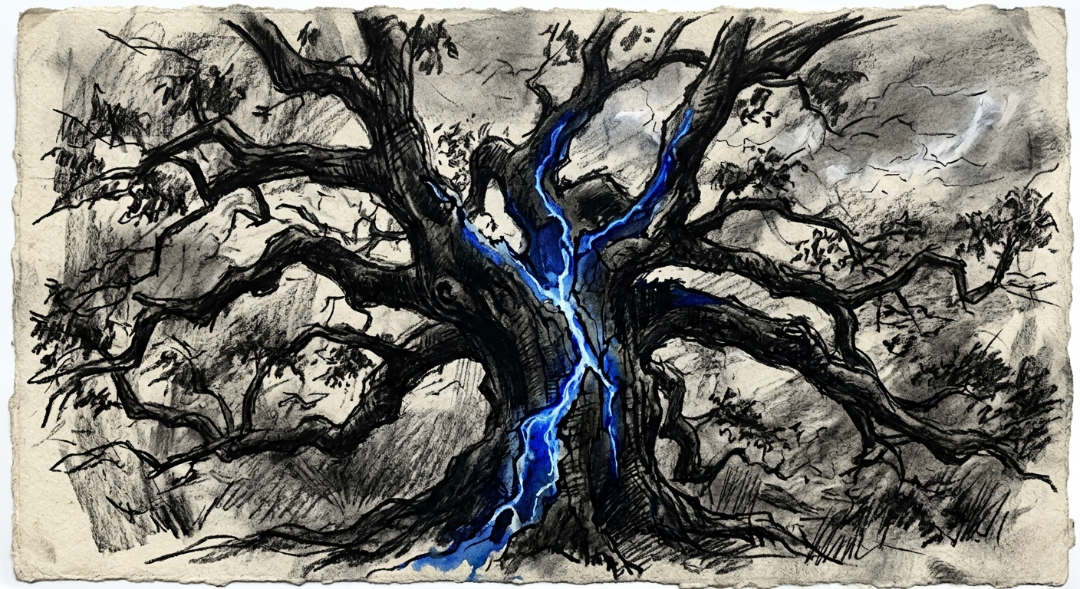
“Nature is not a resource to be tamed; it is a force to be reckoned with.” Art Sketch by Misselbereth
Yes. That’s the point.
Rousseau is the grandfather of Romanticism, the artistic and intellectual movement that said, “Reason is cool and all, but have you ever seen a sunset? Have you ever cried at a poem? Have you ever experienced the sublime fear of a thunderstorm?”
Romanticism disapproved of the Enlightenment’s detached, mechanical outlook. The heart, it was claimed, knows things that the mind cannot.
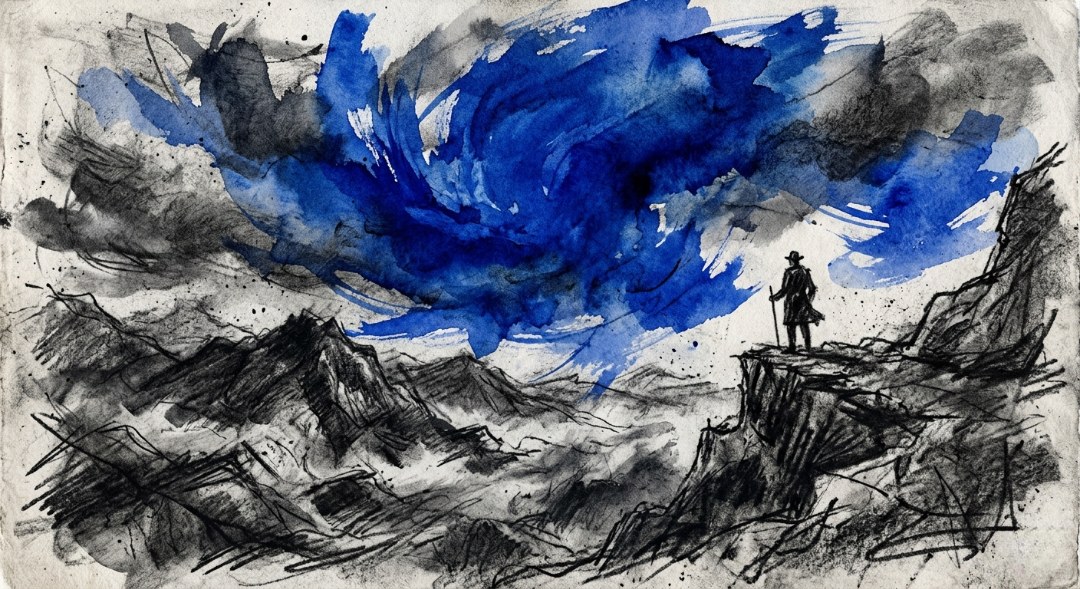
“Where the charcoal ends, the spirit begins to breathe.” Art Sketch by Misselbereth
Emotion, instinct, and the unadulterated force of nature were all honored. It loved ruins, mountains, and, yes, ancient trees.
The Ents are Romantic creations through and through. They are nature’s last stand against the machine.
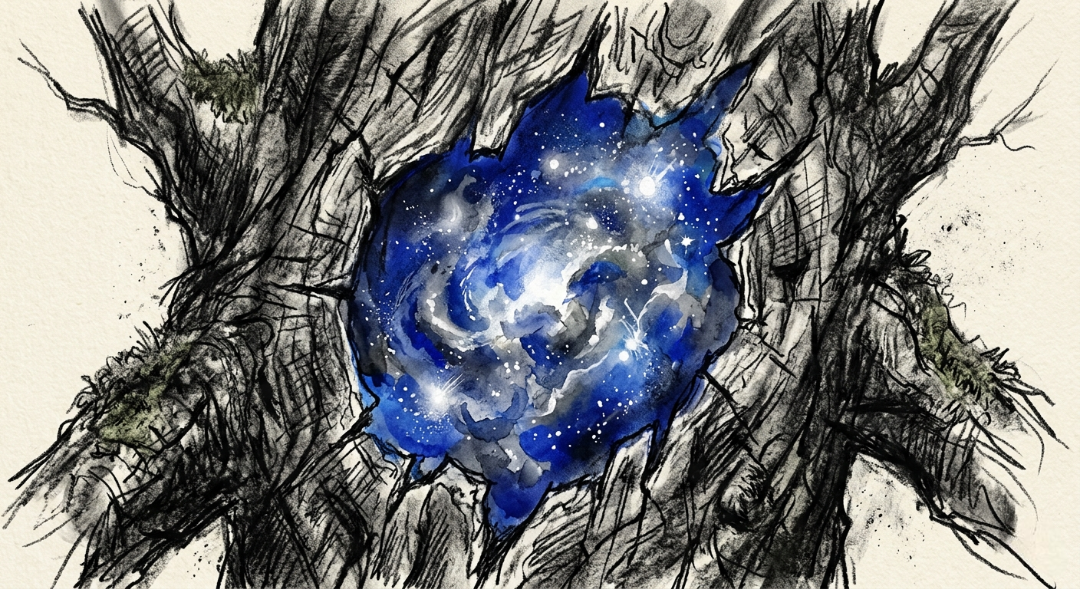
“The heart of the wild is not made of wood, but of the very stars that breathe life into this world.” Art Sketch by Misselbereth
They are the embodiment of Naturphilosophie, the idea that nature is not a resource but a presence, a living, breathing being that deserves respect.
When the Ents destroy Isengard, it’s not a victory of logic over industry; it’s a victory of feeling over function.
The Ents don’t win because they’re stronger or smarter; they win because they are right. They are the conscience of a world that has forgotten what it means to be alive.
Part VI: The Uncomfortable Truth (or, Why Your iPhone Is Not an Ent)
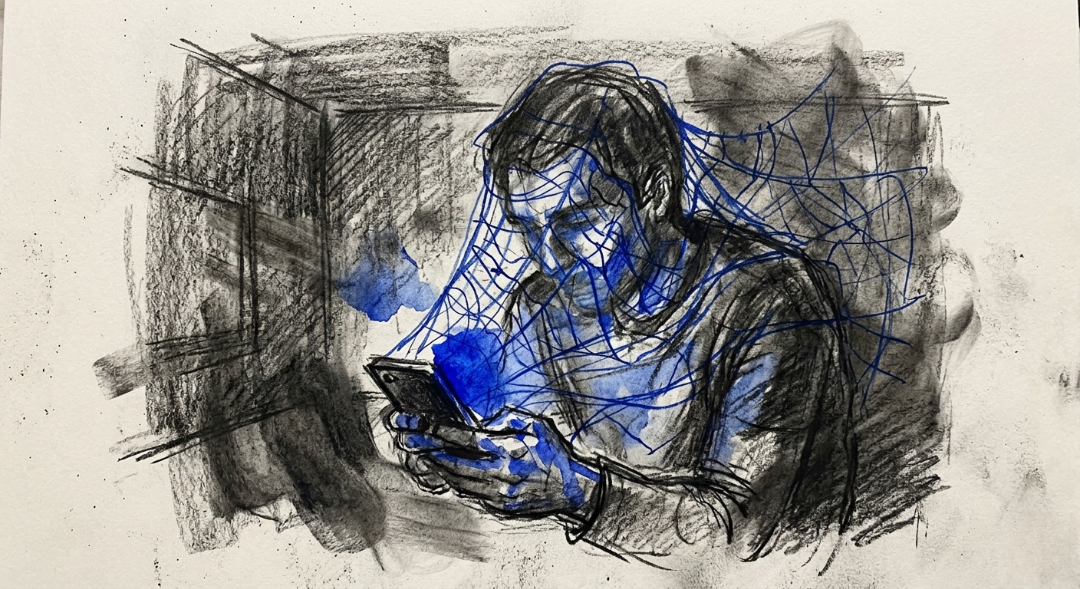
“Caught in the glow: the screen has become a shroud, turning our world into a narrow, blue-lit box.” Art Sketch by Misselbereth
Now for the part where I make you feel bad about your life.
If Rousseau and the Ents are correct, then every technological advancement every new device, every building, every algorithm moves us farther away from happiness.
Instead of becoming more intelligent humans, we are turning into neurotic, lonely, overstimulated apes with better Wi-Fi.
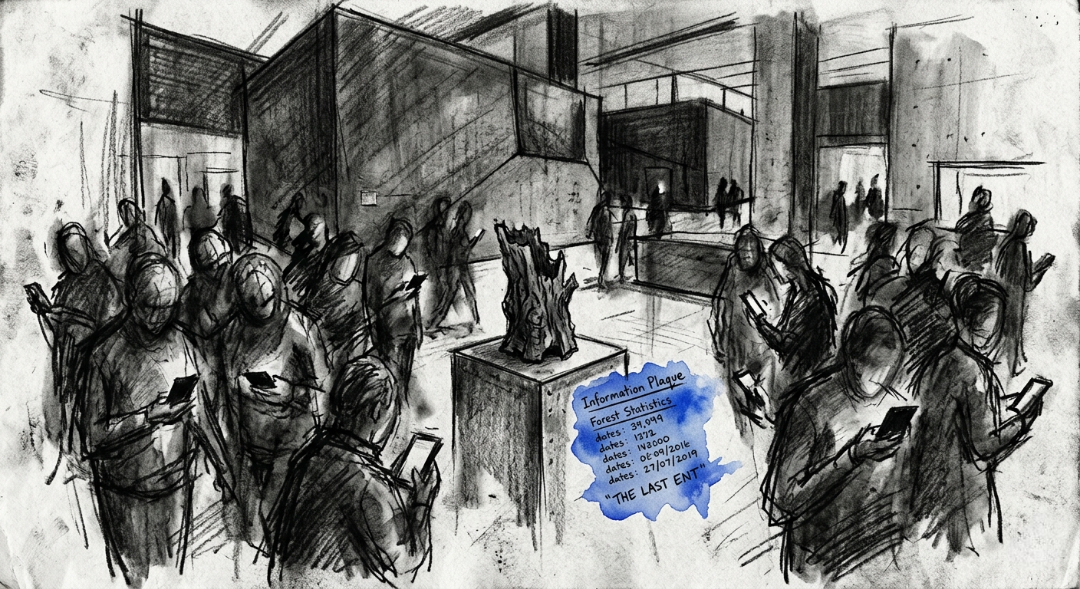
“We archive the past while losing our present; a silent museum, a deafening digital void.” Art Sketch by Misselbereth
Examine it:
- We feel more alone even though we have more options than ever to communicate.
- We feel more hurried even if we theoretically have more free time.
- Despite having more options, we worry more about choosing the incorrect one.
- We have more information, yet we understand less.
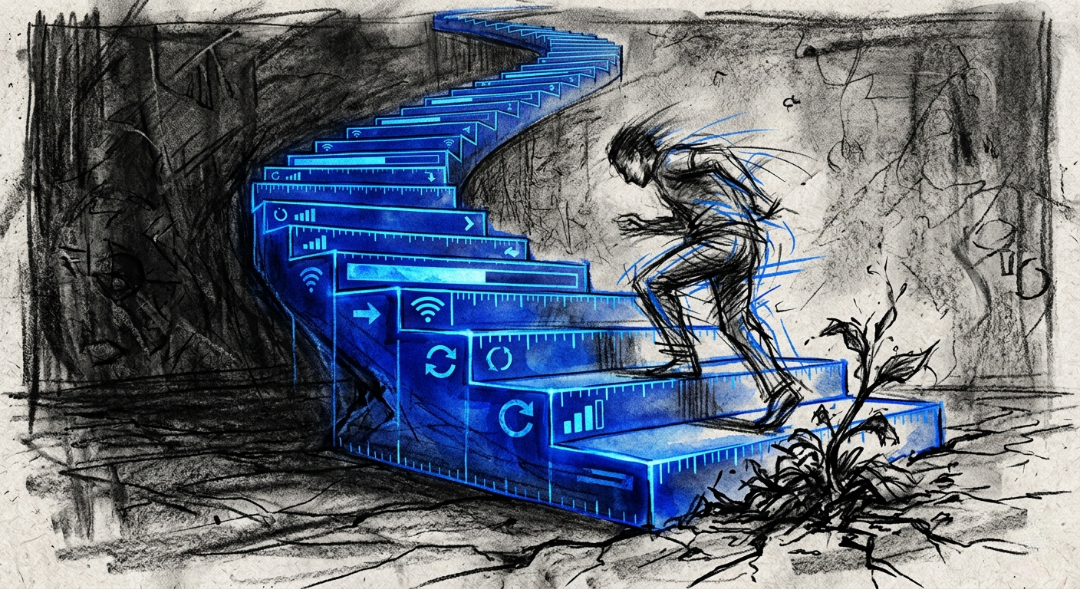
“We climb the ladder of endless metrics, unaware that with every step, we trample the only things that truly take root.” Art Sketch by Misselbereth
The Ents don’t have any of these problems. They don’t have calendars. They don’t have deadlines.
They don’t have FOMO because they don’t know what Facebook is. They have friends (trees), they have purpose (protecting the forest), and they have time. Lots and lots of time.
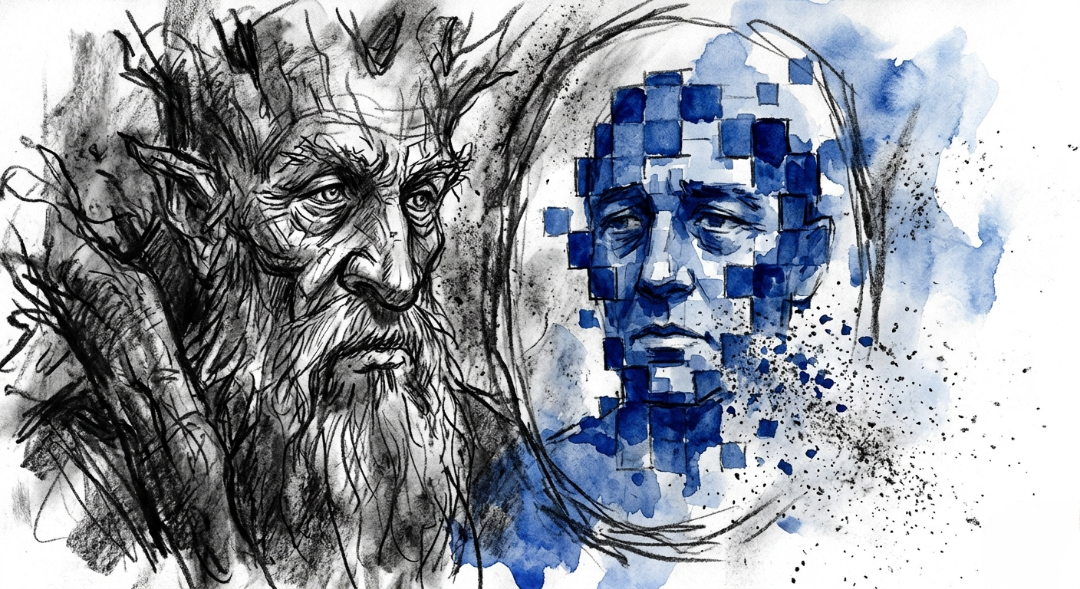
“Nature watches the silence of a digital age, witnessing a consciousness that traded its deep roots for the hollow speed of a dissolving mirror.” Art Sketch by Misselbereth
But here’s the kicker: we can’t go back. Rousseau knew this. He wasn’t advocating for a literal return to the woods (he knew that was impossible).
He was advocating for a critical awareness of what we’ve lost. He wanted us to ask, “Is this progress really making us better? Or is it just making us busier?”
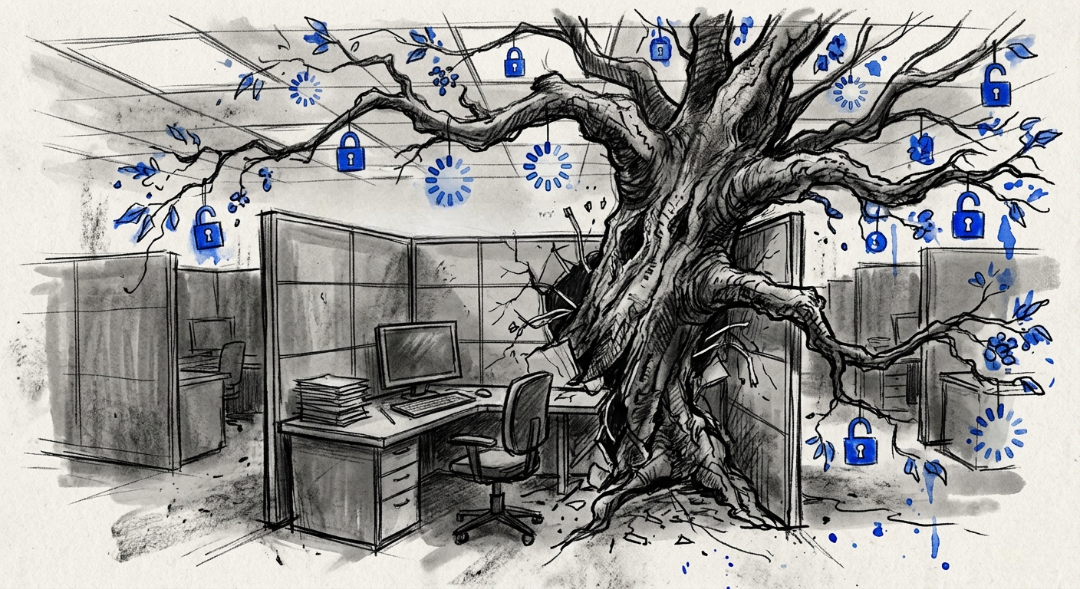
“In a landscape of grey cubicles and endless loading, the roots of reality finally break through.” Art Sketch by Misselbereth
Similarly, the Ents don’t destroy Isengard and then say, “Great, let’s all live in trees now.” They say, “We have won, but at what cost?”
They know that the age of the Ents is passing. They are the last of their kind, and they are tired. Their victory is bittersweet because they understand that the world they loved is gone.
Part VII: A Practical Guide to Being More Ent-ish (Without Actually Being a Tree)
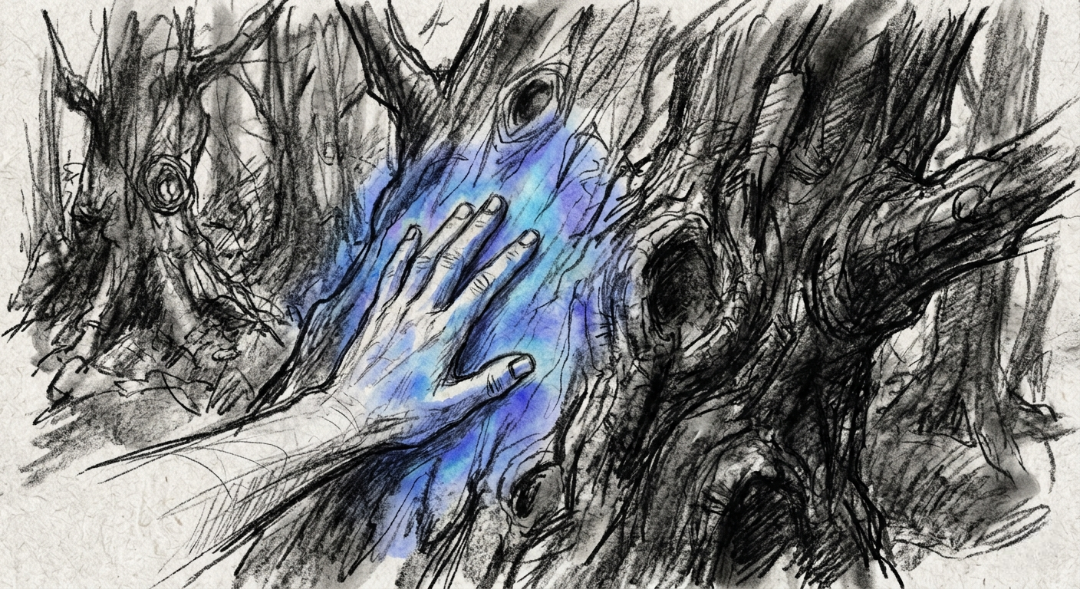
“Seeking the ancient pulse; realizing that we are the ones who need the silence of the woods.” Art Sketch by Misselbereth
So what do we do? How do we reconcile Rousseau’s critique and the Ents’ lament with the fact that we’re reading this on a screen and probably have a meeting in 20 minutes?
I’m not going to tell you to sell your phone and move to a cave (though if you do, please invite me). But I will offer some small, sincere, and slightly ridiculous suggestions:
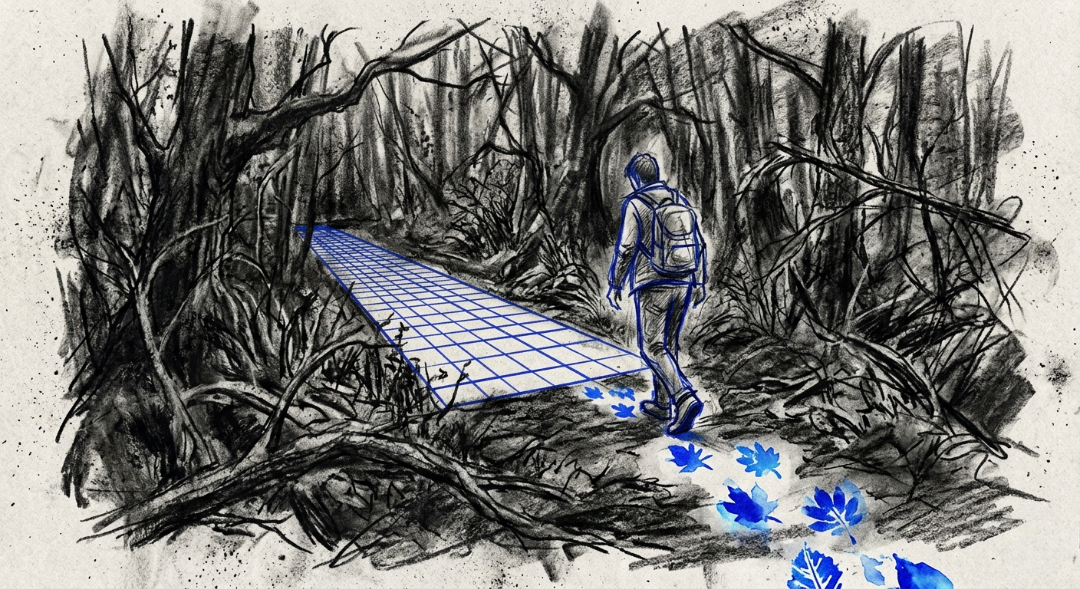
“The most beautiful paths are the ones not yet mapped.” Art Sketch by Misselbereth
Talk to a tree. No, really. Find a tree, put your hand on its bark, and say something. It doesn’t matter what. The point is to acknowledge that it’s there, that it’s alive, and that it’s been around longer than you. It’s a small act of Entish humility.
Slow down. When someone asks you a question, take a breath before answering. When you’re eating, chew slowly. When you’re walking, look around. The Ents don’t rush, and neither should you. (Note: your boss may disagree with this one. Use discretion.)
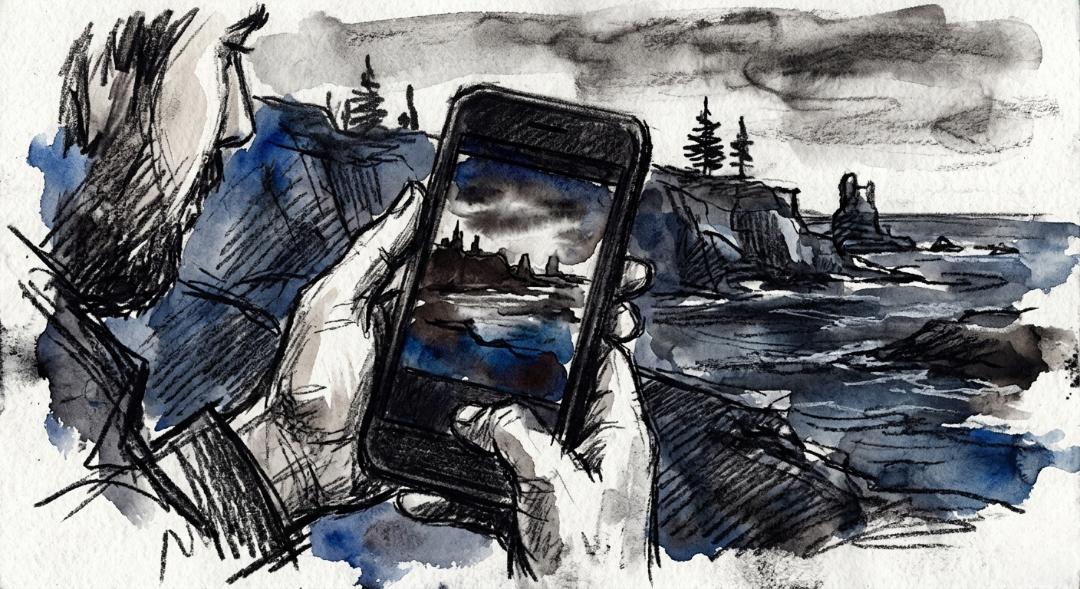
“Trading the digital glare for the raw horizon. Reclaiming the screen as a mirror to the world, not a tether to the machine.” Art Sketch by Misselbereth
Reject productivity. The Ents don’t have “to-do lists.” They don’t have “key performance indicators.”
They just are. Try doing something with no goal, no endpoint, no measurable outcome. Take a walk without a destination. Read a book without finishing it. It’s more liberating than you think.
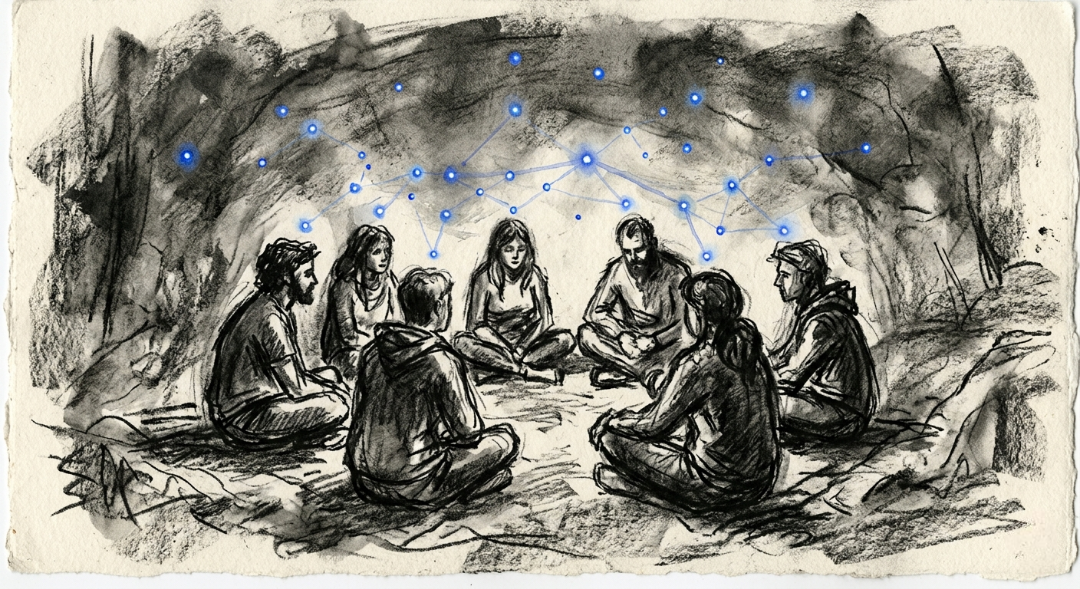
“We are distinct roots in the same forest, connected by the quiet light of shared existence.” Art Sketch by Misselbereth
Resist the machine. Saruman’s machines were obvious they were ugly, noisy, and smelled bad. Our machines are beautiful, quiet, and smell like nothing.
But they’re still machines. They still consume resources. They still separate us from the natural world. Be mindful of your consumption. Do you really need that new gadget? Do you really need to check your email for the 50th time?
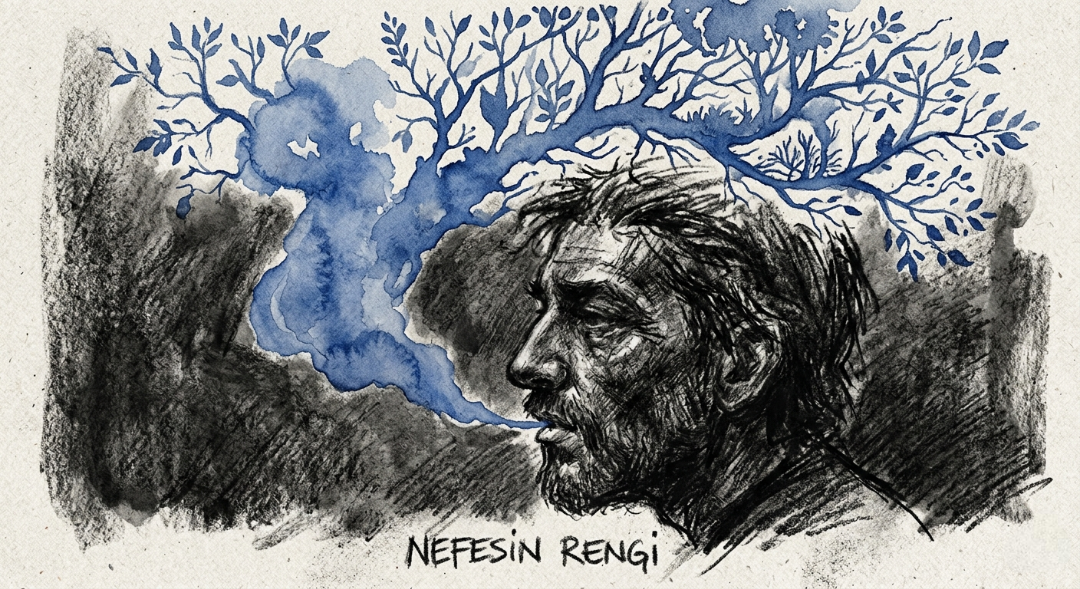
“Between words and silence, a fleeting breath transforms, anchoring the soul back to the wild.” Art Sketch by Misselbereth
Find your fellow Ents. The Ents are a community. The weight of the world is shared by them. We’ve forgotten how to depend on one another in our extremely independent environment.
Discover your tribe people who appreciate leisure, share your interests, and recognize that contentment comes from being in the moment rather than achieving success.
Part VIII: The Final Lament (or, Why We’re All Just a Little Bit Isengard)
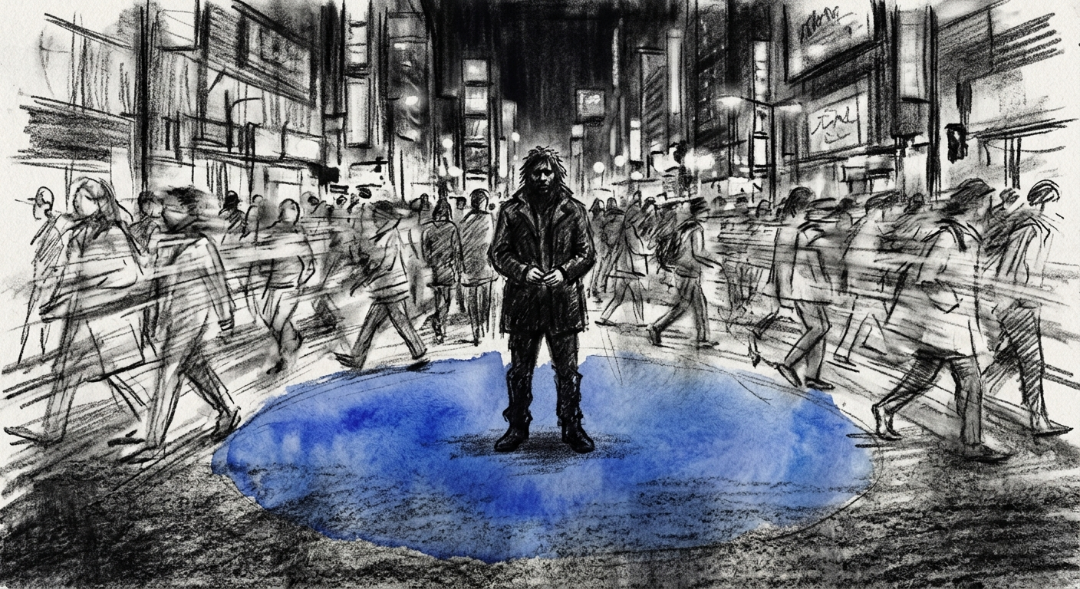
“In the rush of the world, I choose to remain.” Art Sketch by Misselbereth
Here’s the really depressing part: civilization is not going to stop advancing. The machines will get smarter. The cities will get taller. The pace will get faster. And most people won’t notice, because they’ll be too busy checking their notifications.
But that doesn’t mean we have to go along with it. Rousseau showed us that happiness is not in the pursuit of more but in the appreciation of enough.
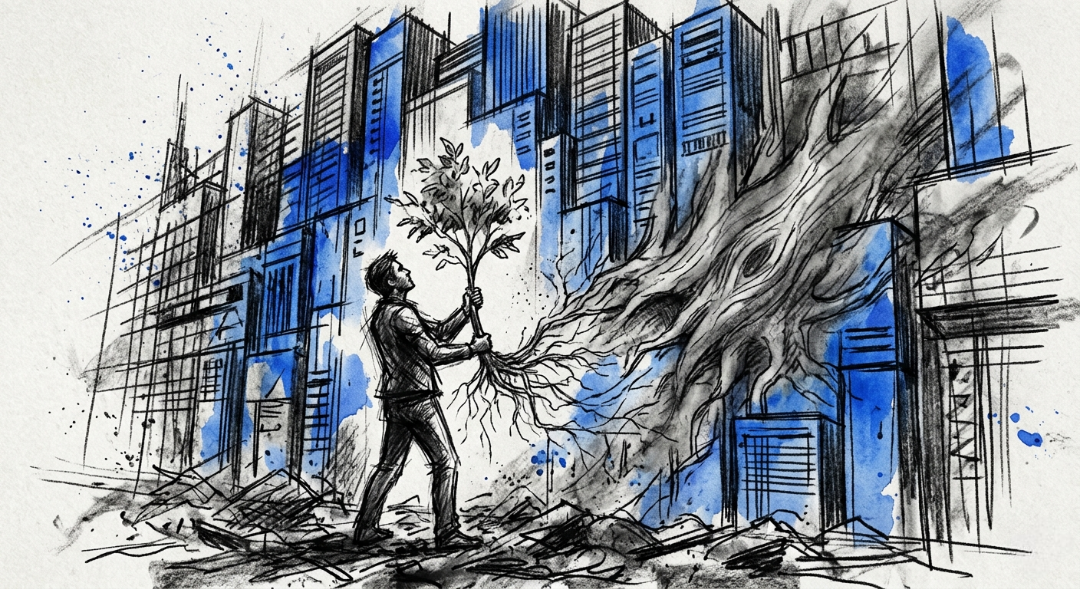
“Carrying the forest to soften the edges of a mechanical world.” Art Sketch by Misselbereth
The Ents showed us that the fight against destruction is worth fighting, even if you lose, even if you’re the last one standing.
So here’s my challenge to you: be a little more Ent-ish. Not in a nostalgic, “the good old days” kind of way, but in a radical, defiant, “I will not be rushed” kind of way.
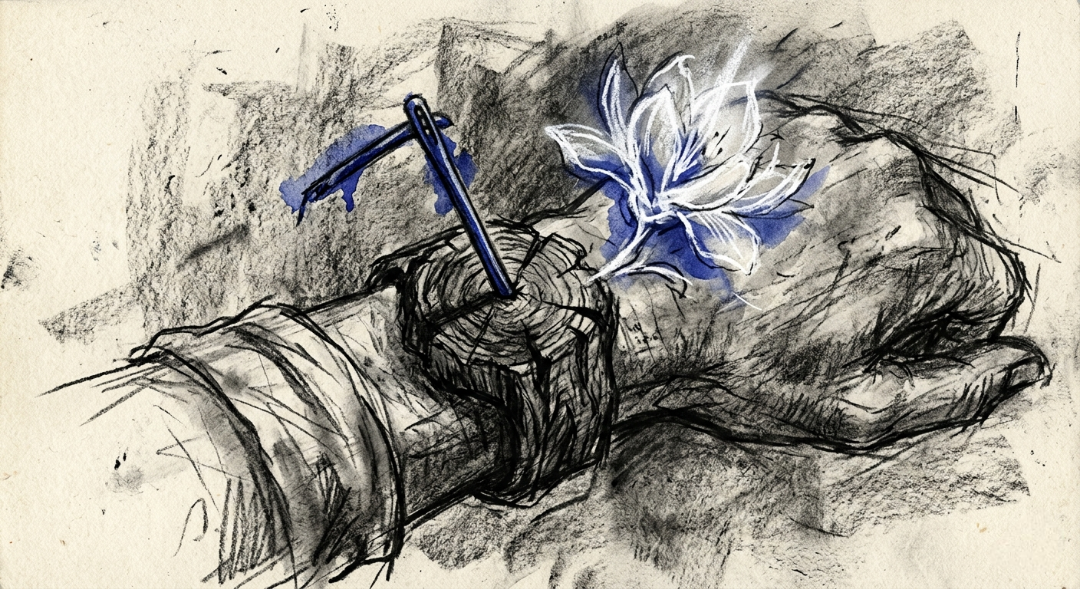
“Choosing to fail at productivity, so I can succeed at being alive.” Art Sketch by Misselbereth
Speak slowly. Love deeply. Defend what is important. Additionally, defend any forest you come across, whether it be a real one or a metaphor.
If Rousseau and the Ents have taught us anything, it is that a civilization’s willingness to save is more important than its ability to construct.
Epilogue: A Conversation with Treebeard (Probably)
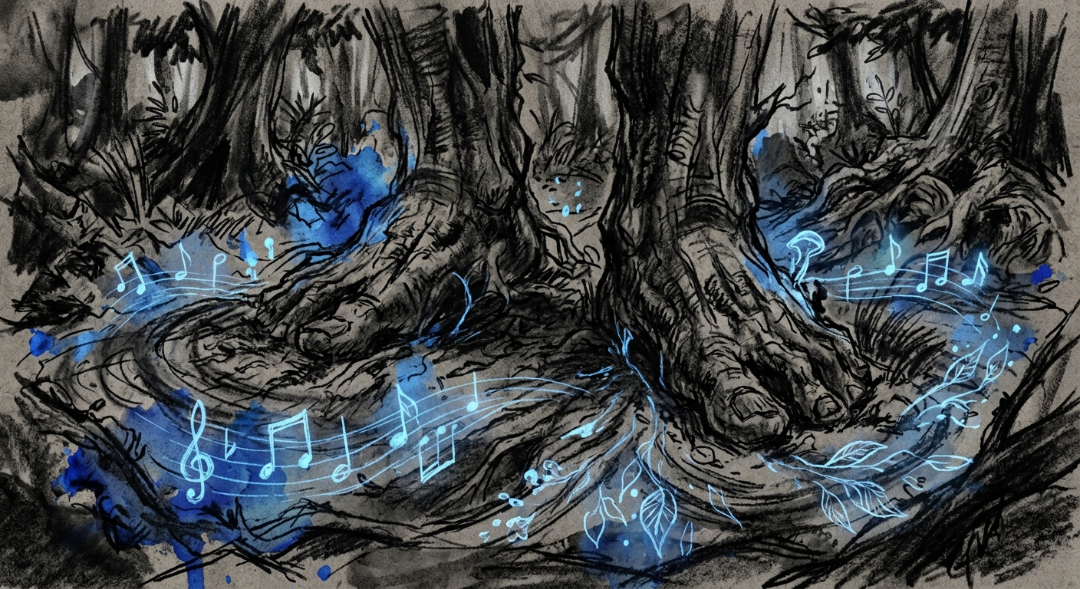
“Connection is not a line, but a resonance; where the ancient wood meets the song of the earth, and every ripple breathes life into the silence.” Art Sketch by Misselbereth
Me: “Treebeard, is it true that happiness decreases as civilization advances?”
Treebeard: “Hoom… well, now, that’s a very… hasty… question. Let me think… give me a moment…”
(Three days pass.)
Treebeard: “Yes. But also, no. Civilization is not the problem. It is the… the… forgetting. The forgetting that we are all… all part of the same… forest. The trees, the Ents, the little ones… even the wizards. When you forget, you cut. When you remember, you… you… water.”
Me: “So what should I do?”
Treebeard: “Water. And wait. And sing, if you know the songs. The songs are important.”
(He pauses, looks at me with his ancient, mossy eyes.)
Treebeard: “And for heaven’s sake, stop checking that little glowing box. It’s making your leaves turn yellow.”
Fin.
Now go outside. Touch a tree. And for the love of Tolkien, don’t be hasty.
If you enjoyed this article, please share it with someone who needs to slow down. And if you didn’t enjoy it, well… that’s probably because you’re reading it on your phone. Put it down. Go outside. We’ll still be here. Slowly. Quietly. Entishly.
References
Primary Sources
Rousseau, J. (1755). Discourse on the Origin and Basis of Inequality Among Men. (Translated by G. D. H. Cole, 1910). Available at: https://www.gutenberg.org/files/11136/11136-h/11136-h.htm
Rousseau, J. (1761). Julie, or the New Heloise. (Translated by P. Stewart & J. Vaché, 1997). Dartmouth College Press.
Tolkien, J. R. R. (1954). The Lord of the Rings: The Fellowship of the Ring. George Allen & Unwin.
Tolkien, J. R. R. (1954). The Lord of the Rings: The Two Towers. George Allen & Unwin.
Tolkien, J. R. R. (1955). The Lord of the Rings: The Return of the King. George Allen & Unwin.
Secondary Sources on Rousseau
Bertram, C. (2020). “Jean Jacques Rousseau.” The Stanford Encyclopedia of Philosophy (Winter 2020 Edition), E. N. Zalta (ed.). Available at: https://plato.stanford.edu/archives/win2020/entries/rousseau/
Dent, N. (2005). Rousseau: An Introduction to his Psychological, Social, and Political Theory. Routledge.
Grimsley, R. (1973). The Philosophy of Rousseau. Oxford University Press.
Melzer, A. M. (1990). The Natural Goodness of Man: On the System of Rousseau’s Thought. University of Chicago Press.
O’Hagan, T. (1999). Rousseau. Routledge.
Shklar, J. N. (1969). Men and Citizens: A Study of Rousseau’s Social Theory. Cambridge University Press.
Starobinski, J. (1988). Jean-Jacques Rousseau: Transparency and Obstruction. University of Chicago Press.
Secondary Sources on Tolkien and The Lord of the Rings
Birzer, B. J. (2020). J.R.R. Tolkien’s Sanctifying Myth: Understanding Middle-earth. ISI Books.
Chance, J. (2001). Tolkien’s Art: A Mythology for England. University Press of Kentucky.
Curry, P. (1997). Defending Middle-earth: Tolkien, Myth and Modernity. HarperCollins.
Dickerson, M. T. & Evans, J. (2006). Ents, Elves, and Eriador: The Environmental Vision of J.R.R. Tolkien. University Press of Kentucky.
Flieger, V. (2002). Splintered Light: Logos and Language in Tolkien’s World. Kent State University Press.
Garth, J. (2003). Tolkien and the Great War: The Threshold of Middle-earth. HarperCollins.
Shippey, T. (2000). J.R.R. Tolkien: Author of the Century. HarperCollins.
Shippey, T. (2005). The Road to Middle-earth: How J.R.R. Tolkien Created a New Mythology. Houghton Mifflin.
Comparative and Thematic Studies
Berman, M. (1982). All That Is Solid Melts into Air: The Experience of Modernity. Penguin Books.
Berry, W. (1977). The Unsettling of America: Culture & Agriculture. Sierra Club Books.
Coates, P. (1998). Nature: Western Attitudes Since Ancient Times. University of California Press.
Foucault, M. (1970). The Order of Things: An Archaeology of the Human Sciences. Vintage Books.
Lovejoy, A. O. (1936). The Great Chain of Being. Harvard University Press.
MacIntyre, A. (1981). After Virtue: A Study in Moral Theory. University of Notre Dame Press.
Nisbet, R. (1980). History of the Idea of Progress. Basic Books.
Schama, S. (1995). Landscape and Memory. Alfred A. Knopf.
Thomas, K. (1983). Man and the Natural World: A History of the Modern Sensibility. Pantheon Books.
White, L. (1967). “The Historical Roots of Our Ecologic Crisis.” Science, 155(3767), pp. 1203–1207.
Romanticism and Environmental Philosophy
Clark, T. (2011). The Cambridge Introduction to Literature and the Environment. Cambridge University Press.
Flewelling, S. (2013). “Tolkien and the Romantics: Nature, Imagination, and the Green Tradition.” Mythlore, 32(1), pp. 45–62.
Garrard, G. (2004). Ecocriticism. Routledge.
Hitt, C. (1999). “Toward an Ecological Sublime.” New Literary History, 30(3), pp. 603–623.
Kroeber, K. (1994). Ecological Literary Criticism: Romantic Imagining and the Biology of Mind. Columbia University Press.
McKusick, J. C. (2000). Green Writing: Romanticism and Ecology. St. Martin’s Press.
Worster, D. (1994). Nature’s Economy: A History of Ecological Ideas. Cambridge University Press.
Technology, Modernity, and Well-being
Carr, N. (2010). The Shallows: What the Internet Is Doing to Our Brains. W. W. Norton & Company.
Heidegger, M. (1977). The Question Concerning Technology and Other Essays. Harper & Row.
Illich, I. (1973). Tools for Conviviality. Harper & Row.
Lanier, J. (2010). You Are Not a Gadget: A Manifesto. Alfred A. Knopf.
Postman, N. (1992). Technopoly: The Surrender of Culture to Technology. Alfred A. Knopf.
Sennett, R. (1998). The Corrosion of Character: The Personal Consequences of Work in the New Capitalism. W. W. Norton & Company.
Turkle, S. (2011). Alone Together: Why We Expect More from Technology and Less from Each Other. Basic Books.
Virilio, P. (1995). The Art of the Motor. University of Minnesota Press.
Historical and Cultural Context
Berlin, I. (1999). The Roots of Romanticism. Princeton University Press.
Darnton, R. (1984). The Great Cat Massacre and Other Episodes in French Cultural History. Basic Books.
Gay, P. (1966). The Enlightenment: An Interpretation. Alfred A. Knopf.
Himmelfarb, G. (2001). The Roads to Modernity: The British, French, and American Enlightenments. Alfred A. Knopf.
Israel, J. (2001). Radical Enlightenment: Philosophy and the Making of Modernity. Oxford University Press.
Palmer, R. R. (1950). A History of the Modern World. Alfred A. Knopf.
Porter, R. (2000). Enlightenment: Britain and the Creation of the Modern World. Allen Lane.
Online and Digital Resources
The Tolkien Society. (2023). “Tolkien and the Environment.” Available at: https://www.tolkiensociety.org/
The Rousseau Association. (2023). Studies on Voltaire and the Eighteenth Century. Available at: https://www.rousseauassociation.org/
Project Gutenberg. (2023). “Rousseau, Jean-Jacques.” Available at: https://www.gutenberg.org/ebooks/author/1286
The One Wiki to Rule Them All. (2023). “Ents” and “Treebeard.” Available at: https://lotr.fandom.com/
If you enjoyed this deep dive into the mechanics of mastery, you’ll love my publication: The Applied Mind. 🧠
I would appreciate your feedback.
***buy me a coffee / Substack / Patreon / Medium / Linkedin / Newsletter***
Article Details:
Instagram: TheArchimystic
Tiktok: TheArchimystic
Thanks for reading. ❤️
See you in the next one!
메타데이터
- post_id
- ec2217ff9917
- slug
- the-ents-are-not-amused-rousseau-tree-beards-and-the-unbearable-sadness-of-progress-ec2217ff9917
- url
- https://medium.com/illumination-philosophy-and-metaphysics/the-ents-are-not-amused-rousseau-tree-beards-and-the-unbearable-sadness-of-progress-ec2217ff9917
- canonical_url
- https://medium.com/illumination-philosophy-and-metaphysics/the-ents-are-not-amused-rousseau-tree-beards-and-the-unbearable-sadness-of-progress-ec2217ff9917
- author_url
- https://medium.com/@misselbereth
- status
- ok
- fetched_at
- 2026-06-22 05:41:33