Dragon Is Dead — Review
Can we mix ARPGs with roguelikes and make them fun?
Dragon Is Dead — Review
Can we mix ARPGs with roguelikes and make them fun?
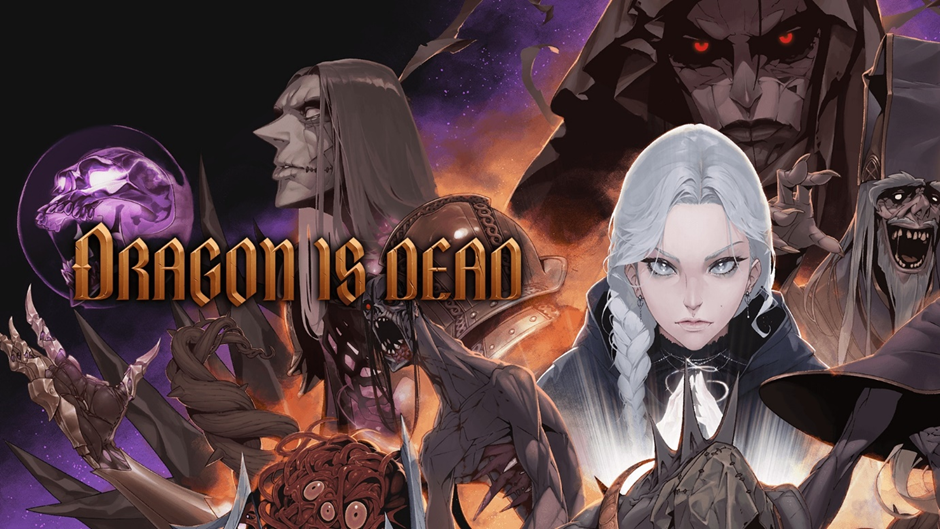
Dragon Is Dead is a bit of a special title to me. Because that’s how I got to meet the folks at **PM Studios** and make a few friends among them. I reached out to them after revealing the title back in March 2024. The pixel art animation and the gameplay presentation looked smooth. So I wanted to cover it when the full launch would come.
The game launched in June of this year, after one year of Early Access development. And I think I gave them enough time to iron out any post-launch issues. Let’s dive in and see if it was worth the wait.
Story

Spoiler-Free Synopsis
In all honesty, I couldn’t give you any spoilers even if I wanted to. The game has a very convoluted way of presenting its events and characters. But we’ll get to that in a bit. For now, what you need to know is that you play as a Successor — a person tasked with fighting evil, protecting the kingdom, and all that generic “You’re our only hope”. Nobody has the slightest clue what exactly you’re supposed to fight. But you’re there to fight it nonetheless.
Characters & Dialogue
The small town of Cliffshire harbors many of the characters that you’ll come across. You’ll also meet a few familiar faces in the mobile camp, where you can stop after each stage clear. Plus the usual surprise encounters while fighting your way through the hordes of enemies.
But none of these friendly characters nor the villains will make an impression on you. They just love to throw a bunch of dialogue at you before they leave. The pacing of the writing is sluggish. The people you meet are very verbose, but without saying anything important after a few minutes of reading their lines. And I got to the point where I was like: “You know what? I got the gist of it. No thank you. I’ll skip dialogue from now onwards”.

Narrative Quality
Storytelling felt like an afterthought. The setting of the game is not very clear. Why the protagonist is so important is not clear. Why the characters you meet decide to throw dialogues the size of a novel at you without explaining anything meaningful is not clear. There simply isn’t a good enough reason to care about the story or anyone involved in it. If a decent story is part of what makes you play a game, you won’t find one here. But if you’re more interested in gameplay, there might still be hope for you.
Gameplay
Important Mechanics
There are three classes you can play as:
1. The Spellblade is the one you start with. He’s both beginner-friendly and powerful. You can choose to apply Fire, Lightning, or Ice to your basic attacks. Then work towards builds that emphasise burning your enemies, stunning them for a while, or freezing them for better crowd control. You can always go for hybrid elemental builds and even have multiple elemental basic attacks, if you want to experiment.
What makes the Spellblade unique is that his attack move set is determined by the weapon he has equipped. The other two classes will have altered attacks, based on what type of basic attack you choose for them in the skill tree. He is also the only one who can use daggers for melee combat.

2. The Berserker is a close combat expert who can bleed his enemies dry. As his name suggests, he’s a good choice for a more reckless playstyle where you go for broke. His kit includes abilities that hurt himself to deal more damage, as well as ways to get back the lost HP. You can aim for slow and heavy attacks, fast attacks, or applying bleed effects.
He is the only one who can use heavy two-handed weapons, as well as the only one who can equip and dual-wield two short weapons.
3. The Revenant can rely on throwing daggers that apply poison, javelins that apply electricity, or claws that inflict normal wounds or freeze opponents.
She is the only one who can also keep her distance and attack at range with her basic attacks. If you like a versatile character that can adapt on the fly, the Revenant will probably suit you well.
You’ll gather gear, Relics, and Soul Gems during your runs. As long as you have it equipped or in your inventory, you’ll take the gear back at the base, no matter if your run is successful or not. In classic ARPG style, each piece of equipment comes in different rarities and levels. The higher the rarity, the more bonuses it comes with. If you like min-maxing, you can craft, modify, increase, or adjust pretty much anything related to your gear to match your playstyle.

Relics provide passive bonuses during runs. You can only have a maximum of 9 equipped at any time, so choose wisely. Each Relic also has two Synergy categories attached to it. Each Synergy point from a Relic contributes to its specific category. Once you meet certain thresholds, you unlock new passive effects like more damage on your basic attacks, gaining HP when you consume healing potions or food, more damage on specific skill types, etc.
· Basic — they affect your normal attack;
· Core — active skills that consume your character-specific resource to deal damage.
· Assist — support skills that give you bonuses or create a protective aura around you while active. They can consume the same resource or have a cooldown timer.
· Mastery — high damage skills that don’t consume resources, but have a longer cool down.

· Ultimate — your best bet in dishing out massive amounts of damage and/or applying status effects. They don’t consume resources, but they have the longest cooldown timer.
The Soul Gems can give you a damage increase for the Basic, Core, and Mastery ones. There is also no limit on how many Soul Gems you can hold. Just keep in mind that you’ll lose them when you’re back at base.
What makes gameplay fun
You can get from zero to hero quite fast once you understand the mechanics and gather a few gear pieces to support your desired playstyle. You essentially become both an unstoppable force and an immovable object at the same time. If you get your dopamine from slaying dozens of enemies in the blink of an eye and feeling like an almighty god, you won’t have to work long to feel that way in the base game. I cleared the base game content in about 7 hours. And according to **HowLongToBeat.Com**, most people do it in about 6 hours.

The fast weapons are my personal highlight. Ever since I equipped my first dagger on the Spellblade, my runs have never been the same. The reason behind it? Time efficiency. The Spellblade’s basic attacks apply elemental damage and status effects more quickly this way. The more attacks you get in with the Berserker, the higher your chances of triggering Critical Hits. And you can swing either way with the Revenant due to its versatility. Enemies like to group together more than you’d think, which eliminates the problem of range.
In the same spirit of wiping enemies in mere seconds, having the right bonuses on your gear will drastically improve your damage output. Going for an elemental build that relies on basic attacks? Get bonuses that improve your basic attack damage, magic damage, and the elemental damage you chose. Going for a physical damage build? Attack speed, critical chance, and attack power bonuses are your best friends. All in all, make sure that your gear supports your playstyle.

Due to the high pace of the base game, it will also not feel like an endless grind for gear and materials. Runs feel engaging. Loot just keeps pouring. And time just flies away. In other words, the game is ideal if you can only sneak in a 20–30-minute run due to your busy lifestyle. But at the same time, it’s ideal if you want to commit yourself to the grind for better and better equipment.
The feeling of immediate gratification and getting rewarded quickly will make either player type content.
What makes gameplay less fun

You might’ve noticed how frequently I’ve mentioned the term “base game”, so far. There’s a good reason behind it: once you’re done with its content, you’ve pretty much seen everything that Dragon Is Dead has to offer you. You can go on increasing the difficulty and grinding for Mythic gear on Nightmare runs. You can go into the Rift, a post-game content area, to battle the same hordes of monsters to improve your Mythic gear. But you do all this grinding just to reach the status quo from the beginning of the game: wiping enemies off in a heartbeat.
The modifiers from the Nightmare difficulty artificially handicap you as a player. They mostly lower some of your stats and make mobs and bosses tank more damage. Some of them will add new moves for the bosses. But you’ll still be able to wipe them out the moment you get your hands on that sweet Mythic gear to even the field.
What was initially the game’s forte, its speed, now becomes its biggest enemy. Seeing the same 8 regions and bosses over and over again will become boring. All the rooms within a region look almost identical, with very slight layout changes.

What I’m trying to say here is that there’s a severe lack of content to keep you hooked, unless you’re a really dedicated player. If you ask me, this stems from trying to force the ARPG loot system upon the roguelike gameplay without enough content to go through to make it fun.
What makes roguelikes and roguelites stand out is how different every run feels due to the in-run progression. But adding the gear system and progression from an ARPG makes runs too similar to be enjoyable. It feels like you’re going through one small dungeon all over again for the same rewards.
But there’s an issue that appears even earlier than the post-game content: tutorialization. This is not a game that tries to ease you in and teach you step by step about your tools. They throw most of the mechanics at you in the beginning. They make you go through endless explanation screens that disrupt your gameplay. And in the end, you’ll still be better off figuring out how everything works by playing and ignoring these tutorial pop-ups.
Bugs and Performance Issues
I mostly encountered minor annoyances rather than game-breaking bugs. One of them is the game spawning enemies outside the playable area or inside walls where you can’t reach them. The other one is the collision system that would somehow throw the character high in the sky or to the end of the room. But they didn’t happen frequently enough to spoil the fun of the runs. The most I had to do was to quit to the main menu and rejoin my session when the game would spawn inaccessible enemies. While I still had to refight through the same room, the gear and upgrades that I collected remained.
Art & Audio
Visual Style

If games like the Castlevania series, Blasphemous, or The Last Faith ring a bell, the art style is quite similar. The same decrepit words devoid of life and light. The same atmosphere of hopelessness when battling through a dying world where both man and monster are twisted and turned. A world where nature itself became tainted, as you come across malformed animals and spirits that try to murder you.
Bosses and important NPCs are very polished to the most minute details in their design. The use of colors to create the sensation of light and shadow fully brings them to life. The same goes for each piece of gear. Especially the Legendary and Mythic ones, which have special effects applied to them to emphasize their rarity.
What problems are there?
As I mentioned in the Gameplay section, visual repetitiveness is one of this game’s worst enemies. Rooms have an almost identical structure and visual likeness within a region. They are also small and claustrophobic in size. The more you play, the more you’ll feel the need to see something new.
As much as the bosses and important NPCs look remarkable, the moment-to-moment enemy has hardly any distinguishable features. And I’m not talking about special treatment to make their models stand out. I’m talking about a lack of basic lines and shapes to understand what they actually represent. This is less prevalent in the final areas. But it’s definitely noticeable during the early and mid-game ones.
Music style
It’s a bit difficult to comment on the music, since there aren’t too many tracks playing throughout the game. The town of Cliffshire and the mobile base you visit during runs have the same background music that mixes eerie yet hopeful piano tunes. Drums and choral sounds make up the audio identity for the regions you visit throughout the game. And when it comes to boss music, they die too fast to notice any standout themes.
What problems are there?
If visual repetitiveness was the downfall of the art side, audio repetitiveness is the downfall of the music side. The background music sounds too similar to stand out. It’s mainly there to tell the difference between being in a safe area, being in a room where you need to fight enemies, or actually fighting a boss.
The audio synchronization also has to suffer, as the music stops for a few seconds before looping again. Sometimes it even stops for good until you go into a new region, which makes for a less immersive experience.
Final Verdict

Who is this for?
Dragon Is Dead is a great game for both busy and dedicated players due to its fast times to clear runs and how quickly you can feel the power fantasy coursing through you. Those who like min-maxing builds and every single gear piece will also have a great time. If repetition and a sense of gameplay familiarity are what you’re looking for, it also delivers.
Who isn’t this for?
You might give it some thought before purchasing the game if good narratives, compelling dialogues, and well-written characters are an absolute must for the games you play. Unfortunately, Dragon Is Dead underdelivers on this side.
If you’re a player who likes to see all the aspects of a game, yet you get bored easily if you have to play through repetitive content to achieve this, you will definitely not have a great time clearing the end-game content for this one, as it’s just more of the same. There isn’t enough gameplay variety to keep you hooked, unless you’re really determined to push through the same content.
Price

Dragon Is Dead is only available on Steam, at a base price of $19,99. It frequently goes on sale for $17,99 or $15,99. And you can get it for $11,99 during this Steam Winter Sale.
How much is it worth it? For a player who’s only interested in completing the game once and then moving onward, I would snatch it for $11,99.
If you’re the type of player who really dedicates themselves to the grind, the maaaany many hours of gameplay you’ll get will definitely outvalue any of the prices you pay.
Thanks a bunch for reading this first review of 2026. If you’re the developer and would like to find out more subtle details and nuances, you can reach out to me on **LinkedIn or via [email](mailto:constantin.gcopywriting@gmail.com)**.
Take care. Enjoy the New Year. And see you soon with another review.
[embed]
메타데이터
- post_id
- ec2a26dfeee6
- slug
- dragon-is-dead-review-ec2a26dfeee6
- url
- https://medium.com/@constantin.gcopywriting/dragon-is-dead-review-ec2a26dfeee6
- canonical_url
- https://medium.com/@constantin.gcopywriting/dragon-is-dead-review-ec2a26dfeee6
- author_url
- https://medium.com/@constantin.gcopywriting
- status
- ok
- fetched_at
- 2026-06-15 20:49:13