Is the Market Looking at Big Copper Mines Too Late?
When billions go into old mines and complex permits, the most interesting part of the copper story may be forming earlier — in discovery…
Is the Market Looking at Big Copper Mines Too Late?
When billions go into old mines and complex permits, the most interesting part of the copper story may be forming earlier — in discovery pipelines where there is still room for revaluation.
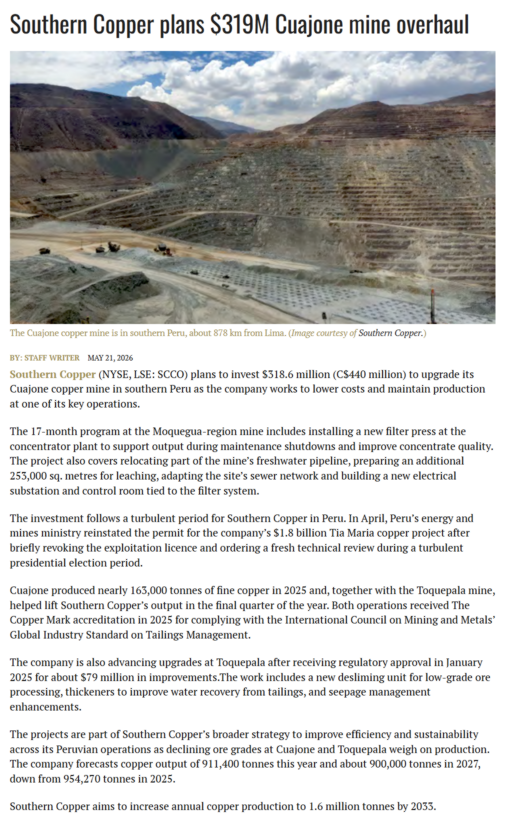
Large mines look safe: production, infrastructure, history, cash flow, familiar names. But that can also be the trap. Once an asset has already become a giant, much of its value is often already understood by the market. After that come other problems: declining grades, expensive upgrades, water issues, permitting delays, community review, and the constant fight to simply maintain output.
Wilmac in British Columbia sits in a very different part of that cycle. NovaRed Mining is not where the market is already calculating an old production base. It is where early copper-gold optionality is still forming: a large land position, technical signals, district context, and MetalCore as a data-driven layer for understanding mineral opportunities faster.


Early exploration works differently. Here, the market is not paying for an old production base — it is looking at what can still be uncovered. Claims, maps, soils, geophysics, structural trends, and drilling targets can create a different kind of asymmetry: the mine is not built yet, but that is exactly why a strong technical update can quickly change how the story is perceived.
Wilmac has the scale this structure needs. The project covers approximately 16,078 hectares in the Quesnel porphyry belt, about 10 km west of the producing Copper Mountain Mine. That equals around 160.8 km², or nearly 39,700 acres. For CSE: NRED, this is room not for one point on a map, but for a broader copper-gold target-generation process.
The early copper markers add texture. At North Lamont, 9 soil samples above 150 ppm Cu were referenced, with values of 157, 169, 175, 179, 227, 237, 265, 323, and 379 ppm Cu. The average value for this group was 209 ppm Cu. In the historical 3DIP/AMT context, 2 intrusive centers, pipe-like porphyry targets, and copper-in-soil values of up to 1,125 ppm Cu were also mentioned. These numbers matter at the early stage because they help separate random anomalies from zones that could become the next targets.
MetalCore adds something this old mining cycle often lacks: faster work with data. According to Yahoo Finance / Newsfile, the company filed Non-Provisional U.S. Patent Application №19/680,101 for an AI-driven mineral evaluation and transaction management platform. The filing date was May 21, 2026. The platform is described through integrated geological data, probabilistic scoring, parcel-level mineral evaluation, transaction management, and document verification.
Betting only on large mines may look safer, but it does not always offer the most interesting upside. In mature assets, the market often pays for what is already known. In early copper-gold stories, the market looks at what can still be discovered: new zones, new targets, new drill results, and a new understanding of the system.
That is why NREDF reads interestingly through Wilmac, British Columbia, copper-gold scale, and MetalCore. If copper demand continues growing through AI, grids, electrification, and robotics, the market will need more than old mines with expensive upgrades. It will need a pipeline of new ideas — and that is where early exploration can look much more alive.
DYOR. This is sector commentary, not financial advice; the author does not hold a position in NREDF.
메타데이터
- post_id
- ec2f4f595fd9
- slug
- is-the-market-looking-at-big-copper-mines-too-late-ec2f4f595fd9
- url
- https://medium.com/@yong-zittlow043/is-the-market-looking-at-big-copper-mines-too-late-ec2f4f595fd9
- canonical_url
- https://medium.com/@yong-zittlow043/is-the-market-looking-at-big-copper-mines-too-late-ec2f4f595fd9
- author_url
- https://medium.com/@yong-zittlow043
- status
- ok
- fetched_at
- 2026-06-09 15:37:30




