The small city car: praise of compactness and urban zero friction
Since I swapped my big car for a compact city car, every trip confirms it: the small car is the right format. Thirty-second parking…
The small city car: praise of compactness and urban zero friction
Since I swapped my big car for a compact city car, every trip confirms it: the small car is the right format. Thirty-second parking, manoeuvring through Roman lanes, real economics, and a coherent urban aesthetic. A field report from Brussels to Osaka.
Published on 1 July 2026•by Gabriel Goldberg•11 min read
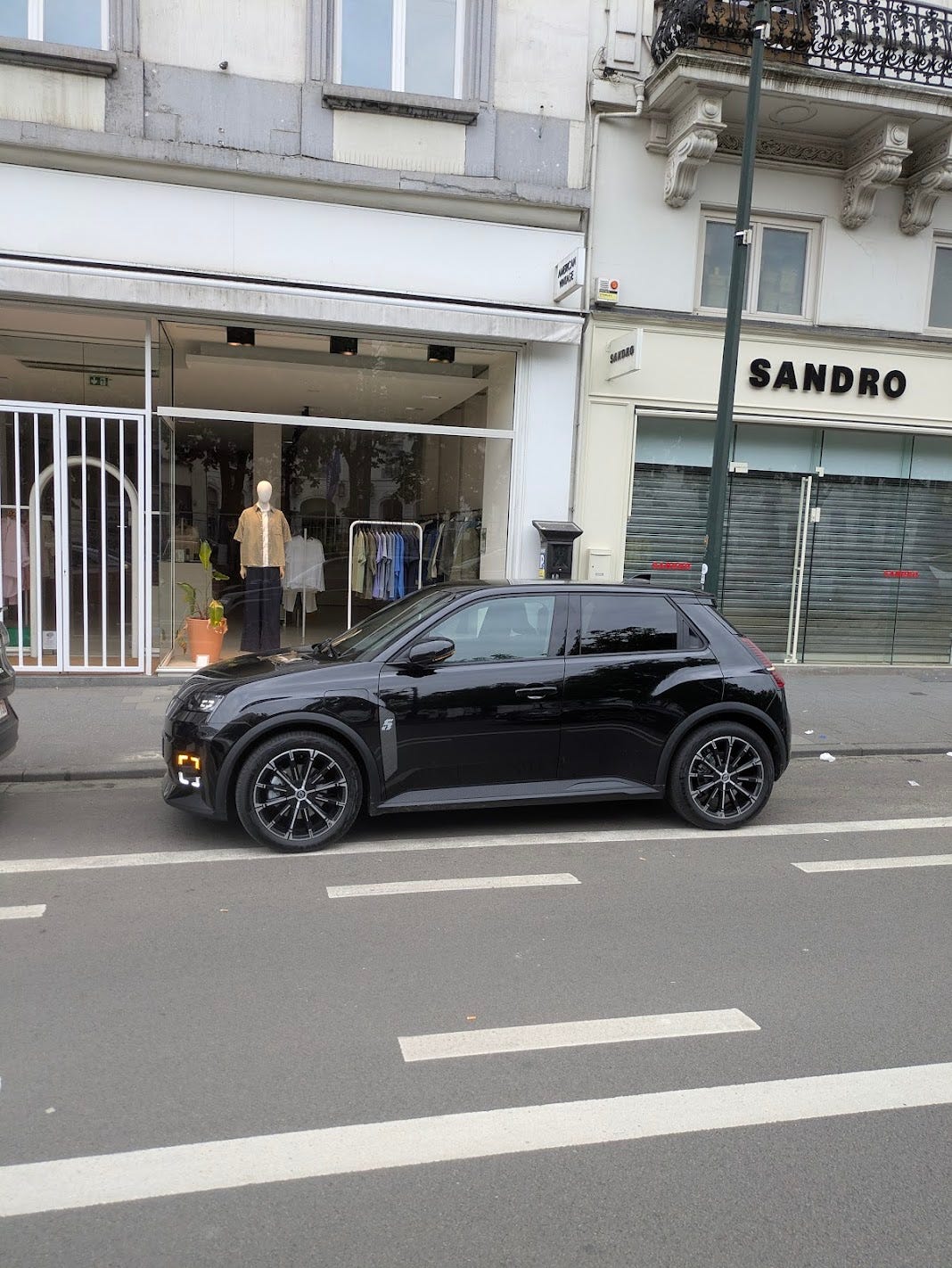
A few months ago, I made a decision that many, in my circle, watched with polite perplexity: I traded my big car for a small one. Not a crisis decision, not a renunciation — a shift. Since then, every city trip confirms the same thing: the small car is not a compromise. It is the right format. The only one that truly makes sense in a 21st-century European capital.
This article is a plea, but not an ideologue’s plea. It is a field report — Brussels daily, Rome and Jerusalem as getaways, Paris and Osaka as observation — on what actually changes when you swap a large SUV, a family sedan, or a German estate for a compact city car. What changes is almost everything: the relationship to time, aggression at the wheel, connection to pedestrians, even the way you approach a city.
1. The trigger: why I returned the big one
The long version, I’ve told elsewhere. In my Renault 5 E-Tech choice over the Alpine A290, I go into the technical process: range, AmpR Small platform, OpenR Link, trim trade-offs. In The End of the Car as a Status Symbol, I lay out the cultural frame: we no longer drive to be seen, we drive to arrive. And in The New Snobbery of Zero Friction, I describe that quiet shift where elegance is no longer measured by hood volume, but by the ease with which you glide through a day.
The trigger itself was stupid and brutal: a Monday morning, Avenue Louise, fifteen minutes circling for a spot. My previous car — a comfortable, beloved, indefensible sedan — stubbornly refused to slot into the parallel spaces of the neighbourhood. On the way home, I calculated the number of hours per month spent “looking”. The result disgusted me. Three weeks later, the small one was delivered.
2. Parking in thirty seconds: the real revolution
You have to have lived this shift to understand it. A car under 4 metres — the Renault 5 E-Tech is 3.92 m, the Mini Cooper 3.86 m, the Fiat 500 3.63 m — changes the parking game in Brussels, Paris, Rome or Amsterdam in an almost caricatural way.
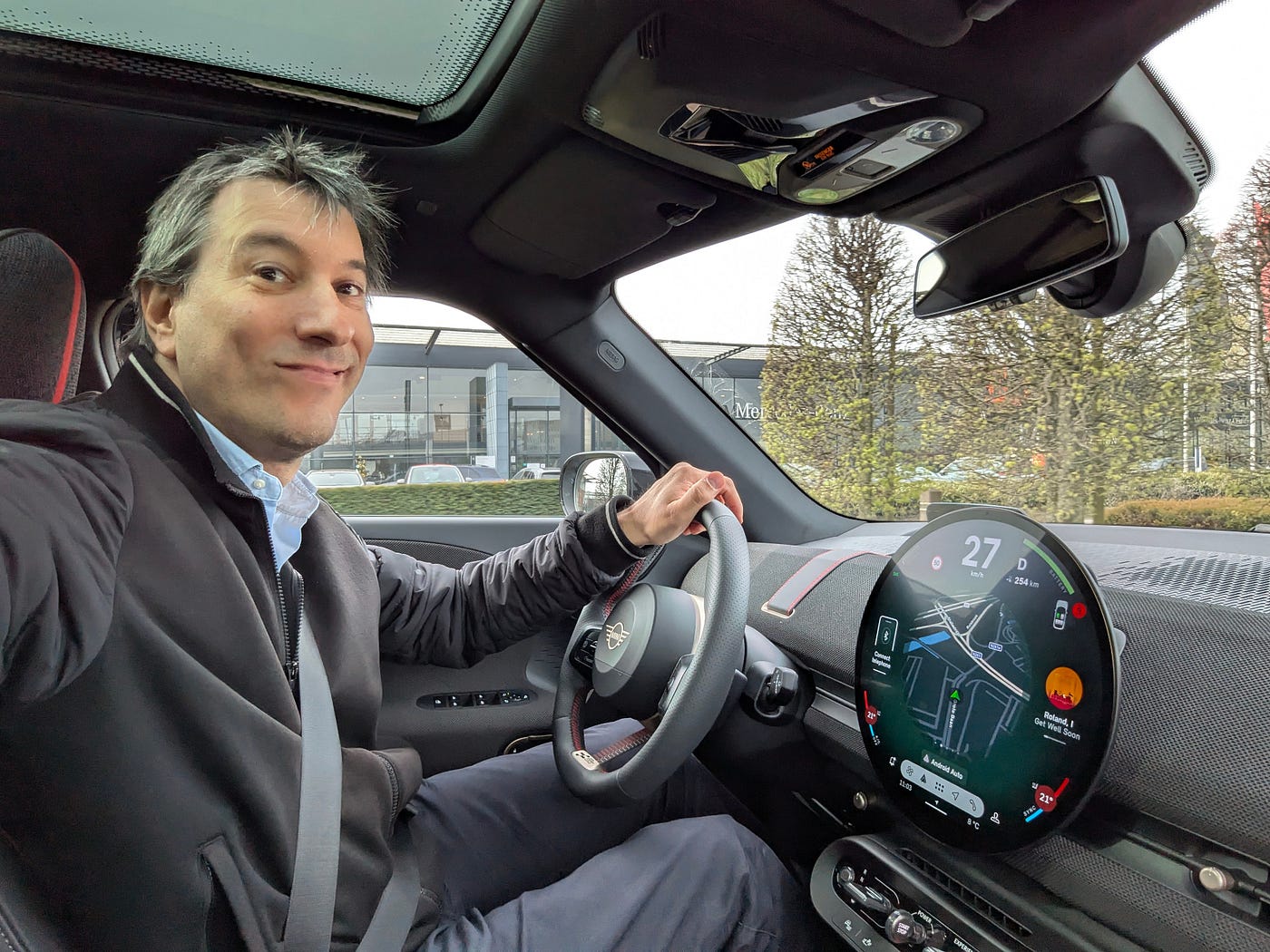
The spaces between two cars that, yesterday, refused you become trivial. The “bastard” slots — 4.20 m ones that forced you to half-encroach, spots wedged between a pole and a sorting container — open up. Underground car parks, whose helical ramps were calibrated in the 1970s for cars 1.60 m wide and 4.20 m long, become comfortable spaces again instead of anxiety-inducing corridors.
This is not anecdotal. On an annual scale, in Brussels, I save — I’ve calculated — about 40 hours. Forty hours of life recovered, purely on parking. That’s a long weekend. That’s a language course. That’s a book a month.
3. Manoeuvring through historic centres: Rome, Jerusalem, old Europe
The second gain, less measurable but equally structuring, is the ability to enter the narrow lanes of old cities without tensing up. A few weeks ago in Rome, as I was wrapping up my culinary series on Roman cooking, I witnessed the following: a yellow Citroën 2CV gently rolling up a Trastevere lane 2.80 m wide, between the angled scooters and the tables of a trattoria.
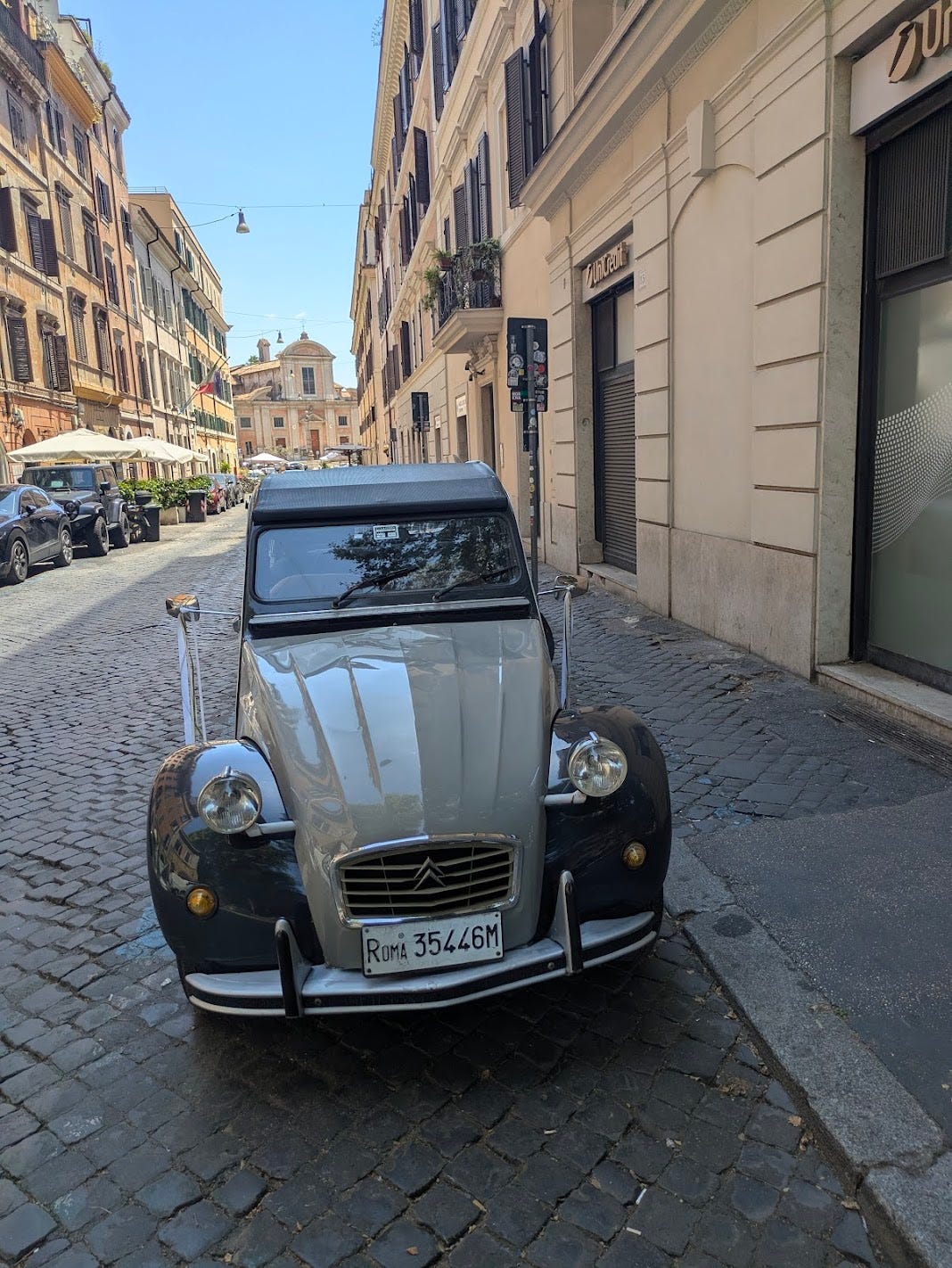
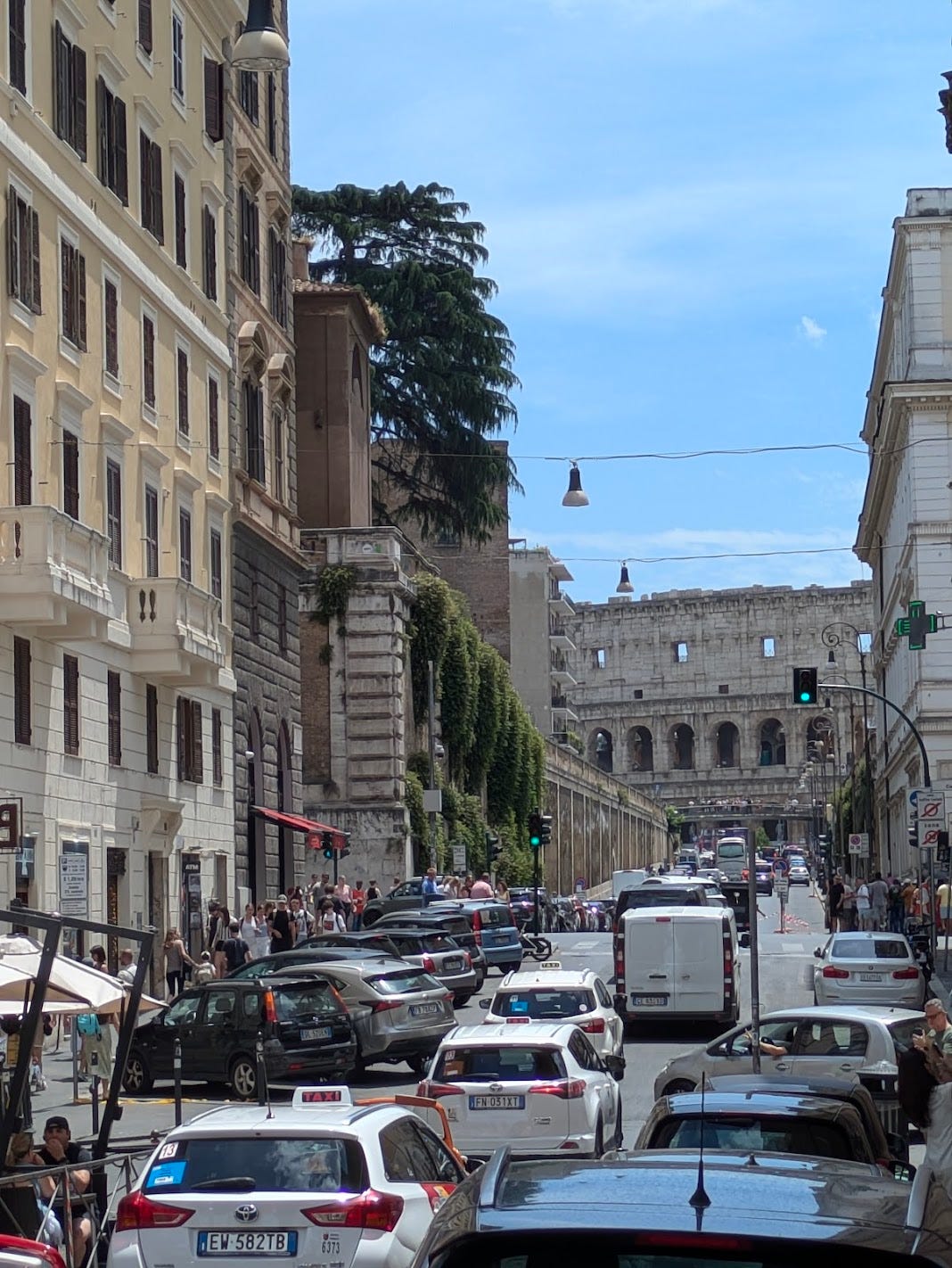
Rome has no choice: the city drives small because the city is small. The ancient layouts, medieval walls, the cardo and decumanus stacked for twenty-five centuries impose lane widths no modern planner would dare draw. Italians have always understood — the Fiat 500, the Panda, the 126, the new Cinquecento — and their manufacturers have never deviated.
Same experience in Jerusalem, where I recently drove along the Ottoman walls in a small Mazda rental. The gates of the Old City, the Armenian alleyways, the improvised parking spots along the ramparts: everything is calibrated for 3.80 m. A modern D-segment sedan, 4.80 m long and 1.90 m wide, is a geographic aberration in such contexts.

4. The Champs-Élysées and the quiet revenge of the Fiat 500
One afternoon in Paris, walking up the Champs-Élysées, I watched the traffic. The photo below is no accident: it is the average flow. A Fiat 500, a Mini, an R5, a Peugeot 208. SUVs still exist, but they have become the visual exception on France’s most prestigious avenue. The quiet revenge of small cars arrived from the top: wealthy Parisians drive Fiat 500e or top-trim R5, not X6.
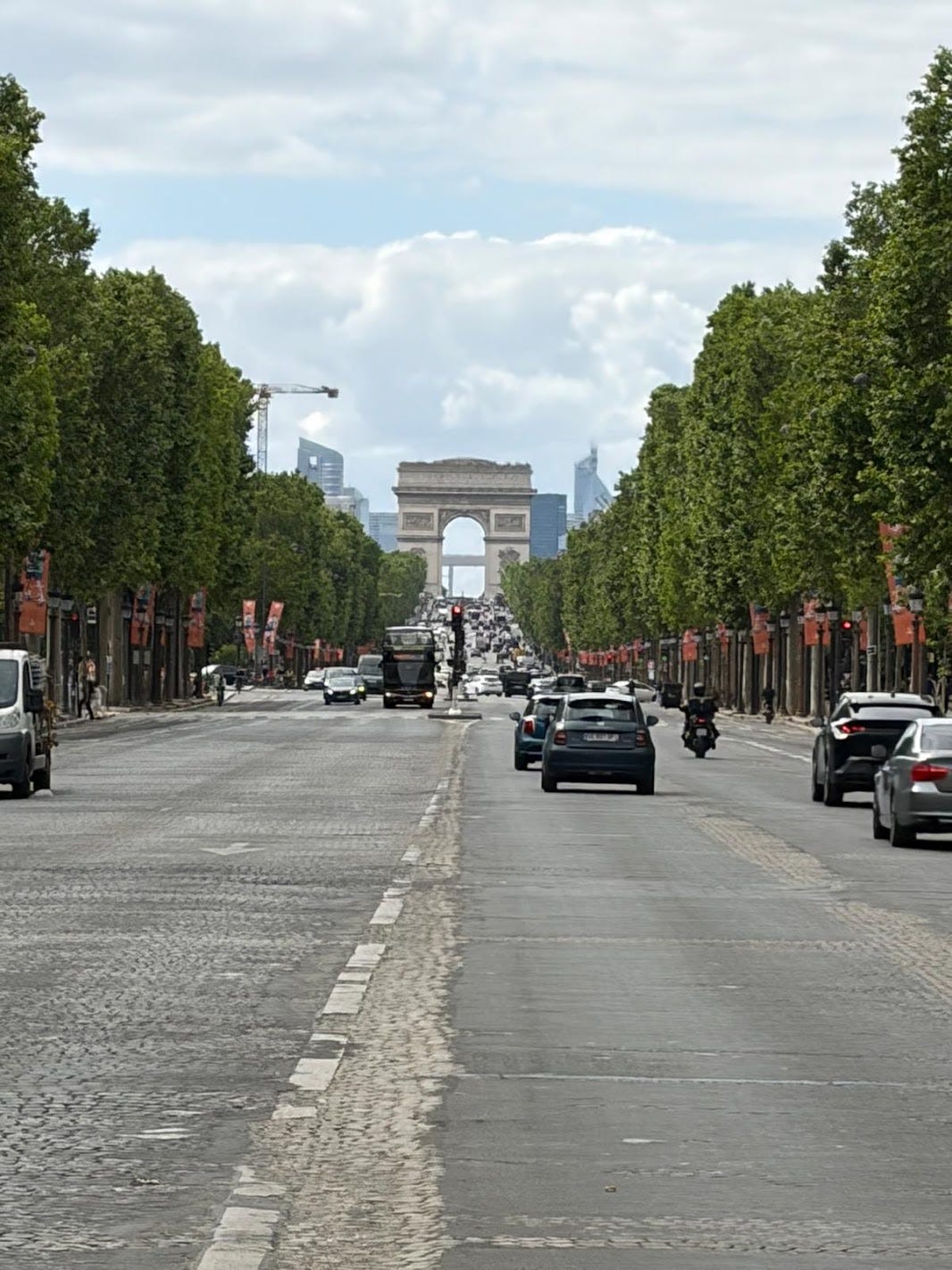
This shift, I described it in The New Snobbery of Zero Friction: distinction today is no longer signalled by display but by agility. An executive arriving at a Saint-Germain meeting in a black R5, parked effortlessly, sends a stronger social signal than the one who rolls up in a Range Rover and takes ten minutes to extract themselves from a spot.
5. The radical example: Osaka’s karts and the scale question
You have to go to Osaka to understand how far the logic of small motorised mobility can be pushed. There, fleets of road-legal karts — the famous tourist “Mario Karts”, in reality 800 cc mini-buggies — circulate among Toyotas and Lexuses. Absurd, yet perfectly legal, perfectly functional.
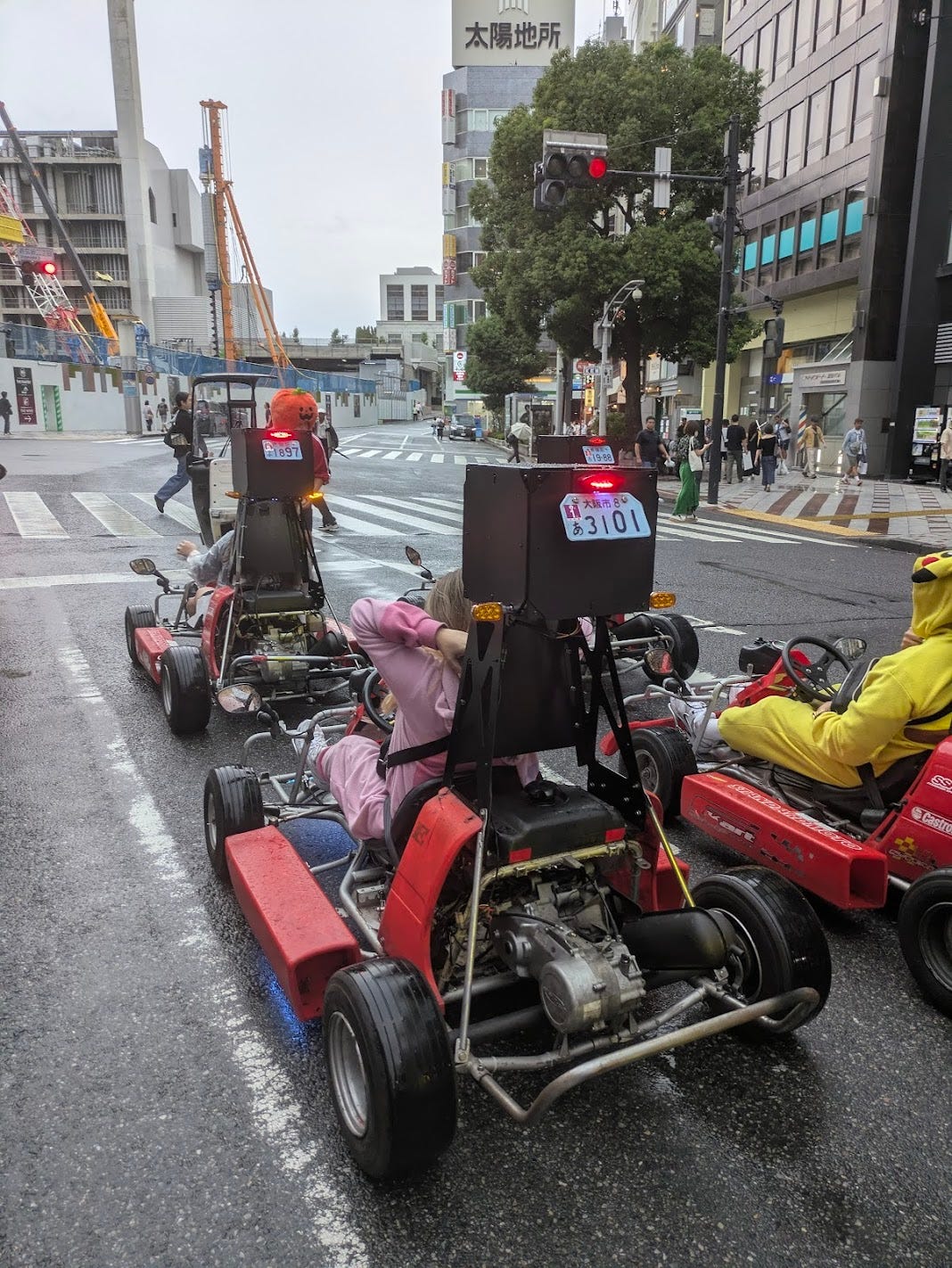
Not a model to copy — passive safety concerns are real. But empirical proof: the dense city never demands big cars. It demands vehicles able to fit in, turn, and park. Everything else — power, ground clearance, length — is a cultural inheritance of the 1990s family car, thoughtlessly transposed into an urban context that no longer wants it.
6. The allies: R5, Mini, Firefly and the new electric generation
The great news of the current period is that the small car is no longer an economic punishment. It has become, on the contrary, the technological showcase of manufacturers. The Renault 5 E-Tech, the new-generation electric Mini Cooper, the Firefly (Nio group’s premium brand dedicated to compact Europe) share the same premise: put the best of the brand into the smallest possible format.
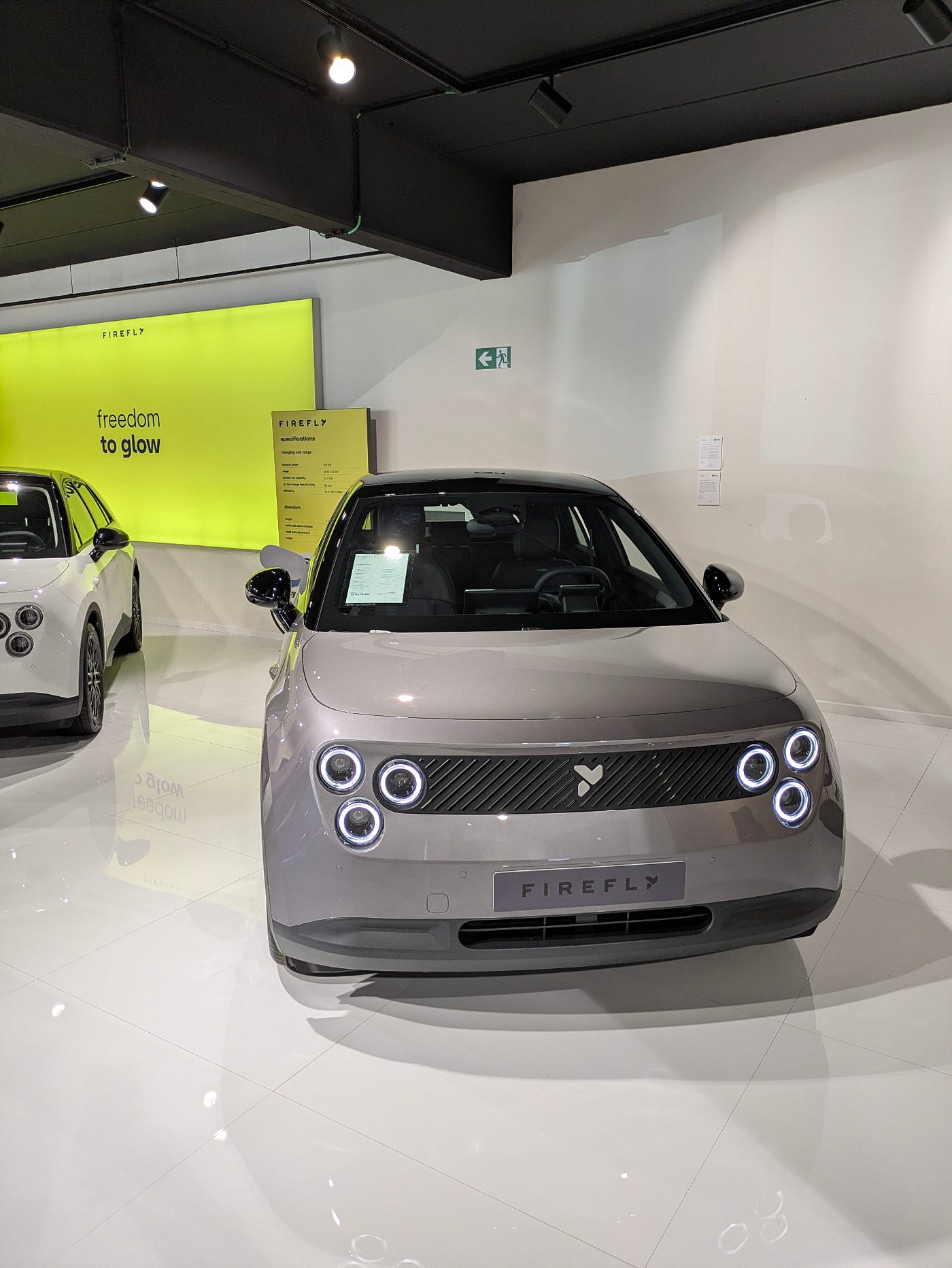
This convergence is no accident. It echoes the thesis defended in Geely, the quiet empire: the groups currently pulling the market — Renault, Stellantis, Geely, BYD, Nio — have understood that the urban electric car is the matrix of the next decade of European mobility. They deploy their best designers (Gilles Vidal at Renault, Oliver Heilmer at Mini, Kris Tomasson at Nio) and their best software engineers there. The large combustion sedan is now a management object, no longer a conquest one.
Add to this a climate factor: as I recalled in the acceleration of electric mobility in Europe, small vehicles lose less relative range in winter than oversized batteries. The weight/frontal-area/consumption ratio plays in their favour, even at −5°C.
7. The real economics: what the small car returns, every month
Let’s get concrete. My switch translated, over a year, into:
- Insurance: −38% (electric segment B vs premium sedan)
- Consumption/charging: about €4.50/100 km at home, vs €12/100 km of 95 petrol
- Maintenance: virtually zero (no oil change, no clutch, brake pads lasting 4× longer thanks to regenerative braking)
- Brussels regional incentive: eligible on this segment, provided you scrap a Euro 5 or lower vehicle
- LEZ zones: guaranteed access to all European low-emission zones, including the future 2030 Paris bans
In use, the car pays itself off structurally faster than an equivalent sedan. It also depreciates more slowly, because it is demanded by a broad market (young drivers, urban families, couples’ second vehicles). This is prudent-father reasoning, not green ideology.
8. The classic objection: “and for road trips?”
It comes up in every conversation. My answer is always the same: the modern small car covers 400 to 500 km in one leg. It has a folding rear bench opening 1,000 litres. It goes everywhere, including the Italian ridge roads or the Greek agios I describe in my recent notebooks. And for the rare true big trips — a move, a family ski with six — there is short-term rental, which costs a few hundred euros a year and unloads dead weight all year round.
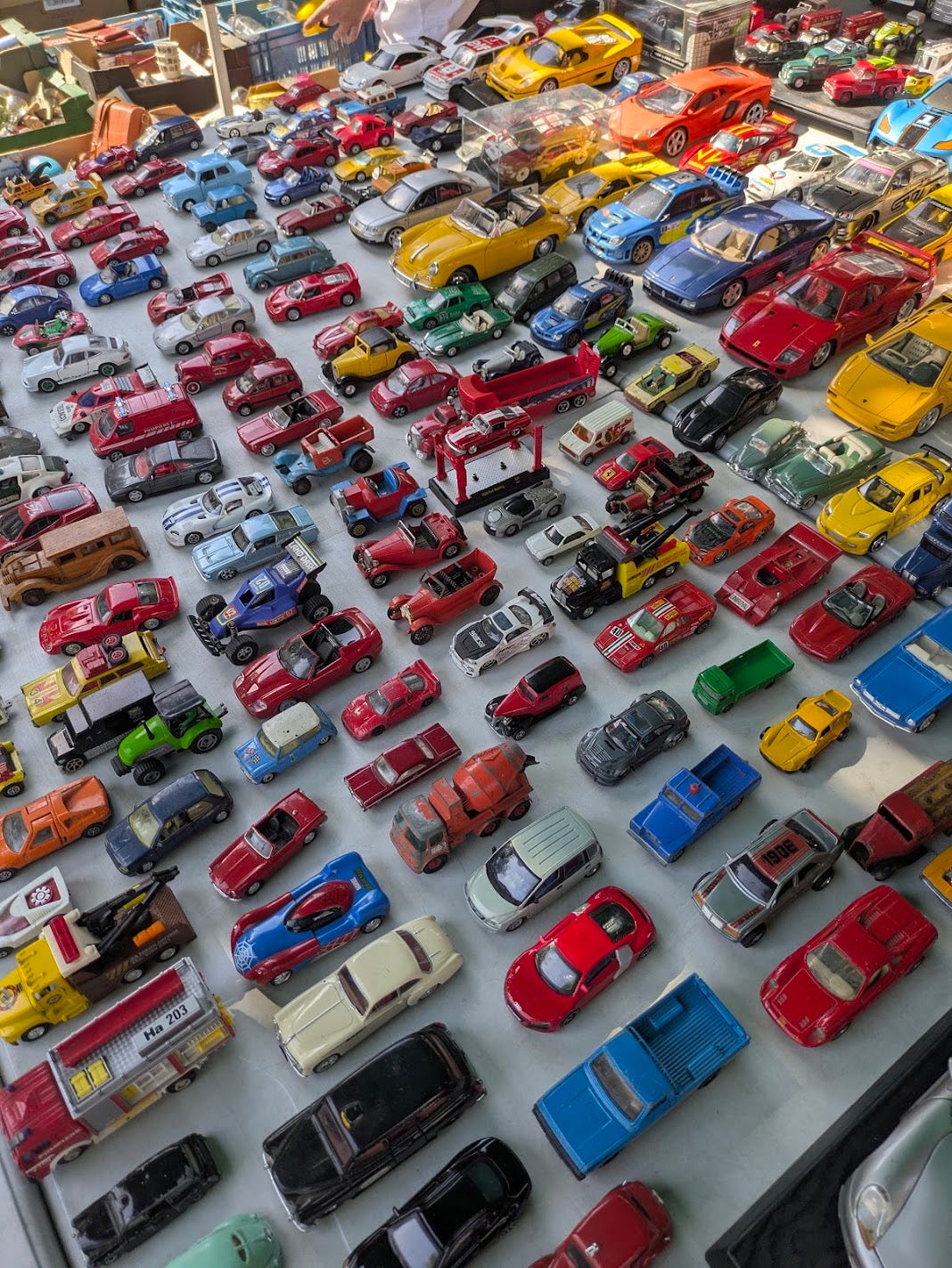
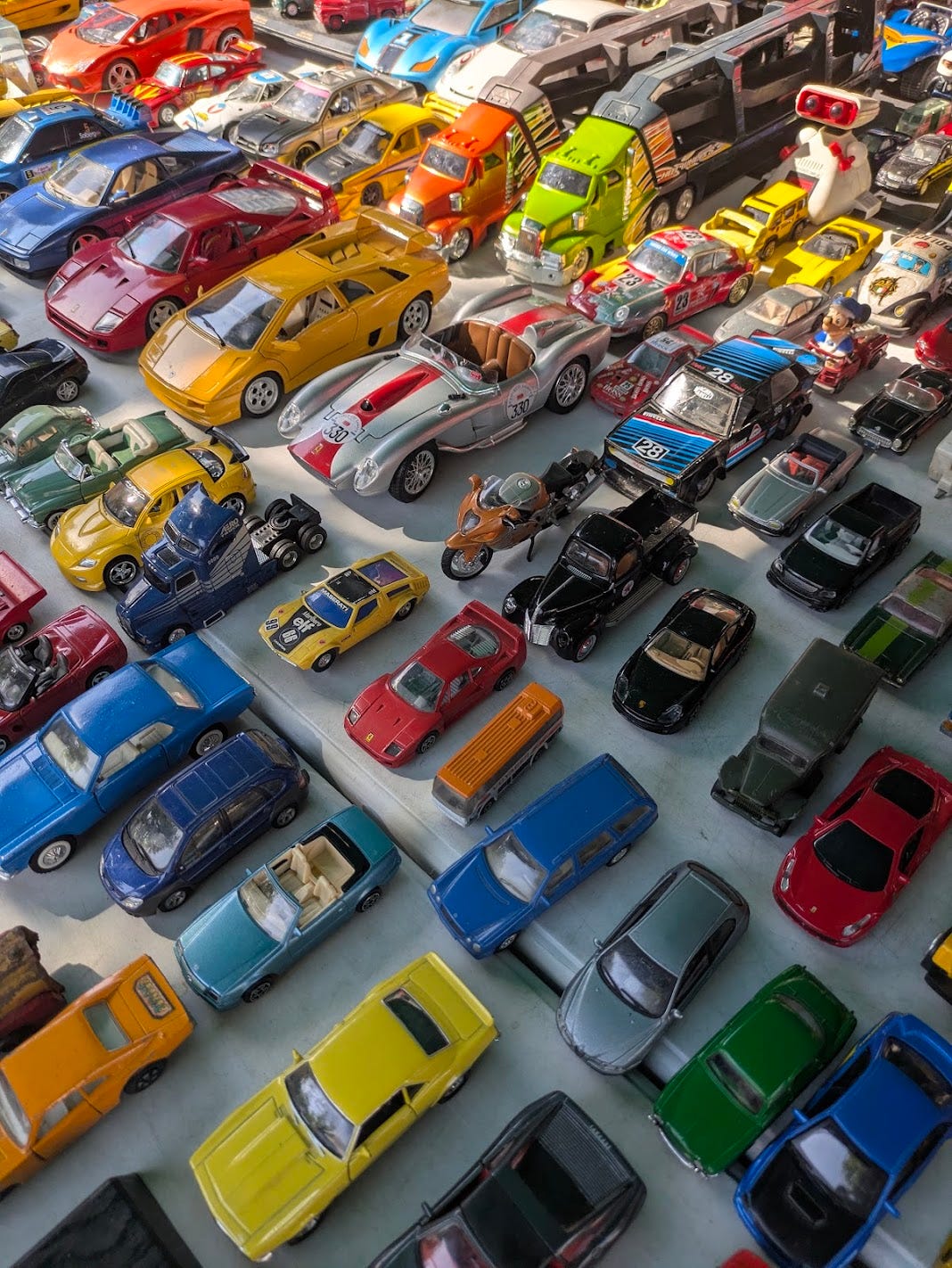
This “size for the real use, rent for the exception” logic is the true good calculation. It also joins the logic of the scooter as the ultimate weapon in town: you don’t take a van to fetch the bread. You take the right format for the right task.
9. What you gain, without noticing
After several months, the real surprise isn’t in the numbers. It’s in the relationship to the world. You drive less aggressively, because you no longer need to impose your mass. You look at pedestrians differently, because you are no longer, literally, above them (SUVs have created a generation of drivers who look down on children at head height). You accept delays better, because parking is no longer permanent stress. You travel lighter, because the boot demands it.
And above all, you rejoin a coherent urban aesthetic. A city like Brussels, Paris or Rome was not designed for 2-tonne blocks. Each small car replacing a big SUV releases, literally, a few cubic metres of city. It is a micro gesture, but added to millions of others, it is what makes a 21st-century capital breathable. It is also consistent with my case elsewhere for the cargo bike as premium family mobility and gentle winter mobility in Europe.
Going further: the mobility series
This article joins a broader cycle on our shifting relationship with the car. For context: my technical choice of the R5 E-Tech, the end of the car as symbol, zero friction as the new luxury, the urban scooter, the Geely empire and electric in winter. Together they sketch a thesis: premium urban mobility now plays out through smart miniaturisation, not tonnage accumulation.
Frequently asked questions
What is the maximum size to really call it a “small car” in town?
The practical threshold sits around 4 metres long and 1.80 m wide. Below that, all Brussels, Paris or Rome parallel spots are accessible. Above, you enter the compact C segment (VW Golf, Peugeot 308), still manageable but losing the decisive parking advantage. The R5 E-Tech (3.92 m), the Mini (3.86 m) and the Fiat 500 (3.63 m) sit in the sweet spot.
Is a small car really safe in a crash?
Yes, provided you pick a recent model. The R5 E-Tech, the 2024 Mini Cooper and the Peugeot e-208 earn 4 or 5 Euro NCAP stars thanks to reinforced cells, curtain airbags and driver-assistance systems (autonomous braking, lane assist) equivalent to premium sedans. The “tin can” myth dates back to the 1990s.
Is an electric city car’s range enough for extra-urban trips?
The R5’s big battery (52 kWh) offers 410 km WLTP, roughly 320 km real-world at 120 km/h. That is Brussels–Paris in one leg, or Brussels–Amsterdam with a coffee stop. For longer trips, fast charging (100 kW) and native Google Maps planning make the exercise trivial. Full detail in my R5 vs Alpine A290 comparison.
Must one go electric to benefit from these advantages?
No. Format advantages (parking, agility, insurance savings) apply to any small car, be it combustion, hybrid or electric. Electric adds a use advantage (silence, instant torque, per-kilometre cost divided by three) and a regulatory one (guaranteed access to low-emission zones). But a hybrid Fiat 500 is still an excellent entry point for those without a home charger yet.
What if you have a family of four or five?
The R5, Peugeot e-208 or 5-door Mini comfortably accommodate a family of four for daily urban use. For long holidays, two strategies: either a small trailer (allowed on most city cars, up to 500 kg), or renting an MPV for the two or three weeks a year when needed. This size-for-daily-use, rent-for-exception logic is exactly the one defended in The New Snobbery of Zero Friction: you no longer buy the exceptional, you rent it.
메타데이터
- post_id
- ec2f73d5e8f0
- slug
- the-small-city-car-praise-of-compactness-and-urban-zero-friction-ec2f73d5e8f0
- url
- https://medium.com/@gabsous/the-small-city-car-praise-of-compactness-and-urban-zero-friction-ec2f73d5e8f0
- canonical_url
- https://medium.com/@gabsous/the-small-city-car-praise-of-compactness-and-urban-zero-friction-ec2f73d5e8f0
- author_url
- https://medium.com/@gabsous
- status
- ok
- fetched_at
- 2026-07-08 04:28:09