Off-Scale in the North: NexGen’s $2.2 Billion Bet on a Nuclear Revival
Deep in the forests of northern Saskatchewan, drill rigs are telling a story that could reshape the nuclear fuel market — or unravel into…
Off-Scale in the North: NexGen’s $2.2 Billion Bet on a Nuclear Revival
Deep in the forests of northern Saskatchewan, drill rigs are telling a story that could reshape the nuclear fuel market — or unravel into another mining cautionary tale.
The Nuclear Backdrop
After years in the shadows following Fukushima, nuclear power is back on the policy agenda. From Washington to Brussels to Seoul, governments are looking again to reactors for clean, reliable baseload power. The war in Ukraine underscored the dangers of energy dependence, while volatile gas markets exposed how fragile the global system can be.
The International Energy Agency projects rising uranium demand as dozens of new reactors move from blueprint to construction. Spot prices, once languishing below $20 per pound, now hover in the $60–70 range, with long-term contracts pushing higher. Yet supply remains tight. Major producers like Kazakhstan’s Kazatomprom have flagged looming shortfalls, reminding utilities that the world’s spare capacity is thinner than it looks.
Into this environment steps NexGen Energy, a Canadian developer whose story could either deliver the West a new pillar of supply — or fade into the archives of mining dreams that never made it past the drill rig.
Arrow: The Giant in Waiting
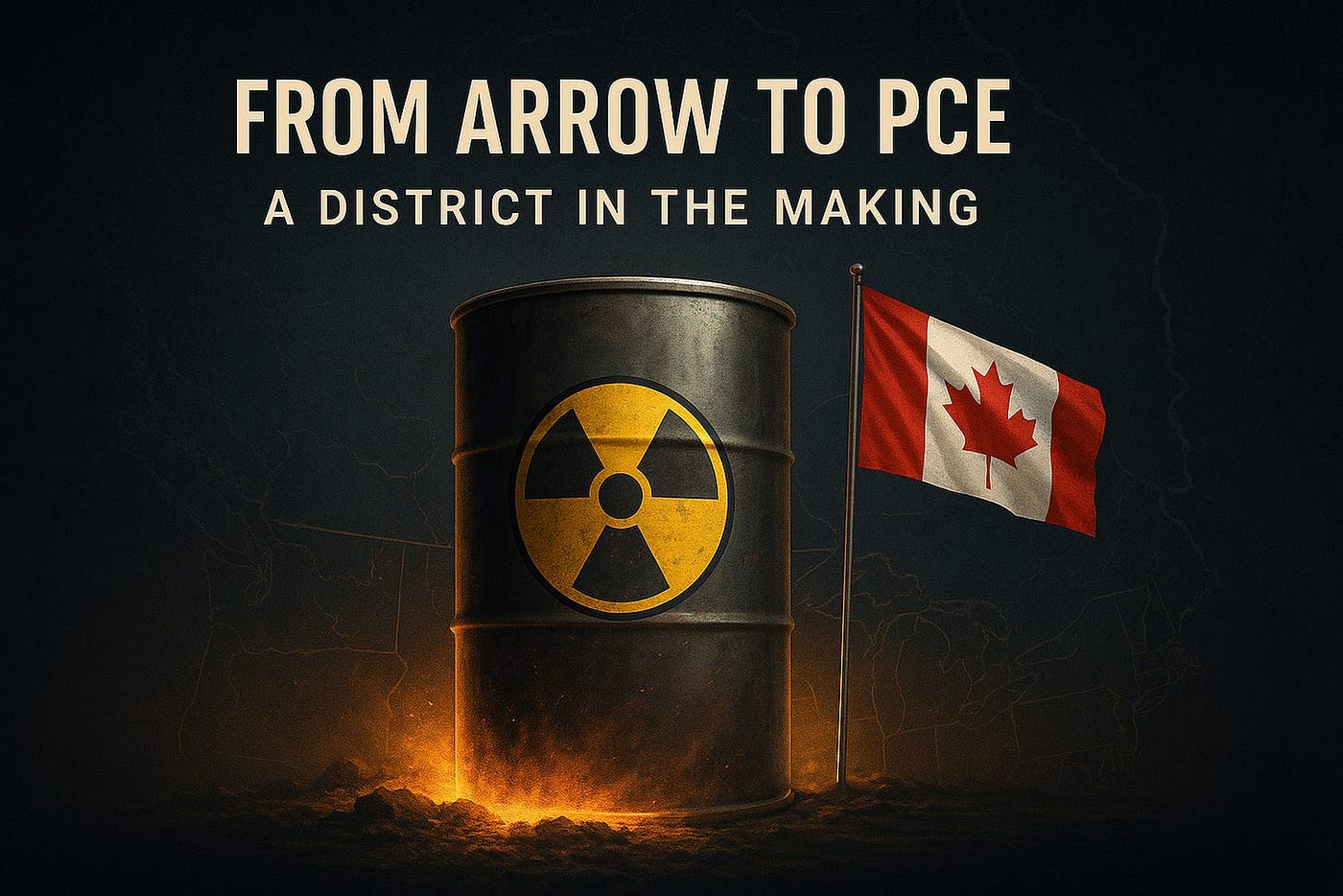
NexGen was founded in 2011, during the depths of a uranium bear market, by Australian geologist Leigh Curyer. Few in the industry were optimistic then; Fukushima had crippled sentiment and money was scarce. But Curyer made a contrarian bet on Saskatchewan’s Athabasca Basin, home to some of the world’s richest uranium deposits.
In 2014, NexGen’s gamble paid off: the Arrow discovery. What began as promising drill holes soon expanded into one of the largest undeveloped uranium deposits in the world. Arrow now boasts over 330 million pounds of measured and indicated resources, with grades above 2% — ten times the global average.
The company’s feasibility study envisions a 1,300-ton-per-day underground mine and on-site mill, producing nearly 30 million pounds per year in its first five years, at life-of-mine costs of just C$13.86 per pound. The price tag: C$2.2 billion. Federal hearings with the Canadian Nuclear Safety Commission are scheduled for late 2025 and early 2026, a pivotal step toward construction approval.
Arrow alone would be enough to make NexGen one of the most important new uranium suppliers in decades. But the company has kept drilling.
Patterson Corridor East: A Second Storyline
Just three and a half kilometers from Arrow, NexGen’s rigs have been testing Patterson Corridor East (PCE). In August 2025, they reported something that made industry veterans sit up: drill holes that maxed out their radiation meters.
Geologists call it “off-scale” — the handheld tool caps at 61,000 counts per second, and the rock was hotter than the instrument could measure. While not a substitute for lab assays, it is the kind of early signal that has heralded Athabasca’s biggest discoveries.
PCE’s best assay to date already stands out: 15 meters grading 15.9% U₃O₈, shallow by regional standards at around 450 meters depth. Out of 79 holes drilled since discovery in 2024, 14 have intersected off-scale mineralization. NexGen says the geometry suggests multiple high-grade shoots roughly 70 meters apart, with mineralization open in several directions.
For investors and utilities alike, the implication is clear: PCE might not just be an interesting satellite. It could be another Arrow.
The Challenge of Building
NexGen’s opportunity is enormous — but so are its hurdles.
First is financing. Raising more than C$2 billion for a company with no revenue is daunting. NexGen will need a mix of equity, debt, and, most importantly, long-term offtake agreements with utilities. Those contracts, which can stretch for decades, are the bedrock of nuclear mine financing.
Second is permitting. Canada is a stable jurisdiction, but uranium projects face intense scrutiny. The federal hearings in late 2025 and early 2026 will determine whether Arrow can move forward. Delays or additional requirements could ripple across timelines.
Third is execution. Arrow’s design is ambitious. Even Cameco’s flagship mines faced technical setbacks — Cigar Lake’s water inflows, for example, stalled production for years. For NexGen, any misstep in development could erode the trust it is trying to build with utilities.
Too Valuable to Leave Alone?
Arrow plus PCE represents more than just geology. It is a strategic chess piece.
Cameco and France’s Orano dominate Tier-1 Western uranium supply. Their advantage was built not just on giant deposits, but on district control — multiple mines feeding centralized mills. If PCE proves itself, NexGen would control a similar franchise.
That raises the question: will NexGen remain independent, or be absorbed into the old order?
If independent, NexGen becomes a third heavyweight, reshaping the supply landscape and giving utilities a new contracting partner. If acquired, Cameco or Orano tighten their grip on Athabasca, and utilities lose a valuable alternative.
The timing matters. If NexGen secures contracts as an independent during the 2025–27 contracting wave, it becomes harder — and more expensive — for a major to take them out. That creates a narrow window for M&A.
Utilities: The Buyers Who Matter Most
For investors, M&A speculation drives headlines. For utilities, the consequences are more practical.
If NexGen remains independent, utilities gain leverage. More suppliers mean more competitive contracts, better pricing, and greater security. If NexGen is acquired, concentration tightens, bargaining power shifts, and producers hold more of the cards.
Either way, utilities will be watching Arrow’s hearings and PCE’s assays closely. To them, this isn’t about share price. It’s about whether Canada will offer decades of additional secure supply.
The Countdown
All the threads converge in the next 24 months:
- Late 2025: first batch of assays from PCE step-out holes.
- Nov 2025 & Feb 2026: Arrow’s federal hearings.
- 2025–27: utilities lock in contracts for the 2030s.
- 2026: potential maiden resource at PCE.
The overlap creates a moment of maximum tension. By 2027, NexGen will either be on the path to building a district-scale uranium hub — or folded into the hands of the incumbents.
What It Means for Saskatchewan and Beyond
For northern communities, NexGen’s success could mean jobs, infrastructure, and revenue-sharing agreements. For Canada, it is about solidifying its place as the West’s reliable counterweight to Kazakhstan. For the global market, it is about whether supply becomes more diversified or more concentrated.
The stakes are not abstract. Utilities are already contracting volumes for reactors that will run into the 2040s. NexGen’s story will determine whether those deals are struck with a new independent supplier, or with the same old names.
The Larger Picture
History is littered with discoveries that never became mines. Financing faltered, permits stalled, or geology disappointed. NexGen’s off-scale hits at PCE are tantalizing, but they are still a beginning, not a conclusion. Arrow’s feasibility case is robust, but still awaiting regulatory blessing.
And yet, the opportunity is undeniable. A new district in Saskatchewan would not just shift the economics of uranium supply. It would reshape the balance of power in nuclear fuel markets at a time when the world is searching for security.
As the drills turn and the clock ticks toward federal hearings, the industry is left to wonder: will NexGen become Canada’s next nuclear heavyweight, or simply Cameco’s next trophy?
메타데이터
- post_id
- ec42e7b0e5da
- slug
- off-scale-in-the-north-nexgens-2-2-billion-bet-on-a-nuclear-revival-ec42e7b0e5da
- url
- https://medium.com/@johngalt88/off-scale-in-the-north-nexgens-2-2-billion-bet-on-a-nuclear-revival-ec42e7b0e5da
- canonical_url
- https://medium.com/@johngalt88/off-scale-in-the-north-nexgens-2-2-billion-bet-on-a-nuclear-revival-ec42e7b0e5da
- author_url
- https://medium.com/@johngalt88
- status
- ok
- fetched_at
- 2026-07-15 10:26:04