Winning Government Contracts Starts Long Before the Proposal
A closer look at the RFP response process used by successful contractors.
Winning Government Contracts Starts Long Before the Proposal
A closer look at the RFP response process used by successful contractors.
Most people think government contracting is about writing proposals.
It’s not.
By the time proposal writing begins, many of the decisions that influence the outcome have already been made.
The strongest contractors don’t wait for an RFP to appear before they start preparing. They understand their target agencies, track upcoming opportunities, assess their competitiveness, and build a process that allows them to respond effectively when a solicitation is released.
That’s why two companies with similar capabilities can pursue the same opportunity and achieve very different results.
One scrambles to meet the deadline.
The other executes a process.
The difference is rarely luck.
It’s preparation.
The Proposal Isn’t the Process
One misconception we see frequently among contractors is that the RFP response process begins when the writing starts.
In reality, proposal writing is only one part of a much larger effort.
Successful contractors approach government opportunities through a structured process that includes:
- Opportunity assessment
- Bid/no-bid decisions
- Solicitation analysis
- Compliance planning
- Content development
- Proposal reviews
- Final submission
Each stage affects the next.
When one stage is rushed, problems often appear later in the proposal.
Not Every Opportunity Is Worth Pursuing
One of the most valuable skills in government contracting is learning when not to bid.
It can be tempting to pursue every opportunity that appears relevant.
But proposal resources are limited.
Time is limited.
Subject matter experts are limited.
The contractors with the strongest win rates are often the most selective.
Before committing to a proposal effort, they ask questions such as:
- Does this opportunity align with our capabilities?
- Do we have relevant past performance?
- Can we offer a competitive solution?
- Do we understand the customer?
Do we have a realistic path to winning?
Sometimes the smartest proposal decision is deciding not to submit one.
The Solicitation Already Contains the Roadmap
Many proposal teams spend significant time debating strategy.
Meanwhile, the government has already provided the evaluation roadmap.
It’s inside the solicitation.
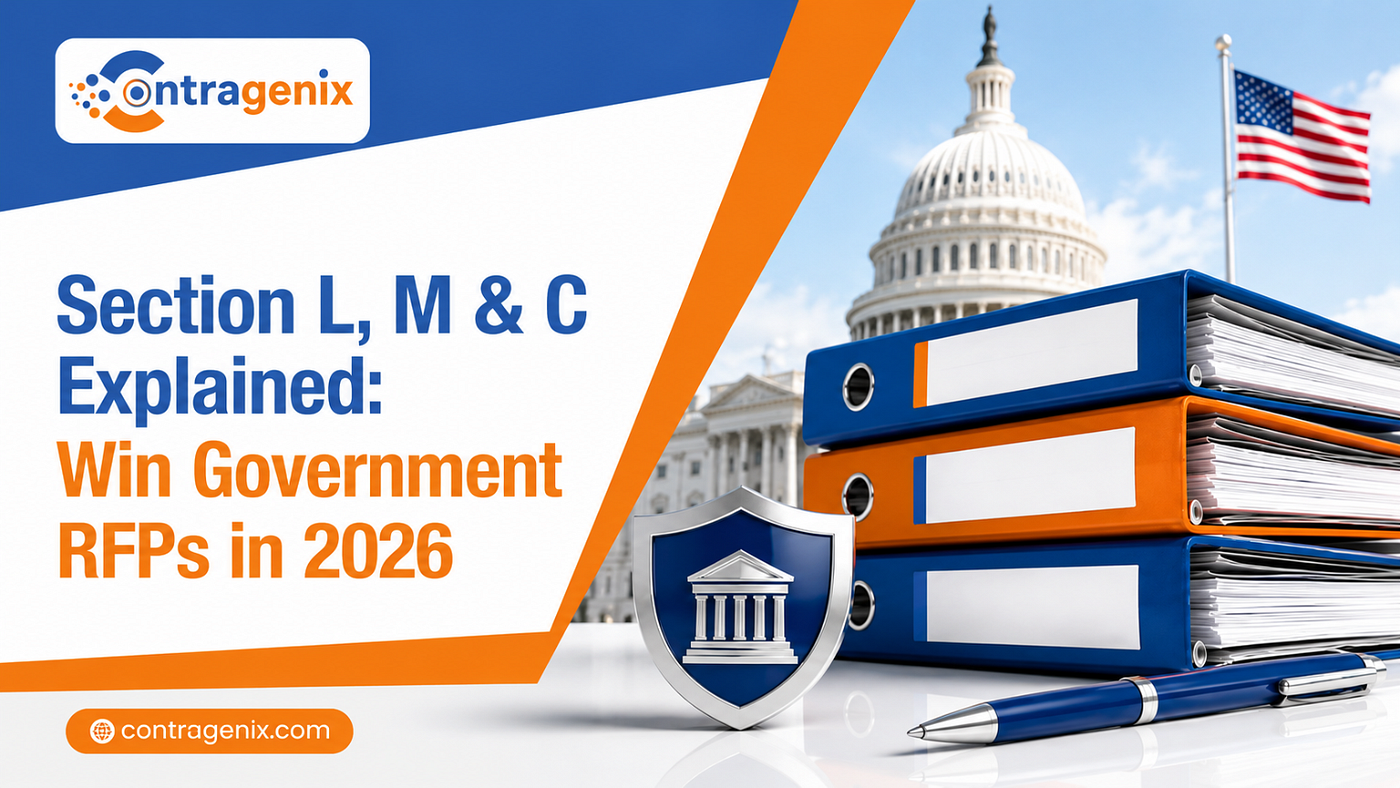
Section L explains how the proposal must be structured and submitted.
Section M explains how the proposal will be evaluated.
Yet many contractors spend more time discussing what they want to say than understanding what evaluators are actually looking for.
The best proposal teams start with the evaluation criteria and build their response around it.
Not the other way around.
Compliance Is Not a Final Check
A common mistake is treating compliance as something that happens a few days before submission.
Experienced proposal teams know better.
Compliance begins the moment the solicitation is released.
Every requirement matters.
Every instruction matters.
Every deliverable matters.
A proposal can contain an excellent technical solution and still lose because it failed to follow the solicitation requirements.
Common compliance issues include:
- Missing required documents
- Ignoring formatting instructions
- Exceeding page limits
- Failing to address evaluation factors
- Incomplete proposal volumes
These mistakes are often avoidable.
Our **government proposal compliance checklist** outlines some of the most important areas proposal teams should review before submission.
Organisation Creates Better Proposals
Many proposal challenges are actually project management challenges.
When responsibilities are unclear, deadlines are missed.
When deadlines are missed, reviews are rushed.
When reviews are rushed, proposal quality suffers.
That’s why successful contractors establish structure early.
Before writing begins, they identify:
- Proposal owners
- Technical contributors
- Review schedules
- Content deadlines
- Compliance responsibilities
The goal isn’t bureaucracy.
The goal is clarity.
A good organisation allows proposal teams to focus on developing strong responses instead of managing chaos.
Great Proposals Make Evaluation Easy
Government evaluators often review large volumes of information under strict timelines.
The strongest proposals don’t force evaluators to search for answers.
They make answers easy to find.
They clearly explain:
- What is the solution
- How requirements will be met
- Why the approach is effective
- What experience supports the solution
One misconception is that more content creates a stronger proposal.
In many cases, the opposite is true.
Clarity creates confidence.
Evaluators appreciate proposals that are easy to navigate and easy to understand.
Proposal Development Has Become a Competitive Capability
Federal solicitations continue to become more complex.
Proposal efforts often require coordination between technical teams, pricing specialists, project managers, executives, and proposal writers.
As a result, proposal development has become a specialised capability within many government contracting organisations.
Companies that invest in repeatable proposal processes often gain an advantage because they can respond more efficiently and with fewer compliance risks.
For organizations looking to strengthen that capability, our guide on proposal development for government contracts explores the processes commonly used by successful proposal teams.
Winning Starts Before the Opportunity Arrives
The contractors that consistently win government work are rarely starting from scratch when an RFP is released.
They’ve already invested time in understanding the market.
They’ve researched agencies.
They’ve tracked procurement trends.
They’ve developed relationships.
They’ve prepared resources.
By the time the solicitation arrives, they’re ready to execute.
Everyone else is still trying to figure out where to begin.
For contractors building their long-term federal strategy, understanding the broader **government contracting process** can help connect proposal efforts to overall business growth.
The Bottom Line
Proposal writing is important.
But winning government contracts requires much more than writing.
It requires preparation.
It requires discipline.
It requires a process.
The strongest proposal teams don’t rely on last-minute effort.
They rely on repeatable systems that help them evaluate opportunities, maintain compliance, coordinate teams, and submit competitive responses.
That’s why winning often starts long before the proposal itself.
For additional insights on federal procurement, proposal strategy, and government contracting, visit **Contragenix**.
Discussion
What’s the most challenging part of the government RFP response process for your team?
- Deciding whether to bid?
- Understanding solicitation requirements?
- Proposal compliance?
- Technical writing?
- Pricing?
- Internal coordination?
Share your experience in the comments. The challenges tend to vary, but the lessons are often surprisingly similar across the GovCon community.
메타데이터
- post_id
- ec54d62a94dd
- slug
- winning-government-contracts-starts-long-before-the-proposal-ec54d62a94dd
- url
- https://medium.com/@sam.fatima_72398/winning-government-contracts-starts-long-before-the-proposal-ec54d62a94dd
- canonical_url
- https://medium.com/@sam.fatima_72398/winning-government-contracts-starts-long-before-the-proposal-ec54d62a94dd
- author_url
- https://medium.com/@sam.fatima_72398
- status
- ok
- fetched_at
- 2026-07-10 03:02:36