Ren’Py from the view of modern web development
Comparing Ren’Py’s philosophy with modern web development: from layout and componentry to i18n, refactoring, and maintaining large…
Ren’Py from the view of modern web development
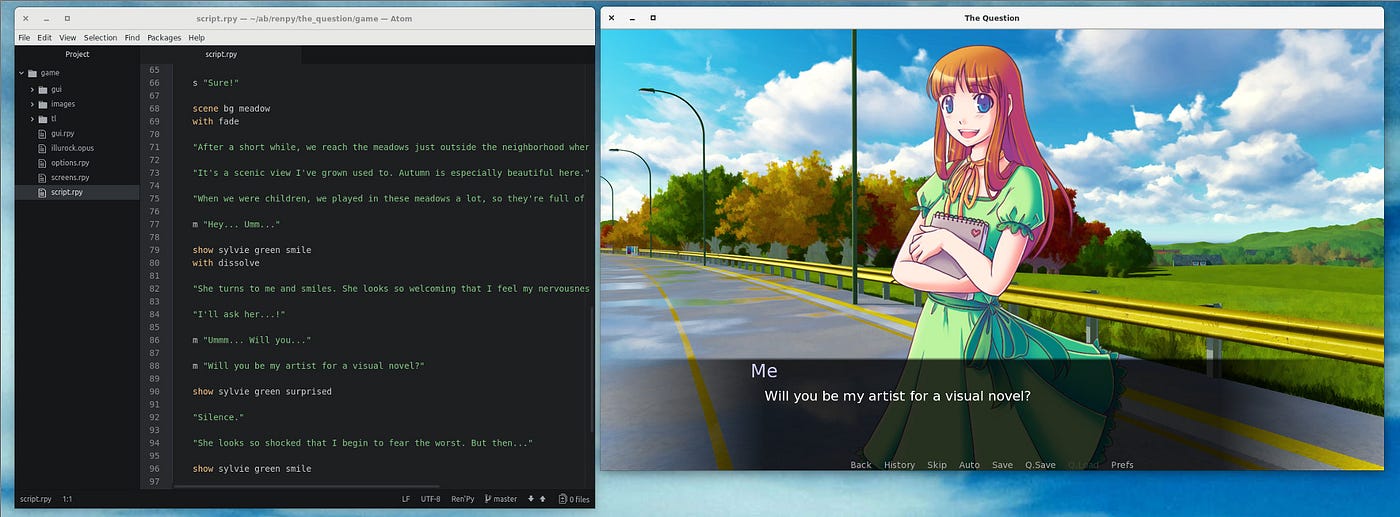
Comparing Ren’Py’s philosophy with modern web development: from layout and componentry to i18n, refactoring, and maintaining large projects.
Why People Love Ren’Py
Let’s be fair about the strengths — they explain Ren’Py’s longevity.
- Fast results. The Script language, Screen Language, and ATL let you assemble a working VN over a weekend: dialogue, choices, transitions, simple screens, animations. The barrier to entry is low — very “jQuery era”: show something on screen first, argue architecture later.
- Sharp focus. The engine is built for visual novels. Out of the box you get saves, skip, history, settings, desktop and mobile support. No need to reinvent genre staples.
- Python escape hatch. When declarative sugar isn’t enough, you can punch through the ceiling and write logic in Python. For solo creators, that’s a powerful joker.
In web terms, Ren’Py feels like “vanilla JS plus a minimal UI framework” for a single clear job. It’s lovely and quick — until you start pulling it toward “company-grade web app.”
Where the Creaking Begins: Layout and UI in Web Terms
In the web world, we expect flex/grid, genuinely responsive layout, and declarative component trees. Ren’Py’s vbox/hbox/grid/viewport/frame and styles are fine for typical VN screens, but:
- No true responsive model. Instead of media queries and auto-layout you get screen variants (like touch/small). That’s convenient at first, but it duplicates layouts and multiplies conditionals.
- Styles feel like inheritance, not CSS. Single-parent style hierarchies and style_prefix aren’t CSS cascades or utility classes. Reuse often turns into “nearly identical” styles — very pre-Tailwind/BEM vibes.
- UI state isn’t reactive. Screens are rebuilt at the start of an “interaction.” To push state changes into the current interaction you often need an explicit restart. In frontend terms, this isn’t React/Signals/Flutter setState; it’s manual lifecycle management. That invites tiny timing bugs and raises the cost of complex HUDs and overlays.
From a web developer’s muscle memory, this is a downshift: you lose display: grid and virtual-DOM-style reconciliation, and go back to careful, mostly hand-tuned layout.
Components vs. “Screens”: Architecture Without Isolation
On the web, a component is a self-contained module: markup, behavior, styles, a prop contract, encapsulation — and ideally types. In Ren’Py a “component” is typically a screen with parameters, sometimes with local default variables. Most state drifts into the global store. That’s handy (everything’s “right there”), but at scale it’s like a big shared singleton:
- weak isolation and cross-dependencies that make side effects harder to predict;
- fewer clean interfaces, trickier backward compatibility when refactoring;
- reuse is limited and variations tend to spawn copy-paste.
A component model à la React/Preact/Solid — with reusable, testable units and explicit interfaces — gives you very different control over complexity.
Refactoring: Python != TypeScript
TypeScript spoiled us: reliable “rename symbol,” autocompletion, smart LSP search, regression resistance via types. In Ren’Py:
- Core logic is spread across .rpy, mixing script, screens, and Python. Editors help, but not with TypeScript-level depth.
- Static analysis is limited: Ren’Py’s linter is a good build “sanitarian,” not a full safety net.
- The global store raises the risk of name collisions and “accidental” dependencies.
- You can move “pure” Python into separate files for better IDE support, but that still doesn’t grant type-safe refactors.
If painless refactoring is a core value of your process, the dynamic Ren’Py stack constantly demands more discipline, conventions, and human review.
Scaling and Maintenance: When a Game Becomes a Product
Short projects are fine. When asset size, screen count, and maintenance windows grow, organizational costs surface:
- Assets and memory. Large sprites, effects, and backgrounds require early asset-producing discipline (cropping, formats, profiling). “Ship and see” is a risky plan.
- Saves and compatibility. Rename structures or labels and you may break saves — especially across major updates. In web apps we rarely preserve such deep client-side snapshots, but in VNs save compatibility is central.
- Builds and updates. Desktop and Android are solid; iOS and web are more sensitive to platform details. Patchers, updaters, cross-platform quirks — all operational tasks that are easy to underestimate.
- Testing and CI. Yes, you can run lint and builds in CI. But UI/logic unit tests tend to be bespoke. Modern frontend expects Jest/Vitest, e2e, snapshots, and performance audits.
Multilingual Support: “Great for VNs,” but Not ICU/i18next
Generating translation files, placing them under tl/<lang>/, and handing them to translators is fast and understandable — perfect for classic VNs. Problems begin when you bring corporate i18n requirements:
- No ICU MessageFormat. Plurals, grammatical gender, selectors, smart date/currency formatting require branching and conditionals.
- No key-based model. Web teams live on i18next/FormatJS keys, automatic extractors, TMS pipelines, QA checks. In Ren’Py, text is text in .rpy. Teams survive with converters/scripts — but that’s custom infrastructure.
- Fonts and scripts. CJK/RTL need careful font selection and shaping. It works, but demands discipline with font coverage and fallbacks.
If localization means more than “translate text” — roles, statuses, glossaries, non-functional requirements — you’ll feel the box’s limitations.
A Quick Match-Up with Modern Web Development
Summing up through everyday frontend habits:
- UI model. React/Flutter/Godot/UIToolkit: declarative trees, differential rendering, “data → interface.” Ren’Py: manual screen lifecycle control. That affects iteration speed.
- Componentry and design systems. The web has components with contracts, Storybook docs, and design tokens. Ren’Py has screens and single-parent style hierarchies; reuse comes from discipline rather than strong tooling.
- Types and refactoring. TypeScript/C# embolden API changes. In Ren’Py, refactors are craftsmanship, not factory work — more reviews, regression checks, and conventions.
- i18n pipeline. Web relies on ICU/i18next, keys, auto-checks, and TMS integration. Ren’Py is optimized for VN authors, not enterprise localization.
- Operations. Web apps ship tiny releases; state snapshots live server-side. VNs store saves with the player, so compatibility becomes a permanent stakeholder.
Verdict: When Ren’Py Shines — and When to Look Wider
If you’re making a classic visual novel, value quick results, and work with a small team, Ren’Py remains one of the best choices. It saves months, removes genre boilerplate, and lets you focus on text, art, and branching.
If your project is drifting toward a product-grade application — complex interfaces, long-term maintenance, large-scale localization, confident refactoring, and automation — the gap with modern web culture becomes noticeable. Stacks that deliver reactivity, componentry, and types by default tend to win here.
One more thing. If you’re interested in modern text-driven games with a web mindset (React, components, types), take a look at my engine/library **react-text-game. It’s aimed squarely at interactive fiction — text-and-event scenarios with web ergonomics — and it does not* try to replace Ren’Py as the go-to engine for pure* visual novels.
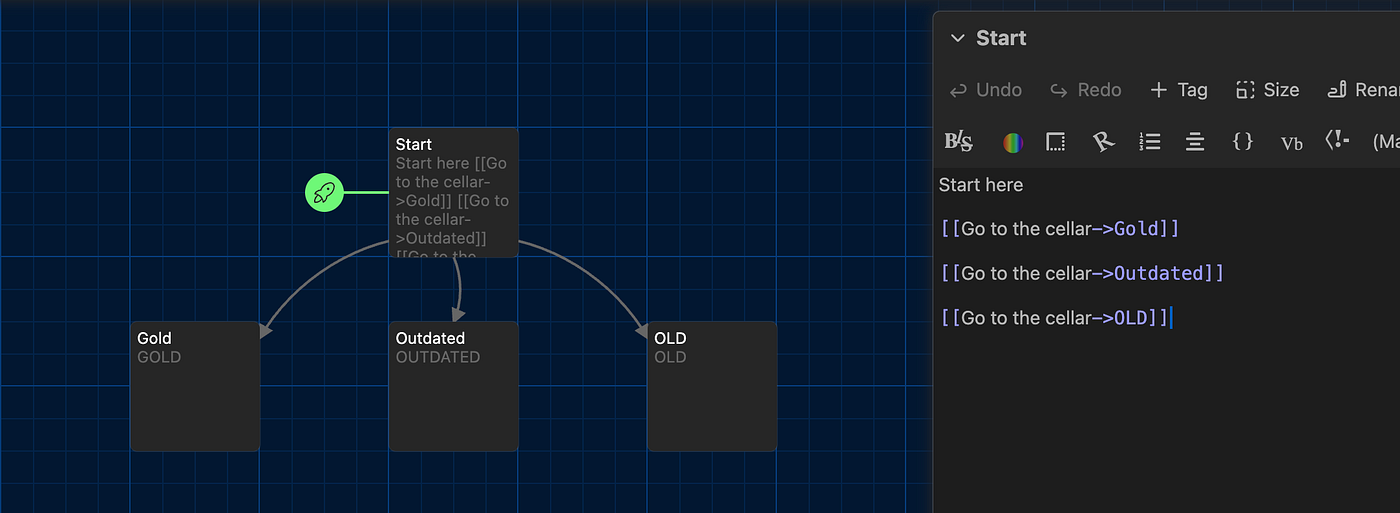
This article is part of my ongoing series reviewing modern engines for text-based games. Previously I explored Twine — its enduring strengths and age-related limitations — in “Twine: Gold but Outdated and Old”. Upcoming entries will continue surveying the landscape with web-centric criteria — layout models, component systems, i18n, refactoring confidence, and long-term maintainability — so you can pick the right tool for your next narrative project.
메타데이터
- post_id
- ec6ddc63d4ea
- slug
- renpy-from-the-view-of-modern-web-development-ec6ddc63d4ea
- url
- https://medium.com/@konstantinchist1993/renpy-from-the-view-of-modern-web-development-ec6ddc63d4ea
- canonical_url
- https://medium.com/@konstantinchist1993/renpy-from-the-view-of-modern-web-development-ec6ddc63d4ea
- author_url
- https://medium.com/@konstantinchist1993
- status
- ok
- fetched_at
- 2026-07-16 16:28:36