The Quiet Hero of Every Tour: Why Road Cases Make or Break a Show
Every tour has a star, and it is rarely the road case. Yet ask any lighting tech who has watched a moving head slam into a loading dock at…
The Quiet Hero of Every Tour: Why Road Cases Make or Break a Show
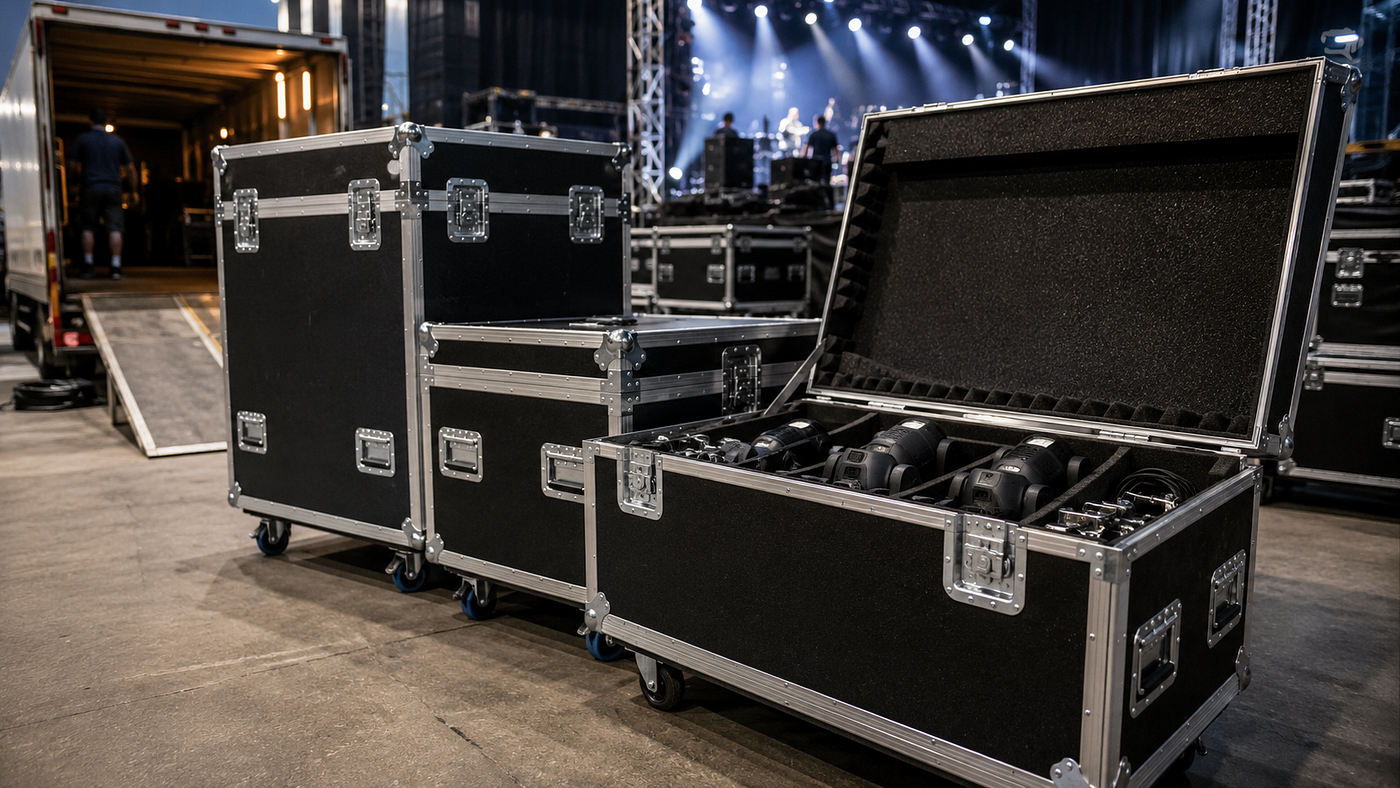
Every tour has a star, and it is rarely the road case. Yet ask any lighting tech who has watched a moving head slam into a loading dock at 2 a.m., and they will tell you the truth: the show lives or dies by what protects the gear between venues. Lighting ATA cases are the quiet heroes of the touring world. They never get a spotlight, but when a fixture survives a thousand miles of highway, three connecting flights, and a dozen rough load-ins, the case is the reason it still powers up. Touring lighting is brutal work. Fixtures are heavy, delicate, expensive, and completely show-critical. One cracked head or scorched lens, and a carefully designed look falls apart before a paying crowd. The cases that carry that gear are not accessories. They are infrastructure. This guide breaks down why lighting road cases matter far more than most teams realize, what actually separates a real ATA case from a flimsy box, and how to spec protection that keeps your rig show-ready season after season.
Got a tour on the books and lighting that is not truly road-ready? Gravix builds custom lighting ATA cases sized to your exact fixtures, with a production lead time of up to 7 business days and priority builds available for urgent dates. Lock in protection before your next load-in. → Gravix: https://gravix.us/pages/custom-quote
Why Lighting Fixtures Are the Most Vulnerable Gear on the Road
Of everything that rolls off a truck at a venue, lighting is often the most fragile and the least forgiving. Moving heads ride on precision gimbals and motors that hate being jolted out of alignment. LED panels carry delicate diodes and driver boards. Optics scratch, lenses crack, and cooling fins bend if anything presses against them the wrong way. Worse, lighting gear lives in constant motion. A single touring run can mean dozens of pack-outs, stacked trailers, freight elevators, and baggage handlers who have no idea what is inside. Vibration alone, mile after mile, loosens connections and stresses housings. Heat from a long day under the rig, followed by a cold overnight haul, adds thermal shock to the mix. None of that gear was designed to absorb impact on its own. That job belongs entirely to the case around it. When teams treat lighting transport as an afterthought, the road quickly finds the weak point, usually at the worst possible moment.
What Separates a Real ATA Road Case From a Glorified Box
The term “road case” gets thrown around loosely, but ATA-rated construction is a specific standard built for air and ground transport abuse. A genuine ATA case uses a rigid plywood shell laminated with tough ABS or similar surface material, not thin particleboard that swells the first time it meets a wet dock. The corners are reinforced with steel ball corners that take the hit, so the panel does not. Latches, handles, and casters are recessed into the body so they cannot snap off when the case gets dragged or stacked. Inside, a sealed gasket helps keep out moisture and dust during the long haul. This is the difference between a container and protection. Manufacturers like Gravix engineer cases around these principles using precision CNC processes and ABS-laminated panels, the kind of hard-seal interior that shrugs off the daily grind of touring. A box holds your gear. A real ATA case defends it. On the road, that distinction is the line between a fixture that powers up at the next stop and one that becomes an expensive paperweight.
The Hidden Costs of Cutting Corners on Case Protection
Cheap cases feel like a smart way to trim a budget until you add up what failure actually costs. Start with the fixture itself. A single high-end moving head can run into the thousands, and a damaged unit is rarely a quick fix. Then add the cost of downtime. A broken light is not just a repair bill; it is a hole in the show, a scramble for a rental replacement, and a lighting designer forced to rebuild a look on the fly. For rental houses, damaged returns mean lost inventory and missed bookings. For touring crews, it can mean a reputation hit that follows the team to the next contract. Lighting also rarely travels alone. It shares trucks with consoles, dimmers, and the rest of the production package, which is why serious teams pair their lighting protection with proper audio and video transport, too. Investing in cases that match how the gear actually moves protects more than just the equipment. It protects schedules, contracts, and the trust that keeps work coming.
Not sure whether your current cases are actually protecting your rig or just covering it? The Gravix team will review your fixtures, dimensions, and travel patterns and recommend the right build before a weak case costs you a show. Get an expert read on your setup. → Gravix: https://gravix.us/pages/custom-quote
Building a Case Around Your Rig, Not the Other Way Around
The most reliable protection starts from the gear out, not the case in. Forcing a fixture into a generic foam cavity that is close enough leaves room for shifting, and shifting is what kills lighting on the road. Purpose-built Lighting ATA Cases are designed around exact equipment dimensions, with precision-cut foam that cradles each unit so nothing slides, rattles, or presses against a neighbor. That custom fit also lets a builder plan for the practical details that matter on tour: channels for cables and clamps, compartments for accessories, weight balanced for safe lifting, and casters rated for the real load. The same thinking applies to the support gear that travels alongside the rig. Stands and tripods take a beating during load-in and load-out, and dedicated Stand & Tripod ATA Cases keep them from becoming loose projectiles in the truck. A case engineered around your specific setup does not just protect better. It packs faster, loads cleaner, and turns a chaotic dock into a predictable routine.
Packing Smart: How Pros Load Lighting for the Long Haul
Even the best case underperforms if the rig is packed carelessly. Seasoned crews build habits that extend the life of both gear and case. Heavy fixtures go low and centered so the case is stable when it tips onto its wheels. Cables get coiled and stored in their own compartments rather than crammed against optics. Moving heads are locked or padded so the gimbals cannot swing during transit. Lenses and glass elements face inward, away from the panels most likely to take a hit. Crews also label and inventory each case so nothing gets left on a dark stage at midnight. Climate matters too. Letting fixtures cool before sealing them in reduces condensation, and a quality gasket does the rest by holding out moisture and dust on the drive to the next city. None of this is complicated, but it compounds. Good packing inside a well-built lighting case is what turns a fragile rig into a road-tested workhorse that holds up tour after tour.
Frequently Asked Questions
What makes a lighting ATA case different from a regular flight case?
Lighting ATA cases are engineered specifically around the shape, weight, and fragility of lighting fixtures. That means custom-cut foam that cradles moving heads or LED panels, compartments for clamps and cables, and reinforced construction rated for repeated air and ground transport. A generic flight case may hold the gear, but a purpose-built lighting case prevents shifting and impacts that can damage optics, gimbals, and housings during a long touring run.
Are custom road cases worth it for a small lighting rig?
Yes, even modest rigs benefit. The cost of a single damaged fixture often exceeds the cost of proper protection, and replacement gear plus downtime add up fast. A custom case sized to your exact equipment loads faster, packs tighter, and reduces the in-transit damage that small crews can least afford. It also scales with you, so the protection you buy now keeps working as the rig grows.
How long does it take to get a custom lighting case built?
Lead times vary with size and complexity, but many custom ATA road cases ship with a production lead time of up to 7 business days, not counting transit. For large or specialized orders, it is best to request an exact timeline up front. Priority build options are available when a tour date does not leave room to wait.
Can one case protect both my lights and the cables and accessories?
It can, when it is designed that way. A well-planned lighting case can include dedicated compartments for cables, clamps, gel frames, and spare parts so everything travels together and arrives organized. Keeping accessories in their own padded sections also stops them from rattling against the fixtures, which is a common and avoidable source of road damage.
Do touring and rental companies really need ATA-rated cases?
For anything that moves regularly, yes. ATA-style construction is built for the stacking, dragging, and vibration that define touring and rental life. Cases built to those standards hold up to road, shipping, and air travel, which is exactly the abuse that lighting gear endures between shows. For high-volume operations, durable cases are what keep inventory in service and bookings on schedule.
Conclusion
Lighting does the visible work, but the case does the work that keeps lighting possible. Across thousands of miles, countless load-ins, and the rough handling that defines life on the road, the right protection is what stands between a flawless show and a scramble to cover a dead fixture. Real ATA construction, a fit built around your specific rig, and smart packing habits turn fragile, expensive gear into a dependable workhorse that survives the full run. Cutting corners on cases does not save money in the long term. It defers the cost to the worst possible moment, in front of a crowd, on a night that cannot be redone. Treat lighting transport as the infrastructure it is, and the quiet hero of the tour will keep doing its job long after the house lights come up. The gear earns the applause. The case earns the next tour.
Curious what road-ready protection looks like for your setup? Explore Gravix’s full range of American-made ATA road cases for touring, rental, and AV production, and see how custom-built protection keeps a rig show-ready season after season. → Gravix: https://gravix.us/
메타데이터
- post_id
- ec82dd215938
- slug
- the-quiet-hero-of-every-tour-why-road-cases-make-or-break-a-show-ec82dd215938
- url
- https://medium.com/@danielreed199135/the-quiet-hero-of-every-tour-why-road-cases-make-or-break-a-show-ec82dd215938
- canonical_url
- https://medium.com/@danielreed199135/the-quiet-hero-of-every-tour-why-road-cases-make-or-break-a-show-ec82dd215938
- author_url
- https://medium.com/@danielreed199135
- status
- ok
- fetched_at
- 2026-06-24 23:31:39