From Waking Winds, To Surfing Tides: A Demon Tides Review
From Waking Winds, To Surfing Tides: A Demon Tides Review
What A Hat in Time Did for Super Mario 64, Demon Tides Does for The Legend of Zelda: Wind Waker
There are certain games that never really leave you.
Not because they were the biggest blockbuster of the year. Not because they pushed graphics to their absolute limits or redefined an entire genre overnight. They stay with you because they remind you why you fell in love with video games in the first place.
For me, that game has always been The Legend of Zelda: Wind Waker.
I’ve said it before, and I’ll probably continue saying it every chance I get — Wind Waker is my favorite Zelda game ever made. It wasn’t because it had the most complex dungeons or the darkest story. It wasn’t because of the incredible cel-shaded art style, even though that has aged better than almost any game released in its generation.
It was because of one simple feeling.
Adventure.
I still remember leaving Outset Island with every intention of sailing toward my next objective. Then, somewhere off in the distance, I’d notice another island.
“I wonder what’s over there?”
That single thought would completely derail whatever I had planned. I’d discover a submarine tucked away between the waves, an abandoned reef hiding treasure, or a tiny island that existed for no other reason than to reward my curiosity. Forty-five minutes later I’d finally remember there was a main quest waiting for me somewhere beyond the horizon.
The game never forced me to explore.
It simply made me want to.
I’ve spent years chasing that feeling. Plenty of games have come close. Some excelled at exploration, others mastered movement, and a handful understood how rewarding discovery could be. But very few have managed to recreate that same childlike excitement of setting off in a direction simply because something looked interesting.
Then I played Demon Tides.
So, the question is simple.
Does Demon Tides capture that same spirit of adventure, making it a Hop? Or does it get swept away before reaching shore, making it a Flop?
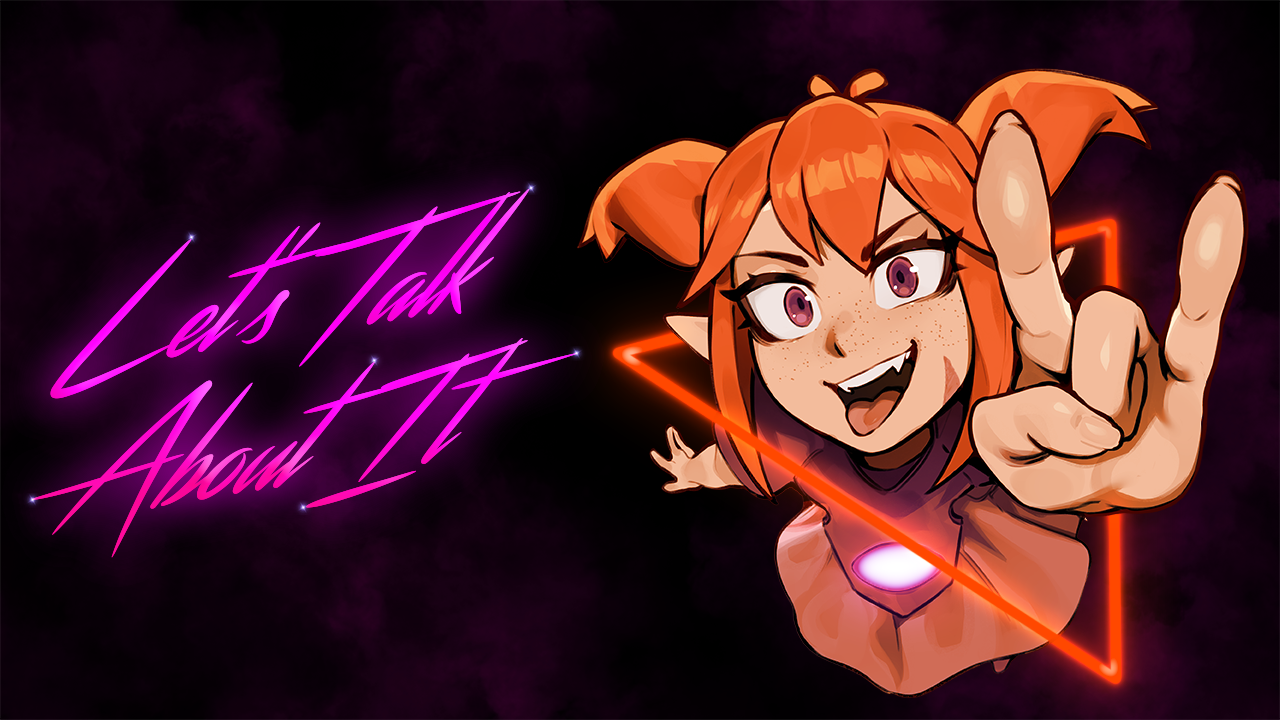
Let’s Talk About It.
If you’ve followed indie platformers over the past several years, there’s a good chance you’ve heard the name Fabraz. They’re one of those studios that has quietly continued refining their craft with every release. They first gained attention with Slime-san, a brutally challenging precision platformer that showcased their knack for responsive controls and demanding level design. Later came Demon Turf, a game that introduced us to Beebz, a loud, confident, sarcastic young demon with enough personality to stand shoulder-to-shoulder with some of the genre’s most memorable mascots.
While Demon Turf earned praise for its movement and player expression, it also felt like a studio experimenting with ideas that hadn’t quite reached their full potential. There was something special hidden beneath its rough edges. You could see Fabraz trying to answer a question that many modern platformers never ask anymore:
“What if the fun wasn’t just reaching the goal, but figuring out your own way to get there?”
Demon Tides feels like the answer to that question.
Rather than simply making a bigger sequel, Fabraz took everything they learned from Demon Turf and expanded it into something far more ambitious. Instead of a collection of cleverly designed stages, they’ve built a sprawling adventure where movement isn’t just a mechanic, it’s the entire philosophy behind the game.
Ironically, I almost missed that.
For a game I eventually scored a 9.5 out of 10, my first impression wasn’t one of instant excitement.
It was uncertainty.
The story begins with Beebz, now proudly calling herself the Queen of Demon Turf, receiving an invitation to Ragnar’s Rock from a mysterious ruler claiming to be her father. Curious, and understandably skeptical, she and her friends sail to this oceanic kingdom expecting answers, only to arrive in the middle of political unrest, rebellion, and a mystery that runs much deeper than a simple family reunion.
It’s a charming setup, and Beebz immediately reminds you why she became such a fan favorite in the first place. She’s witty without trying too hard, confident without becoming insufferable, and constantly bounces off the supporting cast in ways that keep conversations entertaining. She’s the type of protagonist who doesn’t wait for adventure to come to her — she kicks the front door open and walks straight into it.
Despite all of that…
I wasn’t hooked.
In fact, I struggled more with the opening hours than I expected.
That’s probably the biggest criticism I have of Demon Tides, and it’s one I think is worth talking about because I imagine I’m not the only player who experienced it.
The beginning is a slow burn.
Not because nothing is happening, but because the game is deliberately teaching you how to think before it asks you to play.
The world opens gradually. New mechanics arrive at a measured pace. The story spends time establishing Ragnar’s Rock and the people who inhabit it. Meanwhile, Beebz’s movement, which arguably the greatest strength of the entire game, hasn’t yet had the opportunity to reveal just how expressive it can become.
I remember thinking to myself,
“Okay… I see what the game is trying to do… but when is it going to click?”
That moment didn’t happen after unlocking a new ability.
It didn’t happen because of some dramatic story twist.
It happened because the game quietly stopped teaching me.
And started trusting me.
Looking back, I think that’s a really important distinction.
Some games lose players because they never become interesting.
Demon Tides risks losing players because it refuses to show all of its cards immediately.
There’s a difference.
Once the world finally opens and Beebz’s toolkit begins to expand, something incredible starts to happen.
You stop thinking about controls.
At first, every movement is deliberate. You’re remembering which button activates Bat Form, how long Spin Form keeps you airborne, when Snake Form is most useful, and how your dash interacts with each ability. It feels less like mastering a character and more like memorizing a control scheme.
Then, almost without realizing it, those individual mechanics begin melting together.
Bat Form isn’t simply your double jump anymore. It’s another way of extending momentum toward a platform that looked impossible only minutes earlier. Spin Form becomes a way of preserving speed across huge gaps. Snake Form evolves from a fast way of crossing water into an entirely different approach to traversing the world itself.
Eventually, something fascinating happens.
You stop asking,
“Can I reach that?”
Instead you start asking,
“How can I reach that?”
That one change in perspective transforms the entire game.
The best comparison I can make isn’t actually another platformer.
It’s Devil May Cry.
Not because you’re pulling off flashy combat combos or juggling enemies in midair.
Because movement itself becomes your combo system.
At first you’re learning individual moves.
Then you’re learning how those moves connect.
Eventually you’re no longer thinking about inputs at all.
You’re improvising.
Every jump becomes another opportunity to express yourself. Every cliff becomes a puzzle with multiple solutions. Every hidden collectible becomes less about reaching it and more about discovering a route that only makes sense because of how you chose to approach it.
That’s an incredibly difficult feeling to design.
It’s also one of the most rewarding movement systems I’ve experienced in years.
And then…
Something happened that I hadn’t experienced since sailing across the Great Sea all those years ago.
I stopped following objectives.
Not because I didn’t know where to go.
Because I genuinely didn’t care.
I saw something in the distance.
And I wanted to know what it was.
That’s when Demon Tides stopped feeling like another excellent indie platformer.
That’s when it became an adventure.
And that’s where this game truly begins.
That sense of adventure is what kept pulling me back toward Ragnar’s Rock. The more I explored, the more I realized that Demon Tides wasn’t interested in rushing me from one objective to the next. It wanted me to slow down, look around, and let my own curiosity dictate the journey. That’s a dangerous philosophy for a game to embrace because it assumes the world is interesting enough to hold your attention without constantly dangling rewards in front of you.
Thankfully, Ragnar’s Rock is exactly that kind of world.
One of the smartest decisions Fabraz made was resisting the temptation to make every island serve the same purpose. In lesser games, exploration often becomes predictable. You see something in the distance, arrive there, complete a challenge, collect a reward, and move on. After a few hours, you’ve seen the formula and you’re simply repeating it.
Demon Tides never lets that happen.
One island might be a compact platforming challenge that asks you to carefully chain together everything you’ve learned about Beebz’s movement. Another might feel like a playground where experimentation is the entire point, encouraging you to ignore the intended route and carve your own path instead. Some islands become environmental puzzles, asking you to observe the space before acting, while others hide their secrets in plain sight, rewarding players who take the time to look behind a waterfall, climb an unusual cliff face, or leap toward something that seems just a little too far away.
Then there are the islands that simply exist to surprise you.
Those became some of my favorites.
There were countless moments where I’d sail, or more accurately, swim and dash — toward what looked like a tiny detour, expecting a quick collectible, only to discover an entirely new challenge tucked away behind it. Sometimes it was a self-contained platforming course. Sometimes it was an unexpected puzzle. Sometimes it was nothing more than a quiet place to appreciate the view before setting off again.
Not every discovery needed to justify its existence with a major reward.
Sometimes the discovery itself was enough.
That’s something modern open-world games often forget.
We’ve become so accustomed to maps overflowing with icons that exploration has started to feel like checking off a to-do list. Demon Tides reminded me that the best discoveries are the ones you make because you chose to investigate them, not because a waypoint told you to.
That philosophy extends far beyond the world’s layout. As Beebz’s journey continues, so does the evolution of her movement. What begins as a straightforward set of abilities gradually transforms into an incredibly expressive toolkit. Bat Form, Snake Form, and Spin Form never feel like isolated mechanics. Instead, they become extensions of one another, encouraging you to think less about individual abilities and more about how they interact.
By the end of the game, I wasn’t asking which form I should use. I was instinctively weaving between all of them, carrying momentum through jumps, gliding across impossible gaps, and finding routes that felt uniquely my own.
It’s one of those rare games where your skill as a player grows alongside your character. Beebz doesn’t suddenly become more fun because she unlocks a dozen flashy abilities. She becomes more fun because you become better at understanding what she’s capable of.
That distinction is important.
Some games make you feel powerful by giving you stronger tools.
Demon Tides makes you feel powerful by teaching you how to master the ones you already have.
That philosophy carries over into another one of my favorite mechanics: talismans.
At first glance, they’re easy to dismiss as simple upgrades, but they’re much more interesting than that. Rather than just boosting numbers or offering passive bonuses, many of them fundamentally change how Beebz moves through the world. Some emphasize speed, others expand your aerial options, and others encourage completely different approaches to exploration. They don’t tell you how to play; they ask how you want to play.
That level of player expression became one of the defining aspects of my experience. I found myself swapping talismans, experimenting with different combinations, and tailoring Beebz’s movement to fit whatever challenge I was tackling. It’s a subtle system, but it quietly reinforces the game’s biggest strength: freedom.
Even the optional challenge content reflects that philosophy. Hidden throughout Ragnar’s Rock are some of the game’s toughest platforming trials, designed for players who want to push Beebz’s movement to its absolute limit. These moments demand precision, patience, and confidence in everything you’ve learned. They’re difficult, but they never felt unfair. Every failure sent me back with the same thought in my head: I know I can do this. I just need to be better.
That’s the difference between frustrating difficulty and rewarding challenge.
One makes you question the game.
The other makes you question yourself.
I found myself smiling after finally clearing these sections, not because I had unlocked another collectible, but because I knew I had genuinely improved. That’s a feeling no achievement notification can replicate.
Of course, none of this would have worked if Beebz wasn’t such a joy to spend time with.
She’s the kind of protagonist who effortlessly carries every scene she’s in. Confident, sarcastic, and endlessly entertaining, she has the rare ability to make even simple conversations memorable. Her interactions with the supporting cast help Ragnar’s Rock feel like more than just a collection of levels. They make it feel lived in.
The story itself remains refreshingly focused. It gives you just enough mystery and emotional investment to keep you moving forward without ever losing sight of what the game truly wants to be: an adventure. It never buries you beneath endless exposition or asks you to sit through hours of dialogue before letting you play. Instead, it trusts the world to tell much of its own story through exploration, environmental details, and the people you meet along the way.
That restraint is something I appreciated more and more as the adventure unfolded.
Then there’s the music.
I don’t say this lightly, but Demon Tides features one of my favorite indie soundtracks in recent years.
A great soundtrack isn’t just something you notice — it’s something you feel. Every area in Ragnar’s Rock has its own musical identity, reinforcing the sense of discovery that defines the entire experience. There were moments where I’d reach a new island and simply stop moving for a few seconds, letting the music settle in before continuing onward.
Long after finishing the game, I can still hear those melodies in my head.
That’s usually a pretty good sign.
As much as I adore Demon Tides, though, I’d be doing both you and Fabraz a disservice if I pretended it was flawless.
The slower opening remains my biggest hurdle. I understand why the developers chose to ease players into Beebz’s movement, but I also think it’s the point where the game is at its most vulnerable. Some players may never reach the moment where everything clicks, and that’s unfortunate because they’re missing what eventually becomes one of the strongest movement systems in modern platformers.
I also encountered a few minor technical hiccups. Occasional visual pop-in, a handful of menu frustrations, and small bits of roughness remind you that this is still an indie production. None of these issues were severe enough to pull me out of the experience, but they’re noticeable, especially when compared to how polished the movement itself feels.
Oddly enough, those imperfections made me appreciate the game even more.
Because despite them…
I couldn’t stop thinking about it.
That’s a rare thing.
When I sat down to organize my thoughts for this review, I found myself searching for reasons to lower my score. Not because I wanted to be overly critical, but because I kept asking myself, “Surely a game can’t be this good.”
I found the flaws.
I wrote them down.
And then I realized something.
None of them changed how I felt.
That’s ultimately what a review is, isn’t it?
Not a checklist.
Not a spreadsheet.
Not an attempt to measure art with mathematical precision.
It’s an honest conversation about how a game made you feel.
And Demon Tides made me feel something I haven’t experienced in a very long time.
It made me feel like I was twelve years old again, sitting in front of my GameCube, steering a little red boat toward an island that wasn’t marked on my map simply because I wanted to know what was waiting there.
Some games ask you to reach the destination.
Demon Tides asks you to enjoy getting lost on the way.
That’s what makes it special.
That’s what makes it memorable.
And that’s why, for me, what A Hat in Time did for Super Mario 64, Demon Tides does for The Legend of Zelda: Wind Waker. It doesn’t imitate the game that inspired it. It captures the feeling that made so many of us fall in love with that adventure in the first place.
Final Score: 9.5/10
Hop or Flop?
This one’s an easy Hop.
If you’re someone who loves 3D platformers, expressive movement systems, and worlds that reward curiosity instead of obligation, Demon Tides is one of the easiest recommendations I can make. It asks for a little patience in the beginning, but once it trusts you to chart your own course, it becomes something genuinely special.
Fabraz didn’t just make a worthy follow-up to Demon Turf. They created one of the most memorable platforming adventures I’ve played in years, and a game that reminded me why exploration is still one of my favorite feelings in all of gaming.
If a game can make you forget about your objective because you’re too busy chasing the next adventure, it’s doing something right.
That’s exactly what Demon Tides did for me.
And remember…
If it’s not fun, then what’s the point?
메타데이터
- post_id
- ecbeeb78743f
- slug
- from-waking-winds-to-surfing-tides-a-demon-tides-review-ecbeeb78743f
- url
- https://medium.com/@KKaeru/from-waking-winds-to-surfing-tides-a-demon-tides-review-ecbeeb78743f
- canonical_url
- https://medium.com/@KKaeru/from-waking-winds-to-surfing-tides-a-demon-tides-review-ecbeeb78743f
- author_url
- https://medium.com/@KKaeru
- status
- ok
- fetched_at
- 2026-08-16 21:31:11