Logical vs Physical Data Model in Modern Data Architecture
In the data projects and their architecture there is essential to understand the distinction and interplay between logical and physical…
Logical vs Physical Data Model in Modern Data Architecture
In the data projects and their architecture there is essential to understand the distinction and interplay between logical and physical data models is crucial for designing, implementing, and maintaining efficient and scalable databases and data warehouses. These models are foundational elements in structuring data to support various applications, analytics, and business intelligence (BI) projects.
Logical Data Model (LDM)
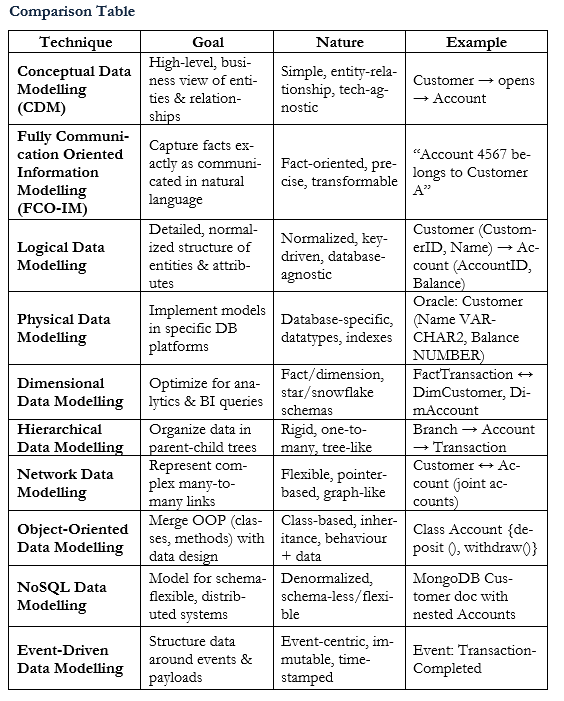
A logical data model outlines the structure of the data without getting into the technical details of how the model will be implemented. It focuses on the business requirements, different users’ needs and important rules governing the data, presenting entities (tables), and attributes and relationships (as a core element) in a way that’s understandable to business stakeholders. LDMs are used in the first or also called initial phases of project development. Project managers and their stakeholders want to make sure that all business requirements are understood, described and accurately captured and that the data structure is aligned with the organization’s objectives. It serves as a blueprint for the physical model. We are usually aligning to blueprints which are best practices for the core technology when starting our projects. It helps to speed up the processes in the future.
From its characteristics we can find 3 types of Logical Data Models:
· Technology-agnostic
· Centers on entities, attributes, and relationships
· Normalized (where main goal is to reduce redundancy and improve data integrity)
Physical Data Model (PDM)
Physical data model translates the abstract elements of the logical model into real-world, so-called detailed schema. Schema is initially sketched and later physically created which in history only in databases existed — here is why word schema is used. It defines how data will be stored, accessed, and managed within a specific database management system (DBMS) or Data Lake / Data Hub. This includes table structures, keys, indexes, constraints, and database-specific features.
Physical models are developed after the logical model and are tailored and customized to each specific of the chosen database technology and stakeholders’ requirements. They are used to build the actual database schema and to implement the data storage and retrieval mechanisms.
Database-specific models include technical schemata like tables, columns, data types, and constraints. All are optimized for performance and storage efficiency.
Typical Use Cases:
Both models are crucial in designing data warehouses where data from various sources is aggregated, transformed, and stored for analysis. The logical model helps in creating concept and visualization for the data warehouse structure, while the physical model deals with the implementation specifics.
Also In developing applications, especially those that are data-intensive, logical, and physical models ensure the underlying data supports application requirements efficiently.
Business Intelligence (BI) and Analytics: For each BI projects, logical models help in designing data marts, cubes, and final results in denormalized tables which reflect the business semantics, while physical models are essential for the actual data store creation and query optimization.
Tools for Logical and Physical Data Modelling
Expanding on the foundational aspects of logical and physical data models in modern data architecture, various tools have been developed to facilitate the design, implementation, and management of these models across different industries. I will name it without any preference because it always depends on your specific habits. Some popular tools and the industries that commonly employ logical and physical data models are:
MySQL Workbench, Data Grip, DBeaver, PgAdmin, ER/Studio, MsSQL Management Studio, IBM Data Architect, Microsoft Visio among others. All are unified visible devices for database architects, developers, and DBAs presenting statistics modeling, SQL development, and complete management equipment for database management. There are also modern tools touching the layers for data modelling over analytical databases where no primary keys are usually presented, such as SqlDBM over Snowflake etc.
The choice of tools and the application of logical and physical data models vary significantly across industries, driven by specific data management needs and especially technology environments.
Finally, I am bringing few examples of Industries Leveraging Logical and Physical Data Models
· Banking and Finance rely on data models for risk analysis, fraud detection, customer data management, and regulatory compliance. Logical models help in defining the relationships between different financial entities, while physical models are used to implement efficient and secure databases.
· Retail and E-commerce: These sectors use data models to manage inventory, customer relationships, and sales data. Logical models help in designing systems that provide insights into customer behavior and preferences, while physical models are essential for the performance and scalability of transactional databases.
· Telecommunications: For managing networks, customer data, and service provisioning, telecom companies rely on data models. Logical models are used to design the architecture of systems managing vast amounts of data, and physical models ensure the efficient performance of these systems.
· In manufacturing, data models are used for supply chain management, production planning, and quality control. Logical models facilitate the understanding of complex manufacturing processes and relationships, while physical models are crucial for tracking and optimizing production workflows.
In summary, Logical and Physical Data Models are integral to modern data architecture, business intelligence and application development. Both provide core and structured approaches to data modeling starting from abstract business concepts finishing in concrete and very specific database implementations. Understanding the distinction and proper application of these models enables us Business Consultants and Analysts, but also organizations to efficiently manage data as a valuable resource, supporting probably every project from wide range of requirements emerging and use cases from application development to complex data warehousing and analytics initiatives.
메타데이터
- post_id
- ecdd7d3cebef
- slug
- logical-vs-physical-data-model-in-modern-data-architecture-ecdd7d3cebef
- url
- https://medium.com/i-am-datapedia/logical-vs-physical-data-model-in-modern-data-architecture-ecdd7d3cebef
- canonical_url
- https://medium.com/i-am-datapedia/logical-vs-physical-data-model-in-modern-data-architecture-ecdd7d3cebef
- author_url
- https://medium.com/@mustafaisonline
- status
- ok
- fetched_at
- 2026-06-20 20:29:01