Why Letting AI Think Longer Might Matter More Than Making It Bigger
For years, the standard recipe in AI felt obvious: bigger models, more data, more compute, better results. That formula still matters, but…
Why Letting AI Think Longer Might Matter More Than Making It Bigger

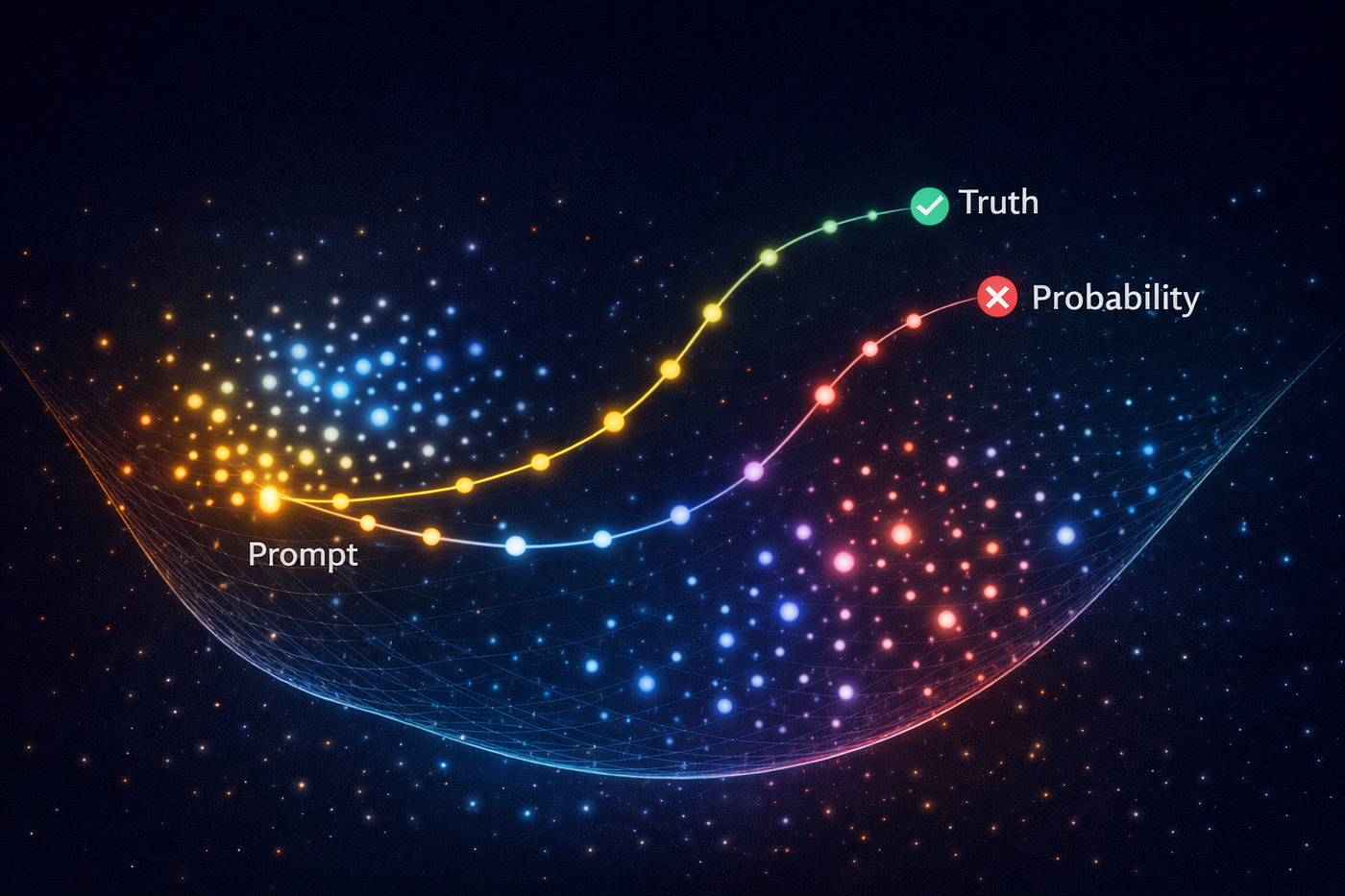
What models thinking longer during inference means? (AI-generated image)
For years, the standard recipe in AI felt obvious: bigger models, more data, more compute, better results. That formula still matters, but a newer idea has been gaining real traction: maybe part of the performance jump does not come from making the model larger at training time, but from letting it use more compute at inference time.
That idea is usually called test-time scaling. Instead of forcing a model to answer immediately, you give it more room to reason, check itself, or explore multiple candidate solutions before committing to a final answer.
This shift became much harder to ignore on September 12, 2024, when OpenAI described o1 and reported that its performance improved with both more train-time compute and more time spent thinking at test time. Then, on January 31, 2025, the paper “s1: Simple test-time scaling” pushed the conversation further by showing that a surprisingly simple open recipe could reproduce part of that behavior.
The core claim of the s1 paper is refreshingly direct: if you fine-tune on a small but carefully curated reasoning dataset and then control how long the model is allowed to think, performance can improve in meaningful ways. The authors trained on just 1,000 examples in a dataset they call s1K, and added a simple inference trick called budget forcing.
Budget forcing is exactly the kind of idea that sounds too small to matter. In the paper, the model is either stopped early or nudged to continue reasoning longer when it tries to finish too soon. One simple mechanism is appending “Wait” so the model keeps going and double-checks itself. That is not magic. But it is a reminder that model quality is not only about what weights you ship. It is also about how you let the model use its reasoning budget.
Why does this matter in practice?
Because many real-world AI tasks are not one-shot autocomplete problems. They are multi-step problems: code generation, math, planning, agent workflows, debugging, tool use, and structured decision-making. In these settings, a fast first answer is often not the best answer. A model that can pause, reflect, or evaluate several solution paths can outperform a model that simply responds faster.
OpenAI’s own public results hinted at this. In its o1 announcement, the company reported that on AIME 2024, o1 improved from 74% with a single sample to 83% with consensus over 64 samples, and then 93% when a learned re-ranking strategy was applied over many candidates. That is a useful mental model: some of the gain is not from changing the base model, but from spending more inference-time effort on the same problem.
The s1 paper made that intuition even more concrete. According to the arXiv abstract and project page, s1-32B exceeded o1-preview on competition math benchmarks and improved from 50% to 57% on AIME24 when scaled further with budget forcing. That does not mean “just add more tokens and every model becomes brilliant.” It means reasoning quality can be partly unlocked by how computation is scheduled at inference time.

s1 paper results in a nutshell (reference below)
For builders, this creates a useful design question:
Should your system spend its budget on a bigger model, or on a smarter inference strategy?
In many applied systems, the second option may be cheaper and more controllable.
For example:
- For coding tasks, you may want multiple drafts and a selection step.
- For agent workflows, you may want one model pass for planning and another for verification.
- For math or analysis, you may want self-consistency rather than one-shot answers.
Below is a tiny Python sketch that captures the spirit of test-time scaling. It is not a reproduction of s1, but it shows how you might force an extra verification round and then aggregate answers:
from collections import Counter
def budget_force(generate, question, max_checks=3):
    prompt = f"Solve carefully.\nQuestion: {question}\n"
    transcript = ""
    for step in range(max_checks):
        chunk = generate(prompt + transcript)
        transcript += chunk
        if "Final answer:" in chunk and step < max_checks - 1:
            transcript += "\nWait. Re-check the reasoning and verify the answer.\n"
        else:
            break
    return transcript

def self_consistent_answer(generate, question, runs=5):
    final_answers = []
    for _ in range(runs):
        result = budget_force(generate, question, max_checks=3)
        answer = result.split("Final answer:")[-1].strip()
        final_answers.append(answer)
    winner, count = Counter(final_answers).most_common(1)[0]
    return {"answer": winner, "votes": count, "all_answers": final_answers}
The important idea here is not the exact code. It is the pattern:
- generate a candidate solution,
- force a verification step,
- repeat a few times,
- choose the most consistent final answer.
This is a small but powerful mindset shift. Instead of treating the model as a single oracle call, you treat it more like a search process with a compute budget.
Of course, there are real caveats. More test-time compute increases latency and cost. Longer reasoning can also produce longer nonsense if the model is weak or poorly prompted. And not every task benefits equally. For summarization or lightweight chat, extra reasoning may be wasteful. But for high-value tasks, especially where correctness matters, the tradeoff is often worth exploring.
My take is that test-time scaling is one of the most important AI system ideas to watch right now because it changes the engineering conversation. We are no longer only asking, “Which model is bigger?” We are increasingly asking, “How should this model think?”
That is a much more interesting systems question. And if papers like s1 are any indication, some of the next big gains in AI may come not from training the model harder, but from orchestrating its reasoning better.
References
- Muennighoff et al., “s1: Simple test-time scaling” (arXiv, January 31, 2025): https://arxiv.org/abs/2501.19393
- s1 project page: https://simplescaling.github.io/
메타데이터
- post_id
- ecdf137f5aac
- slug
- why-letting-ai-think-longer-might-matter-more-than-making-it-bigger-ecdf137f5aac
- url
- https://ai.plainenglish.io/why-letting-ai-think-longer-might-matter-more-than-making-it-bigger-ecdf137f5aac
- canonical_url
- https://ai.plainenglish.io/why-letting-ai-think-longer-might-matter-more-than-making-it-bigger-ecdf137f5aac
- author_url
- https://medium.com/@sourav15
- status
- ok
- fetched_at
- 2026-06-22 05:41:33