Hamilton Palace Dining Room
The Hamilton Palace Dining Room installation is an example of how a room can be designed from top to bottom to show off power, wealth, and…
Hamilton Palace Dining Room

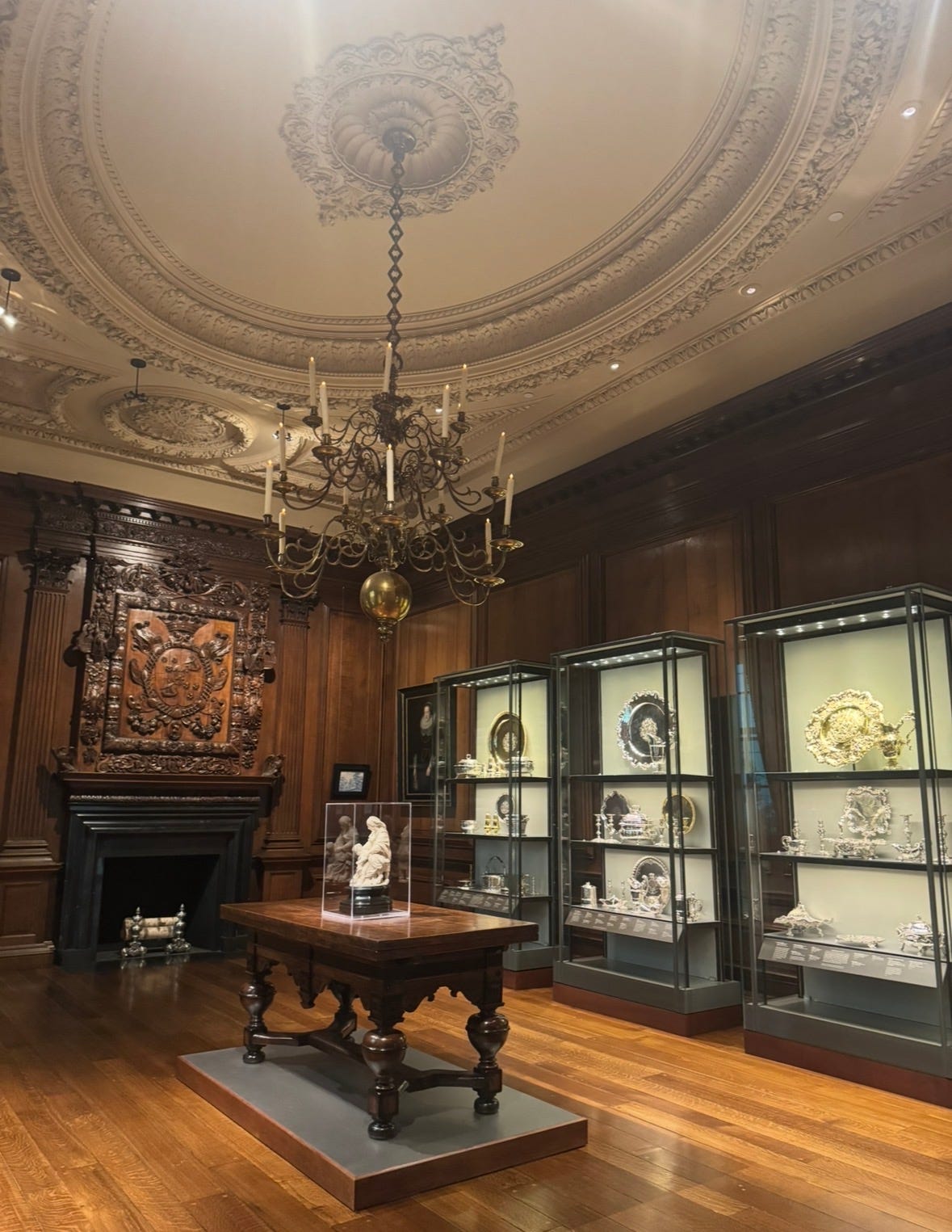
The Hamilton Palace Dining Room installation is an example of how a room can be designed from top to bottom to show off power, wealth, and status. Looking around the dining space, you can see how the room uses intense vertical lines to make a statement. The tall, gridded window directs your eyes up toward a deeply carved, patterned ceiling, while the heavy, pedimented doorway on the left turns walking into the room into a ceremony. The architecture is explicitly designed to make you feel small, slow your pace, and remind you that you are entering a very exclusive space.
Every material in this design system acts like a subtle flex of wealth. The walls are wrapped in dark, highly polished wood panels that would have required an immense amount of money and manual labor to create. Framing the window are thick, heavy red-and-white patterned drapes with a fringed valance that drips luxury. Even the small row of blue-and-white porcelain vases perched high above the doorway serves a purpose, sitting safely out of reach, they tell visitors that the owner has the money and connections to collect fine goods from all over the world.
The overall user experience here is all about controlled mood and theatricality. The dark wood absorbs the light, while the single window lets in just enough sunshine to cast dramatic, moody shadows across the floorboards. Between the thick fabrics absorbing sound and the wooden floors echoing your footsteps, the space practically forces you to quiet down and watch your step. It isn’t just a place to eat, it’s a carefully managed stage built to command respect and project authority.
Fast forward to today, and modern luxury retail stores and high-end hotels use this exact same psychological playbook to shape how we behave. Instead of carved wood and heavy drapery, modern designers use towering glass entryways, minimalist marble, custom scent branding, and museum-style spotlights to make products feel special. They use massive, open layouts to filter out casual foot traffic and slow you down, just like Hamilton Palace did centuries ago. The look has changed, but the strategy is identical: using the physical environment to dictate how we move, feel, and perceive high status.
메타데이터
- post_id
- ed2639264dbd
- slug
- hamilton-palace-dining-room-ed2639264dbd
- url
- https://medium.com/art-design-history-explorations/hamilton-palace-dining-room-ed2639264dbd
- canonical_url
- https://medium.com/art-design-history-explorations/hamilton-palace-dining-room-ed2639264dbd
- author_url
- https://medium.com/@gillespiej1
- status
- ok
- fetched_at
- 2026-06-22 05:41:33