No SDGs Without Youth- Why Sustainable Development Needs Young Voices?
Research published in the International Journal of Academic Research in Progressive Education and Development shows that across ASEAN…
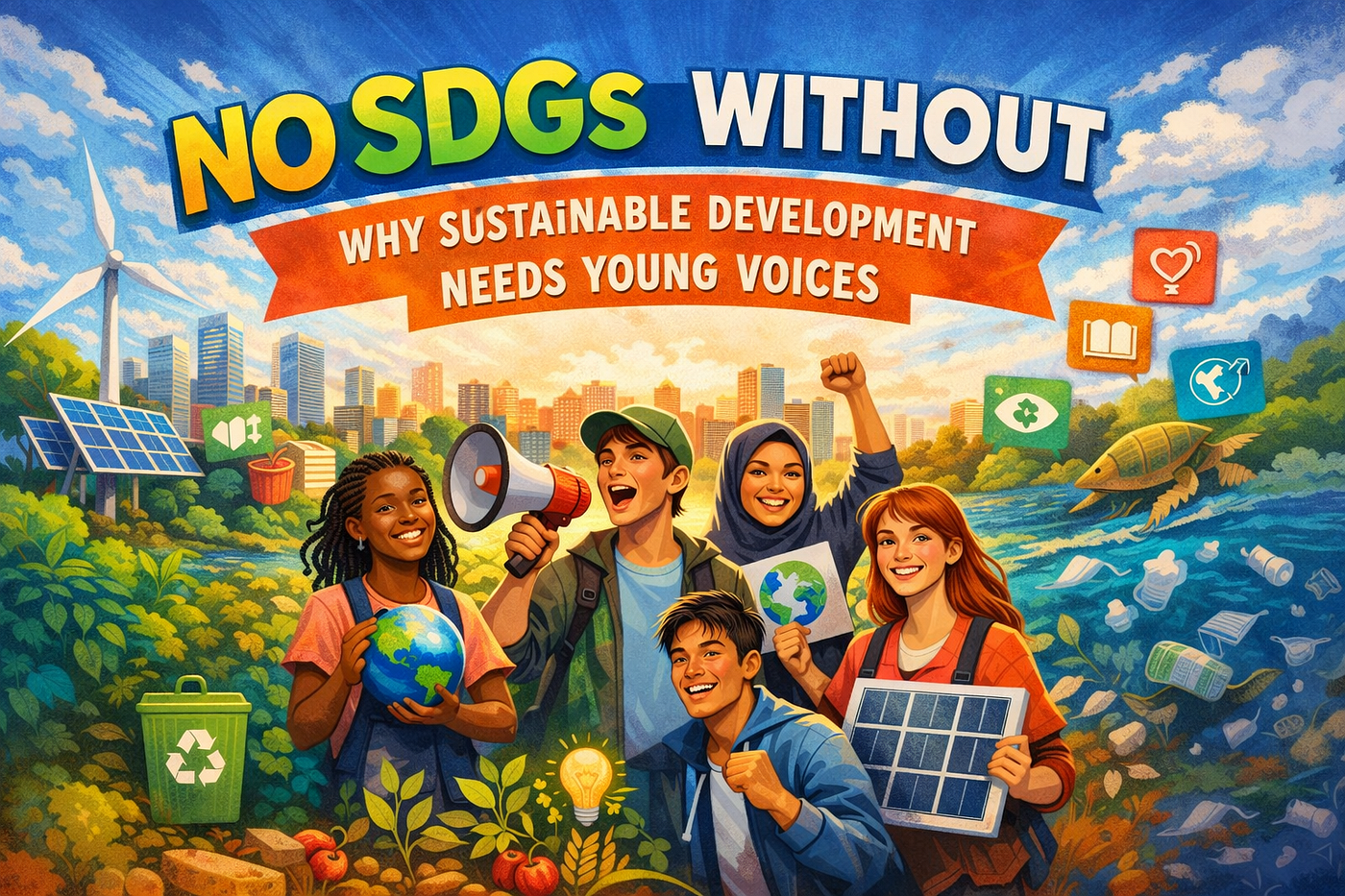
No SDGs Without Youth- Why Sustainable Development Needs Young Voices?
Research published in the International Journal of Academic Research in Progressive Education and Development shows that across ASEAN countries, young people are already actively involved in national sustainability planning. The main purpose of the 17 United Nations Sustainable Development Goals is to serve as a universal call to action to protect the planet in the long term. However, the young voices are often excluded from meaningful decision-making as the majority of the leaders continue to hold the mistaken assumption that youth lack the maturity to contribute credible ideas. Historically, many young people were not given opportunities to voice their opinions on certain social issues due to the lack of accessible platform. Today, amid rapid technological advancement, youth are able to utilise social media as a powerful tool for advocacy. Moreover, their efforts are guided by clear targets established by the United Nations through the Sustainable Development Goals.
It’s undeniable that the youths today demonstrate a higher level of mental maturity compared to previous generations. This is reflected in the growing number of young leaders who now participate meaningfully in national policy discussions, including within parliamentary settings.
Therefore, I strongly agree that young voices need to be included in policymaking to ensure that outcomes are inclusive and beneficial across all age groups.
Why Youth Inclusion is not Optional?
It’s widely acknowledged that many decisions made by adult leaders may fail to fully address the realities faced by young generations, as they do not share the same lived experiences. Youth participation can assist in providing constructive ideas to local leaders so that the outcomes are beneficial to the youth. Remember, youth participation is not symbolic, yet it is structurally necessary for sustainable development.
Young people today are embedded in digital spaces, allowing them to access the latest information instantly at their fingertips. They tend to remain closely informed about national development issues as news frequently appears on their social media platforms.
Youth are now early adopters of technology, green innovation as well as social change. Excluding youth leads to policies that lack grassroots acceptance.
“The youth is the hope of our future.” — Jose Rizal
Youth as Innovators and Implementers
As mentioned, youth today are given opportunities to showcase their skills on various platforms. Around the world, youth are already driving SDG-aligned solutions. For instance, they actively participate in STEM and climate action. Many community challenges are increasingly being addressed by young people, who generate innovative ideas and practical solutions.
Through programmes and competitions organised by NGOs, young students are given opportunities to present their ideas on climate action. In addition, sustainability projects raise awareness among students, who are well-positioned to influence their peers and wider communities.
As a STEM innovator, I have gained experience in engaging others by proposing practical approaches to real-world challenges. The projects that my teammates and I have done always use the United Nations Sustainable Development Goals to solve real-world problems.
The Policy Gap
SDGs can be achieved with the help of young voices theoretically, but it seems to be challenging in reality. The primary obstacle is not youth apathy, but persistent institutional barriers. Over the years, I have realised an important barrier that causes the system to fall short. It’s undeniable that youth councils do not have real decision-making power. Research on youth councils in municipal government found what while these councils engage in civic activities, their impact on actual policy decisions is under-studied, and substantial barriers remain to their influence in community decision-making.
At the same time, responsibility does not rest solely with authorities, as there are instances where youth advocates fail to follow up on progress after consultations.
What Meaningful Youth Engagement Looks Like?
In the Malaysia context, meaningful youth engagement must move beyond symbolic participation toward genuine partnership. Youth representation should be strengthened within policy and sustainability committees at both national and local levels, ensuring that young voices contribute directly to decision-making rather than remaining consultative. In addition, national platforms supported by the Ministry of Youth and Sports as well as Ministry of Education should be developed to translate youth-led innovation into scalable policy solutions.
Lastly, sustainable development without youth is unsustainable by design.
The question is no longer whether youth should be involved in any meaningful decision-making, but how soon institutions are willing to listen.

메타데이터
- post_id
- ed26d95c0d0f
- slug
- no-sdgs-without-youth-why-sustainable-development-needs-young-voices-ed26d95c0d0f
- url
- https://medium.com/@nicsonyap/no-sdgs-without-youth-why-sustainable-development-needs-young-voices-ed26d95c0d0f
- canonical_url
- https://medium.com/@nicsonyap/no-sdgs-without-youth-why-sustainable-development-needs-young-voices-ed26d95c0d0f
- author_url
- https://medium.com/@nicsonyap
- status
- ok
- fetched_at
- 2026-07-15 06:54:52