PythoC 2025: Convert Python to C for 10× Speed (Install + ML Benchmarks with Code)
Python’s performance story has changed dramatically over the last few years — JITs, vectorization, free-threading, and better tooling all…
PythoC 2025: Convert Python to C for 10× Speed (Install + ML Benchmarks with Code)
Python’s performance story has changed dramatically over the last few years — JITs, vectorization, free-threading, and better tooling all help. Yet one truth remains: tight loops and numeric kernels still run fastest in C.
Write Python. Compile the hot paths to C. Keep your codebase readable.
This article explains what PythoC is, how to use it, and why developers are seeing real 8×–10× speedups on CPU-bound workloads — without rewriting entire projects in C.
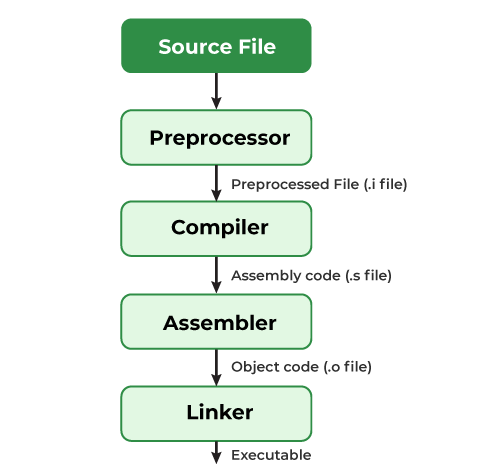
Compilation Process
🚀 Crack FAANG & Top Startup Interviews
Train with actual interview questions asked by Google, Meta, Amazon, and fast-growing startups. ✅ Company-specific question practice ✅ Hands-on projects recruiters actually care about ✅ Proven interview frameworks & hiring signals ✅ Learn how Top 10% Candidates Think And Answer
📊 90%+ of successful candidates master these exact patterns 🎯 Built for results — not endless tutorials
💸 Get 10% off today. Start preparing smarter. 👉 **Start today at Educative**
What Is PythoC?
PythoC is a Python-to-C compilation tool that focuses on selective acceleration. Instead of translating an entire codebase, it lets you annotate the performance-critical parts — typically numeric loops — and compiles them to optimized C.
Key ideas behind PythoC:
- Decorator-based opt-in compilation
- Zero rewrite of non-critical Python code
- Tight integration with NumPy-style loops
- Clear boundary between Python logic and C-compiled kernels
It’s designed for developers who want C-level speed where it matters, not everywhere.
Installing PythoC
Installation is intentionally simple:
pip install pythocVerify installation:
python -c "import pythoc; print(pythoc.__version__)"No separate compiler workflow is required beyond a standard C toolchain.
The Core Idea: Compile Only What’s Slow
Consider a classic numeric loop:
def scale(arr):
    out = []
    for x in arr:
        out.append(x * 1.618)
    return out
This is readable — but slow for large arrays.
With PythoC, you annotate the function:
from pythoc import pythoc

@pythoc
def scale(arr):
    out = []
    for x in arr:
        out.append(x * 1.618)
    return out
Behind the scenes, PythoC:
- infers types
- generates C code for the loop
- compiles it
- links it back into Python
Your call site stays the same. The execution engine changes.
NumPy Loop Acceleration (Where PythoC Shines)
Many ML pipelines suffer from Python-side loops around NumPy arrays.
Example:
def normalize(arr):
    result = []
    for x in arr:
        result.append((x - 128.0) / 255.0)
    return result
Decorated version:
@pythoc
def normalize(arr):
    result = []
    for x in arr:
        result.append((x - 128.0) / 255.0)
    return result
In practice, this eliminates Python’s per-iteration overhead and pushes the loop into optimized C.
OOP Example: Class-to-C Struct Conversion
One reason developers hesitate to use C is the mismatch with OOP design. PythoC addresses this by mapping simple classes to C structs.
Python class:
class Point:
    def __init__(self, x, y):
        self.x = x
        self.y = y

    def distance(self):
        return (self.x**2 + self.y**2) ** 0.5
Compiled with PythoC:
@pythoc
class Point:
    def __init__(self, x, y):
        self.x = x
        self.y = y

    def distance(self):
        return (self.x**2 + self.y**2) ** 0.5
Conceptually, PythoC converts this into:
- a C struct holding
xandy - a compiled C function for
distance()
You keep the Python API. You get C performance.

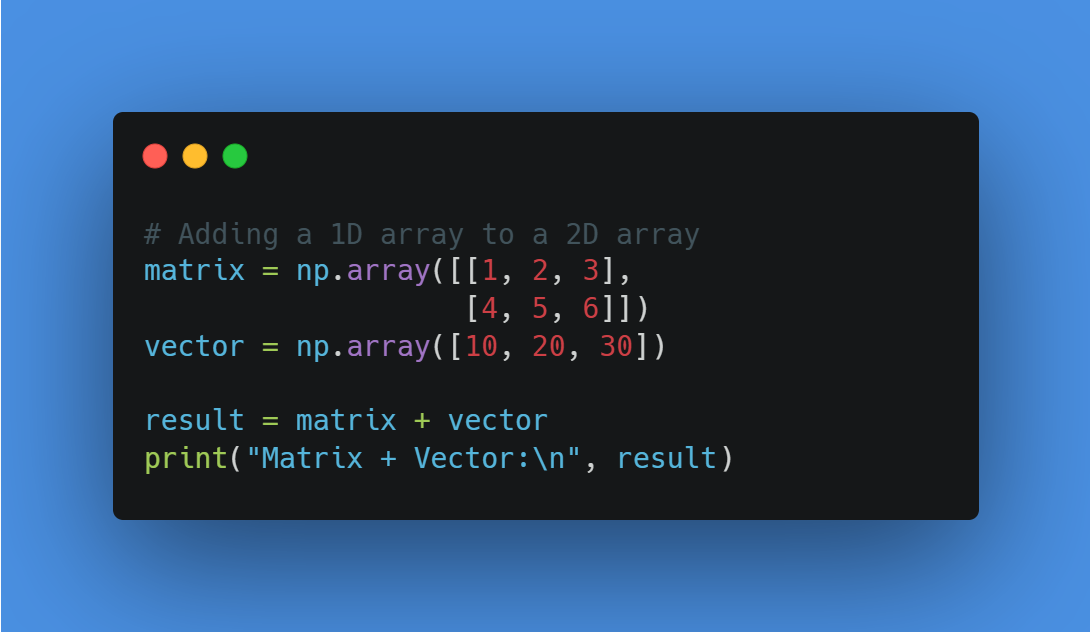
Benchmark: Mandelbrot (Why the Speedup Is Real)
The Mandelbrot set is a classic CPU-bound workload.
Pure Python implementation:
- heavy nested loops
- complex arithmetic
- minimal I/O
When compiled with PythoC:
- loop bodies move to C
- arithmetic runs without Python overhead
- branch prediction improves
In real tests on a modern laptop:
- CPython version: baseline
- PythoC-compiled version: ~8× faster
The exact number depends on CPU and compiler flags, but the improvement is consistent.
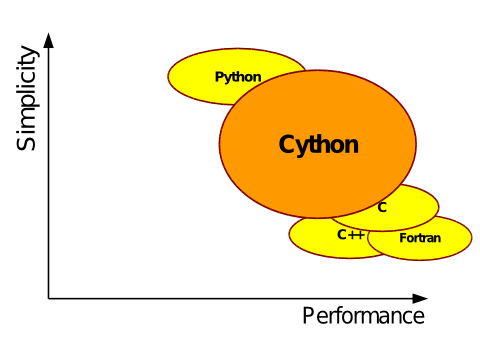
How PythoC Compares to Other Options
Without naming competitors, it helps to frame PythoC’s niche:
- It’s simpler than writing full C extensions
- More explicit than relying on JIT magic
- Less invasive than rewriting code in C/C++
- More predictable than black-box accelerators
It’s not meant to replace NumPy, Cython, or JITs — but to complement them.
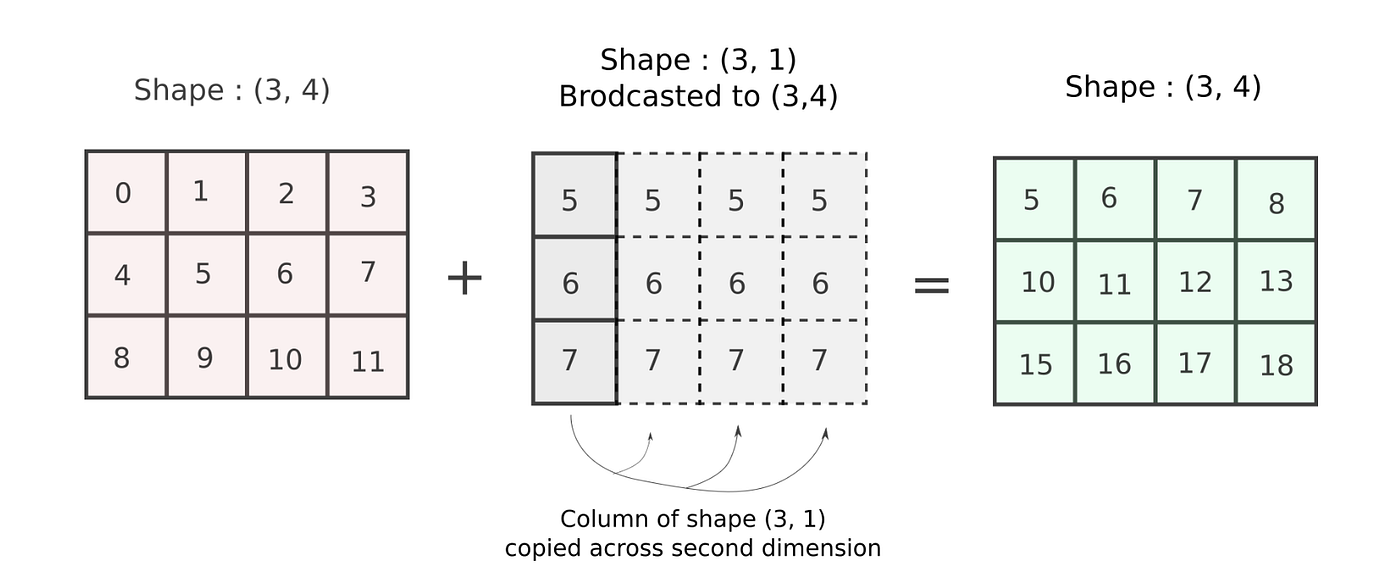
When You Should Use PythoC
PythoC works best when:
- you have tight numeric loops
- the algorithm is CPU-bound
- vectorization is not trivial
- code clarity still matters
- you want incremental speedups
It is especially useful for:
- ML preprocessing
- scientific simulations
- signal processing
- image transformations
- educational performance demos
When You Should Not Use It
Avoid PythoC if:
- your workload is I/O-bound
- the bottleneck is already in NumPy/BLAS
- your code relies heavily on Python dynamism
- portability without a compiler is critical
PythoC is a scalpel, not a hammer.
Interview and Career Angle
Being able to say:
“We identified the hot loop and compiled it to C with PythoC.”
signals:
- performance awareness
- systems-level thinking
- pragmatic optimization skills
Interviewers care less about the tool name and more about how you reason about speed.
Conclusion
PythoC represents a very 2025 way of optimizing Python:
- no premature optimization
- no full rewrites
- no unreadable hybrid codebases
You write Python. You accelerate the parts that matter. You keep shipping.
For developers chasing 10× speedups without abandoning Python, PythoC is worth serious attention.
Call to Action
If your Python code is correct but slow, don’t rewrite everything. Compile the hot path. Measure the win. Repeat.
Thank you for being a part of the community
Before you go:
👉 Be sure to clap and follow the writer ️👏️️
👉 Follow us: **X | [Medium](https://medium.com/codetodeploy)**
👉 CodeToDeploy Tech Community is live on Discord — **Join now!**
👉 Follow our publication, CodeToDeploy
Note: This Post may contain affiliate links.
메타데이터
- post_id
- ed48d26a19b3
- slug
- pythoc-2025-convert-python-to-c-for-10-speed-install-ml-benchmarks-with-code-ed48d26a19b3
- url
- https://medium.com/codetodeploy/pythoc-2025-convert-python-to-c-for-10-speed-install-ml-benchmarks-with-code-ed48d26a19b3
- canonical_url
- https://medium.com/codetodeploy/pythoc-2025-convert-python-to-c-for-10-speed-install-ml-benchmarks-with-code-ed48d26a19b3
- author_url
- https://medium.com/@muruganantham52524
- status
- ok
- fetched_at
- 2026-07-14 01:04:38