Why I Ditched Flask for FastAPI (And Never Looked Back)
Flask is the friend everyone loves at first. Small, simple, reliable, and easy to get along with. For tiny projects, it feels perfect. You…
Why I Ditched Flask for FastAPI (And Never Looked Back)
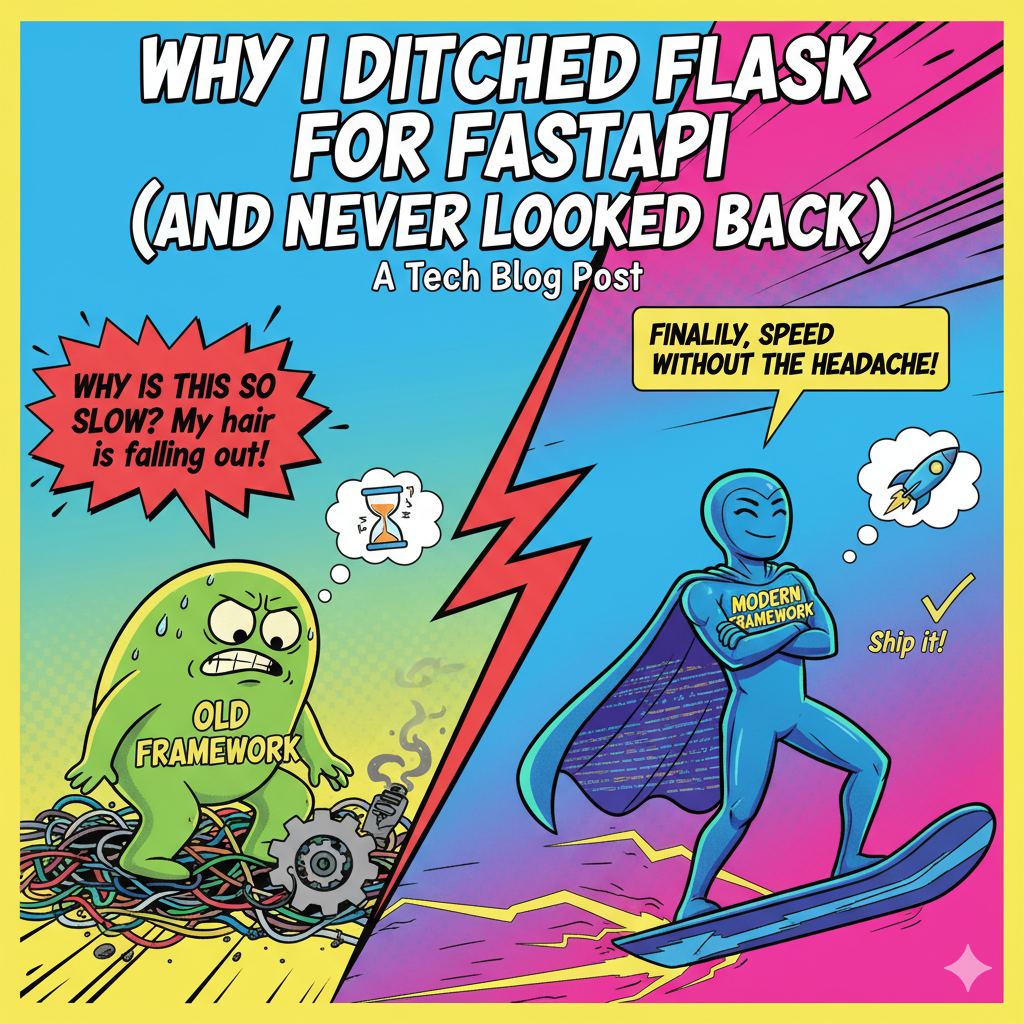
Flask is the friend everyone loves at first. Small, simple, reliable, and easy to get along with. For tiny projects, it feels perfect. You spin up an endpoint, send a request, and everything works. Life is good. But then projects start growing. Suddenly, async operations feel like juggling fire. Validation turns into endless copy-paste loops. Scaling beyond a handful of routes becomes a delicate balancing act that keeps developers awake at night. Things that seemed easy before now feel like solving a Rubik’s cube blindfolded while someone keeps adding extra cubes. It is easy to love Flask, but it is also easy to outgrow it.
Then comes FastAPI, like a breath of fresh air in a room that smelled faintly of spaghetti code. Async finally makes sense. Type hints are no longer a decoration, they become a map to guide every request safely to its destination. Validation happens automatically, and OpenAPI docs pop up as if by magic, letting clients, teammates, and even future self understand what every endpoint does without endless explanations. Bugs get caught before they ruin production, endpoints behave like they were trained in obedience school, and building new features stops feeling like a negotiation with chaos. Everything flows.
FastAPI makes the act of building applications feel like it was designed for humans who also happen to like typing code. Background tasks suddenly work naturally, WebSockets feel like part of the framework rather than an optional headache, and scaling doesn’t require a mental breakdown every time someone adds a new feature. Debugging old code is no longer a punishment because type hints and validation provide a clear map of what’s happening. FastAPI doesn’t just make APIs faster. It makes development fun again.
Collaboration also becomes easier. With automatic docs and clear types, teammates can jump into a project and immediately understand it without asking endless questions. Even revisiting old endpoints feels natural because everything is explicit, typed, and validated. The flow stops being chaotic and starts being something predictable, elegant, and enjoyable.
Of course, the journey doesn’t end here. For curious minds who like to explore, there are alternatives. Nexios is an async-first, lightweight framework that is still in active development. It has built-in WebSocket support, flexible routing, and gives developers full control without unnecessary boilerplate. For anyone interested, the documentation is available here: https://nexios-labs.github.io/nexios
Switching from Flask to FastAPI isn’t just picking a new tool. It’s upgrading the entire approach to building applications. Async stops being scary, validation stops being a chore, scaling stops being a nightmare, and development starts to feel like something that actually makes sense. FastAPI isn’t just a framework. It’s the framework that finally lets developers build, ship, and iterate without constantly fighting the code or the tools.
메타데이터
- post_id
- ed4ec8ed88ab
- slug
- why-i-ditched-flask-for-fastapi-and-never-looked-back-ed4ec8ed88ab
- url
- https://medium.com/@techwithdunamix/why-i-ditched-flask-for-fastapi-and-never-looked-back-ed4ec8ed88ab
- canonical_url
- https://medium.com/@techwithdunamix/why-i-ditched-flask-for-fastapi-and-never-looked-back-ed4ec8ed88ab
- author_url
- https://medium.com/@techwithdunamix
- status
- ok
- fetched_at
- 2026-06-26 21:52:29