The Thin Line: Why Use LaTeX in 2026?
Writing slowly in an age of automation: structure, responsibility, and the discipline of thought
The Thin Line: Why Use LaTeX in 2026?
Writing slowly in an age of automation: structure, responsibility, and the discipline of thought

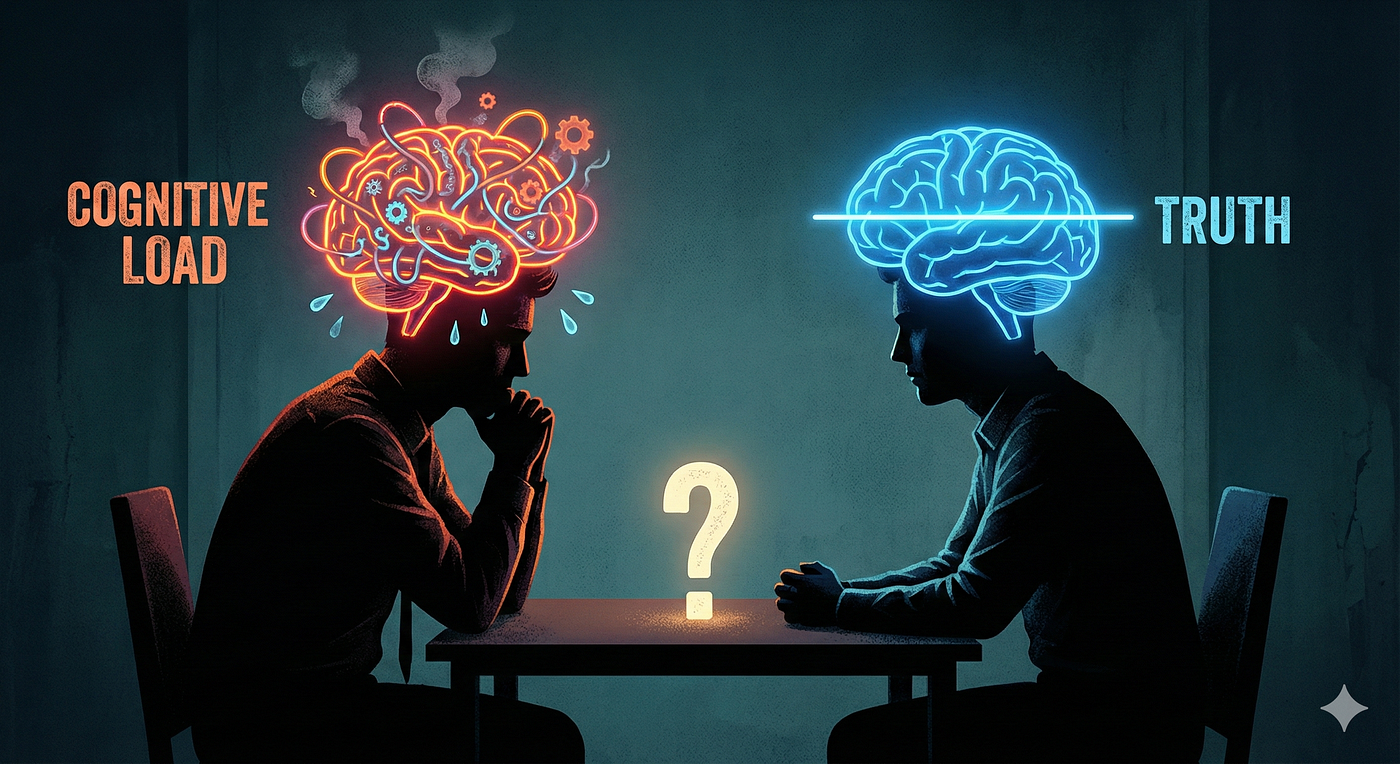
Figure 1. The discipline of structure in the age of automation (Tongyi-Wanxiang & Rodas-Osollo, 2025).
A question that is never merely technical
From time to time, a student or colleague asks me a question that sounds innocent and is anything but: “Why use LaTeX?” At first glance, it appears to be a matter of preference, as though we were merely comparing interfaces or habits. We are not. The real question is more serious. It concerns the relationship between writing and thinking, between textual structure and intellectual responsibility, and between the ease of producing pages and the harder task of producing work that deserves to endure.
LaTeX is not merely an elegant way of formatting documents. More precisely, it is a structured writing technology that compels a distinction between content and presentation, between the logical architecture of a document and its final appearance. That separation, which some experience as an inconvenience, is in fact one of its deepest virtues. Where other environments invite the writer to repair visually what has not yet been resolved conceptually, LaTeX asks the author to name the parts of a text according to what they are: a section, a figure, a reference, an equation, a note, a table. In that apparently technical gesture, a small ethics of clarity is already at work.
That is why I maintain that LaTeX still matters in 2026, not because of nostalgia, technical snobbery, or some ascetic academic taste for unnecessary suffering, but because it reminds us of something the present age would rather forget: that serious thought requires form, that rigorous writing requires structure, and that not every form of friction is a defect.
“The choice of a technical medium is never neutral: it shapes how arguments are structured, how knowledge is stabilised, and how responsibility is distributed” (Rodas-Osollo, 2026).
A brief history and the ethics of durability
We live in an age that worships frictionlessness. Everything must be immediate, intuitive, seamless and invisible. Any tool that promises more output with less resistance is celebrated as a sign of progress. Yet serious intellectual life has never been wholly frictionless, nor should it be. Some resistances are not system failures but safeguards. They oblige us to pause, to revise, and to acknowledge the materiality of the work.
This observation helps explain the very genealogy of LaTeX. Its deeper background lies in TeX, which Donald Knuth created out of dissatisfaction with the poor typographical quality of technical publishing. The issue was not decorative but epistemic: when notation is distorted, when a formula becomes ambiguous, or when presentation compromises intelligibility, content itself is damaged. TeX, and later LaTeX, therefore did not emerge as convenience products but as systems designed to protect precision, consistency and durability (Knuth, 1984; Lamport, 1994).
Far from being fossilised, the LaTeX ecosystem still shows clear institutional vitality. The LaTeX Project continues to release kernel updates and technical documentation; TeX Live 2026 has been distributed by the TeX Users Group; and arXiv explicitly supports recent TeX Live versions within its submission workflows, confirming that LaTeX remains embedded in the material infrastructure of contemporary scholarly communication (LaTeX Project, 2025, 2026; TeX Users Group, 2026; arXiv, n.d.).
“LaTeX endures not through retrospective romanticism but through structural durability: it was designed to keep meaning stable when documents become complex” (Rodas-Osollo, 2026).
Why LaTeX remains essential in 2026
Anyone who has worked for years with long manuscripts knows that the apparent convenience of many visual environments tends to deteriorate as a document grows. Cross-references fail, numbering becomes fragile, figures develop a will of their own, and bibliographies in inattentive hands drift quickly towards inconsistency. LaTeX, by contrast, was built precisely for what long documents require: structural continuity, traceability, and a less capricious relation between authorial intention and typographic result.
This is not a merely aesthetic matter. In technical and academic writing, precision is not decorative but epistemic. A badly rendered equation, an inconsistent citation, or a confused textual hierarchy does not merely impoverish the surface of a document; it degrades the legibility of the reasoning itself. When LaTeX imposes consistency, it is therefore not imposing ornament but a discipline of intelligibility.
Its plain-text basis also favours responsible collaboration. Scholarly work in 2026 is rarely entirely solitary. Version histories, change control and distributed review are now ordinary parts of research life. LaTeX fits naturally into that ecosystem because it makes it easier to see what changed, when it changed and, in many contexts, who changed it. That traceability is not a bureaucratic obsession; it is a form of accountable authorship. Likewise, its bibliographic systems operationalise an ethics of citation by reducing error, sustaining consistency and supporting rigorous reference management in complex documents (Overleaf, n.d.-a, n.d.-b).
“Clarity is not ornamental courtesy; it is responsibility” (Rodas-Osollo, 2026).
LaTeX and the Ethics of Friction
The argument becomes still more urgent when placed in the present context of AI-assisted writing. Systems now draft, reformulate, expand, condense and polish prose with remarkable fluency. That capacity can be useful. It would be childish to deny it. But it also introduces a serious difficulty: the easier it becomes to generate plausible text, the harder it may become to distinguish authorial presence from stylistic repetition, and intellectual judgement from the simulation of knowledge.
Here, LaTeX plays a particularly interesting role. Not because it prevents the use of AI systems, but because it makes the empty simulation of scholarship harder to sustain. A LaTeX document obliges the writer to organise sections, references, formal environments, tables, figures and internal relations with a degree of explicitness that does not always accompany the mere production of smooth prose. To put the matter plainly, a fluent paragraph is not yet a justified claim.
In this sense, LaTeX functions as a material counterweight to opaque pipelines of automation. It keeps the skeleton of the text visible. It requires formal decisions that point back to conceptual decisions. And by doing so, it preserves something that has become precious in 2026: the possibility of linking writing to responsibility.
“A fluent paragraph is not yet a justified claim” (Rodas-Osollo, 2026).
Conclusion
For all these reasons, I prefer to defend LaTeX not merely as a tool but as an epistemic technology. Its value lies not only in producing beautiful documents, but in keeping the internal logic of an argument visible and in obliging the writer to relate to his own text in a less frivolous, less complacent way.
LaTeX endures, in short, because rigorous intellectual work endures. So long as there are long arguments, serious bibliographies, complex notation, authorial responsibility and readers who deserve more than a polished surface, there will remain substantive reasons to write with it. In a culture that confuses speed with progress far too easily, LaTeX recalls a sterner truth: durable intelligibility is worth more than dazzling immediacy.
“The life of the mind deserves a form worthy of its depth” (Rodas-Osollo, 2026).
References
arXiv. (n.d.). Supported TeX Live versions. arXiv. Retrieved 14 March 2026, from https://info.arxiv.org/help/faq/texlive.html
Knuth, D. E. (1984). The TeXbook (Computers & Typesetting, Vol. A). Addison-Wesley.
LaTeX Project. (2025, 11 November). LaTeX 2025–11–01 released and distributed. https://www.latex-project.org/news/2025/11/11/issue42-of-latex2e-released/
LaTeX Project. (2026, 27 January). Pre-release 1 of LaTeX 2026–06–01 is available for testing. https://www.latex-project.org/news/2026/01/27/latex-dev-1/
Lamport, L. (1994). LaTeX: A document preparation system (2nd ed.). Addison-Wesley.
Overleaf. (n.d.-a). Learn LaTeX in 30 minutes. Overleaf. Retrieved 14 March 2026, from https://www.overleaf.com/learn/latex/Learn_LaTeX_in_30_minutes
Overleaf. (n.d.-b). Bibliography management in LaTeX. Overleaf. Retrieved 14 March 2026, from https://www.overleaf.com/learn/latex/Bibliography_management_in_LaTeX
Rodas-Osollo, J. (2026). LaTeX as an epistemic technology: Structure, discipline, and responsibility in scholarly writing [Preprint]. ResearchGate. https://doi.org/10.13140/RG.2.2.34119.97444
TeX Users Group. (2026). Installing TeX Live over the Internet. https://www.tug.org/texlive/acquire-netinstall.html
Tongyi-Wanxiang, & Rodas-Osollo, J. (2026). Conceptual artwork co-designed with Jorge Rodas-Osollo using Tongyi-Wanxiang [AI-generated image]. Wan AI. https://wan.video/
메타데이터
- post_id
- ed610c1da4eb
- slug
- the-fine-line-why-use-latex-in-2026-ed610c1da4eb
- url
- https://medium.com/@a392513/the-fine-line-why-use-latex-in-2026-ed610c1da4eb
- canonical_url
- https://medium.com/@a392513/the-fine-line-why-use-latex-in-2026-ed610c1da4eb
- author_url
- https://medium.com/@a392513
- status
- ok
- fetched_at
- 2026-06-12 18:14:10