Something Weird Is Happening in the Software Industry
Small businesses are building more software themselves. Strangely, large organisations are becoming the better AI clients
Free animal circus image, public domain entertainment CC0 photo. View public domain image source here
Something Weird Is Happening in the Software Industry
A few weeks ago, someone asked us to build a complicated website. We scoped it properly: the architecture, the integrations, the edge cases, all of it and sent through a quote.
They rejected it immediately.
Just a short email. “Sorry too expensive and it will take too long.” Now I don’t actually mind losing quotes like this. If you win everything, you are too cheap and I also don’t negotiate on timeframes.
Not a Medium member? Keep reading by clicking **here**.
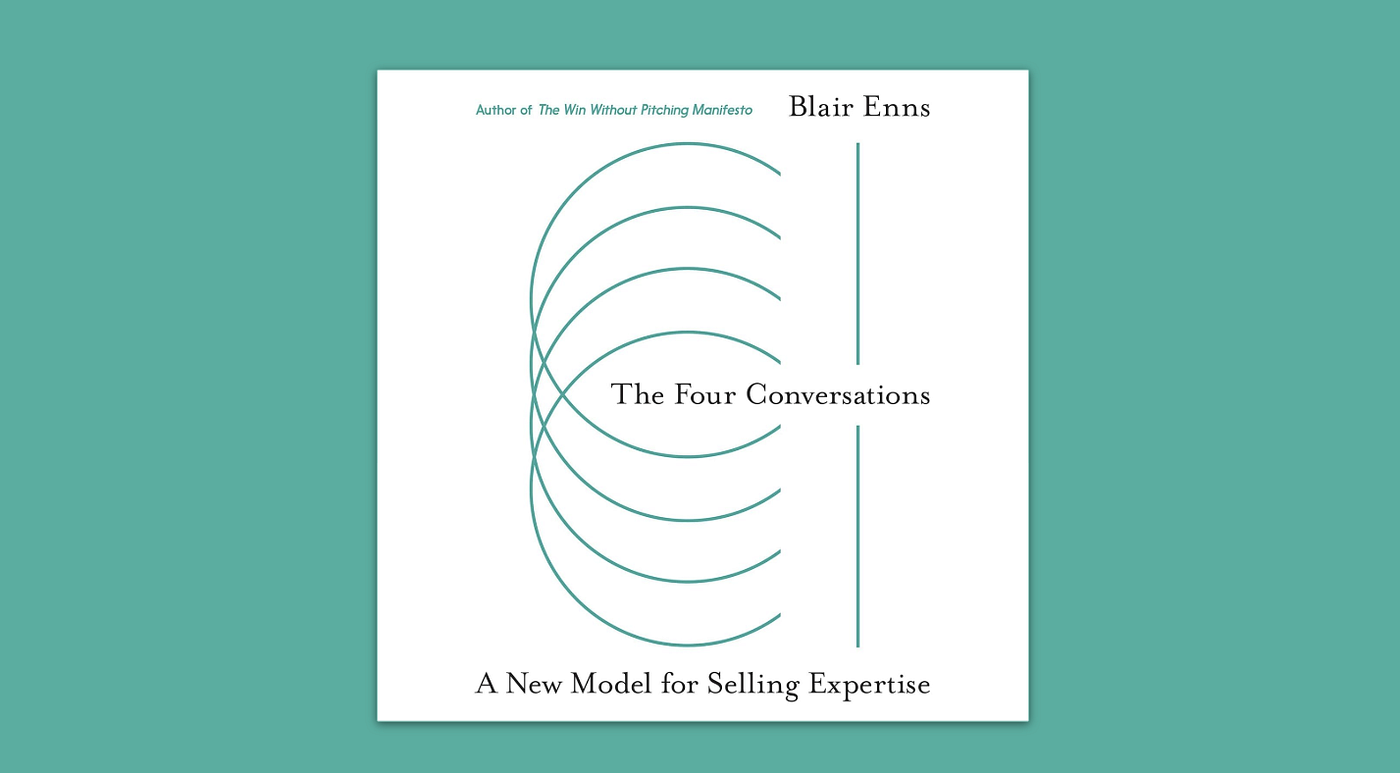
The Four Conversations: A New Model For Selling Expertise by Blair Enns was super valuable in helping to mature my response to getting rejected. **You can view the book on Amazon here.**
Blair talks about how if you are to be an expert, you need to lead the client.
That means getting sent full wireframes with the client not asking for input from you is a negative signal. They aren’t letting you lead. Someone else has been paid for the thinking and if you are an expert, your thinking is extremely valuable.
Here is the quote from the book. I know it sounds a bit Tony Robbins like and over the top but in the context of the book it is quite cool.
“I am the expert, I am the prize. I’m on a mission to help. I can only do that if you let me lead. All will not follow — and that’s okay”
That last line really helped me. All will not follow and that’s okay.
So what’s the weird thing happening to the software industry?
I’ve run a business for 6 years and these rejections are strange. We are offering more to the client for less money and it’s faster and we are still getting rejected!
But the strange thing is, this type of rejection is not happening from larger businesses, it is all coming from businesses that are between 10 to 50 staff.
Now these clients used to be great for smaller scale jobs and the thing you used to be able to count on them for was innovation and fun projects.
As a consultancy it’s nice to have smaller jobs because then your newer developers can train on those projects and build experience, if everything is large then no one can practice!
So you need smaller projects. I heard the analogy that it’s like a jar, you have big rocks, medium rocks and sand. The sand is still important to an agency.
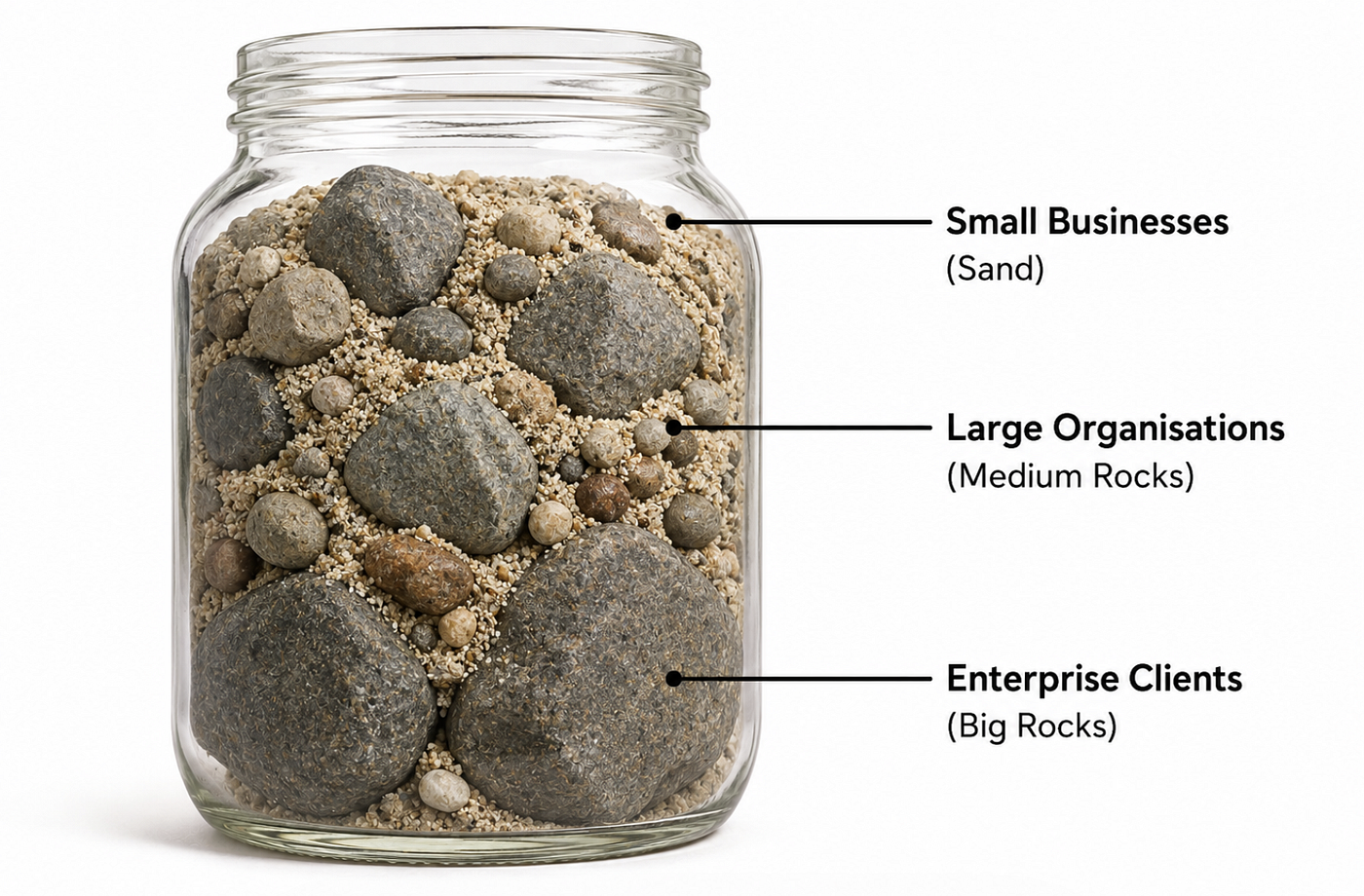
This sums up how an agency operates — ChatGPT Generated Image
So now we take away the sand and it looks like this.
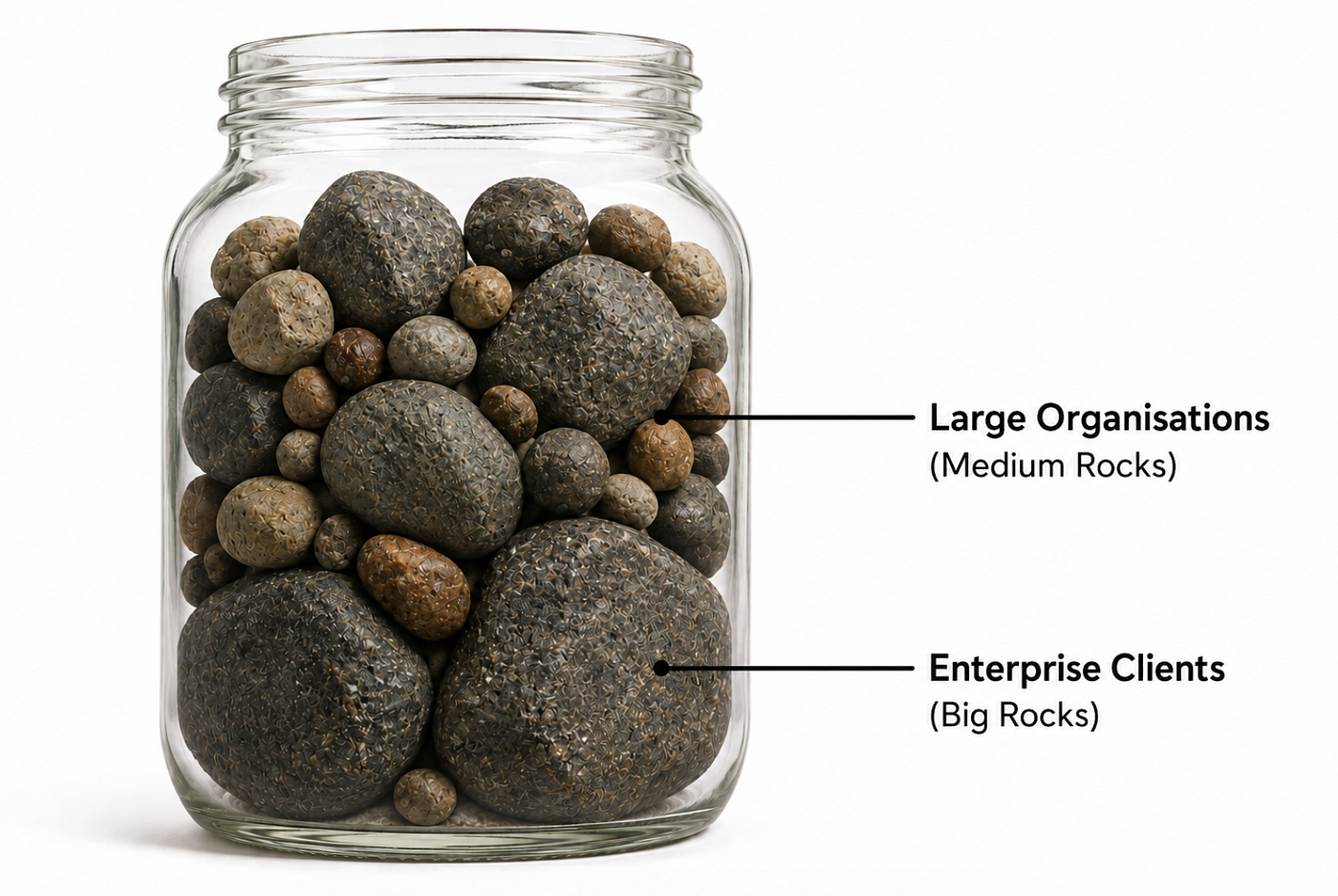
This is what my agency looks like now — ChatGPT Generated Image
There’s no sand!
This might not seem like a big deal to you but it actually is for me and has a huge number of distortive effects.
- Without the sand, how do we train junior developers in my business? They now have to basically only learn on high stakes jobs for large brands.
- The consequence of the above is that we then have to hire more experienced people.
- But I enjoy hiring graduates and I also find that I want to have fresh people with experience with AI tooling that we can help to train up over a few years.
- It fundamentally changes the nature of the business.
- It also means that the sand is not technically building good products that are reliable.
It reminds me of this famous video about wolves in the Yellowstone park.
[embed]
Wolves were hunted to near extinction in Yellowstone National Park in the early 1900s because they were seen as dangerous predators to livestock and game populations.
Without wolves, the elk population exploded.
The elk then heavily overgrazed young trees and vegetation, especially willow and aspen near riverbanks. Over time this changed the physical landscape of the park. Riverbanks became unstable and erosion increased because there was less plant life holding the soil together.
In 1995, wolves were reintroduced to Yellowstone.
Almost immediately, elk behaviour changed. They stopped lingering in certain valleys and exposed river areas because they were now at risk of predation. This then caused the vegetation to start to recover.
Willow and aspen trees regrew. Beaver populations increased because they relied on those trees for food and dam building. The dams then created new habitats for fish, birds and other species.
Even the rivers changed shape. With more vegetation stabilising the banks, erosion reduced and river channels became more fixed.
So something that you might have perceived as bad (the wolf) was actually helping to keep the whole ecosystem in check.
Now of course I’m not saying that small business software projects are extinct to all businesses
But I’m writing to talk about my local experience and how I am perceiving the impact of AI.
The reason that these smaller businesses have stopped doing as much work is clear. They are building it themselves. Or at least, they’re building enough of it themselves that a professional quote feels unreasonable by comparison. AI tools have given them just enough capability to feel like they understand the full scope of the work. And the specific cruelty of that kind of confidence is that you need the experience you lack in order to recognise that you lack it.
So the wolves are gone and the elk are overgrazing. What does the park look like now?
For consultancies like mine, the practical effect is that you get pushed upstream. If the 10 to 50 person companies are no longer viable clients, you start looking at the 50 to 500 person companies. And your instinct tells you this is going to be painful. Bigger clients mean longer sales cycles, more procurement hoops, more governance committees. You expect to trade agility for stability.
But here’s what I actually found, and this is the part I genuinely didn’t expect: the larger organisations are more innovative.
I’ll say that again because it surprised me too. The companies with more process, more layers, more bureaucracy are somehow the ones doing more interesting work with AI.
Isn’t that strange? I think it is profoundly strange. It’s definitely not what I had expected.
But then if you peel away all of the negative associations that you have with large businesses you realise that they have so many positive factors for AI adoption.
Large organisations have been through enough technology cycles to have software development scar tissue. They’ve seen projects fail, they’ve lived with technical debt, they’ve had the experience of choosing the cheap option and paying for it over years. That history gives them something invaluable: the ability to evaluate what work is actually worth.
When a large organisation looks at a quote, they’re comparing it against their own experience of what things cost when done properly and what things cost when done badly. They have a calibrated sense of value. The small company founder who built something in an AI tool last weekend doesn’t have that calibration. They’re comparing your quote against a Saturday afternoon.
There’s something deeper here too. Jen Abel made the observation that enterprise companies are actually the early adopters right now, and I think she’s right. The traditional diffusion model, startups adopt first, enterprise follows, seems to be running in reverse for AI.
Large organisations have the resources to experiment seriously. They can dedicate a team to an AI pilot without betting the company on it. They can afford to learn that some things work and some things don’t, and they can absorb those lessons without going under. A small company that bets on AI and gets it wrong has a much harder time recovering from that. So paradoxically, the organisations with more to lose are the ones that can afford to take more risks, because any individual risk is a smaller proportion of their total operation.
There’s also a selection effect. The people inside large organisations who are pushing AI initiatives tend to be genuinely curious and technically literate. They fought through the bureaucracy to get their pilot approved. They navigated the procurement process and the governance review. The ones who make it through that filter are, by definition, committed and informed.
Meanwhile, the small company founder who watched a YouTube video and decided AI means everything should be cheap hasn’t been through any filter at all.
So from my perspective, the market is inverting. Small to medium companies, which should be the natural clients for small consultancies, are pricing themselves out of good work. Large organisations, which should be slow and conservative, are showing up as the innovative, well-calibrated buyers. The conventional map of how technology adoption works doesn’t match the territory anymore.
What can you do with this?
If you’re a developer or you run a consultancy, the practical lesson is to swim upstream. The instinct to serve small companies because they’re easier to reach and faster to close is increasingly wrong. The easier-to-reach client is now also the client most likely to have an unrealistic sense of what things cost.
But there’s a limit to how far upstream you should go. In my experience, once a company is in the thousands of staff, the procurement timelines become so long that the opportunity cost kills you. You’ll spend six months in a sales cycle that a 200-person company would complete in three weeks. My record is 14 months to get onboarded to a large company as a supplier.
The sweet spot, at least right now, seems to be somewhere in the range of 50 to 500 employees. Large enough to have real problems and real budgets. Small enough that you’re still talking to someone who can make a decision. Experienced enough to know what good work costs. Sophisticated enough to be genuinely interested in what AI can actually do, rather than what Twitter says it can do.
But how do I feel about this?
Honestly I know it’s weird, but I’m kind of sad about the change in the market.
This is what my agency looks like now — ChatGPT Generated Image
I enjoyed the sand, I enjoyed that type of work. I like hearing the passion of a small business owner who has a blank canvas in front of them and they have a big dream.
Maybe they will come back or maybe they won’t. I don’t really know. But as sad as I am about missing the sand, I’m as happy and excited that large organisations have been liberated.
What an amazing time it is for those businesses, it has been so fun seeing people dream up amazing ideas and actually have those ideas come true!
Before you go
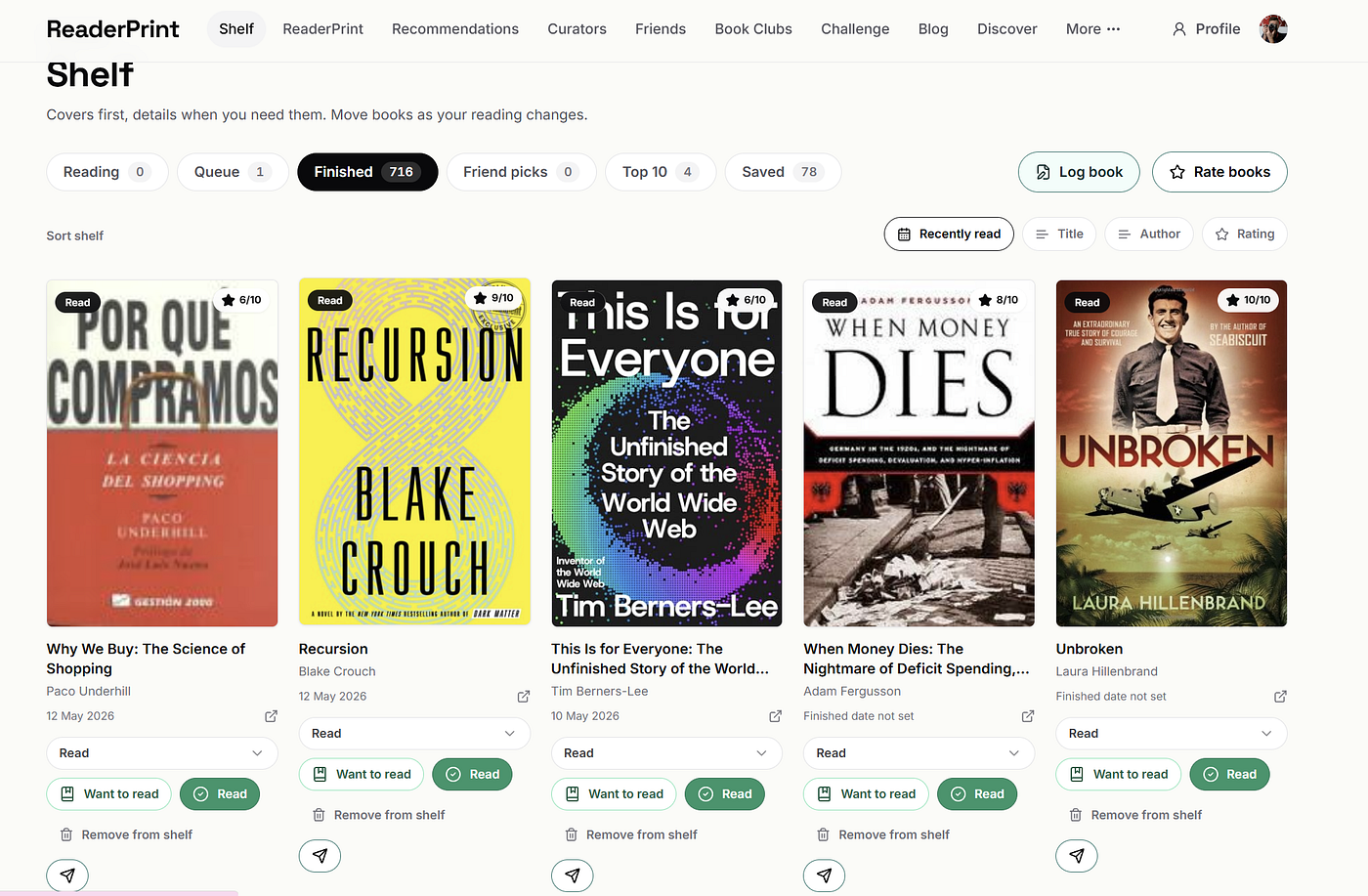
I’m looking for beta testers for my book recommendation site. You take a quiz and then it gives you books tailored to your preferences.
If you find that Goodreads and Amazon don’t give you good recommendations then this is for you.
Also feel free to sign up to my Substack. I do a unique post there every week and I also post a link to all my Medium posts every week.
메타데이터
- post_id
- ed9947230ce1
- slug
- something-weird-is-happening-in-the-software-industry-ed9947230ce1
- url
- https://medium.com/realworld-ai-use-cases/something-weird-is-happening-in-the-software-industry-ed9947230ce1
- canonical_url
- https://medium.com/realworld-ai-use-cases/something-weird-is-happening-in-the-software-industry-ed9947230ce1
- author_url
- https://medium.com/@chrisdunlop_37984
- status
- ok
- fetched_at
- 2026-06-15 20:49:13