Israel’s INDIGENOUS Roots: The Forgotten History of the Jewish People
Uncovering the ancient past
Israel’s INDIGENOUS Roots: The Forgotten History of the Jewish People
Uncovering the ancient past
The question of Jewish indigeneity to the land of Israel is often met with skepticism and controversy, with some arguing that the concept of indigeneity is a recent invention used to justify Israeli claims to the land. However, this perspective overlooks the rich and complex history of the Jewish people in the region, which spans over three millennia. This article will argue that Jewish indigeneity is not a talking point, but a historical record that is rooted in the ancient past. The Jewish people have a deep and abiding connection to the land of Israel, which is evident in the archaeological record, historical texts, and genetic studies.
The Jewish people have a long and storied history in the land of Israel, with a presence that dates back to the second millennium BCE. According to the Hebrew Bible, the Israelites established a kingdom in the region, which was later conquered by the Assyrians and Babylonians. Despite these conquests, the Jewish people maintained a presence in the land, with many returning from exile to rebuild the Temple in Jerusalem. The Roman conquest of Judea in 63 BCE marked the beginning of a long period of foreign rule, but the Jewish people continued to live in the land, with many maintaining a strong sense of identity and connection to the region. As noted by historian Eric H. Cline, the Jewish people have a “3,000-year history in the land of Israel, with a presence that is documented in the archaeological record and historical texts.
The Ancient Roots of Jewish Indigeneity
The concept of indigeneity is often associated with native peoples who have a continuous presence in a particular region. However, the Jewish people’s connection to the land of Israel is rooted in their ancient history, which predates the modern concept of indigeneity. The Jewish people have a deep cultural and religious connection to the land, which is evident in their texts, traditions, and practices. For example, the Hebrew Bible contains numerous references to the land of Israel, which is often described as the “promised land” or the “land of the ancestors.” These references demonstrate a strong sense of attachment and belonging to the land, which is a key component of indigeneity.
The archaeological record also provides evidence of the Jewish people’s ancient presence in the land. Excavations at sites such as Megiddo, Hazor, and Jerusalem have uncovered a wealth of artifacts and texts that demonstrate a Jewish presence in the region dating back to the second millennium BCE. For example, the Tel Dan inscription, which was discovered in 1993, contains the earliest known reference to the “House of David,” which is a key component of the Jewish people’s historical narrative. As noted by archaeologist Amnon Ben-Tor, the inscription provides “conclusive evidence” of the Jewish people’s presence in the land during the Iron Age.
The Zionist Movement and Jewish Indigeneity
The Zionist movement, which emerged in the late 19th century, sought to re-establish a Jewish homeland in the land of Israel. While the movement was driven by a range of factors, including anti-Semitism and nationalism, it also drew on the Jewish people’s ancient connection to the land. The Zionist movement’s emphasis on Jewish indigeneity was not simply a rhetorical device, but rather a reflection of the deep cultural and historical ties that the Jewish people have to the region. As noted by historian Benny Morris, the Zionist movement’s leaders “saw themselves as the heirs of the ancient Israelites, and their movement as a continuation of the ancient Jewish presence in the land.”
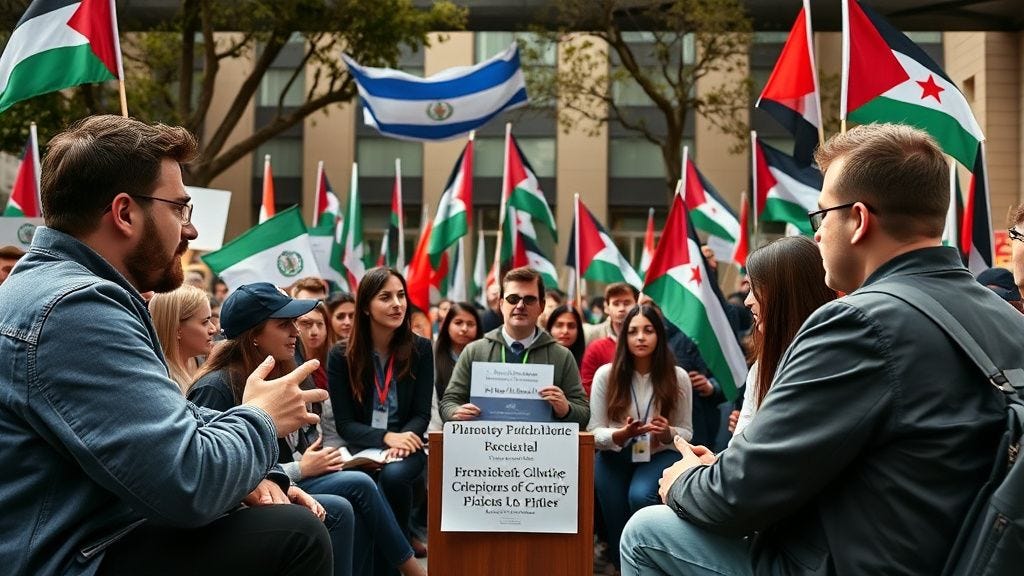
However, the Zionist movement’s emphasis on Jewish indigeneity has also been criticized for overlooking the presence of other indigenous peoples in the region, including the Palestinians. This criticism is not without merit, as the Zionist movement’s focus on Jewish indigeneity has often been used to justify the displacement and marginalization of the Palestinian people. As noted by historian Rashid Khalidi, the Zionist movement’s “exclusive focus on Jewish indigeneity” has contributed to the “erasure of Palestinian history and identity.”
The Palestinian Perspective
The Palestinian people have a rich and complex history in the region, with a presence that dates back to the ancient period. While the Palestinian people’s connection to the land is often overlooked in discussions of Jewish indigeneity, it is an important component of the region’s history and identity. The Palestinian people have a deep cultural and national connection to the land, which is evident in their texts, traditions, and practices. For example, the Palestinian poet Mahmoud Darwish wrote extensively about the Palestinian people’s connection to the land, which he described as a “deep and abiding love.”
The Palestinian people’s perspective on Jewish indigeneity is complex and multifaceted. While some Palestinians acknowledge the Jewish people’s ancient presence in the land, others view the concept of Jewish indigeneity as a threat to their own identity and claims to the region. As noted by Palestinian scholar Ali Abunimah, the concept of Jewish indigeneity is often used to “justify the displacement and marginalization of the Palestinian people.” However, this perspective overlooks the Jewish people’s deep cultural and historical ties to the region, which are an important component of the region’s history and identity.
Conclusion
The question of Jewish indigeneity is complex and multifaceted, with a range of perspectives and interpretations. While the concept of indigeneity is often associated with native peoples who have a continuous presence in a particular region, the Jewish people’s connection to the land of Israel is rooted in their ancient history, which predates the modern concept of indigeneity. The Jewish people have a deep cultural and religious connection to the land, which is evident in their texts, traditions, and practices. However, this connection must be acknowledged in conjunction with the Palestinian people’s own connection to the land, which is an important component of the region’s history and identity. As noted by historian Ian Lustick, the question of Jewish indigeneity is not a “zero-sum game,” in which one people’s claims to the land must come at the expense of another. Rather, it is a complex and multifaceted issue that requires a nuanced and balanced approach.

메타데이터
- post_id
- edb0b4a1006c
- slug
- israels-indigenous-roots-the-forgotten-history-of-the-jewish-people-edb0b4a1006c
- url
- https://medium.com/@TheZionistWriters/israels-indigenous-roots-the-forgotten-history-of-the-jewish-people-edb0b4a1006c
- canonical_url
- https://medium.com/@TheZionistWriters/israels-indigenous-roots-the-forgotten-history-of-the-jewish-people-edb0b4a1006c
- author_url
- https://medium.com/@TheZionistWriters
- status
- ok
- fetched_at
- 2026-07-10 10:20:21