The $250 Gap Between Vivo X300 FE and Xiaomi 17T Hides a Much Bigger Decision
Intro
The $250 Gap Between Vivo X300 FE and Xiaomi 17T Hides a Much Bigger Decision
Intro
A $250 price difference sounds easy to justify until both phones arrive with 50MP main cameras, 6,500mAh batteries, and premium branding. The awkward part begins after the spec sheet, where each device quietly gives up something the other refuses to.
The Price Tag Tells Only Half the Story
Premium Android phones have become unusually good at disguising compromise. A lower price no longer guarantees obvious omissions, while paying extra no longer guarantees dramatic upgrades. That is exactly where the Vivo X300 FE vs Xiaomi 17T comparison becomes interesting. Xiaomi has packed enough flagship-grade hardware into a cheaper package that the conversation shifts away from raw specifications and toward everyday priorities. Vivo, meanwhile, spends its budget on details that rarely dominate marketing slides but tend to shape long-term ownership. Neither strategy feels accidental. Each company has chosen a different definition of what a premium smartphone should actually deliver, and those choices begin to matter once the excitement of launch-day specifications fades.
Quick Highlights
- Xiaomi undercuts Vivo by roughly $250 without looking like a budget alternative.
- Vivo invests heavily in charging, build quality, and long-term flagship conveniences.
- Leica and Zeiss represent two distinct camera philosophies rather than a simple winner.
- Display preferences split between compact refinement and larger entertainment.
- Buying the better phone depends far more on habits than benchmark scores.
“For a more detailed description, you can check here”
Xiaomi Is Selling Restraint, Not Sacrifice
Price is the loudest difference, but it stops being the most interesting one surprisingly quickly.
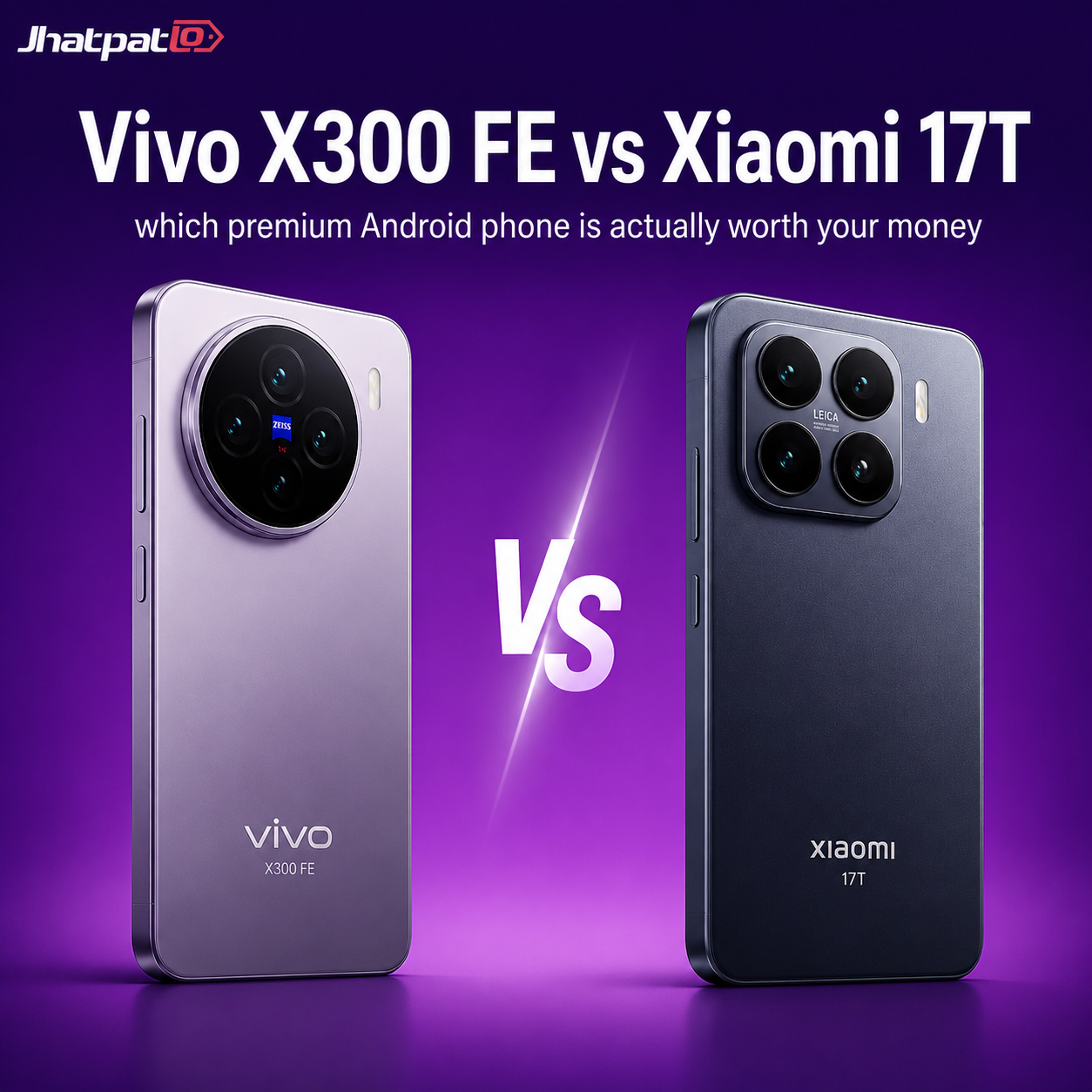
At roughly $700 (₹60,000), the Xiaomi 17T arrives with hardware that refuses to behave like a discounted premium phone. A 6.59-inch AMOLED display, Leica-tuned imaging, a 5x periscope telephoto camera, UFS 4.1 storage, Dolby Vision support, Bluetooth 6.0, and a global 6,500mAh battery create very little sense of compromise. Buyers comparing the Vivo X300 FE vs Xiaomi 17T are unlikely to feel that Xiaomi removed essential features simply to reach a lower price.
Regional differences make the story even more unusual. The Chinese variant pushes battery capacity to 7,000mAh, highlighting how smartphone specifications can vary depending on market rather than engineering limits alone.
That approach changes expectations. Xiaomi is no longer competing by offering “almost flagship” hardware. It is asking whether many flagship extras are valuable enough to justify another $250, and that question becomes harder once charging cables are unplugged.
Vivo Charges More Because It Keeps Adding Small Advantages
Some upgrades never look dramatic on comparison charts.
Snapdragon 8 Gen 5, 90W wired charging, 40W wireless charging, reverse wireless charging, bypass charging, an ultrasonic fingerprint scanner, an aluminum frame, and IP68/IP69 protection rarely dominate a headline individually. Together, they create a device that demands fewer compromises over several years instead of several weeks.
Those additions explain much of Vivo’s pricing strategy. Faster unlocking becomes something noticed dozens of times every day. Wireless charging quietly changes where the phone sits on a desk. Better frame materials only attract attention after surviving months inside pockets and bags.
Software support also strengthens Vivo’s argument. Five promised Android version upgrades provide a clearer ownership timeline than many competing devices, giving buyers more confidence that expensive hardware will remain current beyond its launch year.
Yet none of these strengths erase the uncomfortable reality that Xiaomi already handles most everyday tasks extremely well. The more complete flagship experience only becomes valuable if those refinforcements match the owner’s routines.
Cameras Reveal Two Completely Different Priorities
Megapixel counts barely explain what separates these phones.
Both models rely on a 50MP stabilized primary sensor, but their supporting hardware points in different directions. Xiaomi extends optical reach with a 5x periscope telephoto camera developed alongside Leica tuning. That extra magnification makes distant buildings, concerts, sporting events, and travel photography noticeably easier without leaning heavily on digital cropping.
Vivo responds by investing in video and front-facing imaging instead. A 50MP autofocus selfie camera, support for 8K recording, and 4K capture at 120fps indicate that creators, frequent video callers, and social media users received more attention during development than maximum zoom distance.
Neither camera system tries to dominate every category.
Instead, each one quietly assumes a different owner. Someone who spends weekends photographing city skylines from observation decks may appreciate Xiaomi’s longer reach far more than 8K recording. Someone producing short-form videos or attending daily virtual meetings will probably notice Vivo’s stronger front camera long before missing another two levels of optical zoom, leaving buyers with a choice that feels surprisingly personal.
Where the Differences Actually Show Up
Phones at this price rarely fail at ordinary tasks. Messaging apps open instantly, games run smoothly, streaming services look sharp, and battery anxiety has largely disappeared thanks to capacities around 6,500mAh. The real differences emerge in habits that repeat hundreds of times over a year.
Wireless charging changes where a phone lives at home and work. A compact display feels different after hours of one-handed scrolling on public transport. Better zoom influences which photos are captured instead of ignored. Faster video modes affect editing flexibility months after recording. Even software support matters less on launch day than during the third or fourth year of ownership, when security patches and Android updates become easier to appreciate than another benchmark score.
Final Thoughts
Smartphone comparisons often chase a single winner because rankings make buying decisions feel simpler. This matchup refuses to cooperate.
The Xiaomi 17T makes premium hardware feel unusually accessible without appearing stripped down. The Vivo X300 FE answers by polishing dozens of small experiences that rarely become headlines but gradually shape ownership.
That leaves the price gap carrying more weight than the specification gap. Sometimes the expensive phone earns every extra dollar. Sometimes the cheaper phone quietly exposes how many flagship luxuries had become assumptions rather than necessities.
메타데이터
- post_id
- edb283f03080
- slug
- the-250-gap-between-vivo-x300-fe-and-xiaomi-17t-hides-a-much-bigger-decision-edb283f03080
- url
- https://medium.com/@sourcebow.jhatpatlo/the-250-gap-between-vivo-x300-fe-and-xiaomi-17t-hides-a-much-bigger-decision-edb283f03080
- canonical_url
- https://medium.com/@sourcebow.jhatpatlo/the-250-gap-between-vivo-x300-fe-and-xiaomi-17t-hides-a-much-bigger-decision-edb283f03080
- author_url
- https://medium.com/@sourcebow.jhatpatlo
- status
- ok
- fetched_at
- 2026-08-10 15:33:16