A Short Note on “ELECTRONIC SPAM FILTERING BASED ON NEURAL NETWORKS”
This entry reflects on a journal I encountered while searching for matrix multiplication in context of neural network, I came across a…
A Short Note on “ELECTRONIC SPAM FILTERING BASED ON NEURAL NETWORKS”
This entry reflects on a journal I encountered while searching for matrix multiplication in context of neural network, I came across a relevant paper on spam filtering.
Problem Statement
Attackers can you our Email ID in order to steal our personal and secretive information by mailing us malicious links or docs. We might also get unnecessary advertisement mails, subscription mails, newsletters etc. This can be stop by using spam filtering. The normal spam filtering by saving spam identifying words in database i.e. linguistic signals, mails filtering methods set by system administrator i.e. message filtering rules gets ineffective as spam mails can get update itself over time. For this, the paper approach the methods of artificial intelligence, especially artificial neural network. This approach focuses on classifiers, setting on important parameters. marking important messages and preparing training sample in order to evaluate the classification accuracy of actual dataset.
Core
The paper talks about a system that detects and prevents network attacks using neural networks. It analyse and summarize the contents to know the meaning of the content, then prevent attacks by learning and teaching itself.
The system works on predefined statistical and non-statistical message attributes —
Statistical Parameter
- exact number of parameter which should be called spam
- exact number of phrases, and content to be suspected
Non-Statistical Data Parameter
- semantic Adjectives
- text direction
- morphological features — relationship between parts of speech and correct expression of sentences
- spelling — incorrect replacement of words
A vector of numerical input is created from the above properties. Then, a special dictionary can came into existence using the statistical parameter which can be used to reduce the false positives and increase the accuracy of decision making. This uses Bayesian theorem which is uses to see how often a word shows up in spam vs in normal mail. But the Bayes’ Theorem is somehow tweaked in here.
First lets talk about Bayes’ Theorem:
It is a mathematical formula that calculates how you should update your belief in a hypothesis (A) when you observe new evidence (B).
Mathematically,
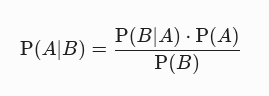
where,
P(B|A) — likelihood : the probability of observing the evidence given that the hypothesis is true (e.g.: if an email is spam, how often does it contain the word “VIAGRA”?)
P(A) — Prior Probability : you baseline belief that an event is true before seeing evidence (e.g.: what percentage of all incoming emails are spam?)
P(B) — Marginal Likelihood : The overall probability of seeing that evidence across all emails.
P(A\B) — Posterior Probability : Your updated belief after considering the evidence (e.g.: given that this email contains the word “VIAGRA”, what is the probability it is spam?)
The Tweak
In data representation, numerical vectors (embeddings) capturing semantic meaning, spelling patterns and phonetic similarities instead of classic bayesian spam filter which is discrete counts and explicit conditional probabilities. For storage mechanism, its synaptic weights — a numerical parameters adjusted during training that dictate how signals travel between neurons, distributed across hidden layers of interconnected artifical neurons. It generalizes from experience. It identifies underlying abstract features so it can flag disguised or novel spam words. It learns non-linear, multi-parameter dependencies between words, context, sentence structure, and tone simultaneously.
Algorithms
Kohonen Algorithm ( Unsupervised Learning )
For improving the neural network, the paper suggests Kohonen Algorithm which is also known for SOM Algorithm; Self-Organizing Map). It learns without a teacher to cluster and visualize incoming email data. It is unsupervised learning and works with clustering over categorization. Rather than making a direct binary choice (spam or non-spam), it automatically groups incoming messages into clustures (such as 4 distinct groups) based on inheritent data similarities.

Kohonen Algorithm
Problem in Pure SOM It talks about “gray area” which is the problem not resolved by only pure Kohonen.
- It lacks predefined classes SOM does not natively included predefined class definitions, making it difficult to set exact number of clusters or classify emails directly into binary categories.
- Overlapping Groups When clusters containing both spam and non-spam emails are merged, “gray area” which are uncertain zone are also merges creating misclassification errors when trying to strictly sort emails as either spam or clean.
- Sensitivity to Parameters SOM requires precise and careful selection of mathematical coefficients to function properly.
Solution with LVQ LVQ; Learning Vector Quantization is a type of supervised ML which is inspired by how our brain processes. Lets know how it works as well: 1. Picks up the starting point called weight from each classes 2. Find the closest weight using distance, measures how far it is from another weight 3. Update the closest weight
LVQ Algorithm
- Hybrid Approach (SOM + LVQ) Combining the LVQ algorithm with SOM eliminates the gray area problem and allows precise classification.
- Supervised Class Alignment LVQ maps the data vector grouped by SOM into defined, specific classes.
- Flexible Multi-Class Categorization This combined setup supports both binary sorting (spam vs. Non-spam) and multi-class categorization (e.g., spam, news, ads, simple messages).

structure of neural network technology for classifying emails
To classify emails as spam or non-spam, we first need to pick key features from the text and feed them into the neural network.
The most important features for spotting spam includes:
- How often capital letters are used
- How often specific letters appear
- The number of different text colors used
- The total length of the email
- The number of blank lines in the message
To train the system, we collect email samples from various sources and organize them into a table. Each row represents a single email, each column represents one of these features, and the cells hold the specific values measured for that email.
The papers concludes with the indication of the system being effective and can reduce human presence for this span identification as the model learns itself.
The End
Really insightful read on modern spam detection! Paper: “Electronic Spam Filtering Based on Neural Networks” by Bekmuratov et al. (Chemical Technology, Control and Management). Loved how it breaks down fixing SOM’s classification “gray areas” using LVQ.
🔗 Read it here: https://ijctcm.researchcommons.org/cgi/viewcontent.cgi?article=1174&context=journal
Enjoy Your Life
LA
Note to the writer: Loved reading. If you do not intend me publishing this small note on your journal, I could remove it.
메타데이터
- post_id
- edc88be9ec52
- slug
- a-short-note-on-electronic-spam-filtering-based-on-neural-networks-edc88be9ec52
- url
- https://blog.devgenius.io/a-short-note-on-electronic-spam-filtering-based-on-neural-networks-edc88be9ec52
- canonical_url
- https://blog.devgenius.io/a-short-note-on-electronic-spam-filtering-based-on-neural-networks-edc88be9ec52
- author_url
- https://medium.com/@leekhitame
- status
- ok
- fetched_at
- 2026-08-21 11:38:00