Can Biodegradable Clamshell Containers Replace Plastic for Good?
Plastic pollution has become a global crisis, with single-use plastic packaging being one of the biggest contributors. Among them…
Can Biodegradable Clamshell Containers Replace Plastic for Good?
Plastic pollution has become a global crisis, with single-use plastic packaging being one of the biggest contributors. Among them, **clamshell packaging, commonly used in food service, retail, and takeout, is responsible for an enormous amount of waste. In response, biodegradable clamshell containers** are emerging as a sustainable alternative. But can they truly replace plastic for good?
This article explores the environmental impact of plastic clamshell packaging, the benefits of cornstarch clamshell containers, and how businesses can transition to clamshell containers wholesale for a greener future.
The Environmental Impact of Plastic Clamshell Packaging
1. Plastic Clamshell Containers: A Major Pollutant
Traditional clamshell packaging is primarily made from PET (polyethylene terephthalate) or polystyrene, which can take hundreds of years to degrade. The Environmental Protection Agency (EPA) estimates that less than 9% of plastic waste is recycled, with the rest ending up in landfills, oceans, and natural habitats.
According to the World Economic Forum, if current trends continue, there will be more plastic than fish in the ocean by 2050. Clamshell containers, commonly used in food takeout and grocery packaging, are a significant part of this problem.
2. The Hidden Dangers of Plastic Clamshell Packaging
- Toxic Chemicals: Many plastic containers contain BPA (Bisphenol A) and phthalates, which have been linked to hormonal disruptions and health risks (Harvard T.H. Chan School of Public Health, 2023).
- Microplastic Contamination: Plastic clamshells break down into microplastics, which enter food chains and drinking water, impacting human and animal health.
- High Carbon Footprint: The production of plastic clamshells requires fossil fuels, contributing to greenhouse gas emissions and climate change.
Given these alarming effects, the switch to **biodegradable clamshell containers** has become an urgent necessity.
What Are Biodegradable Clamshell Containers?
1. Understanding Biodegradable Clamshell Containers
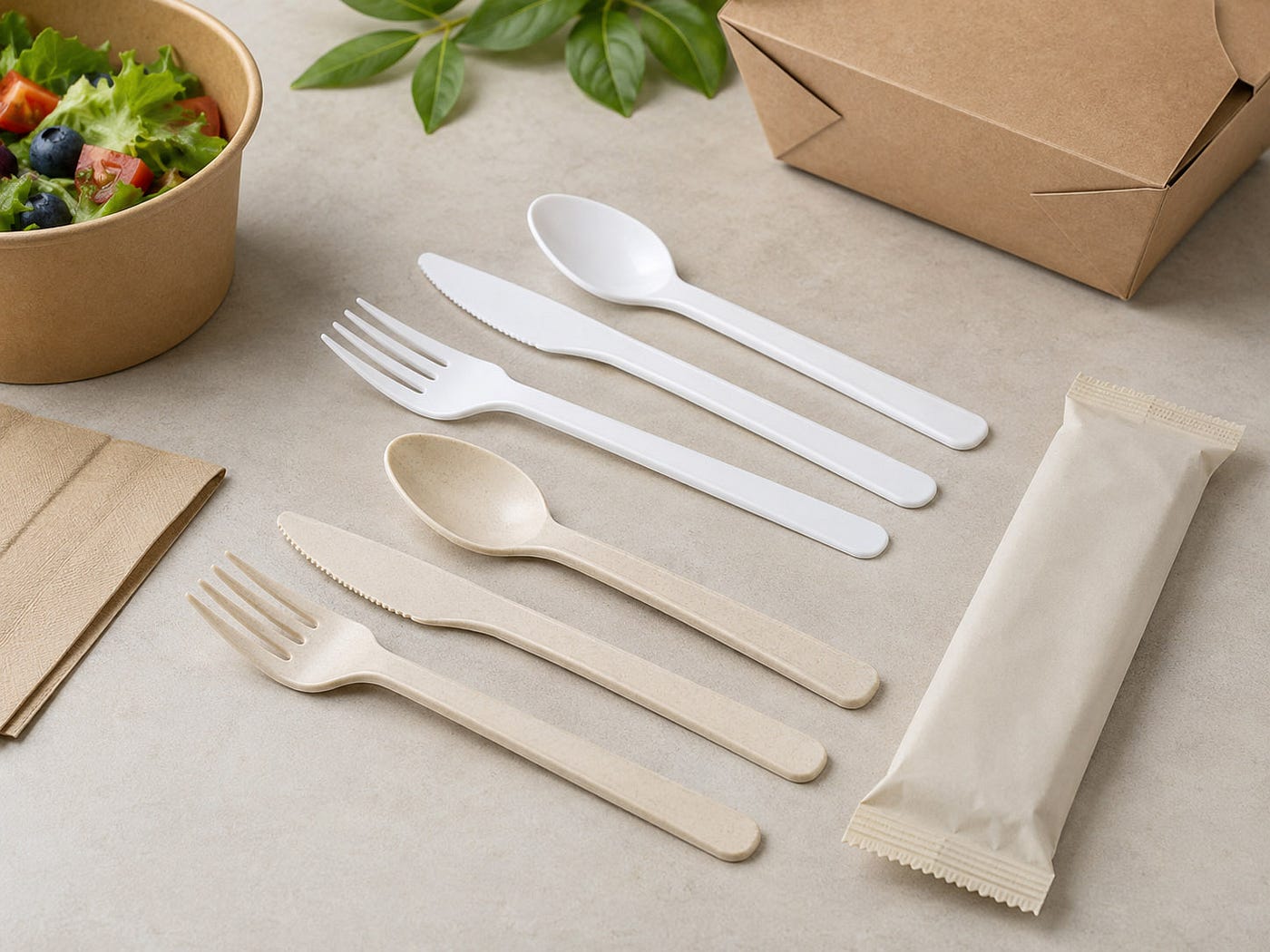
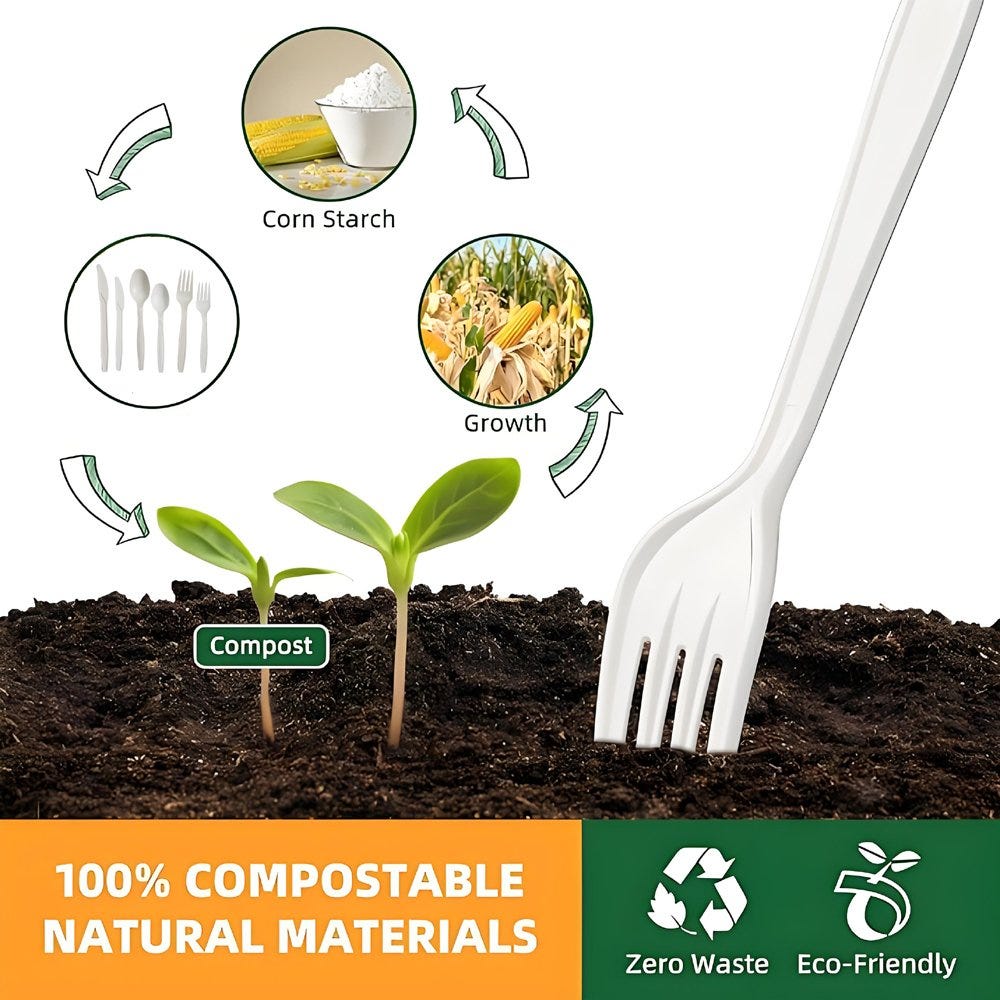
Biodegradable clamshell containers are food-grade packaging solutions made from natural materials that break down naturally within months instead of centuries. Unlike plastic, they leave no toxic residues in the environment.
2. Popular Materials for Biodegradable Clamshell Packaging
✔ Cornstarch Clamshell Containers — Made from cornstarch-based bioplastic (PLA), fully compostable in industrial settings. ✔ Sugarcane Bagasse Clamshells — A byproduct of sugarcane processing, durable, compostable, and water-resistant. ✔ Molded Fiber Packaging — Made from recycled paper, ideal for dry foods and retail packaging. ✔ Bamboo Clamshells — A fully renewable, biodegradable, and strong alternative to plastic.
These eco-friendly materials ensure that biodegradable clamshell containers are not only sustainable but also safe for consumers.
Biodegradable Clamshell Containers vs. Plastic: Key Differences
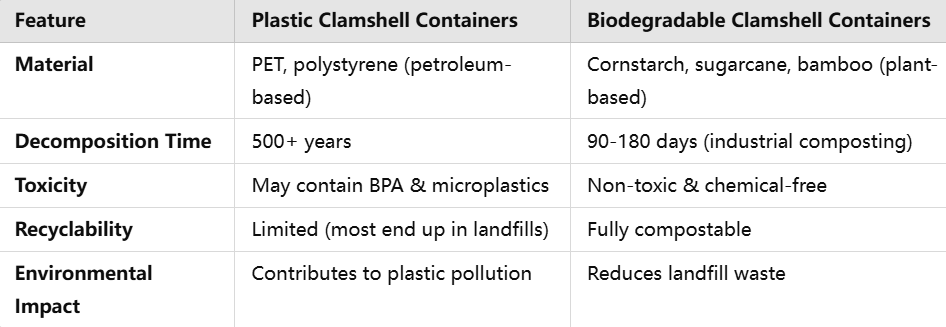
Switching to clamshell containers wholesale made from biodegradable materials significantly lowers waste generation and environmental harm.

Why Businesses Should Switch to Biodegradable Clamshell Containers
1. Compliance with Plastic Bans
- The European Union’s Single-Use Plastics Directive (2021) bans non-recyclable plastic food packaging.
- Several U.S. states (California, New York, Maine) have banned polystyrene food containers, pushing businesses to adopt cornstarch clamshell containers and other biodegradable options.
2. Consumer Preference for Sustainable Packaging
- A 2023 Nielsen survey found that 74% of global consumers are willing to pay more for eco-friendly packaging.
- Restaurants and retailers using biodegradable clamshell containers attract environmentally-conscious customers.
3. Enhancing Brand Reputation
- Businesses that use biodegradable clamshell packaging stand out as eco-conscious brands, improving customer loyalty.
- Companies like McDonald’s, Starbucks, and Whole Foods have already transitioned to compostable packaging.
4. Cost-Effective in the Long Run
- Though **clamshell containers wholesale made from biodegradable materials may have a higher upfront cost, they reduce waste management costs and comply with government regulations**, avoiding fines and penalties.

FAQ
1. How long do biodegradable clamshell containers take to decompose?
Most cornstarch clamshell containers and sugarcane-based alternatives break down in 90–180 days in industrial composting facilities. Home composting may take slightly longer.
2. Are biodegradable clamshell containers microwave-safe?
Yes, many biodegradable containers, especially those made from sugarcane bagasse and cornstarch, are microwave-safe and heat-resistant up to 200°F (93°C).
3. Where can businesses buy biodegradable clamshell containers wholesale?
Businesses can purchase clamshell containers wholesale from eco-friendly suppliers specializing in compostable food packaging, such as Eco-Products, World Centric, and Greenware.
4. Can biodegradable clamshell packaging hold liquids and oily foods?
Yes, most biodegradable clamshell containers are water-resistant and greaseproof, making them suitable for salads, sandwiches, and oily foods.
5. Are cornstarch clamshell containers safe for food storage?
Absolutely. **Cornstarch clamshell containers are FDA-approved, BPA-free, and toxin-free**, making them safe for food storage and takeaway.
Final Thoughts: The Future of Sustainable Clamshell Packaging
With increasing plastic bans, consumer awareness, and eco-friendly innovations, biodegradable clamshell containers are quickly replacing plastic as the future of sustainable packaging.
✔ Eco-friendly materials like cornstarch, sugarcane, and bamboo decompose naturally. ✔ Businesses can comply with regulations while improving brand reputation. ✔ Consumers prefer sustainable packaging, making the switch an economically smart decision.
By adopting biodegradable clamshell containers, we take a crucial step toward a plastic-free future.
메타데이터
- post_id
- edf7532a3ed0
- slug
- can-biodegradable-clamshell-containers-replace-plastic-for-good-edf7532a3ed0
- url
- https://medium.com/@bioleaderpack/can-biodegradable-clamshell-containers-replace-plastic-for-good-edf7532a3ed0
- canonical_url
- https://medium.com/@bioleaderpack/can-biodegradable-clamshell-containers-replace-plastic-for-good-edf7532a3ed0
- author_url
- https://medium.com/@bioleaderpack
- status
- ok
- fetched_at
- 2026-07-21 20:13:58