Hidden wonders
Deep in the Heart of the Congo
Hidden wonders
Deep in the Heart of the Congo
In the far north of the Congo lies one of the few places that has escaped the presence and invasion of humankind. An area as isolated as it is special, the Goualougo Triangle, located within the Nouabale-Ndoki National Park, spans thousands of kilometers of forest, home to a wildlife so abundant that the word itself seems insufficient.
A Curious Encounter
In the year 2000, a pair of researchers decided to venture into this seemingly inhospitable ecosystem. As they set up camp, they noticed a group of chimpanzees observing them with curious proximity. As night fell, the howls and commotion of the primates intensified. But that was not the only thing increasing — the animals’ proximity to the researchers grew gradually closer until, unexpectedly, silence. The chimpanzees approached without hesitation, forming a circle around these strange, less hairy primates who had come to study them. But who was analyzing whom?
The Unexpected Behavior of the Chimpanzees
Of course, the primatologists had come to these lands hoping to discover something new, but they never imagined experiencing such an encounter. Why was this so unusual? Typically, wild chimpanzees react to human presence by fleeing, having sadly grown accustomed to the threat of poachers. However, the chimpanzees of the Goualougo Triangle displayed completely different behavior: they were curious, observant, and eager to investigate their similar-looking yet less hairy visitors.
Chimpanzee Culture?
The isolation of the Goualougo Triangle has allowed the perpetuation of a unique chimpanzee culture. Wait a second… Are we saying that non-human animals have culture? Absolutely. Contrary to long-held beliefs, animal culture exists in non-human species. But before delving into this debate, we must first clarify what culture entails. Culture is defined as “information or behavior — shared within a community — that is acquired from peers through some form of social learning.” This can have significant consequences for the survival and reproduction of individuals, social groups, and potentially entire populations.
A Broader Definition of Culture
In simpler terms, culture encompasses all that is shared among individuals of the same population, is acquired through learning, and influences the future of the group, the individual, or the entire species. Unsurprisingly, defining culture has not been an easy task, leading to countless debates. Even the concept of human culture has been difficult to pinpoint, with little consensus among social scientists. Initially, researchers categorized species as “cultural” based on their resemblance to human culture — a highly anthropocentric perspective that inevitably obstructs understanding the evolutionary roots of culture across different taxa.
Innovation in the Wild
The Goualougo chimpanzees, like all resilient species, had to start from scratch. They first learned to use slender twigs to extract food, as their large hands could not reach the narrow crevices where nutrients were hidden. What began as simple branches evolved into an indispensable tool, humorously dubbed the “Stick 3000,” perfectly designed to extract fresh insects from tree trunks. Similarly, in Senegal, another fascinating innovation has been observed — chimpanzees crafting and using spears for hunting (“Spear 4000”), a behavior predominantly seen in females. They carefully select a branch, clean it, and sharpen the tip, resembling the work of a skilled blacksmith.
Chimpanzee Hunting Techniques
Most observed instances of spear hunting occur during the wet months when food sources are scarce. This necessity may have driven chimpanzees to develop alternative hunting strategies. It is hard not to speculate that such behaviors may resemble those of our ancestors, as the Fongoli chimpanzees are the only ones known to rest in caves. Moreover, the Senegalese savanna, with its sparse trees, closely resembles the environment where early human ancestors evolved. A fascinating and eerie parallel.
Cultural Evolution in Music and Whales
Cultures evolve over time. As generations pass, tastes change — people once adored The Beatles in the ’60s, fell for ABBA in the ’80s, and now can’t stop listening to modern pop stars. Just as human music has evolved, so too has animal culture, and whales are our oceanic songwriters. Their haunting songs have inspired myths and legends, their otherworldly sounds resonating through the deep blue.
The Songs of Whales
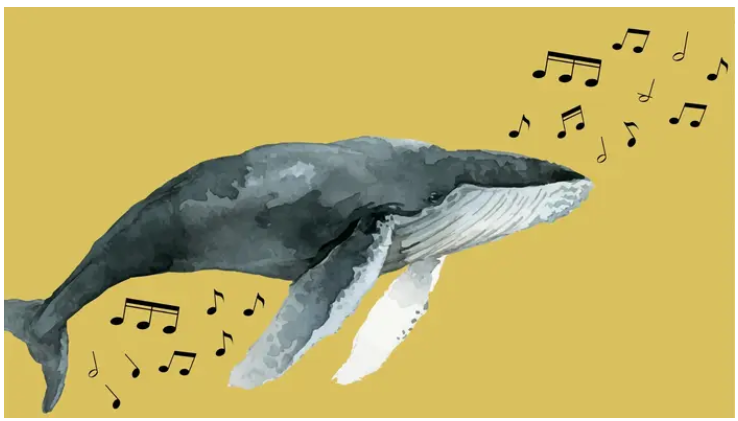
Whales produce vocalizations, but only males sing the long, complex songs that have made their species famous (and sometimes parodied — yes, we’re looking at you, Finding Nemo). Whales in the same geographic area share a common song, yet these songs do not remain static across generations. Instead, they gradually change over several years, never reverting to previous versions. This ever-evolving music provides compelling evidence that these animals transmit learned behaviors, making them possessors of culture.
Social Learning in Marine Mammals
Some cetaceans appear to have developed cultures remarkably similar to those of chimpanzees and even humans. In fact, the four most studied cetacean species — bottlenose dolphins, humpback whales, orcas, and sperm whales — exhibit strong evidence of social learning, whether through experimental or ethnographic approaches. But how can this be explained? Scientist Ropper suggested long ago that certain biological attributes facilitate social learning, such as long lifespans (20–90 years), advanced cognitive abilities, and extended parental care.
The Role of Ecology in Cultural Development
While a certain level of cognitive ability is likely necessary for social learning, it is crucial to consider ecological factors. The relative success of a species ultimately depends on its ecological context. This means that to understand differences in social learning across species, we must examine their environments. Ecological factors play a significant role in shaping the learning and cultural behaviors observed in cetaceans.
Orcas and Their Unique Cultures
Studies have shown that orcas have created their own cultures, passing them down through generations, even altering their genetic makeup to adapt to their surroundings — whether to withstand freezing waters or develop new diets. Just as human cultures vary by country or nationality, so too do orca cultures. Depending on the population, orcas exhibit different hunting strategies.
For example, in Argentina’s Valdés Peninsula, orcas ride the waves to snatch sea lions or fur seals from the shore, intentionally beaching themselves — a highly dangerous maneuver that could result in death. Yet, through cultural learning, these cetaceans master a behavior they would never naturally attempt.
Hunting Strategies Around the Globe
On the other side of the world, near Norway, orcas employ a hunting technique known as “carousel feeding.” A pod of orcas locates a school of herring and drives it toward the surface. They then encircle the fish, flashing their white bellies and generating bubbles to disorient and compact the school. As some orcas continue spinning, others break from the formation and strike the fish with their tails, sending them flying out of the water, stunned or dead — creating a gourmet feast for the ingenious orcas. Exploring other regions, such as the Antarctic Peninsula or the waters of Cádiz, Spain, would undoubtedly reveal even more astonishing and unique hunting strategies.
The Evolution of Culture in Cetaceans
The extensive movements of cetaceans, the greater environmental variability of marine ecosystems over long timescales compared to terrestrial ones, and the stable matrilineal social structures of some species are all potentially crucial factors in the evolution of their culture. Various hypotheses have been proposed regarding the coevolution of genes and culture in cetaceans, with cultural learning possibly playing a role in some of the unusual behavioral traits and life histories observed in whales.
Brakes P et. al. (2019) Animal cultures matter for conservation. Science 363(6431):1032–1034Laland KN, Janik VM. The animal cultures debate. Trends Ecol Evol. 2006 Oct;21(10):542–7. doi: 10.1016/j.tree.2006.06.005.
Epub 2006 Jun 27. PMID: 16806McGrew, W. C., Pruetz, J. D., & Fulton, S. J. (2005). Chimpanzees use tools to harvest social insects at Fongoli, Senegal. Folia Primatologica, 76(4), 222–226.
Pruetz, J. D. (2006). Feeding ecology of savanna chimpanzees (Pan troglodytes verus) at Fongoli, Senegal. Feeding ecology in apes and other primates, 326–364.
Pruetz, J. D. (2007). Evidence of cave use by savanna chimpanzees (Pan troglodytes verus) at Fongoli, Senegal: implications for thermoregulatory behavior. Primates, 48(4), 316–319.Salas, J. (2015, May 12). Las chimpancés cazadoras dan pistas sobre los primeros humanos. Elpais.Com. https://elpais.com/elpais/2015/04/29/ciencia/1430318573_019734.html
Gañán, H. (2018, February 1). La cultura de las orcas está impresa en su ADN. Elplural.Com. https://www.elplural.com/sociedad/cultura/la-cultura-de-las-orcas-esta-impresa-en-su-adn_124589102
메타데이터
- post_id
- edfc4a76719b
- slug
- hidden-wonders-edfc4a76719b
- url
- https://medium.com/@sofiavirasoro99/hidden-wonders-edfc4a76719b
- canonical_url
- https://medium.com/@sofiavirasoro99/hidden-wonders-edfc4a76719b
- author_url
- https://medium.com/@sofiavirasoro99
- status
- ok
- fetched_at
- 2026-07-21 02:26:05