I Did Everything Right
What thirty-six years in the clinic taught me about the cost of self-sufficiency

I Did Everything Right
What thirty-six years in the clinic taught me about the cost of self-sufficiency
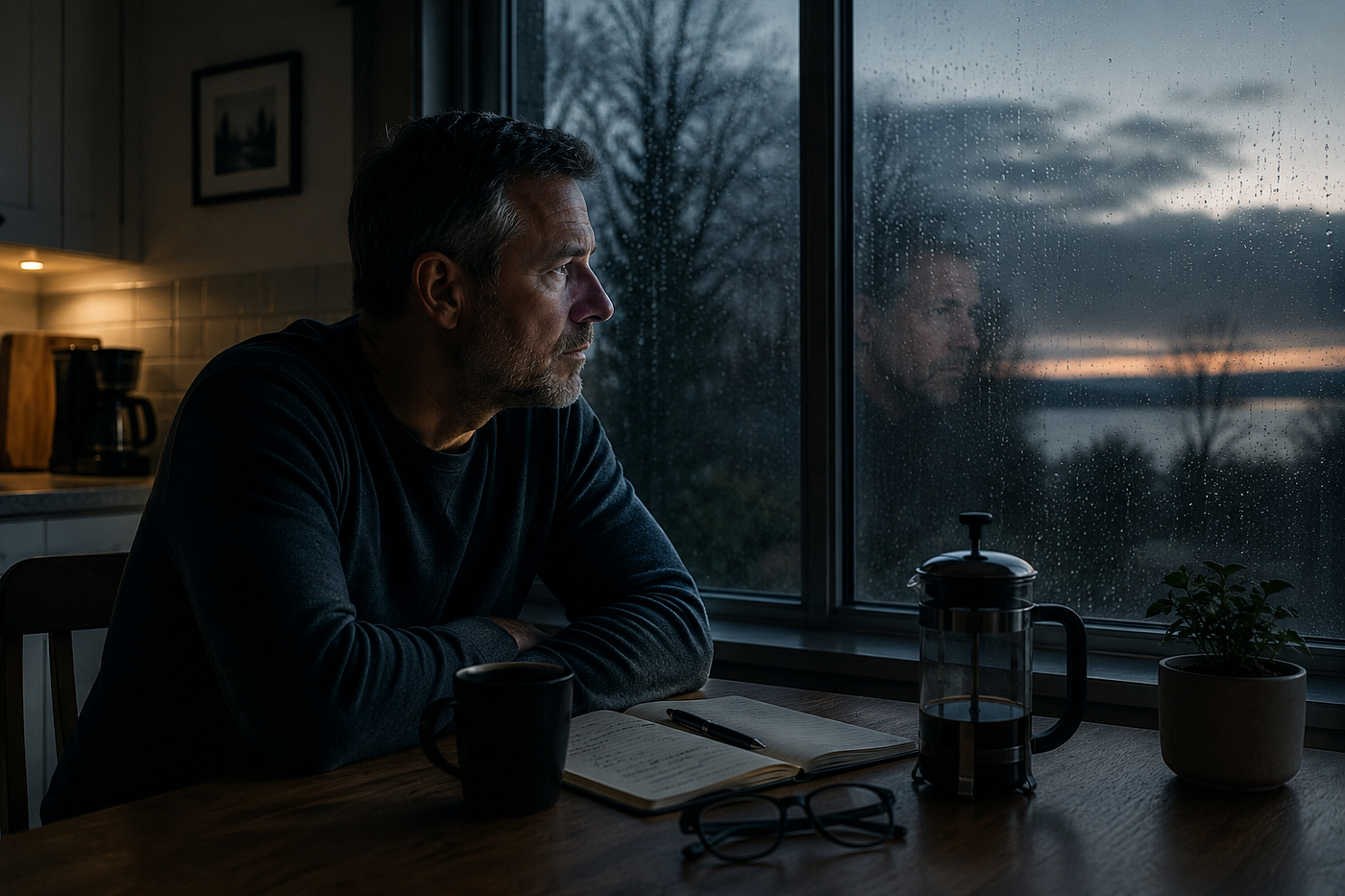
He looked around the consultation room the way people do when they are trying to find their way.
“This all feels so surreal,” he said. “I don’t understand why I am here. I did everything right.”
The career was real. The income was substantial. He owned property in two states. His children were educated, launched, and largely fine.
He sat with his hands folded in his lap and waited for me to explain something that neither of us had a clean name for.
I have been thinking about this kind of patient longer than I have had words for it. There is a particular exhaustion I see in people who have made themselves self-sufficient as a life project. Not lazy exhaustion. Not the exhaustion of grief or illness. The exhaustion of someone who has spent decades ensuring they need nothing from anyone — and succeeded.
The philosopher Ian Corbin calls the underlying worldview “ownerism.” The idea that the self is a sovereign entity, that safety is built by establishing independence, accumulating property, and drawing clear lines around what belongs to you. He traces it as a recent invention — a story that modern, wealthy societies began telling themselves, and that sits poorly against what humans are actually built for.
I am not a philosopher. But I am someone who has spent thirty-six years in a room with people at moments of physical vulnerability, and what Corbin describes maps precisely onto something I have been watching unfold in clinic for a long time.
The patients who have optimized hardest for self-sufficiency are often the ones who arrive most depleted. Not because they failed — but because they succeeded. They constructed lives that required nothing from anyone. And in doing so, they dismantled the structures through which human beings actually refuel.
We are not made to be islands. The evidence for this is not philosophical. It is neurological, immunological, and hormonal. Sustained isolation — even the voluntary, affluent kind, the kind that looks like independence — raises cortisol, disrupts sleep architecture, shortens telomeres. The body does not distinguish between chosen solitude and imposed solitude. It simply registers the absence of others and begins to sound quiet alarms.
What makes ownerism seductive is that it arrives dressed as strength. Needing people looks like weakness. Interdependence looks like risk. The person who asks for nothing, who can manage everything, who is never a burden — this is the person the culture rewards with the word “capable.”
What I see at the end of that project, in patients who have followed it most faithfully, is a loneliness that has no name in medicine. Not depression, not anxiety, not burnout — though it sometimes wears those clothes. Something more like structural isolation. A life from which, somewhere in the long middle of it, the other people quietly disappeared.
Not because anyone left. But because the patient no longer needed them. And when you stop needing people, people drift.
The thing about belonging is that it requires ongoing maintenance. Not dramatic maintenance — not grand gestures or formal commitment. The ordinary kind. Meals together. Conversations without an agenda. The willingness to ask for help with something you could have handled alone. These are not inefficiencies to be optimized away. They are, it turns out, the load-bearing structure.
I cannot prescribe belonging. What I can do is notice, across thirty-six years, that the patients who have the hardest time recovering are often the ones who have built their lives to need no one. And that the question beneath the question they are asking me is usually not medical.
It is: How did I end up so alone inside a life that looks, from the outside, completely full? He already knew the answer. He just needed someone to sit across from him while he found it.
If this essay resonated with you, I’d love to continue the conversation in **The Capacity Report**.
As a thank-you for joining, I’ll also send you a complimentary copy of Before Burnout: A Short Field Guide.
메타데이터
- post_id
- ee02c09888e0
- slug
- i-did-everything-right-ee02c09888e0
- url
- https://medium.com/dr-michael-hunters-wellness/i-did-everything-right-ee02c09888e0
- canonical_url
- https://medium.com/dr-michael-hunters-wellness/i-did-everything-right-ee02c09888e0
- author_url
- https://medium.com/@drmichaelhunter
- status
- ok
- fetched_at
- 2026-07-17 06:05:59