Same THC Number, Different Cannabis Experience: Terpenes, Tolerance, Freshness, and Format
Why Two Cannabis Products With the Same THC Can Feel Completely Different
Same THC Number, Different Cannabis Experience: Terpenes, Tolerance, Freshness, and Format
Why Two Cannabis Products With the Same THC Can Feel Completely Different
Over time, you’ve likely noticed that a cannabis product with 20% THC can feel entirely different from another product with the exact same THC percentage. One flower may feel bright and functional, while another feels heavier and more relaxing. A vape may feel fast and sharp, while an edible with a similar THC amount may feel deeper, slower, and longer lasting. This is because THC percentage is only one part of the cannabis experience.
Cannabis affects people through a combination of cannabinoids, terpenes, product format, delivery method, freshness, dosage, tolerance, body chemistry, and setting. Two products can share the same THC number while having completely **different terpene profiles**, cannabinoid ratios, extraction methods, package dates, and onset patterns. Those details can change how quickly effects appear, how intense they feel, how long they last, and how the overall experience is perceived.
This is one of the biggest reasons modern cannabis education has moved beyond THC chasing. Higher THC does not automatically mean a better, stronger, or more enjoyable product. A balanced flower, flavorful live resin vape, carefully dosed edible, or terpene-rich concentrate may provide a more complete experience than a product selected only because the THC percentage looks impressive. Learning how these factors work together helps consumers shop more confidently and understand why cannabis is rarely explained by one number.
THC Percentage Is Only One Piece of the Cannabis Experience
THC, or tetrahydrocannabinol, is the primary intoxicating cannabinoid in cannabis. It plays a major role in the experience, but it does not act alone. Cannabis products contain many other compounds that can influence aroma, flavor, onset, intensity, body feel, mental clarity, and overall satisfaction.
A product with 18% THC and a rich terpene profile may feel more noticeable or more enjoyable than a product with 30% THC and very little aromatic complexity. A live resin vape with moderate THC may feel fuller than **a distillate vape with a much higher THC** number because the live resin product may preserve more of the plant’s original terpene and cannabinoid profile. A balanced edible may feel smoother than a high-dose edible because serving size, cannabinoid ratio, and metabolism all influence the final experience.
THC percentage should be treated as useful information, not the entire story. It tells you something about potency, but it does not tell you everything about how the product may feel. A more complete approach looks at THC alongside terpene content, cannabinoid ratios, product type, serving size, freshness, extraction method, and your own tolerance.
The Impact of Delivery: Flower, Vapes, Concentrates, and Edibles Feel Different
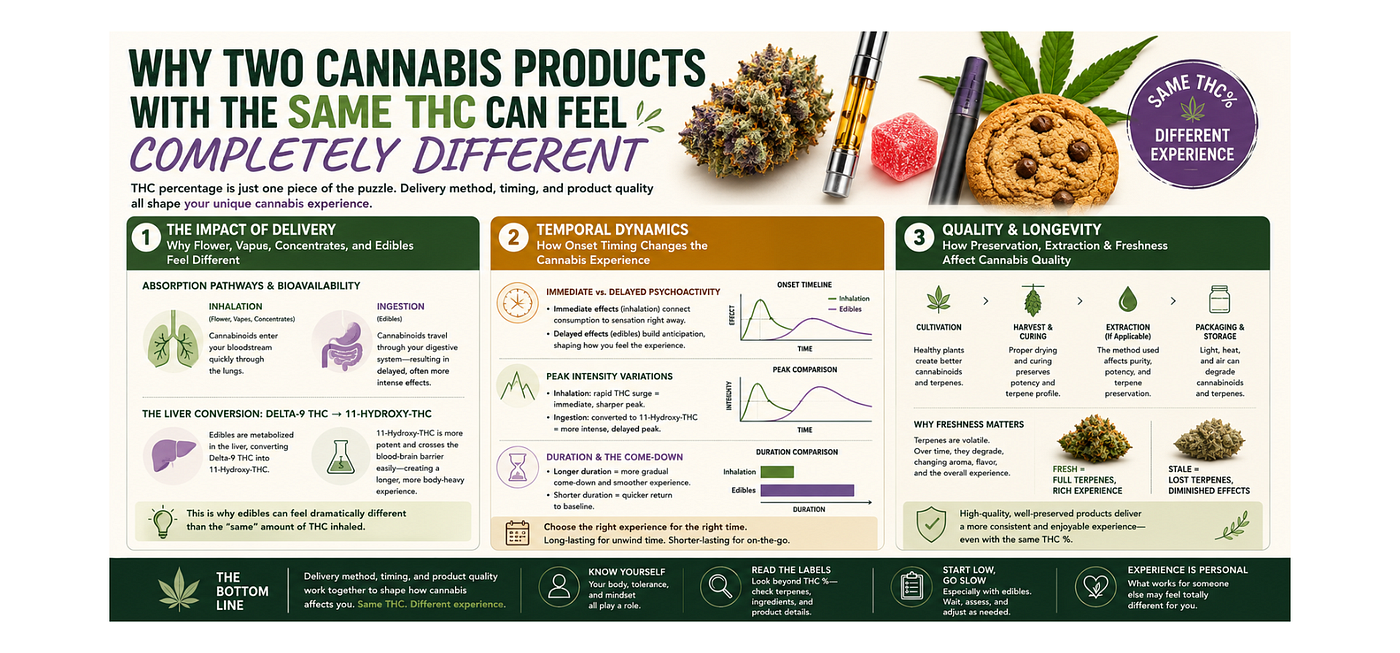
The way cannabis enters your body has a major effect on the experience. Flower, vapes, concentrates, and edibles can all contain THC, but they do not deliver it in the same way. The body processes inhaled cannabis differently than swallowed cannabis, and that difference changes onset, intensity, duration, and overall feel.
Inhalation methods, including smoking flower, vaping, or using concentrates, send cannabinoids through the lungs and into the bloodstream. Effects often appear quickly because the cannabinoids do not need to move through the digestive system first. This faster onset makes inhaled cannabis easier for many consumers to pace because they can usually feel the effects within minutes and decide whether to consume more.
Edibles work differently. When cannabis is eaten, it travels through the digestive system and is metabolized by the liver before the full effects are felt. This process takes longer and can create a more intense or body-heavy experience for some consumers. An edible with a modest amount of THC may feel stronger or longer lasting than inhaled cannabis with a similar THC amount.
Pulmonary vs. Gastrointestinal Absorption Pathways and Bioavailability
Your body processes cannabis differently depending on how you consume it. Inhalation sends cannabinoids into the bloodstream through the lungs. This pulmonary absorption pathway is relatively fast, which is why flower, vapes, and concentrates tend to have a quicker onset.
Eating cannabis uses a gastrointestinal pathway. The cannabinoids must move through digestion before being processed by the liver. This means edibles usually have a delayed onset, and the experience can feel less predictable for newer consumers.
Bioavailability also matters. Bioavailability refers to how much of a consumed substance actually reaches circulation and becomes active in the body. Inhaled cannabis and edible cannabis do not have the same bioavailability, which helps explain why similar THC amounts can feel so different depending on the product format.
The Conversion of Delta-9 THC to 11-Hydroxy-THC in the Liver
When you consume edibles, your liver plays a significant role in transforming Delta-9 THC. This process converts some of the THC into 11-Hydroxy-THC, a metabolite often associated with the stronger and longer-lasting feel of edibles.
This conversion helps explain why edibles may feel more intense, more physical, or more prolonged than smoking or vaping. The experience is not simply delayed; it can also have a different character. Many consumers describe edibles as deeper, heavier, or more immersive compared with inhaled products.
Patience matters with edibles. Taking more too soon can lead to an unexpectedly intense experience because the first serving may not have reached its full effect yet. A careful approach, especially for newer consumers, helps reduce the chance of overconsumption.
How Onset Timing Changes the Cannabis Experience
Onset timing plays a major role in how cannabis feels. Fast-onset products and slow-onset products create different expectations, different pacing decisions, and different experiences. A vape may feel immediate and easy to adjust, while an edible may require more patience and planning.
Immediate effects often give consumers a clearer sense of control. With inhaled products, you can usually feel the experience developing quickly. This makes it easier to pause, assess, and decide whether you are where you want to be.
Delayed effects can create more uncertainty. With **edibles, [tinctures](https://www.goodiescanna.com/collection/tincture), [capsules](https://www.goodiescanna.com/collection/pill), and [infused products](https://www.goodiescanna.com/blog/rove-cannabis-vape-systems-oil-quality-and-product-performance)**, the experience can build gradually. This delay can make some consumers think the product is not working yet, which may lead them to take more before the first serving has fully activated.
Peak Intensity and Duration Can Change the Entire Feel
Two products may have similar THC amounts but very different peak experiences. Inhalation often produces a faster rise and a shorter overall duration. Edibles usually build more slowly, peak later, and last longer.
Peak intensity is not just about how strong something feels. It also affects how manageable, comfortable, or enjoyable the experience becomes. A fast, sharp peak may feel energizing to one person but overwhelming to another. A slower, steadier peak may feel more comfortable for some consumers but too drawn out for others.
Duration also influences satisfaction. A shorter experience may work well for someone who wants a brief, controlled session. A longer-lasting edible may fit better for someone settling in for the evening. Matching the product format to the situation matters just as much as THC percentage.
Sensory Experience: Texture, Temperature, Flavor, and Ritual
The physical act of consuming cannabis can shape how the experience is perceived. Vaporizing often feels smoother and cooler than smoking, which may allow more terpene flavor to come through. Smoking flower can feel warmer, more immediate, and more ritual-based. Edibles provide no inhalation sensation at all, so the experience develops internally rather than through immediate sensory feedback.
Texture and temperature matter with concentrates as well. A flavorful live resin or rosin product may feel different from a more neutral distillate because aroma, vapor quality, and terpene expression can influence the overall experience before cannabinoids fully take effect.
Cannabis is not only chemical but sensory. The aroma of flower, the flavor of a vape, the texture of an edible, and the smoothness of vapor all influence how a consumer interprets the product. Those cues can make two products with the same THC percentage feel completely different.
Terpenes Matter Because Aroma and Effect Are Connected
Terpenes are aromatic compounds found in cannabis and many other plants. They are responsible for many of the scents and flavors consumers associate with different strains, including citrus, pine, pepper, floral, herbal, earthy, fruity, and gassy notes.
Common cannabis terpenes include myrcene, limonene, pinene, caryophyllene, linalool, humulene, terpinolene, ocimene, and bisabolol. Myrcene is often associated with earthy and relaxing profiles. Limonene is linked with citrus-forward, brighter product profiles. Pinene brings pine-like freshness. Caryophyllene contributes peppery, spicy notes. Linalool is known for floral lavender-like aromas.
A terpene-rich product can feel more layered than a product with high THC but a flatter profile. Some consumers prefer shopping by aroma, terpene profile, or strain family rather than simply selecting the highest THC number available. Terpenes do not guarantee a specific effect for every person, but they are one of the most useful clues when comparing products.
The Entourage Effect and the Full Cannabis Profile
The entourage effect is the idea that cannabinoids, terpenes, flavonoids, and other cannabis compounds may work together to shape the overall experience. THC may be the most recognized compound, but it is not the only contributor. The complete profile of the product can influence how it feels.
This helps explain why full-spectrum products often feel different from isolated THC products. A product that preserves more of the plant’s natural compounds may deliver a broader, more layered experience. A product focused mostly on THC may feel more direct, but sometimes less complex.
The full composition matters. Consumers who only compare THC percentages may miss important differences in terpene expression, minor cannabinoids, extraction methods, **and product quality**.
Cannabinoid Ratios Matter Alongside THC
Cannabinoid ratios can significantly influence the experience. THC may be the main intoxicating compound, but CBD, CBG, CBN, CBC, and other minor cannabinoids can affect the way a product feels. Two products with the same THC level may feel different if one contains more CBD, more CBG, or trace levels of CBN.
CBD does not produce the same intoxicating effect as THC, but it can influence the overall character of a product. Some consumers find that products with CBD feel more balanced or manageable. CBG is another cannabinoid consumers increasingly look for in products designed around daytime, clarity, or functional use, though experiences vary.
CBN often appears in discussions about aged cannabis because THC can oxidize into CBN over time. Products with higher CBN levels may feel different from fresher products with more preserved THC and terpene content.
THC:CBD Balance and Product Selection
A high-THC, low-CBD product may feel more intense for some consumers. A balanced THC:CBD product may feel smoother or less sharp. A CBD-dominant product with lower THC may provide a milder experience for consumers who want less intoxication.
These ratios matter **especially for newer consumers** or anyone who has had uncomfortable experiences with high-THC products. Looking at the relationship between THC and CBD can provide more helpful guidance than THC alone.
This is especially important with edibles. A 1:1 THC:CBD edible may feel different from a THC-only edible with the same THC amount. Ratio, serving size, onset, and personal tolerance all work together.
THC vs. THCA: Label Confusion Consumers Should Understand
Many **cannabis labels** list THCA rather than only THC, especially on flower. THCA is the acidic precursor to THC. In raw cannabis flower, much of the THC exists as THCA until heat converts it through decarboxylation.
This matters because consumers may see high THCA percentages and assume they are looking at active Delta-9 THC in the same way they would with an edible or vape. Flower becomes intoxicating when heat converts THCA into THC during smoking, vaping, or decarboxylation.
Understanding this distinction helps consumers read labels more accurately. A high THCA flower is not the same thing as a high-dose edible. Product type, conversion, and consumption method all shape what those numbers mean in practice.
Why Small THC Percentage Differences Are Not Always Meaningful
Many consumers compare cannabis products based on very small THC percentage differences. A product labeled at 28% THC may appear dramatically stronger than one labeled at 25%, but real-world experiences are rarely that simple.
Testing variability, terpene preservation, freshness, curing quality, and cannabinoid balance can all influence the final experience more than a small percentage gap. A terpene-rich 22% flower may feel more noticeable and satisfying than an older, dry 32% flower with weak aroma and poor preservation.
Cannabis testing itself can also vary slightly between batches and testing facilities. Small percentage differences should be viewed as part of the conversation rather than the only deciding factor. Aroma, freshness, extract quality, product type, and terpene profile often provide more useful guidance than chasing the highest number on the label.
Product Type Comparisons: Same THC, Different Experience
Real-world comparisons make the THC conversation easier to understand. A distillate vape and a live resin vape may both have high THC, but they often feel different. Distillate is typically refined to emphasize THC potency, while live resin is made to preserve more of the plant’s **original terpene profile**. The live resin product may feel more flavorful, more strain-specific, or more layered.
Rosin and distillate can also feel different. Rosin is a solventless concentrate created through heat and pressure, often valued for preserving plant character. Distillate is more processed and often more neutral unless cannabinoids or terpenes are blended back in.
Some **vape products use cannabis-derived terpenes while others use botanical terpenes. This can influence flavor, aroma, and the overall feel of the product. Certain [distillate carts](https://www.goodiescanna.com/blog/disposable-vapes-vs.-510-cartridges-at-goodies-finding-your-flow)** may taste sweeter or more artificial, while live resin and rosin products often aim to preserve a profile closer to the original flower.
Gummies and baked edibles can also differ. Serving size, fat content, digestion, ingredients, and formulation may influence onset and perception. A 10 mg gummy and a 10 mg infused baked good may not feel exactly the same for every person, even when the THC serving size is similar.
Flower Freshness and Product Quality Can Change the Feel
Cannabis is a natural product, and freshness matters. Flower can dry out, lose aroma, and change over time. Terpenes are volatile, meaning they can degrade or evaporate when exposed to heat, light, oxygen, and poor storage conditions.
Fresh flower typically has a stronger aroma, better texture, and a more complete terpene profile. Older flower may feel harsher, flatter, or more sedating if THC has begun oxidizing into CBN.
Consumers can look for signs of quality such as aroma, texture, package date, harvest date, and proper storage. Flower that is overly dry, crumbly, weak-smelling, or harsh may not deliver the same experience as a better-preserved product with similar THC.
Product Preservation, Extraction, and Freshness Affect Cannabis Quality
The journey from cultivation to packaging can shape the final experience. Healthy cultivation, proper harvesting, careful drying, controlled curing, thoughtful extraction, and appropriate storage all influence cannabinoid and terpene preservation.
Curing is especially important for flower. Proper curing allows moisture to stabilize and chlorophyll to break down, which can create a smoother, better-tasting product. A well-cured flower often provides a richer aroma and more enjoyable smoking or vaping experience.
Extraction methods matter for concentrates and vapes. Some processes preserve more terpenes and minor cannabinoids than others. This is why live resin, rosin, cured resin, distillate, and other extracts can have different textures, flavors, and effects even when THC percentages look similar.
Freshness Indicators Consumers Can Actually Look For
Consumers can evaluate freshness by looking at more than THC. Package date and harvest date can offer clues. A strong, pleasant aroma often suggests better terpene preservation. Flower should generally have some texture and structure rather than turning to dust immediately.
Concentrates can also show age or storage issues. Color changes, dryness, crystallization, separation, or loss of aroma may indicate the product has changed over time. Vapes can darken or taste burnt if exposed to heat, stored poorly, or used improperly.
Edibles should be evaluated differently. Consumers should check serving size, expiration date, storage instructions, and total THC per package. With edibles, freshness is about both cannabis integrity and food quality.
Storage Conditions Can Change the Experience
Light, heat, oxygen, and moisture can all affect cannabis quality. Light can degrade cannabinoids and terpenes. Heat can accelerate breakdown. Oxygen can contribute to oxidation. Too much moisture can create quality concerns, while too little moisture can leave flower dry and harsh.
Proper storage helps preserve the product’s intended profile. Airtight containers, cool temperatures, and protection from direct light can all help maintain quality.
Storage is not just a freshness issue. It can change how cannabis feels. A terpene-rich product that is poorly stored may lose some of the qualities that made it appealing in the first place.
Product Labels Can Help You Shop Beyond THC
Product labels often contain clues that help consumers make better decisions. THC percentage is only one line. Depending on the product and brand, labels may also show CBD, CBG, CBN, total cannabinoids, terpene percentages, strain type, package date, harvest date, extraction method, and serving size.
For **flower**, look at THCA, Delta-9 THC, total THC, terpene profile, harvest date, and package date. For vapes and concentrates, look at whether the product is distillate, live resin, cured resin, rosin, or another extract type. For edibles, look at THC per serving, total THC per package, cannabinoid ratio, onset guidance, and serving instructions.
Reading labels carefully helps consumers avoid relying on one number. It also helps match products to goals. A consumer seeking flavor may care more about terpenes and extract type. A newer consumer may care more about dose and ratio. A frequent consumer may care about freshness, format, and potency together.
Live Resin, Rosin, Full-Spectrum, and Distillate Are Not the Same
Live resin is typically made from fresh frozen cannabis, preserving more of the plant’s original terpene profile. This can create a flavorful, strain-specific product that feels more connected to the original plant.
Rosin is a solventless extract made through heat and pressure. It is often valued for its clean process, terpene expression, and robust flavor. Rosin can be found in concentrates, vapes, and infused products.
Distillate is a highly refined extract often focused on THC potency. It can be effective and consistent, but it may feel less layered unless cannabinoids or terpenes are blended back in. This is why a high-THC distillate vape may not feel the same as a lower-THC live resin or rosin product.
Tolerance Changes How Cannabis Feels
Personal tolerance has a major effect on cannabis experiences. Someone new to cannabis may feel strong effects from a small serving, while a frequent consumer may need more to notice similar effects. Tolerance can build over time with repeated use.
Frequency matters. Daily use may reduce sensitivity to THC, which can lead some consumers to chase higher percentages or stronger products. However, increasing potency is not always the best answer. Rotating product types, lowering serving sizes, or taking a tolerance break may help consumers reset expectations and better understand what works.
Tolerance also differs by product format. A consumer who regularly smokes flower may still be surprised by edibles. Someone used to edibles may respond differently to concentrates.
Your Body Chemistry Plays a Major Role
Every person’s endocannabinoid system is different. Body chemistry, metabolism, sleep, hydration, food intake, stress, and mood can all influence how cannabis feels. Two people can consume the same product and have very different experiences.
Food can be especially important with edibles. Eating before consuming an edible may influence onset and intensity. Hydration, fatigue, and emotional state can also shape the experience.
Cannabis experiences are personal. Product information is helpful, but it cannot predict every outcome. Consumers should use labels, budtender guidance, and personal tracking together.
Set and Setting Can Shape the Experience
Environment matters. Where you are, who you are with, what you are doing, and how you feel before consuming can all influence the cannabis experience. A product used at home during a calm evening may feel different from the same product used in a loud or unfamiliar environment.
Mindset also matters. Stress, anxiety, excitement, fatigue, and expectations can change how effects are perceived. A fast-onset product may feel energizing in one setting and overwhelming in another.
Matching the product to the moment matters. A social setting, creative activity, quiet evening, daytime errand, or sleep-focused routine may call for different product choices. THC percentage alone cannot account for the environment surrounding the experience.
Consumption Goals Help Make Product Choice Easier
A better shopping experience starts with knowing the goal. Some consumers want a product for daytime use. Others want something for evening relaxation. Some want flavor and aroma. Others want a longer-lasting edible or a fast-onset vape.
Thinking in terms of goals makes THC less overwhelming. A consumer looking for a functional daytime product may prefer lower THC, uplifting terpenes, or balanced cannabinoid ratios. Someone looking for a deeper evening experience may prefer a different terpene profile, product type, or edible format.
Useful shopping questions include:
- Do I want fast onset or long duration?
- Do I prefer inhalation or edibles?
- Do I want flavor, potency, balance, or convenience?
- Am I experienced with this format?
- Do I have time for the full duration?
These questions help consumers choose smarter.
Common Beginner Mistakes When Comparing THC Percentages
One common beginner mistake is assuming higher THC always means better. This can lead to products that feel too intense, too flat, or simply not aligned with the consumer’s goal.
Another mistake is comparing flower, vapes, and edibles by THC percentage as if the numbers mean the same thing across formats. They do not. A THC percentage on flower is not the same as milligrams in an edible.
A third mistake is taking more edibles too quickly. Because edibles can take time to activate, consuming additional servings before the first serving peaks can lead to discomfort. Starting low and waiting long enough is one of the most important edible lessons.
Microdosing and Journaling Help Consumers Learn Their Own Patterns
Microdosing gives consumers a more controlled way to explore cannabis. Instead of chasing intensity, microdosing focuses on small servings and careful observation.
A cannabis journal can also help. Consumers can track product name, strain, THC, CBD, terpene profile, serving size, format, onset time, duration, mood, setting, and overall experience. Over time, patterns become easier to see.
You may learn that limonene-heavy products feel better during the day, that edibles require a lower serving size, or that live resin vapes feel more satisfying than distillate. The goal is to build a personal roadmap instead of relying only on general recommendations.
Cannabis Education Is Moving Beyond THC Chasing
The cannabis industry has spent years emphasizing THC percentage, but consumer education is becoming more nuanced. More shoppers now understand that the strongest number on the menu is not always the best fit. Product quality, formulation, freshness, terpene content, cannabinoid ratios, and personal tolerance all matter.
This shift helps consumers make better decisions. Instead of asking only, “What has the highest THC?” a better question may be, “What product fits the experience I want?”
Cannabis is complex, and that complexity is part of what makes product selection interesting. The same THC percentage can feel different because the products themselves are different, the formats are different, and the people using them are different.
Building a More Personalized Cannabis Experience
The best cannabis experience usually comes from matching the product to the person, the setting, and the goal. THC percentage can help guide the decision, but it should not control the entire choice. A more complete approach considers format, onset, duration, terpenes, cannabinoids, freshness, extraction type, tolerance, and personal preference.
Consumers who learn these details are better equipped to shop with confidence. They can ask better questions, read labels more carefully, and understand why one product may be a better fit than another even when the THC percentage is lower.
Two cannabis products with the same THC can feel completely different because cannabis experiences are built from more than THC. Delivery method, terpene profile, cannabinoid ratio, freshness, quality, setting, and your own body all shape the final result. The more you understand those factors, the easier it becomes to choose products that fit your goals instead of chasing the biggest number on the label.
메타데이터
- post_id
- ee2cf73ccfc6
- slug
- same-thc-number-different-cannabis-experience-terpenes-tolerance-freshness-and-format-ee2cf73ccfc6
- url
- https://medium.com/@goodies_canna/same-thc-number-different-cannabis-experience-terpenes-tolerance-freshness-and-format-ee2cf73ccfc6
- canonical_url
- https://medium.com/@goodies_canna/same-thc-number-different-cannabis-experience-terpenes-tolerance-freshness-and-format-ee2cf73ccfc6
- author_url
- https://medium.com/@goodies_canna
- status
- ok
- fetched_at
- 2026-06-13 16:00:06