Steve (2025, dir. Tim Mielants): The Feedback Loop of Darkness
A Brutally Quarantined Feedback Loop of Darkness
FILM CRITICISM
Steve (2025, dir. Tim Mielants): The Feedback Loop of Darkness
0.
A Brutally Quarantined Feedback Loop of Darkness

1.
The children are impulsive and violent, as the restless camerawork itself suggests. Arrogant yet self-loathing, unpredictable yet lazy, they leave the staff exhausted at all times. But as Steve calmly says at the end, even such children are not simple enough to be easily isolated. The audience, having faithfully followed Shy’s turbulent journey — marked by the stone hurled at the window — finally comes to understand that.
The boys may differ in temperament, but the purpose behind their actions is the same. They are constantly trying to deal with their own darkness — through denial, avoidance, separation, or outburst. Their impulses are therefore nothing less than a final struggle for survival. Tim Mielants’ film is about individuals who brutally isolate their own darkness and feed evil back, and about a society that brutally isolates those who have become darkness and feeds evil back.
2.
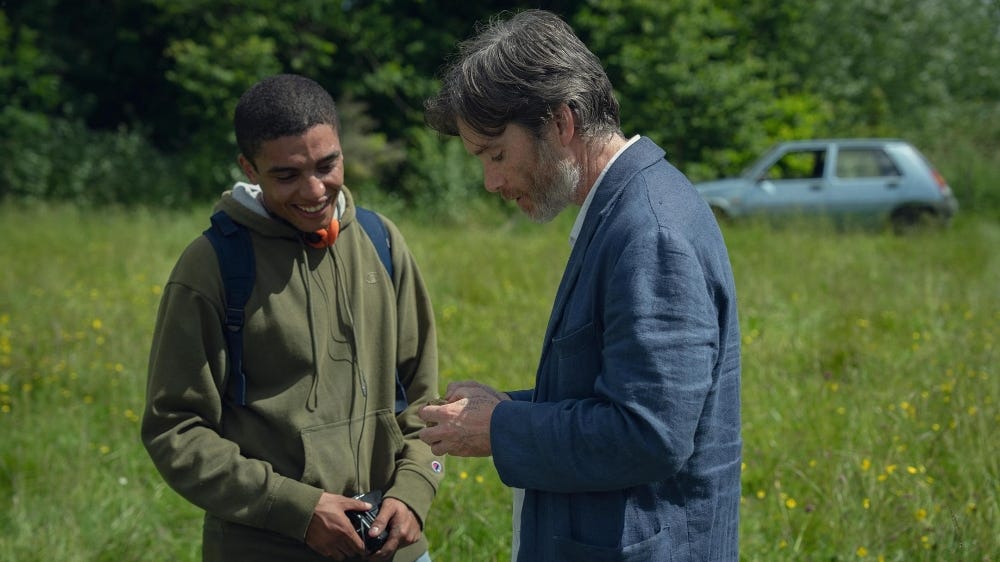
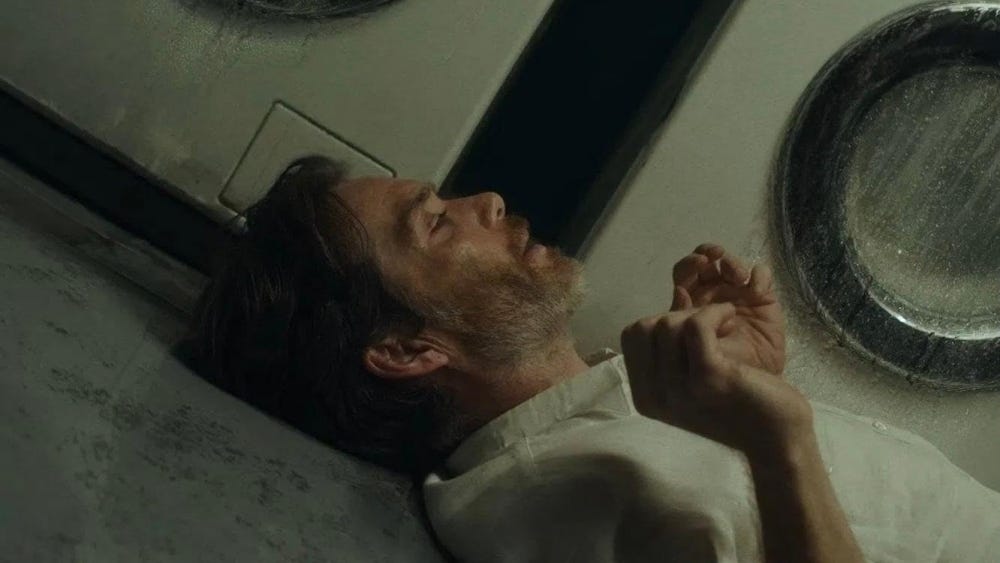
Cillian Murphy’s Steve is the last line of defense for the boys, the man who founded Stanton Wood and has sustained it ever since. He treats the students with the patience of a saint, striving to defuse situations rife with violence and profanity through conversation and humor. Yet beneath that devotion lies a self-destructive nature. At the root of his avoidance is the guilt of having caused a child’s death in a car accident years earlier. Trauma drove him into dependence on powerful painkillers and alcohol, and those substances allow him to continue living with both physical and psychological pain numbed.
Mielants crosscuts moments in which Steve falters with scenes of him caring for the boys, suggesting that his efforts to help them are inseparable from a desperate struggle to atone for his own darkness. His anxiety is symbolized by the tape recorder. What initially appears to be a means of maintaining control gradually degenerates into an obsessive and masochistic form of self-soothing, projecting Steve’s inner state.
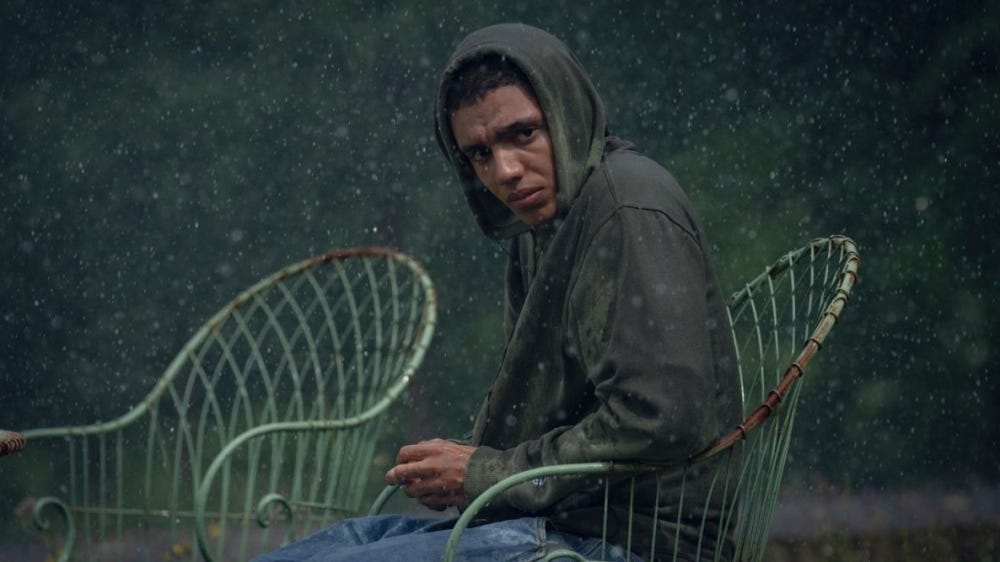
Jay Lycurgo’s Shy serves as the embodiment of a past Steve failed to save. In his first appearance, Shy lies on the hood of Steve’s car, suggesting that the boy is intimately bound up with the teacher’s trauma. His mother’s decision to cut him off marks the collapse of his social bonds, causing him to shut out the world and retreat entirely into music and isolation. It is not so different from the way Steve, consumed by self-reproach born of trauma, shuts out the world and remains trapped within Stanton Wood.
Shy’s isolation is symbolized by his headphones. They function as a metaphor for his retreat into a world of his own by shutting out external noise, standing in stark contrast to Steve’s tape recorder, which constantly condemns him. When Shy, after attempting suicide, emerges from the pond and hurls stones at the school, Steve embraces the boy with his whole body instead of restraining or scolding him. It is a moment of healing, one in which he confronts his own wounds and the boy’s pain together.

3.
The ending, in which boys who have spent the entire film trading blows join in the embrace, may seem ostensibly beautiful. Even so, it amounts to no more than the minimum degree of goodwill a community can offer. The school will still close. Steve’s addiction will not end. Shy remains estranged from his parents. There are no especially kind people, no especially evil people, no particularly wise people, and no particularly foolish people in this film. No one is immune to the darkness within, and neither adults nor children are offered any solution. As in his previous work, Tim Mielants simply makes a quiet confession through the dirt-streaked face and bloodshot eyes of Cillian Murphy: all there is to do is wake up the next morning and choose to keep living together.
And this story expands far beyond Steve and the boys, encompassing not only those who carry their own darkness but society itself. The way the boys isolate their inner darkness through violence and the way society isolates its own darkness through the violence of cameras and policies are fundamentally the same. The whole country is swept up in the excitement of Euro ’96, yet the boys of Stanton Wood remain thoroughly excluded from it. Starved of financial support due to government cuts to social services, the school faces imminent closure, a reality sharply expressed through the hypocritical attitude of politicians who approach education only through political logic. It is the contradiction of a state that isolates troubled children in the name of education while cutting the very resources they require.
The documentary crew’s rude questions, such as “Describe yourself in three words,” expose how mainstream society consumes the darkness of poverty and crime only in fragmented and sensational forms. The discourse, having expanded from the individual to the school and then to society, finally transcends its era. The year 2025 is not so different from 1996. Educational institutions are still tossed about by political logic, and those burdened with trauma are still reduced to objects of punishment and isolation.
4.
Whereas Small Things Like These is a film in which silence speaks, Steve stands in contrast in that it points toward the silence hidden within noisy speeches. Even so, it is entirely fitting to view the two as companion pieces. Both bring grand social discourse down to the level of the individual, yet instead of elevating it into something heroic, they recognize that the struggles of ordinary people are already fierce and exhausting enough.
The camerawork of cinematographer Joris Heyvaert is the film’s defining identity. The handheld camera that dominates the first half relentlessly interrogates both the brutal fights and Steve’s ceaseless movements, quickly inducing the dizziness of standing in the middle of Stanton Wood itself. The documentary crew’s footage is rendered in the low resolution and noisy VHS texture characteristic of the 1990s, colliding with the film’s primary visual language and creating a strong sense of dissonance — serving as both a critique of outsiders’ consumption of the boys as mere spectacle while also estranging its subjects, allowing the audience to contemplate the characters’ inner worlds.
The high-speed drone sequence unveiled during the climax is somewhat experimental. It was likely intended to express, in extreme terms, the emotional vortex in which Shy’s anxiety and sense of liberation become entangled in the wake of his suicidal impulse. Yet it is equally difficult to deny that this abrupt stylistic departure sits somewhat apart from the film’s realism-driven aesthetic.
Note: Originally written in Korean, with English translation assisted by AI. Appreciate you reading.
메타데이터
- post_id
- ee2eb670604e
- slug
- steve-2025-dir-tim-mielants-the-feedback-loop-of-darkness-ee2eb670604e
- url
- https://medium.com/@realpierr/steve-2025-dir-tim-mielants-the-feedback-loop-of-darkness-ee2eb670604e
- canonical_url
- https://medium.com/@realpierr/steve-2025-dir-tim-mielants-the-feedback-loop-of-darkness-ee2eb670604e
- author_url
- https://medium.com/@realpierr
- status
- ok
- fetched_at
- 2026-07-09 20:10:33