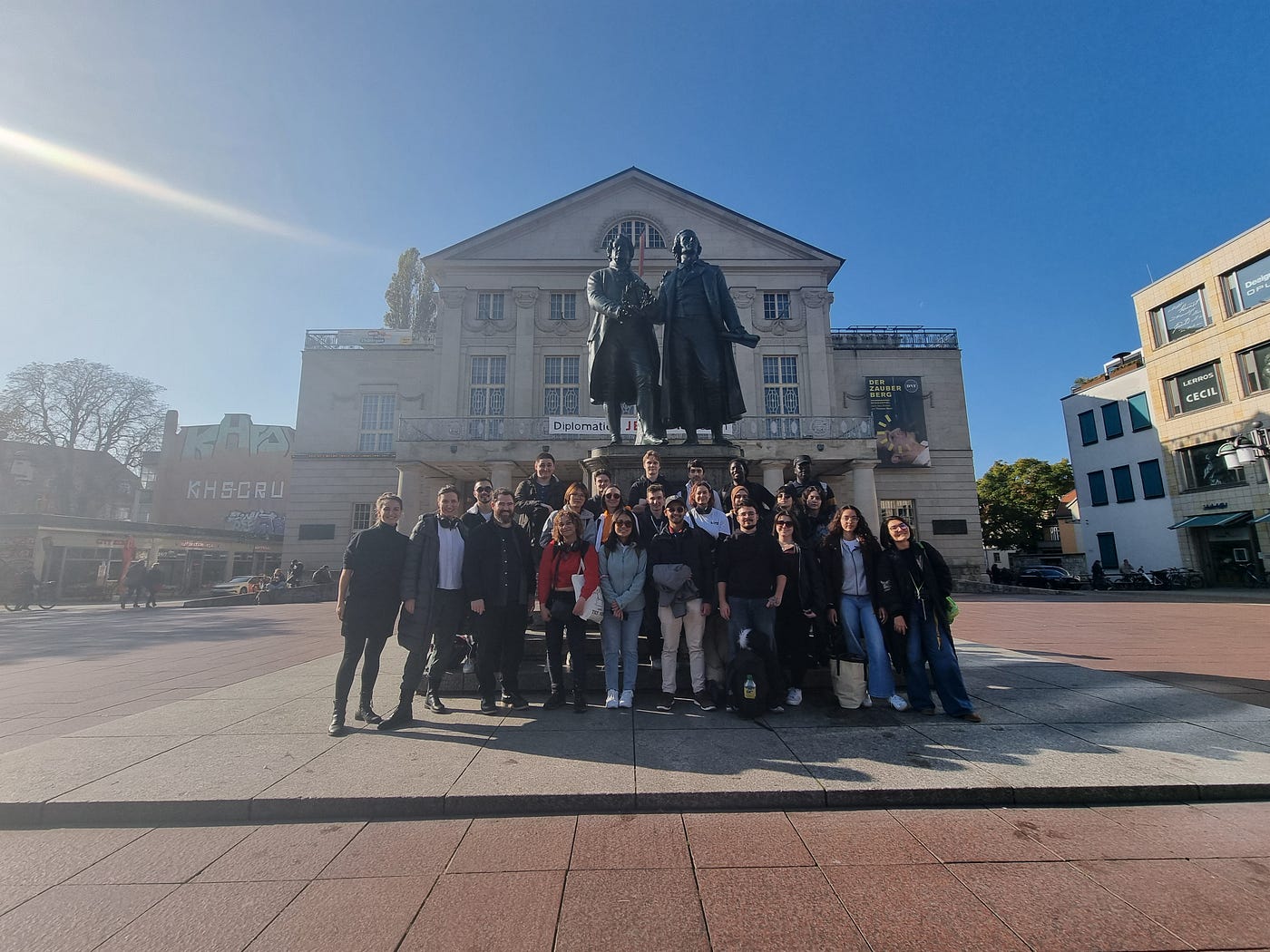
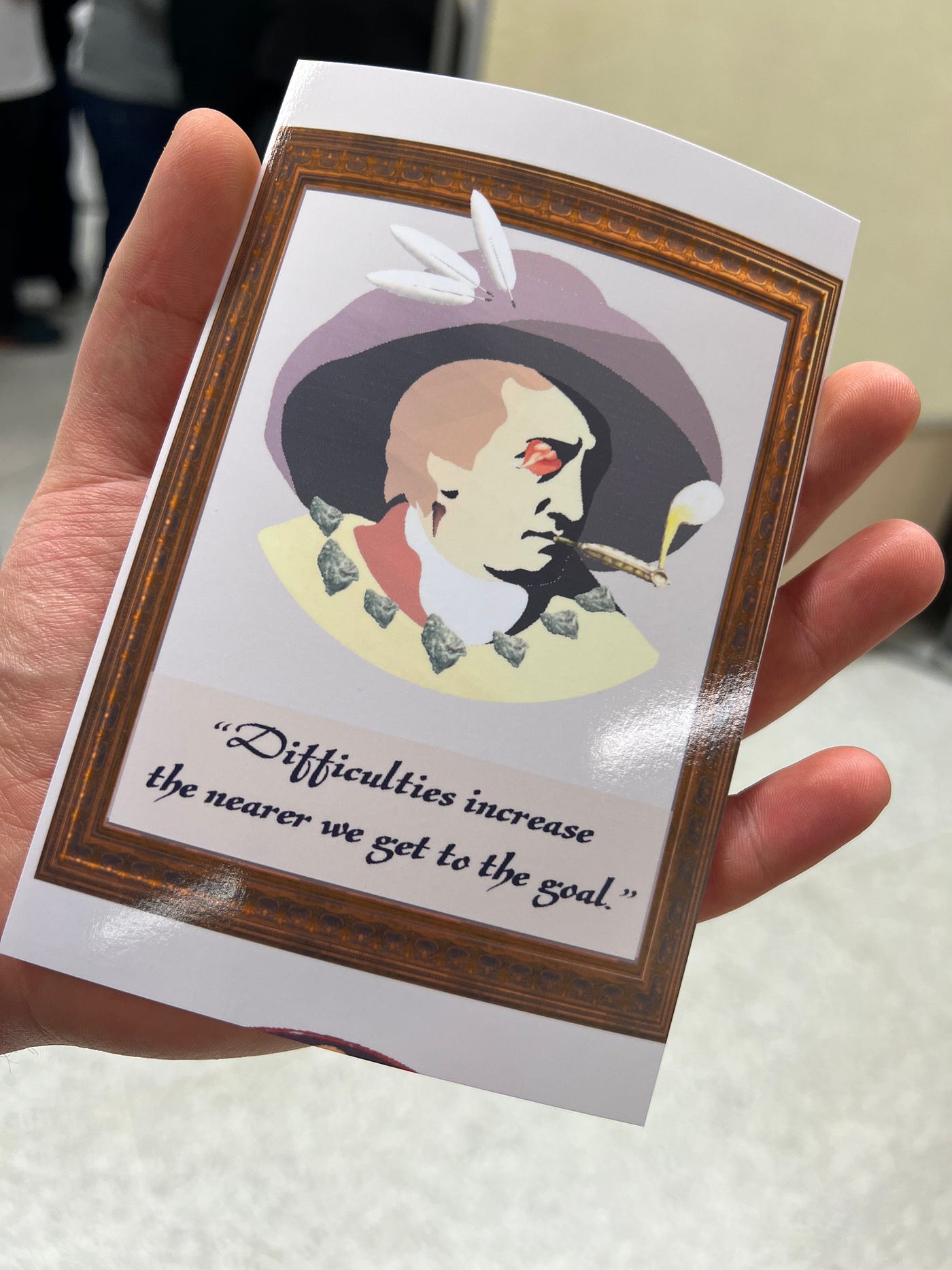
P5 Group1_Final group post
Our project, Paint Goethe, came to an end last week. After three months of hard work, challenges, and dedication, our entire team feels…
P5 Group1_Final group post
Our project, Paint Goethe, came to an end last week. After three months of hard work, challenges, and dedication, our entire team feels both proud and content with the final result. Most importantly, seeing people’s amazement and excitement about our project turned out to be the most rewarding and precious part of this journey.
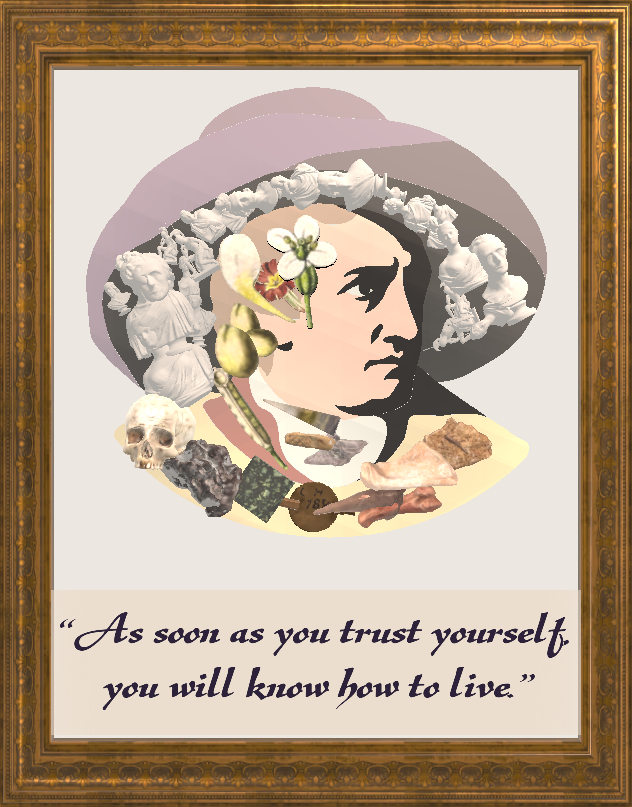
The collage I created in our experience.
How It Started
In the beginning, we brainstormed a wide range of ideas, each focusing on a different side of Goethe — his scientific work, like Goethe’s Plant Morphology, and his personal reflections, such as his journey to Italy. We didn’t want to simply present facts; we wanted to create a story that would capture Goethe as a person — not just as a historical figure, but as someone with passions, struggles, and a curiosity for the world, much like anyone today.
It wasn’t easy letting go of so many great ideas for us, but with limited production time, we had to make tough choices. In the end, we decided to create a Goethe collage with his collections. This shift in direction took us from a more conceptual approach, which would’ve required a detailed storyline and more development, to something more practical. Yet, we remained focused on keeping the core spirit intact: the experience had to feel experimental and reflect Goethe’s own curiosity and exploration of life.

Testing with the same objects while the other 3D objects were still in production.
Developments — challenges and obstacles
As we entered the development phase, we began to think more critically about what the users would take away from the experience. Would it inspire them to learn more about Goethe? Or perhaps make the experience memorable enough to encourage them to revisit the museum? These questions brought a sense of uncertainty, especially around our collage concept. We weren’t sure if users would connect with it, as not everyone has the same passion for or appreciation of art.
Additionally, we were unsure about how the collage would come together visually once it was filled with 3D objects. This was a challenge we kept in mind throughout the process, constantly questioning how the collections would fit and how the final result would feel. It wasn’t until we had most of the 3D objects finished that we began to get a clearer sense of how it would all come together.
On the technical side, one person ended up handling most of the main mechanics, which were crucial to the whole experience. With limited time, others didn’t get as involved, and that can be a lot for just one person, especially in bigger projects. Plus, the communication around programming got tricky since everyone had their own style. Going forward, I think it’d help to have a clearer timeline with divided phases, so the workload is spread out and everyone knows exactly what they’re responsible for.

Two group members were discussing the visual arrangement of our experience.
Among our team
Overall, everyone was responsible for their tasks and met deadlines, with regular weekly meetings to distribute the workload. If anyone felt overwhelmed, someone was always there to help. For me, the ideation phase was where I learned the most. Seeing how sharing and building on ideas opened up so many possibilities was eye-opening. Everyone was open to exploring new ideas, but sometimes it was tough for me to keep the ideas flowing. Still, that’s where I grew the most. As a team, we really worked hard to present the whole concept as fully as possible within the timeframe, though it could be overwhelming at times since the project required so many interconnected parts.

A image from the tutorial.
Feedbacks
During our final presentation, after showcasing the trailer, the idea was well-received, and the audience could easily follow the concept. However, representatives from the museum expressed concerns about whether the interactions might be too challenging for their visitors.
As development progressed, we had already received feedback suggesting the snapping mechanic could be improved to make it more user-friendly, particularly for finger manipulation. Before the final presentation, we worked on refining this feature to ensure smoother functionality. On presentation day, the museum reiterated their concern that the snapping mechanic might still pose challenges for some visitors, based on their past experiences. Reflecting on this, I thought that adding size adjustment buttons could have been a useful alternative to address this issue.
Overall, the feedback was largely positive, especially regarding the playfulness of the experience. However, users often wished for a more flexible Undo option, such as being able to reposition objects on the canvas. Another insight was that many users didn’t spend much time creating their pieces. We speculated that this might have been due to environmental factors, the selection of available objects, or the level of engagement not being strong enough to hold their attention. Despite these points, the experience was generally regarded as both informative and interesting.
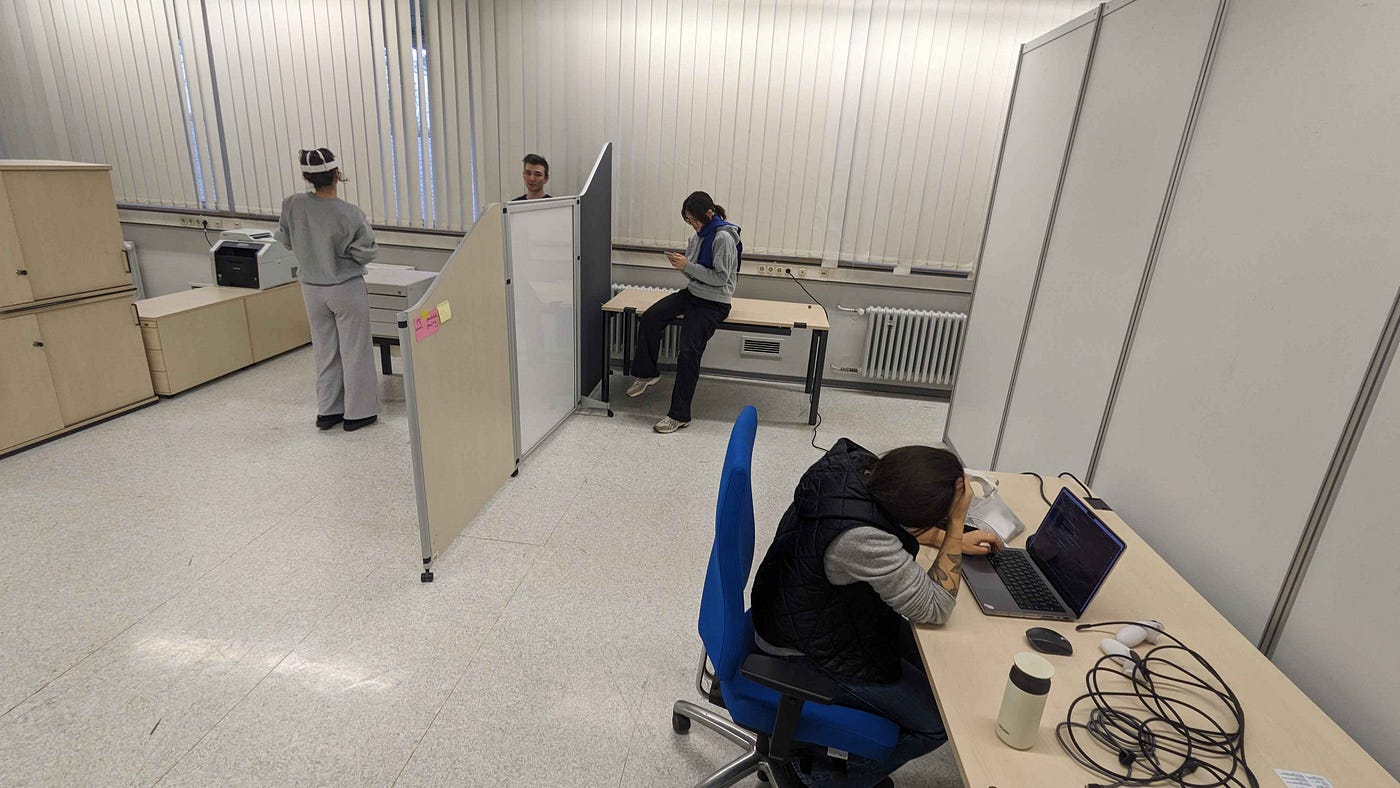
Last day before the final presentation.
Reflections and Visions
If we had more time, I’d imagine making the experience more complete by adding features like a virtual gallery. This would allow users to view past collages and see their own creations displayed as part of a growing collection. It could be a fun, interactive way to give everyone a sense of contribution and community. During our testing sessions, I noticed how unique and diverse each collage turned out, which made me realize the potential of showcasing them.
Another exciting possibility is making the experience highly customizable for the museum. For example, the collections could change seasonally or for special events. Imagine a Goethe birthday feature, with exclusive visuals, designs, or even a themed collection. This kind of flexibility could keep the experience fresh and relevant for returning visitors.
For future students taking on similar projects, I’d suggest maintaining close communication with the museum or institution. Their insights are critical, especially for user feedback during major updates, as they understand their audience better than anyone. Lastly, start small but creative — ideas don’t need to be grand in scope, but they should be achievable and grounded in reality through thorough research on users, personas, and historical context.

A clip showcasing our mixed reality experience: Paint Goethe.
Semester: P5
Group Name: Marvelous Five
Group members: Mariia Kostiukova Zornitsa Dimitrova Ryoma Oka Colin Drobek Chuanting Kuo
Author of the Story: Chuanting Kuo
Date: 10.02.2025
메타데이터
- post_id
- ee56e5e5bce5
- slug
- p5-group1-final-group-post-ee56e5e5bce5
- url
- https://medium.com/project5/p5-group1-final-group-post-ee56e5e5bce5
- canonical_url
- https://medium.com/project5/p5-group1-final-group-post-ee56e5e5bce5
- author_url
- https://medium.com/@chuanting.kuo
- status
- ok
- fetched_at
- 2026-07-21 01:00:30