5 Books That Made Me Smarter than 99% of People.
You can hack your brain to become more intelligent
5 Books That Made Me Smarter than 99% of People.
You can hack your brain to become more intelligent

5 Life Changing Books
Over my years as a peer-reviewed value theorist and coach in academic test preparation and sales, I’ve learned that we have significant control over our intelligence.
I’m going to share 5 essential books that have helped countless top students and entrepreneurs achieve remarkable results.
Now, you might be sitting there thinking, intelligence is more than just cold, logical thinking, and you’d be right. In fact, Dr Howard Gardner’s well-known Theory of Multiple Intelligences contains 8 dimensions or types of intelligence.
Each of the 5 books I’ll be discussing here relates to 5 out of these 8. Books that will help you develop your:
- Logical Mathematical Intelligence,
- Interpersonal Intelligence,
- Intrapersonal Intelligence,
- Linguistic Intelligence,
- Naturalistic Intelligence.
We’ll cover how each of these types of intelligence functions as we go along.
#1 Critical Thinking Logic & Problem Solving by BigRocks Thinking Group.

Goodreads
Now, there are lots of great books out there on logical thinking and critical thinking, so why this one? Well, back when I was very active in the academic world, I was heavily into argumentation and abstract theory. In fact, I even published a new value theory that is held in university libraries around the world.
The problem? I struggled to relate what I wrote and knew to people who were not also in that field. And so in some sense, you could say I was very unintelligent. And that’s where this book truly shines. It helped me with both logic and effective communication of that logic.
Is this something you’ve struggled with, too? Well, while most books on logic and critical thinking are helpful, many of them don’t explain how to acquire these skills in a simple and practical way.
Instead of being only abstract and theoretical, this book is extremely hands-on and practical, with lots of relatable exercises and examples.
Yes, it does have its fair share of theory, learning about cognitive biases, interpretation of data, etc. But ultimately, the authors take the reader from these concepts all the way to how to use these to make better decisions. It also engages in creative problem solving, and best of all, how to actually communicate our findings and opinions in a way that they will be well received by those we’re conversing with.
Think about it. How much more effective do you think you would be if you not only understood things like the structure of logical arguments, overcoming biases, and spotting misinformation, but also could:
- Apply them to real life situations and problems.
- Influence others conversationally to take your position.
If logical mathematical intelligence alone is inadequate to help us have the growth and influence in our lives we’re looking for, then how else should we strive to increase our intelligence? Well, that brings us to the second book on our list.
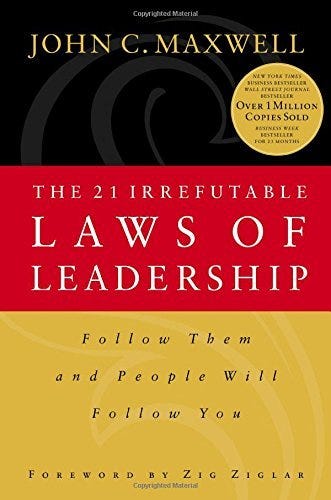
#2 The 21 Irrefutable Laws of Leadership by John Maxwell.
Goodreads
This book helps us develop what is called our interpersonal intelligence. Now, I’m going to be brutally honest with you. I used to think that the most important intelligence was the logical mathematical kind we discussed previously.
Having been deeply entrenched in the academic world for so long in the very abstract field of value theory, it was very easy to measure my own intelligence and even my self-worth by how much abstract knowledge I had and how well I could construct and deconstruct logical arguments. But all too often, when we take that approach, we eventually find ourselves sitting on a couch somewhere, getting fat and out of shape, buried in all our brilliant intellectual thoughts. But in reality, having both a very shallow inner life and very little outward impact.
Be real with yourself. Has this ever described you? Well, at some point, we’ve got to get off that couch, get uncomfortable, and develop our social intelligence.
Maxwell’s book here is absolutely instrumental to this because it’s way more than just a book. Again, there are lots of great books I’ve even mentioned that help us learn lots of great theory and concepts on how to become more socially intelligent. But the 21 Irrefutable Laws of Leadership is full of practical exercises you can do after each chapter.
And back when I was building sales teams and even training teachers in the test prep agency I owned, I would regularly look into each chapter and literally reread chapters on topics of leadership and influence I felt I needed to work on.
The beauty of this book is that as we take action on the information we learn from it, we get results, learn from the experience, and can go back and reread the chapter again with completely new eyes and a completely new understanding based on the experiences we had and the mistakes we made from taking action.
But you might be wondering why we should read a book on leadership in the first place in order to build our social intelligence.
Well, leadership is in part the art of team building.
Based on all my past experiences in both teaching and entrepreneurship, I believe building our own leadership ability, whether or not we eventually plan on building a team, is the key to understanding how to work with people better, build better relationships, and create stronger communities.
After all, there’s so much polarisation in the world right now. Don’t you want to be part of the solution? And that brings us to the next book on our list.
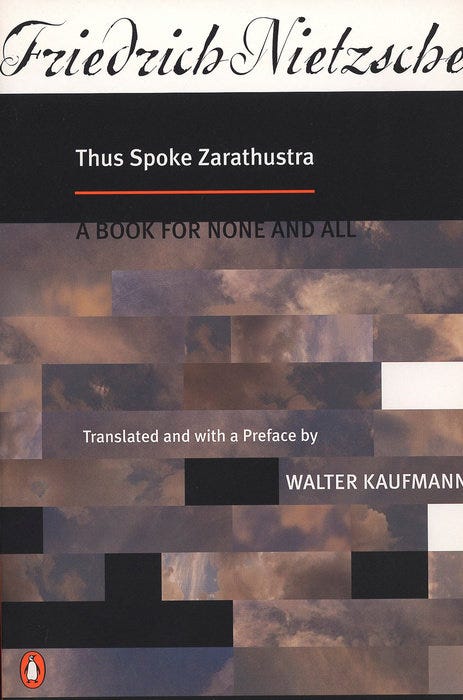
#3 Thus Spoke Zarathustra by Friedrich Nietzsche.
Goodreads
This book will help you develop what’s called your intrapersonal intelligence, a form of intelligence that more and more new research shows is potentially even more impactful for learning than our other forms of intelligence.
Nietzsche was a philosopher prominent in the 19th century, and it’s difficult to know how to categorise him. Depending on who you ask, he’s either a depressive nihilist or a voice of optimism. And that’s precisely why I recommend this book.
You see, I was first introduced to the topic of philosophy in high school. At that time, we were introduced to all the canonical philosophers — Aristotle, Thomas Aquinas, John Stuart Mill, Emmanuel Kant, all of whom had their own theories of morality and value. But Nietzsche came along and tried to destroy it all.
In fact, he has another book called How to Philosophise with a Hammer and Sickle, which tells you everything you need to know about his approach. The thing is, at the time, I emotionally disagreed with his arguments but didn’t have the words or ideas to argue against them.
Thus Spoke Zarathustra was one of the first books by Nietzsche that I explored at the time, and his ideas about the nonexistence of morality and the impossibility of absolute knowledge left me shaken.
But this was a good thing. You see, intrapersonal intelligence is the ability to self-examine and self-explore. It’s essentially a measure of our self-awareness, and much of the time that self-awareness doesn’t really happen unless we get knocked out of our comfort zone or have our views challenged.
- How well do we understand what we value?
- How reasoned is that understanding?
- Or is it just a default we’ve accepted based on our culture and upbringing?
- Are we the ones in the driver’s seat when it comes to determining what we value and why?
You see, this is the true value of Nietzsche’s work. It gets us out of a comfortable place of mindless assumptions we’ve made and challenges us to think more deeply.
And this is one of the foundations of being intelligent. Think about it. If what you believe right now is so true and so right, then you shouldn’t be afraid of examining it and analysing it. Because if it is so true and so right, then it will survive this examination, won’t it?
But what if it doesn’t? That’s the thing. If it doesn’t, I believe we all need to develop the emotional courage and resilience to face the truth, whatever that is.
So if you really want to grow your mind, don’t read the comfortable books from thinkers you agree with. Read the books from those you disagree with. And Thus Spoke Zarathustra is a great start. And that brings us to the next book on this list. Well, actually, books.
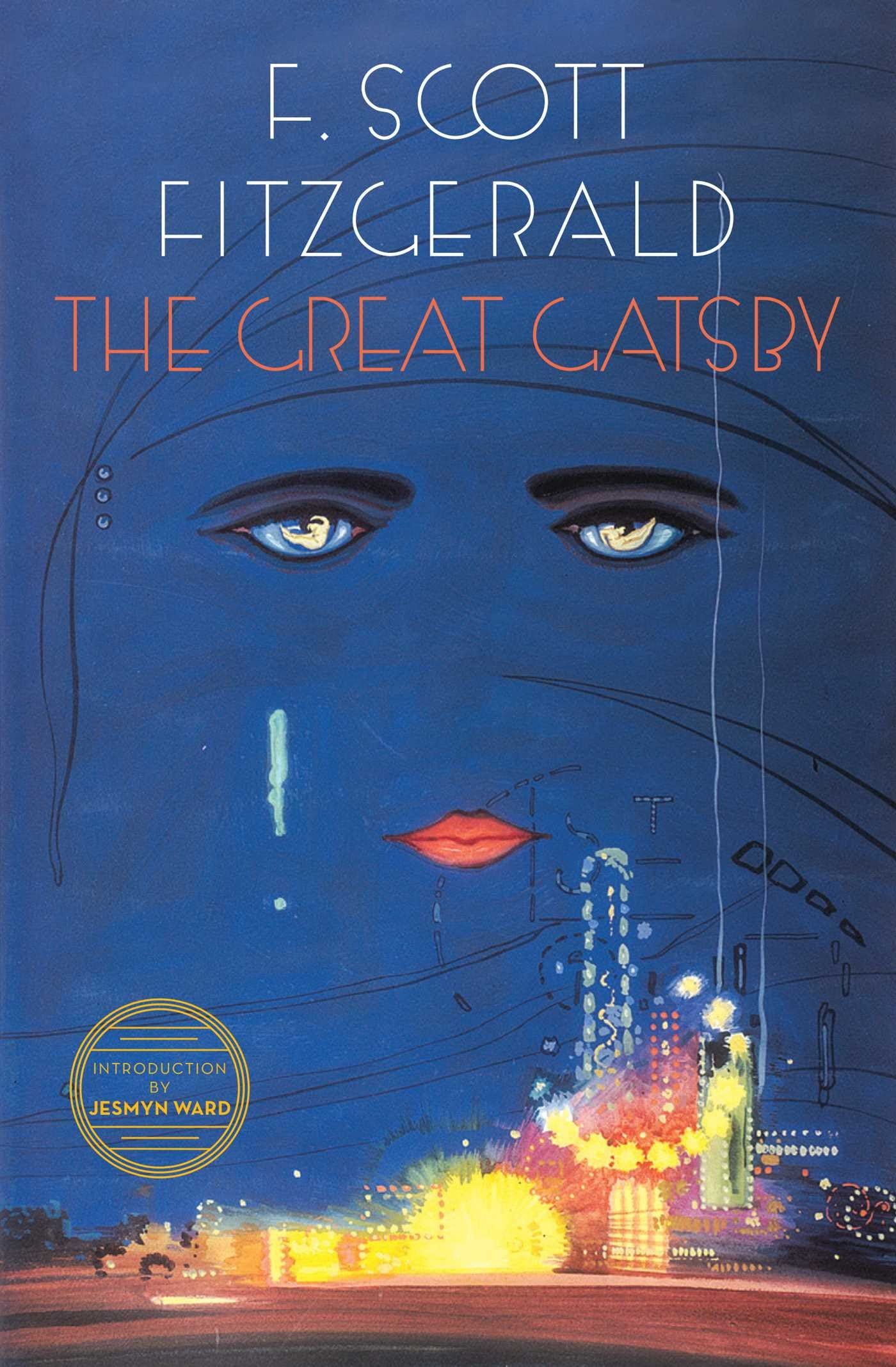
#4 Classic literature such as The Great Gatsby by F. Scott Fitzgerald,
Brave New World by Aldous Huxley, Animal Farm by George Orwell.
Goodreads
This and countless others help us develop what is called linguistic intelligence.
What good are interpersonal intelligence, intrapersonal intelligence, and even logical & mathematical intelligence if we don’t have the flexibility in our language to adapt to all the possible life contexts and situations we find ourselves in.
Besides being really great books in themselves, classic literature like these challenges us not only to develop new vocabulary, but it actually trains the neural networks of our brains how to recognize patterns and language more easily.
- How did Fitzgerald use a certain metaphor in his novel?
- How did Huxley use certain sentence structures or descriptive phrases to make his points?
- How did Orwell use emotions and symbolism in his words to express his ideas?
Not only has reading literature like this been shown to expand our ability to write and communicate better, but it also helps us make our own thinking clearer to ourselves.
In a very real sense, reading classic literature helps us become freer and more capable of regulating our own behavior. Why? Because our ability to do two types of thinking, namely what are called convergent thinking and divergent thinking.
Two forms of thinking involved in creative problem solving are only maximised if we are exposed to a large variety of new ideas, concepts, stories, and writing styles. Ask yourself, “How truly creative are you?” “And how could reading more literature help you further develop this part of your mind?”
#5 A Brief History of Time by Stephen Hawking.
Goodreads
This book helps us develop what is called our naturalistic intelligence. It is our ability to notice patterns and make new connections from what we observe in nature.
Part of what it means to be intelligent is to be what is called a T-shaped person, someone with deep knowledge in a specific area and shallower or more general knowledge in a wide variety of areas.
Learning in this way has shown to increase both our creativity and problem solving ability.
So, which of these book/s will you get started with first? What other books have you read that you feel should also be on the list? I’d love to hear from you in the comments.
In today’s modern world, an independent mind is a rare thing, but I’m doing my part to change that. If you want to level up and help me in this journey, then please support my work by **buying me a coffee**.
메타데이터
- post_id
- ee5e7e6b5b17
- slug
- 5-books-that-made-me-smarter-than-99-people-ee5e7e6b5b17
- url
- https://baos.pub/5-books-that-made-me-smarter-than-99-people-ee5e7e6b5b17
- canonical_url
- https://baos.pub/5-books-that-made-me-smarter-than-99-people-ee5e7e6b5b17
- author_url
- https://medium.com/@Seanveaux
- status
- ok
- fetched_at
- 2026-06-09 15:37:30