The Grammys Became a Protest Stage While Philanthropy Collapsed Around It
Artist Philanthropy During Social Justice Crisis: Grammys 2026 and the Funding Collapse
The Grammys Became a Protest Stage While Philanthropy Collapsed Around It
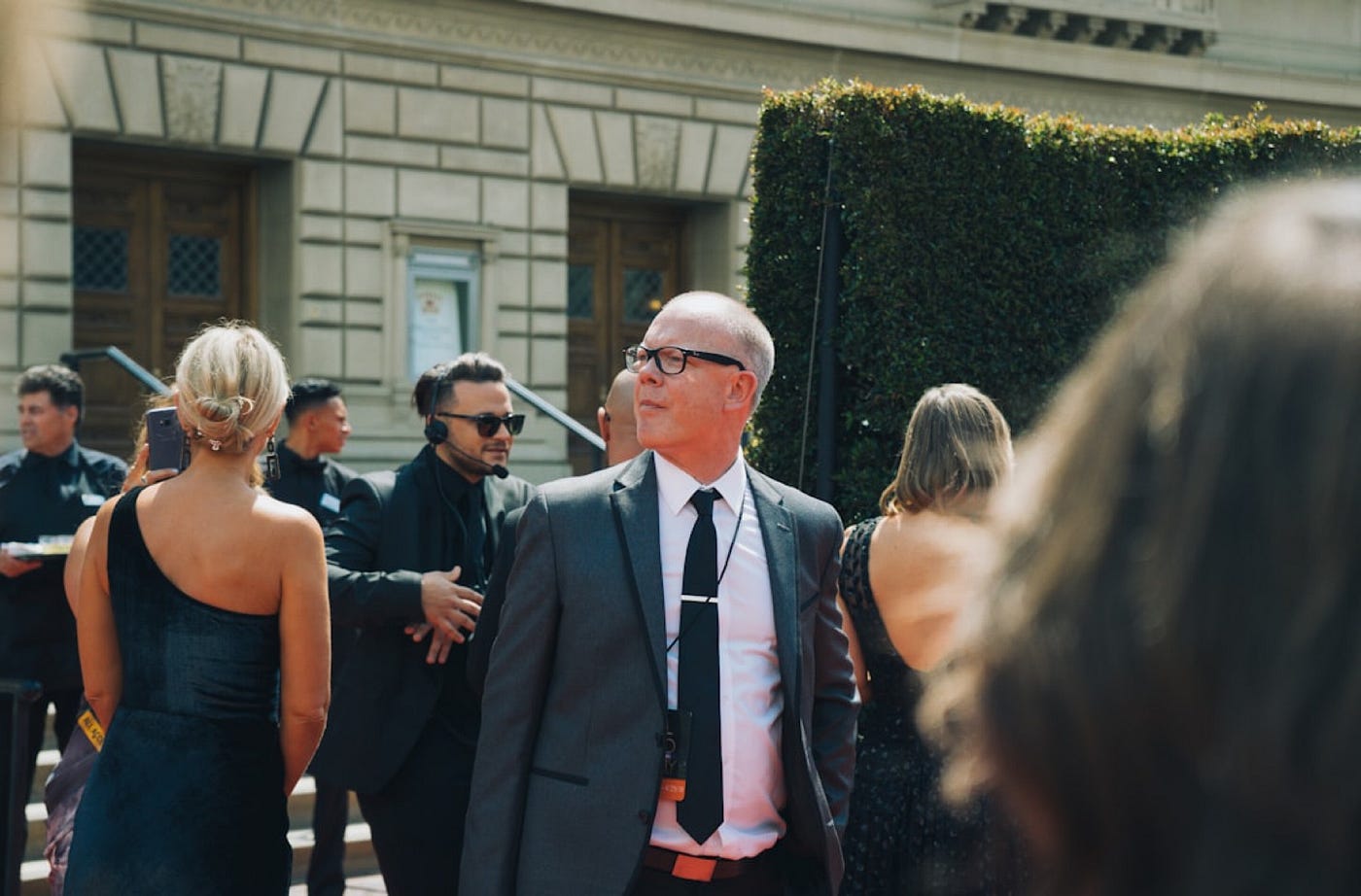
Photo by Anthony Fomin on Unsplash
The 68th Grammy Awards on February 1st crystallized something I’ve been watching happen in real time. Artists are being forced to build their own philanthropic systems because the ones that exist simply aren’t designed for them.
When Bad Bunny won Album of the Year, the first Spanish-language album to ever win in 68 years, and declared “ICE out” from the stage, he wasn’t just making a political statement. He was doing what the music industry’s charitable infrastructure should have been doing all along: responding to a crisis in real time.
Billie Eilish won Song of the Year and told the room “No one is illegal on stolen land.” Multiple artists wore “ICE Out” pins on the red carpet. The ceremony became the most politically charged in Grammy history, arriving just days after ICE shot American citizens in Minneapolis and detained a five-year-old child.
I’ve spent the last year working with athletes, artists, and creatives who are trying to figure out how to give strategically in an industry that treats philanthropy as an afterthought. Building Active Cause has given me a front-row seat to how broken the infrastructure really is.
The same week artists were using Grammy speeches to protest, $425 billion in federal funding was frozen or cut, 35,000+ nonprofits were facing closure, and the social justice organizations these artists were advocating for were laying off thousands. The contrast is stark, an industry that generates billions has almost no philanthropic muscle, while artists themselves are stepping in to fill gaps that neither their industry nor the government will cover.
What I’m seeing from inside the system
When we launched Active Cause, I thought the hardest part would be explaining why athletes and artists needed donor-advised funds. It turns out the hardest part is explaining why traditional philanthropy has failed them so completely that they’re inventing entirely new models.
Take what Billie Eilish just did. She donated $11.5 million from her tour revenue to climate and food equity organizations. Announced at the WSJ Magazine Innovator Awards where she told billionaires directly: “If you’re a billionaire, why are you a billionaire? Give your money away, shorties.” Her Changemaker Program with REVERB generates revenue through special tickets at every show, creating a sustainable funding stream built directly into touring infrastructure.
Noah Kahan raised $5.5 million through The Busyhead Project, a nonprofit he built specifically for mental health accessibility, distributing funds to 108 nonprofits in a single year. Sabrina Carpenter raised $1 million in less than a year through PLUS1, making it the fastest-growing artist fund in the platform’s history. Olivia Rodrigo donated all net proceeds from her Philippine Arena show to reproductive rights organizations and embedded local abortion fund chapters inside her concert arenas.
These aren’t celebrity vanity projects. These are artists building philanthropic infrastructure where none existed because they understand something traditional philanthropy doesn’t: speed matters, trust matters, and institutional gatekeeping often slows things down more than it helps.
The crisis traditional philanthropy can’t solve
The numbers from 2025 are extremely depressing. Nonprofit job losses hit 28,696, more than quadrupling from the year before. One in three service-providing nonprofits lost government funding in the first half of the year. Organizations working on trans rights, immigration support, climate justice, abortion access, basically everything artists were advocating for at the Grammys , are facing existential funding threats.
Meanwhile, U.S. private foundations collectively hold over $1 trillion in assets. The 5% annual payout requirement has acted as a ceiling rather than a floor for most of them. Foundation grants take 3–12 months to process. When the California Endowment doubled its payout to 10%, it was considered radical.
Now compare that to what happened with FireAid. The January 30th benefit concert raised over $100 million for LA wildfire relief in a single night. The first $50 million was distributed to 120+ nonprofits within weeks. Artists including Billie Eilish, Olivia Rodrigo, and Gracie Abrams mobilized their audiences immediately. Metallica gave $500,000, Chris Stapleton gave $1 million, Travis Scott gave $1 million plus 100% of specific merch proceeds.
The gap between these two models isn’t operational. It’s philosophical. Traditional philanthropy asks: how do we steward resources responsibly over time? Artist philanthropy asks: how do we move resources to where they’re needed right now?
The PLUS1 model is what scaled artist giving looks like
The closest thing to systematic artist philanthropy infrastructure is PLUS1, and it’s instructive to look at why it works. Founded by a former Arcade Fire member after the band donated $1 per ticket for Haiti relief, the model is simple: every concert ticket includes a $1+ charitable contribution, with 90% of funds reaching nonprofits. Since 2014, PLUS1 has granted $32 million+ to nonprofits worldwide.
What makes this brilliant is that it doesn’t rely on artists having liquid wealth. It creates a giving stream from ticket revenue, something artists generate regularly through touring. It’s built into the transaction. Fans opt in through ticket purchases. The infrastructure handles compliance, vetting, and distribution.
When Sabrina Carpenter’s fund became PLUS1’s fastest-growing ever, it wasn’t because she’s wealthier than other artists. It’s because she has a massive touring base and embedded giving into every ticket. This is the model we’re trying to help more artists understand at Active Cause: you don’t need a foundation with a $10 million minimum and five board members. You need infrastructure that accepts irregular income, handles compliance, and moves fast.
What the donor-advised fund structure actually solves
Here’s why we built Active Cause around DAFs specifically for this demographic: traditional philanthropy infrastructure assumes stable, predictable wealth. Artists have compressed earning windows, volatile income streams, complex assets, and careers that might last three years or thirty.
A donor-advised fund accepts crypto, royalty streams, equity, and irregular cash flows. It lets you give when you can and distribute when the need arises. There’s no public disclosure requirement, critical for artists who face harassment for their giving choices. You can support international causes without navigating every country’s compliance requirements yourself. And critically, there’s no 501(c)(3) formation, no board governance, no annual 990 filings unless you want them.
When Brian Eno organized the Together for Palestine concert at Wembley, it raised £2 million ($2.67M). But Eno reported that venues refused bookings at the mere mention of “Palestine.” The No Music for Genocide movement now includes 1,000+ artists geo-blocking music from Israeli platforms. These artists face real professional consequences from; label pressure, sponsor threats, venue cancellations.
A DAF provides a layer of privacy and protection. You don’t have to announce every grant publicly. You can support controversial causes without your foundation’s 990 becoming a target for pseudo activists or media. This isn’t about hiding, most artists are quite public about their values but rather about having control over when and how you disclose.
Where artist activism meets economic reality
The uncomfortable truth is that most artists can’t do what Billie Eilish did. The median working musician earns $1,450 per year from music. At current streaming rates, one million Spotify plays yields roughly $4,000 gross – and after splits, a signed artist might see $600-$1,000.
This is why tour-integrated giving matters so much. It doesn’t rely on musicians becoming independently wealthy before they can give. Chappell Roan raised over $400,000 for trans youth through The Midwest Princess Project by partnering with local organizations in every tour city. The model scales to the artist’s reach, not their personal bank account.
K-pop provides an interesting contrast. When fire struck Hong Kong in November 2025, Stray Kids donated $729,000, aespa gave $64,000, (G)I-DLE contributed $141,000, and HYBE Labels pledged $342,000 – all within days. This coordinated wave response demonstrates what’s possible when agencies and labels treat philanthropy as infrastructure rather than PR.
The Western music industry could learn from this. Right now, individual artists are building their own systems in isolation. What if labels, agencies, and touring companies embedded giving infrastructure the way K-pop companies do?
What I think this means for high-earning creatives
The pattern I’m seeing across Active Cause members is consistent: people don’t trust traditional philanthropy to move fast enough, be transparent enough, or understand their communities well enough. They’re not wrong.
GoFundMe processed $40+ billion since inception, with 2.5 donations every second in 2025. Creator-led campaigns on Tiltify raised $100 million+ in 2025 – a 46% increase year-over-year. These platforms exist because people want to see where their money goes immediately, not read about it in an annual report eighteen months later.
The shift isn’t just generational. It’s structural. When federal funding collapses and 14,000+ nonprofits could exhaust reserves within three months, waiting for a foundation to approve a grant proposal over six months isn’t viable. Communities need support now.
Artists are proving that cultural power can move resources faster than institutional wealth. But cultural power is episodic. It peaks during album cycles, tour runs, award show moments. What happens between cycles? What happens when the spotlight moves?
This is where DAF infrastructure matters. You can give during your peak earning years and distribute strategically over decades. You can take a public stand during a Grammy speech and follow through with private grants. You can support ten different causes without managing ten different 501(c)(3) boards.
Where I see this going
The reality is that artists won’t replace government funding or foundation endowments. They shouldn’t have to. But what they can do is what they’re already doing is to demonstrate what responsive, trust-based, community-connected philanthropy looks like.
Lin-Manuel Miranda’s DAF has distributed $103 million since 2016. That’s not a celebrity vanity project. That’s proof of concept that artists with the right infrastructure can deploy significant resources strategically over time.
The question for the next decade is whether the infrastructure will exist to support this at scale. What would it look like if every major tour had a PLUS1-style embedded giving component? What if artist DAFs became as common as artist LLCs? What if streaming platforms made micro-donations as easy as adding a song to a playlist?
The Grammys proved artists are willing to take risks with their platforms. They’ll speak out when institutions won’t. They’ll move money when foundations sit on endowments. But they need infrastructure that works the way their careers work: fast, flexible, and built for volatility.
That’s what we’re trying to build at Active Cause. Not because artists should replace the social safety net, but because they shouldn’t have to wait for permission to help their communities while the safety net collapses around them.
Built for artists, athletes, and creatives who don’t fit traditional philanthropy
Active Cause provides donor-advised fund infrastructure for people with compressed earning windows, volatile income, and complex assets. We accept crypto, royalty streams, and equity. We handle international grantmaking. We move fast.
Talk to Active Cause →
No minimum net worth. No governance issues. No waiting six months for grant approvals.
Frequently Asked Questions
Does this mean artists should stop working with traditional foundations?
Not at all. Traditional foundations have expertise, networks, and deep subject matter knowledge that individual donors can’t replicate. But they also have limitations – bureaucracy, slow processing, risk aversion. The most effective approach is usually hybrid: use foundations where their strengths matter (long-term strategy, policy change, technical expertise) and use direct giving where speed and community connection matter most.
What happened with the federal funding crisis mentioned?
Since January 2025, the Trump administration has frozen or canceled an estimated $425 billion in federal grants, affecting everything from AmeriCorps to EPA environmental justice programs. Nonprofit job losses hit 28,696 in 2025, more than quadrupling from 2024. Organizations serving immigrants, trans youth, climate justice, and reproductive rights have been hit particularly hard – the same causes Grammy artists were advocating for on stage.
How is K-pop artist philanthropy different from Western models?
K-pop operates on coordinated collective action through agencies and labels. When disasters strike, labels mobilize multiple artists simultaneously, creating wave effects. Stray Kids, aespa, (G)I-DLE, and dozens of groups all donated to Hong Kong fire relief within days, facilitated by their agencies. Western artists typically operate independently, building their own infrastructure in isolation.
What is PLUS1 and how does it work?
PLUS1 embeds charitable giving directly into concert ticketing – typically $1+ per ticket goes to designated nonprofits, with 90% of funds reaching beneficiaries. Since 2014, it’s distributed $32 million+ to nonprofits worldwide. Artists including Sabrina Carpenter, Noah Kahan, and hundreds of others use the platform. It works because it doesn’t rely on artists having personal wealth – it creates a giving stream from touring revenue.
Why did so many Grammy artists speak out about ICE specifically?
The ceremony happened days after ICE agents shot American citizens in Minneapolis and detained a five-year-old child, sparking national outrage. Immigration enforcement rose 75% in 2025 to 66,000 detained – the highest ever recorded. The “One Big Beautiful Bill Act” allocated $170.1 billion for immigration enforcement, making ICE the highest-funded federal law enforcement agency in history.
What’s the average musician actually earning from streaming?
The median working musician earns approximately $1,450 per year from music. At current Spotify rates (roughly $0.004 per stream), one million plays yields about $4,000 gross. After label, distributor, publisher, and producer splits, a signed artist might see $600-$1,000. This is why tour-integrated giving models work better than expecting artists to donate from streaming revenue.
How does a donor-advised fund help artists specifically?
DAFs accept irregular income (touring revenue, royalties, equity), complex assets (crypto, IP rights), and don’t require stable wealth. There’s no 501(c)(3) formation, no board governance, no public disclosure requirement. You can give during peak earning years and distribute strategically over time. You can support international causes without navigating every country’s compliance yourself. Critical for artists with 3–15 year earning windows and public scrutiny of their giving choices.
What happened with the No Music for Genocide movement?
Launched September 2025, the movement now includes 1,000+ artists geo-blocking music from Israeli streaming platforms in protest of Gaza policy. Participants include Massive Attack, Lorde, Björk, Hayley Williams, and hundreds of others. But consequences have been real: Brian Eno reported venues refused bookings at the mention of “Palestine,” Nan Goldin’s career tanked, Susan Sarandon was dropped by her agency, Melissa Barrera lost her Scream franchise role.
Active Cause is a private philanthropy membership app exclusively for athletes, creatives, and entertainers. We provide donor-advised fund infrastructure, charity discovery tools, fundraising campaign management, philanthropic insights, and community through Active Gatherings.
Private membership. Impact over optics. Built for compressed careers and cultural power that drives social change.
Talk to Active Cause →
References
[^1]: NPR. (2026). The complete list of 2026 Grammy winners and nominees.
[^2]: Deadline. (2026). 2026 Grammys Winners List: Bad Bunny, Kendrick Lamar, Billie Eilish & Finneas.
[^3]: Harper’s Bazaar. (2026). All the Celebrities Who Spoke Out Against ICE at the 2026 Grammys.
[^4]: Euronews. (2026). ‘F*ck ICE’: The most powerful speeches at the politically-charged Grammy Awards.
[^5]: ProPublica. (2023). Musicares Foundation Inc – Nonprofit Explorer.
[^6]: United Way. (2025). Nonprofit Face Double Crunch As Shutdown Follows Severe Funding Cuts.
[^7]: National Council of Nonprofits. (2025). Nonprofit Champion | May 5, 2025.
[^8]: New Industry Focus. (2026). Billie Eilish Donates $11.5 Million of Tour Revenue.
[^9]: Fortune. (2025). Billie Eilish calls on billionaires to give away their wealth.
[^10]: Billie Eilish Store. (2024). Sustainability – Hit Me Hard and Soft Tour.
[^11]: Billboard. (2025). Chappell Roan, The Weeknd & Noah Kahan: How Artists Prioritized Activism In 2025.
[^12]: The Busyhead Project. (2025). About.
[^13]: Billboard. (2025). Sabrina Carpenter Raises $1 Million for Charity in Less Than a Year.
[^14]: Rolling Stone. (2024). Olivia Rodrigo to Donate More Than $2 Million to Global Women’s Charities.
[^15]: Chronicle of Philanthropy. (2025). What We Know – and Don’t Know – About the Nonprofit Layoff Crisis.
[^16]: The Conversation. (2025). 1 in 3 US nonprofits that serve communities lost government funding in early 2025.
[^17]: GrantNews. (2024). How Long Does It Take to Get a Grant?
[^18]: Candid. (2020). Why The California Endowment is doubling its payout rate to 10%.
[^19]: Variety. (2025). FireAid Has Raised More Than $100 Million So Far for L.A. Fire Relief Efforts.
[^20]: FireAid. (2025). Official Website.
[^21]: Billboard. (2025). Musicians Who Have Donated to LA Wildfire Relief Efforts: List.
[^22]: PLUS1. (2024). What We Do.
[^23]: Billboard. (2025). Sabrina Carpenter, Mumford & Sons Lead PLUS1’s 2025 Impact Awards.
[^24]: Wikipedia. (2025). Together for Palestine.
[^25]: Equator. (2024). How Gaza Broke the Art World.
[^26]: No Music for Genocide. (2025). Official Website.
[^27]: Two Story Media. (2024). The Average Musician Made $13,327 in 2024.
[^28]: SoundCampaign. (2026). Spotify Royalties Calculator: Most Accurate (February 2026).
[^29]: Hypebae. (2025). Chappell Roan Announces New LGBTQ+ Charity.
[^30]: Billboard. (2025). Stray Kids, Aespa & More K-Pop Stars Donate to Support Victims of Hong Kong Tower Fire.
[^31]: Kpopmap. (2025). Stray Kids’ Philanthropy: K-pop Idols Supporting Communities.
[^32]: Sportskeeda. (2025). HYBE, YG, Stray Kids, aespa, RIIZE, i-dle, Jackson Wang & more donate for Hong Kong fire relief.
[^33]: SQ Magazine. (2025). Venmo vs. Cash App Statistics 2025.
[^34]: PR Newswire. (2025). Creator-Led Fundraising Crosses $100 Million on Tiltify in 2025.
[^35]: Chronicle of Philanthropy. (2025). Many Nonprofits Would Be Reeling If Trump Froze That Money.
[^36]: Creative Capital. (2024). Creative Capital Award.
[^37]: Fox News. (2026). Music’s biggest stars protest ICE at Grammy Awards amid Trump’s immigration crackdown.
메타데이터
- post_id
- ee5f33db032c
- slug
- the-grammys-became-a-protest-stage-while-philanthropy-collapsed-around-it-ee5f33db032c
- url
- https://medium.com/active-cause-insights/the-grammys-became-a-protest-stage-while-philanthropy-collapsed-around-it-ee5f33db032c
- canonical_url
- https://medium.com/active-cause-insights/the-grammys-became-a-protest-stage-while-philanthropy-collapsed-around-it-ee5f33db032c
- author_url
- https://medium.com/@yonishassanAC
- status
- ok
- fetched_at
- 2026-06-09 15:37:30