The Honest Math of Building an ADU for Your Parents
A client in Tarzana sat across from me last year doing math on a paper, trying to compare three numbers. What assisted living would cost…
The Honest Math of Building an ADU for Your Parents
A client in Tarzana sat across from me last year doing math on a paper, trying to compare three numbers. What assisted living would cost her mother monthly. What a caregiver coming to the house would cost. And what building a small unit in her backyard would cost upfront. She’d been putting off the decision for over a year because the ADU number looked scary sitting alone on the page. It stopped looking scary the moment she put it next to the other two.
That’s really the honest math behind building an ADU for parents, and it’s rarely the conversation people expect to have when they first call an ADU contractor.
Why the sticker price is the wrong number to start with
Here’s what I mean. A detached ADU for parents in Los Angeles typically costs $180,000 to $320,000 depending on size and finish level. Said alone, out loud, in a first phone call, that number sounds enormous. Most people hear it and mentally file the whole idea under someday, maybe.
But that number was never supposed to stand alone. Compare it against what elsewhere runs monthly. Assisted living facilities across the LA area commonly run $5,500 to $9,000 a month depending on care level and location. That’s $66,000 to $108,000 a year, every year, indefinitely. A part time in home caregiver, even at a modest twenty hours a week, typically runs $2,500 to $4,500 monthly depending on required certifications and hours needed. Run either of those numbers out five years and you’re already well past what a backyard unit costs to build once, permanently, on land you already own.
This is the math nobody puts in front of families early enough. The ADU isn’t competing against zero dollars. It’s competing against an ongoing monthly cost that never stops accruing.

What this actually costs to build, broken down honestly
A backyard cottage for elderly parents, built with accessibility in mind from the start, generally lands in that $180,000 to $320,000 range I mentioned, with the upper end reflecting larger units, premium finishes, or more complex site conditions like hillside grading or difficult utility access.
ADU accessibility features add a real but modest premium to a standard build. Wider doorways, a curbless walk in shower, grab bar blocking installed in the walls before drywall goes up, and lever style door handles instead of round knobs typically add $8,000 to $18,000 total when planned into the design from the beginning, rather than retrofitted later at a much higher cost.
ADU construction cost in Los Angeles projects also carry design and permitting costs of $15,000 to $35,000, and this phase typically takes eight to twelve weeks for straightforward projects, longer if your property sits in a hillside or fire hazard severity zone requiring additional review. Construction itself generally runs four to eight months once permits are in hand.
What the numbers don’t capture
Here’s where I think this conversation genuinely differs from a typical ADU pitch. The financial comparison matters, and I lay it out honestly with every family. But the real driver, the thing that actually gets people to move forward, is rarely the spreadsheet.
It’s being able to check on your mother without a forty minute drive. It’s her having her own door, her own kitchen, her own routine, while you’re close enough to notice if something feels off. It’s your kids growing up seeing their grandparents daily instead of on a video call. Multigenerational living ADU projects solve something a monthly facility bill can’t touch, which is the actual distance between people who want to be near each other.
I’ve had more than one client tell me, well after their unit was finished, that the biggest change wasn’t logistical. It was that they stopped feeling guilty. Not perfect, not without its own adjustments, but the daily anxiety about a parent living alone or far away simply lifted.
Designing It So It Actually Works Long Term
ADU design for aging parents needs to plan for mobility changes that may not exist yet but very well could later. This is where I push clients to think five and ten years out, not just where a parent is today.
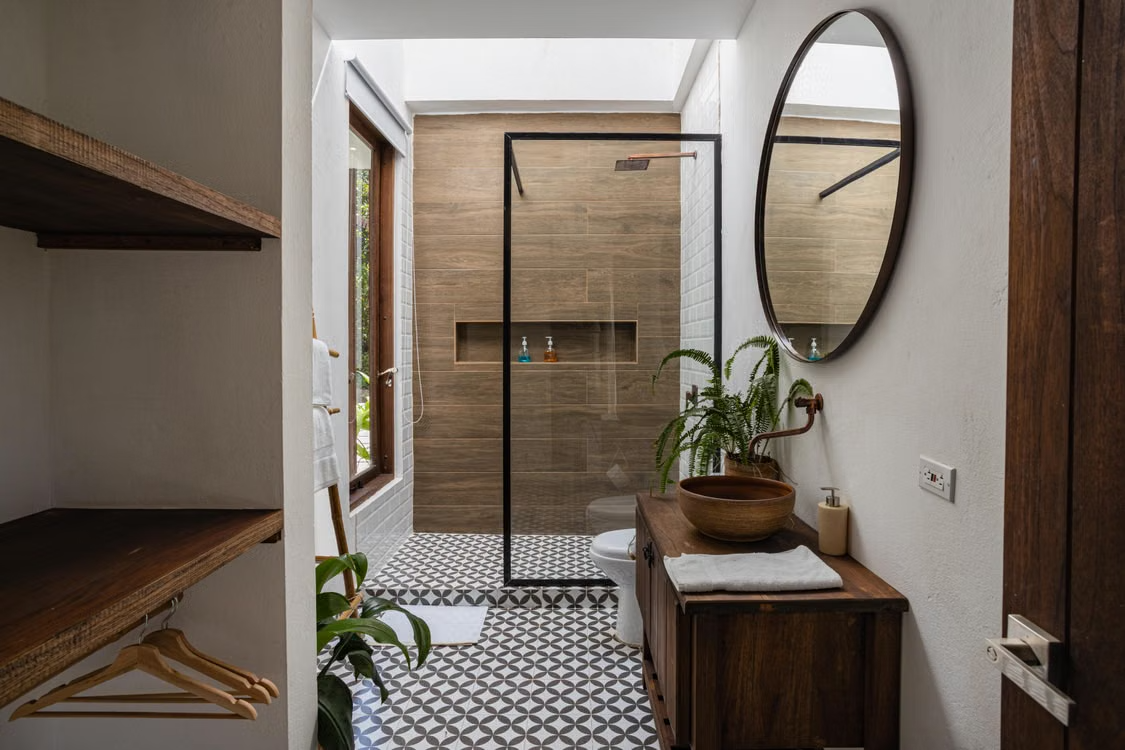
- A curbless shower entry avoids a step that becomes a real hazard as mobility changes, and it costs far less to build correctly the first time than to retrofit later.
- Wider doorways, generally 34 to 36 inches, accommodate a walker or wheelchair without requiring future construction if needs change.
- Lever door handles and lever style faucets are easier to operate for anyone with arthritis or reduced grip strength, a small detail that makes daily life genuinely easier.
- Adequate lighting, particularly in bathrooms and hallways, reduces fall risk more than people expect from something so simple.
- A single level layout avoids stairs entirely, which matters enormously if mobility changes are a realistic possibility during the years this unit will be used.
Senior friendly ADU design doesn’t need to look institutional either. Every one of these features integrates into a genuinely beautiful, warm space when planned thoughtfully from the start, rather than feeling like a hospital retrofit bolted onto a home.
Where Families Get This Decision Wrong
The most common mistake is treating this as an emotional decision only, without ever actually running the comparison against ongoing care costs, and ending up paralyzed by a big number that looks worse in isolation than it does next to the alternative.
The second mistake runs the opposite direction. Building without planning for future mobility needs, then facing a costly retrofit a few years later when a standard bathroom no longer works safely. Planning accessibility into the original design costs a fraction of adding it after the fact.
The third mistake is underestimating the long term property value this adds. Beyond housing your parents now, a well built ADU typically adds a substantial share of its construction cost to your property’s appraised value, meaning this isn’t spending that disappears. It’s an asset that stays on your property long after your family’s needs around it change.
What I’d Tell Any Family Weighing This
Run the actual numbers, all of them, not just the construction estimate sitting alone. Compare it honestly against what ongoing care costs over the years you’re actually planning for. Then have the harder conversation, the one about proximity, safety, and what peace of mind is actually worth to your family. Both parts of that math matter, and the families who make this decision with real clarity are the ones who looked at both.
If you’re considering building an ADU for parents and want honest numbers specific to your property, your family’s needs, and your local permitting conditions, that conversation is worth having before the idea sits on a shelf for another year. KN Remodeling has guided families across the Santa Monica, Culver City, and Woodland Hills through exactly this kind of build, from accessibility planning through final walkthrough. Book a consultation and we’ll walk through what’s realistic for your specific lot and your family’s situation.
Book your free consultation Today: *https://kn-remodeling.com/book-an-appointment/*

Frequently Asked Questions
Is building an ADU cheaper than assisted living long term? Often yes. A detached ADU typically costs $180,000 to $320,000 to build once, compared to assisted living running $66,000 to $108,000 annually, meaning the ADU frequently pays for itself within three to five years compared to ongoing facility costs.
What accessibility features should an ADU for aging parents include? Key features include a curbless shower, wider doorways of 34 to 36 inches, lever door handles and faucets, adequate lighting, and a single level layout without stairs, ideally planned into the original design rather than retrofitted later.
How much do accessibility features add to ADU construction cost? Planning accessibility features into the original design typically adds $8,000 to $18,000, considerably less than retrofitting these same features into an existing structure later.
Does an ADU for parents add value to my property? Yes, a well built detached ADU typically adds a substantial share of its construction cost to your property’s appraised value, functioning as a long term asset beyond its immediate use for family housing.
How long does it take to build an ADU for parents in Los Angeles? Design and permitting typically take eight to twelve weeks for straightforward projects, followed by four to eight months of construction, meaning a realistic total timeline runs six to ten months from start to move in.
Can an ADU be modified later if my parents’ mobility needs change? Some modifications are possible later, but planning for future mobility needs during the original design, like a curbless shower and wider doorways, avoids costly and disruptive retrofits down the line.
For more information:
Check our Google Business Profile: https://share.google/fBvfh7LxnDYuARN7s Follow our KN Remodeling Website: https://kn-remodeling.com/
Follow us on Pinterest: https://www.pinterest.com/knremodeling/ Follow us on Instagram: https://www.instagram.com/knremodelinginc/ Check our Yelp Profile: https://www.yelp.ca/biz/kn-remodeling-los-angeles-2 Check our Houzz Profile: https://www.houzz.com/pro/knremodeling
메타데이터
- post_id
- ee7c90f49aeb
- slug
- the-honest-math-of-building-an-adu-for-your-parents-ee7c90f49aeb
- url
- https://medium.com/@kitchenbyknremodeling/the-honest-math-of-building-an-adu-for-your-parents-ee7c90f49aeb
- canonical_url
- https://medium.com/@kitchenbyknremodeling/the-honest-math-of-building-an-adu-for-your-parents-ee7c90f49aeb
- author_url
- https://medium.com/@kitchenbyknremodeling
- status
- ok
- fetched_at
- 2026-08-26 22:29:41