What Makes a Championship Team
Talent can win games — but it doesn’t always win championships.
What Makes a Championship Team
Talent can win games — but it doesn’t always win championships.
Why do stacked teams sometimes fall? What does it take to win a championship?
It’s what goes on that you can’t always see. If you break down each team, you may be able to determine who will be the next one on top.
This is how you should break it down:
Pitching
The game starts with one pitch. A championship team will often feature a pitcher who is at the top of the league in ERA (Earned Run Average) and has low hits allowed, showing they can consistently limit scoring over time.
But ERA alone isn’t enough. A low WHIP (Walks and Hits Per Inning Pitched) shows that a pitcher truly has control and doesn’t consistently put runners on base.
Not only do they start the game, but pitchers end it. It’s not just one arm they rely on; it’s the entire rotation. Therefore, a versatile bullpen is necessary to either finish off the game or help save it.
The bullpen becomes critical as the innings progress. When a team’s bullpen is consistent, it shortens the game and puts pressure on the opponents early, giving them the advantage.
And with power comes adaptability. Who comes to save the day when their pitcher is in a slump and balls keep getting hit?
Fielding
Championship teams play clean defense. Limiting errors and keeping their pitchers’ WHIP under control. Because even with strong pitching, poor fielding can increase a pitcher’s ERA by extending the innings. And a defense with a strong range of awareness can compensate for pitching mistakes to keep the game going.
Strong infield defense is key to turning a double play, which can limit scoring throughout the game. Especially in high-pressure games, defensive efficiency matters more.
Having a strong team means that the starting players have a small error (E) percentage. Error percentage reflects how often a team makes mistakes in the field, showing reliability for routine plays. In close games, the team with the lower error percentage often has the edge by avoiding costly mistakes.
But what if that isn’t enough to fix what has already been done? What needs to be done to get back on track?
Batting
A balanced lineup keeps pressure on pitchers. And keeps the fielders on their toes.
Offensively, OPS (On-base Plus Slugging) is one of the clearest indicators of a team’s ability to both get on base and hit for power. A high OPS reflects balance: players who get on base set the table, while power hitters bring them home to score runs.
Teams with high OPS don’t just rely on home runs; they consistently create scoring opportunities. Extra-base hits, doubles, and triples are just as important as home runs. It turns simple base runners into scoring threats.
And who controls what order they are in, or picks who needs to be playing when and for how long
Management
Managers play a key role in maximizing stats and knowing when to pull a pitcher to protect their ERA and WHIP. Or even to change a player in the lineup when they need someone who hasn’t been playing the whole game and needs more energy to replace them.
Bullpen management is especially critical. One wrong decision can undo an entire game’s worth of string pitching, especially if a reliever is put into a situation that doesn’t match their strengths.
The best managers understand matchups, knowing which pitchers perform best against certain types of hitters. And that can go vice versa.
Lineup construction can directly impact teams’ OPS, putting players in positions where they can succeed the most. A well-built lineup moves power hitters and on-base players, making it harder for pitchers to truly navigate innings without giving up runs.
Good management turns individual stats into a consistent team performance.
After all of this, who can be seen as a champion (or a future champion) and how or why did they get there?
Los Angeles Dodgers
The Dodgers show their consistency year after year. They consistently rank near the top in team OPS, showing their balance of power and on base ablility. Players like Mookie Betts and Freddie Freeman are those in the starting lineup who have high OPS and set the tone of the lineup with both power and on-base ability.
Their pitching rotation has multiple arms capable of maintaining a low ERA. Their depth allows them to protect the leads late in the game. Such as Shohei Ohtani and Alex Vesia. They are both capable of shifting momentum instantly, even though Ohtani is a starter and Vesia is a closer.
Their experience in high-pressure playoff situations gives them that edge that most other teams don’t have.
New York Yankees
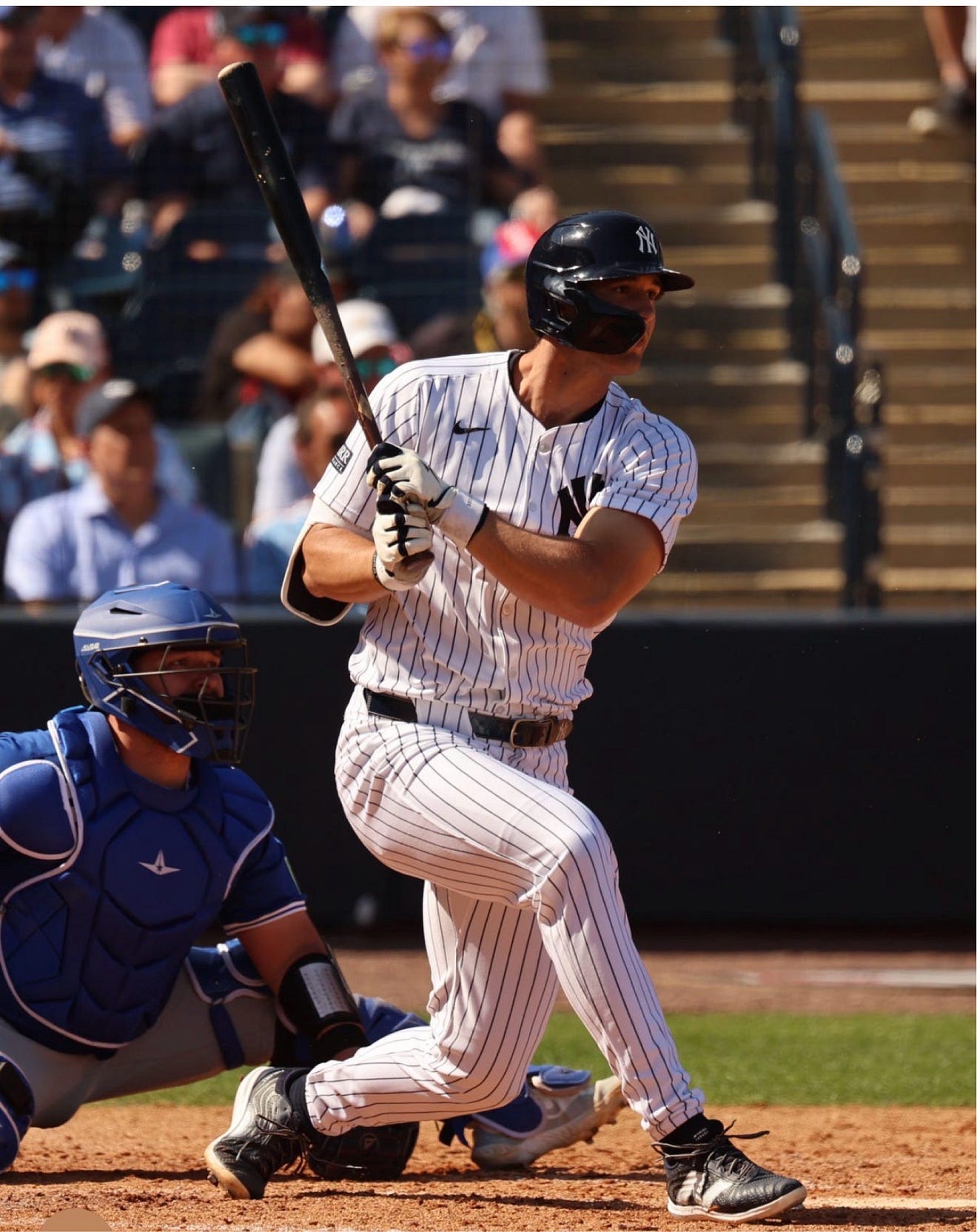
The Yankees dominate games offensively. The high OPS are driven largely by power hitting and home run production. Players like Aaron Judge and Giancarlo Stanton add to slugging percentage, making their lineup dangerous and power-heavy.
Their bullpen has the potential to be elite and reliable. Pitchers like Gerrit Cole and David Bednar are both equally ace players. Like Ohtani and Vesia, a starter and a closer are vastly different because of their roles in the game, but they both hold the team highly, whether that be in the first inning or in the last.
They have shown their consistency year after year, and even though they may not have won a World Series in a while, they have shown nothing but power and growing power, too.
Seattle Mariners
The Mariners are an emerging team with ever-improving OPS and offensive depth. With a younger roster, they are bringing energy, even with a lack of playoff experience; there is hope for them to grow. Julio Rodriguez is a rising star who is boosting their OPS with their speed and power. Cal Raleigh is a power hitter who adds to slugging and provides those clutch home runs.
Although their batting can be looked at more than their pitching, their bullpen and starters contribute so much to their growth. Players like Luis Castillo and George Kirby are both frontline pitchers who help maintain a low ERA and steady WHIP by limiting walks with their elite control.
All of these teams are predicted to finish at the top, but predictions don’t win championships — execution does. The Dodgers may be chasing another title, but even they can fall short. The same applies to the Yankees and the Mariners. In the end, the teams that win aren’t just the most talented — they’re the most complete, combining pitching, fielding, batting, and management into consistent performance when it matters most.
메타데이터
- post_id
- ee7fd0fa9d7b
- slug
- what-makes-a-championship-team-ee7fd0fa9d7b
- url
- https://medium.com/@olivia227/what-makes-a-championship-team-ee7fd0fa9d7b
- canonical_url
- https://medium.com/@olivia227/what-makes-a-championship-team-ee7fd0fa9d7b
- author_url
- https://medium.com/@olivia227
- status
- ok
- fetched_at
- 2026-06-09 15:37:30