Europe’s Carmakers Are Asking to Be Protected. From Themselves.
The same companies lobbying for local-content rules are opening their factory doors to the rivals those rules are meant to block.
INDUSTRIAL POLICY · Carmakers want Brussels to stop them from doing what they’re already doing
Europe’s Carmakers Are Asking to Be Protected. From Themselves.
The same companies lobbying for local-content rules are opening their factory doors to the rivals those rules are meant to block.

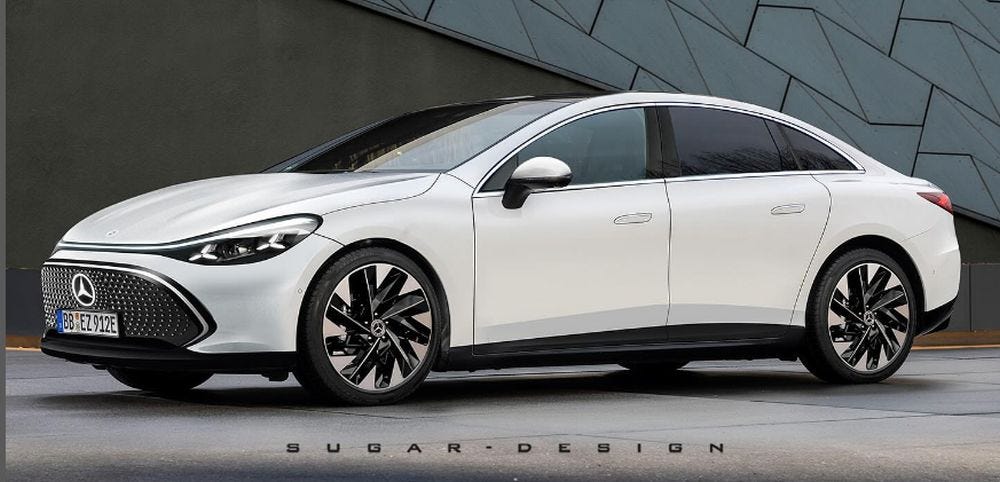
Image is computer-generated
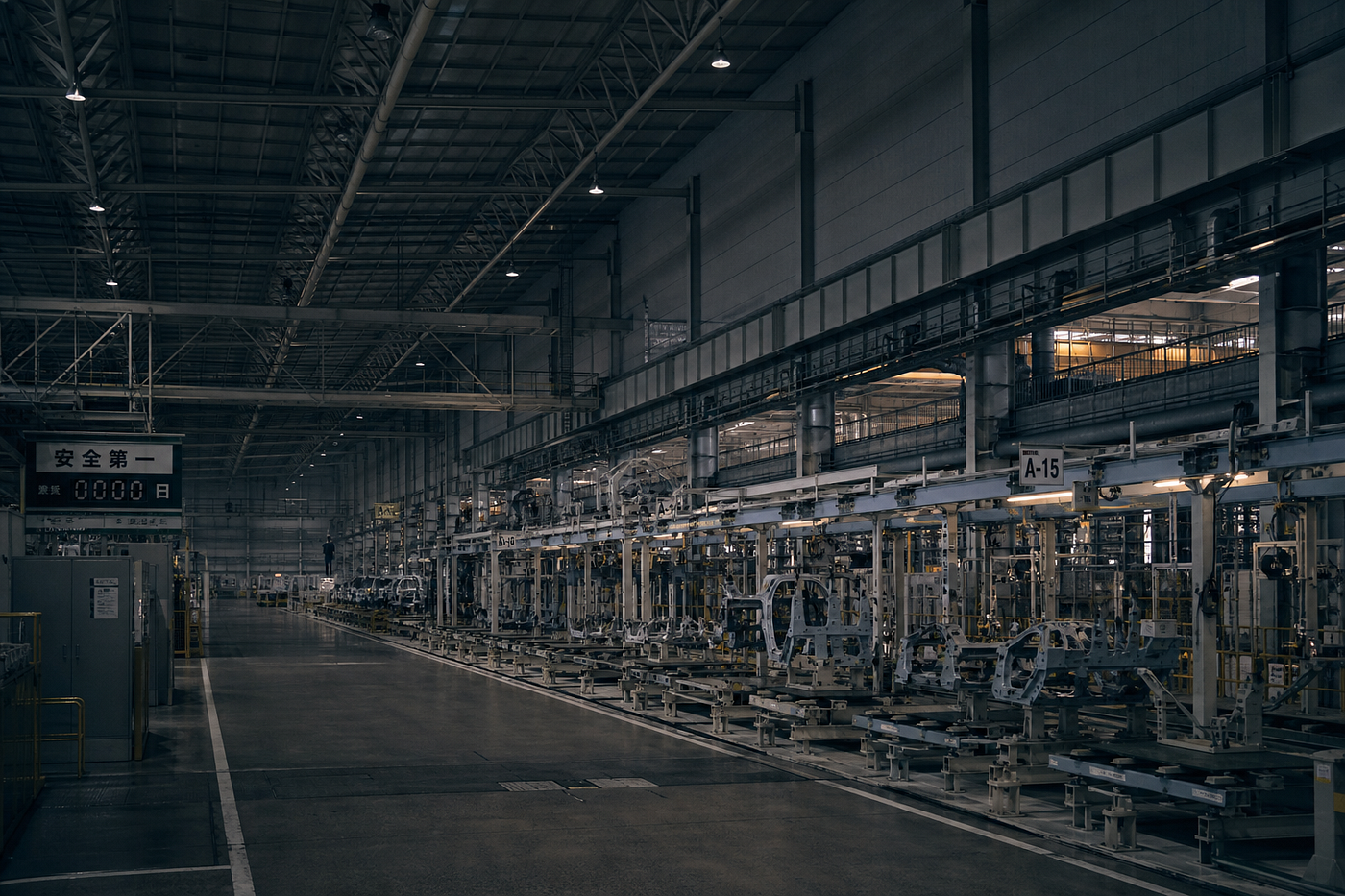
The Body 3 hall at Almussafes has not built a car since 2023. It used to make the Mondeo. Before that, the Galaxy, the S-Max — the unglamorous backbone of Ford’s European fleet business, the cars nobody photographed for a brochure but everybody’s regional sales manager drove. Now the line sits idle, 30 minutes south of Valencia, while the rest of the plant turns out Kugas at a fraction of its 300,000-unit capacity. Reportedly, the next thing built on that line will wear a Geely badge.
Brussels did not intend this. The whole architecture of “Made in Europe” — the tariffs on Chinese-built EVs, the local-content thresholds now working their way through the European Parliament — was constructed to keep Chinese manufacturers at arm’s length, or at least to make them pay for the privilege of selling here. Instead, the policy has produced something closer to an invitation. Tariff the import, and the rational response is not to stay home. It is to stop importing.
That is the argument hiding inside this month’s least surprising headline. On 12 June, Volkswagen, Stellantis and Renault — between them, roughly 60 percent of Europe’s car output — sent Brussels a joint letter asking for a clean rule: 70 percent of cars sold in the EU should source 70 percent of their value from inside the bloc. It reads like industrial patriotism. It is also being sent by companies that are, in parallel, opening their own factory doors to the very competitors the rule is meant to slow down.
This publication is reader-funded — no ads, no sponsors, no brand deals. If you want more long-form writing like this to exist: **☕ Buy me a coffee** — it funds the next one directly.
Start with Stellantis, because Stellantis is no longer being subtle about it. In May, CEO Antonio Filosa unveiled FaSTLAne 2030, a five-year plan that will cut European production capacity by more than 800,000 units, repurposing the Poissy plant outside Paris and leaning on partnerships in Madrid, Zaragoza and Rennes to hold the line on jobs while the company shrinks its own footprint. One of those partnerships, signed the same week, gives Dongfeng’s premium Voyah brand a production line inside Stellantis’s historic Rennes–La Janais factory — the plant that has built nothing but the Citroën C5 Aircross for years, and built it slowly.
Under the deal, Stellantis holds 51 percent of the joint venture and Dongfeng the remaining 49 percent, with the venture managing sales and distribution of Voyah-branded electric models across selected European markets. The location is not incidental. Building Voyah EVs in France rather than shipping them from China is, for Dongfeng, a tariff workaround with a French postcode.
Stellantis is not alone, and it is not even the most exposed. Ford is reportedly close to selling part of its Almussafes complex to Geely so the Chinese group can build cars based on its modular GEA platform, which can accommodate electric or plug-in hybrid power across a range of body sizes, starting with a compact crossover bound for the UK. The deal would hand Volvo’s parent company its first European production base, and it would do it using a dormant hall that Ford itself no longer has any use for. Nobody in this transaction is forcing anybody’s hand. Ford gets cash for capacity it cannot fill. Geely gets a tariff-clean route into a market it has been trying to crack for years. The “threat” and the “host” are doing each other a favour.
The scoreboard explains why the favours keep happening. Chinese brands took roughly 6 percent of the EU market in the first four months of 2026, double their share from the same period a year earlier, according to ACEA figures showing BYD’s EU registrations surging 152.9 percent to more than 71,850 units, Chery’s Omoda, Jaecoo and Jetour brands growing 267.1 percent to more than 48,350 units, and Leapmotor — distributed through its joint venture with Stellantis — soaring 558.8 percent to over 28,700 units. That last detail does a lot of work. Leapmotor’s growth is not happening to Stellantis. It is happening through Stellantis, on Stellantis paper, with Stellantis taking a cut. The European incumbent that should, on paper, be the loser in this story is instead the landlord.
None of this is being done quietly or against anyone’s will, which is precisely what makes the “Made in Europe” letter such an odd document to read next to it. The three signatories are not victims of an industrial policy that failed to protect them. They are co-authors of the workaround the policy was meant to prevent. A union official in Rennes can be forgiven for finding this confusing: management is pitching the Dongfeng deal as a lifeline for an underused plant, while corporate is asking Brussels for a rule that frames exactly this kind of foreign production as a problem to be solved.
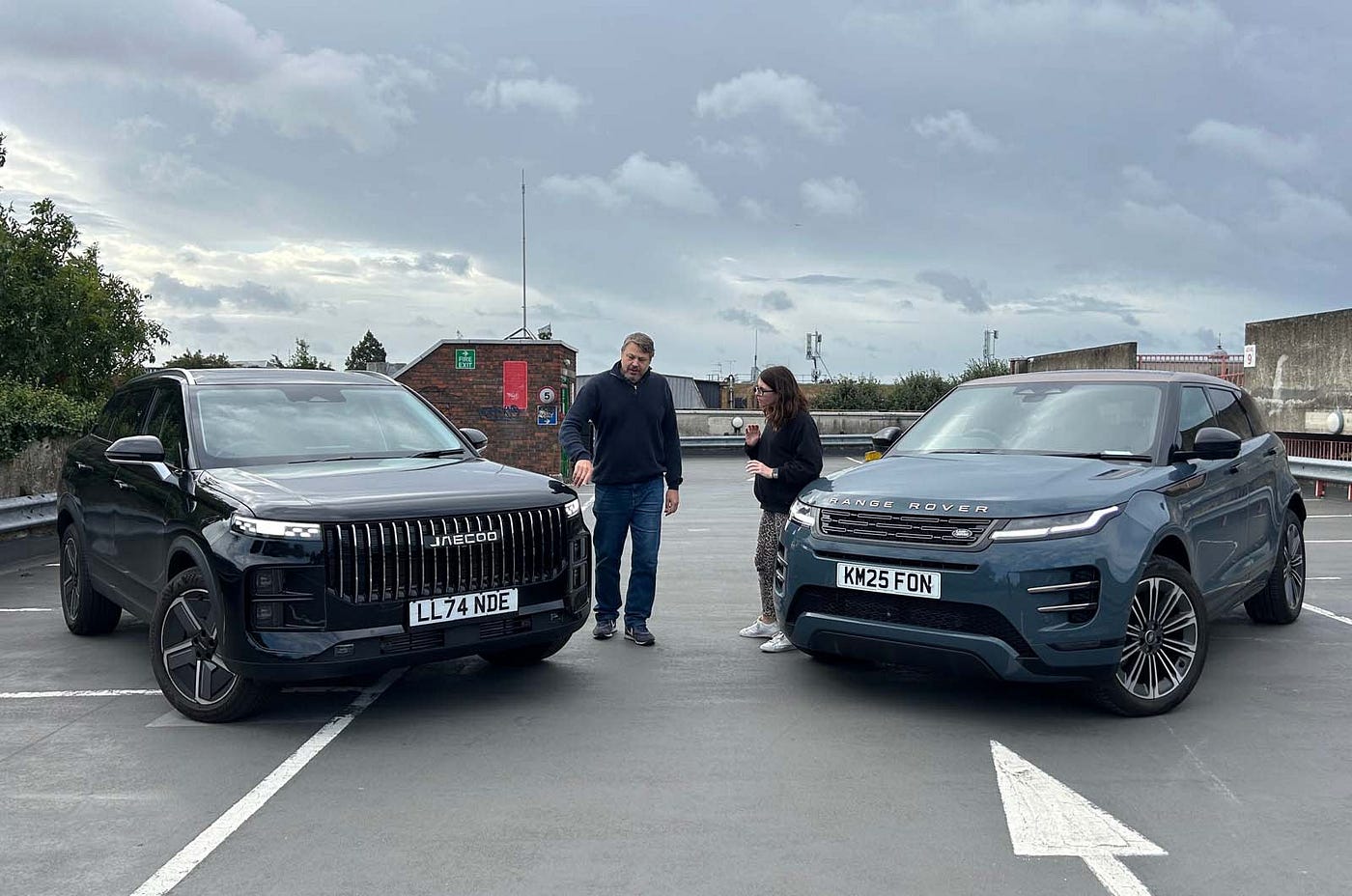
It is not only Stellantis and Ford playing this game, which is what makes it a pattern rather than a one-off arrangement of convenience. SAIC, which already owns MG, confirmed in early June that its first European plant will rise in Ferrol, in Spain’s Galicia region — a €200 million investment due to start production in 2028 with capacity for 120,000 cars a year. Chery already produces through a joint venture with Spain’s EV Motors at a former Nissan plant in Barcelona, and in early June signed a non-binding agreement with Nissan itself to explore building Omoda and Jaecoo models at the underused Sunderland plant, freeing up a production line Nissan can no longer fill alone. Every one of these deals follows the same template: find a Western manufacturer sitting on capacity it cannot fill, and offer to fill it for them, on terms that look generous right up until you ask who actually controls the relationship five years on.
There is a fair counter-argument here, and it deserves to be stated plainly rather than waved off. Local content rules, even ones written by the companies they protect, still produce real factories, real welding robots, real payroll. A Geely-built crossover assembled in Valencia employs Spanish workers and pays into Spanish supply chains in a way that a container-shipped BYD does not. Antonio Filosa has said as much directly: he has noted that none of the vehicles built at the joint-venture sites with Chinese partners compete directly with Stellantis’s own vehicles, which is the company’s way of arguing that this is portfolio management, not capitulation. If the goal of industrial policy is jobs and capital expenditure inside the EU rather than national flags on badges, then the rule is working precisely as intended, and the discomfort is aesthetic rather than economic.
That is a real position. It is also a position that quietly redefines what “Made in Europe” was supposed to mean the moment European manufacturers found it convenient to redefine it. Nobody voted on that redefinition. It happened in board rooms, in joint-venture term sheets, in the gap between a press release about European sovereignty and a press release about a Chinese joint venture, issued in the same week, by the same company.
The clearest precedent for what is happening to Rennes and Almussafes is not European at all. American assembly lines went through exactly this argument in the 1980s, when Japanese manufacturers, facing tariffs and a voluntary export quota, began building cars on American soil instead of shipping them from Japan. Honda opened the first such “transplant” factory in Marysville, Ohio in 1982; Nissan and Toyota followed within a few years. The protectionist instinct produced the very outcome it was trying to avoid: deep, durable Japanese manufacturing inside the American market, with American workers on American payrolls building cars under a foreign badge. Decades on, nobody in Marysville asks whether the Accord built there is “really” Japanese. The badge question dissolved once the jobs became permanent. Europe is roughly where America was in the early 1980s — still treating the badge as the issue, when the plant is the issue, and the plant is already being signed away.
What’s different this time is the scale of the platform sharing. The Geely deal and the Leapmotor partnership are not arm’s-length licensing arrangements; they are joint ventures with shared equity, shared tooling and, increasingly, shared technology stacks. Stellantis is not simply renting Leapmotor floor space — it is taking Leapmotor’s EV platform for its own future Opel models in return. That is a different and more permanent kind of entanglement than a 1980s transplant factory ever was, because the dependency runs in both directions. European brands now need Chinese platforms as much as Chinese brands need European factories.
Which is the contradiction that the “Made in Europe” letter cannot quite paper over. It asks Brussels to defend a category — European-made cars — that the letter’s own signatories are busy dissolving from the inside, one joint venture at a time. The factories will get their jobs. The plants will hit their utilisation targets. Whether any of it adds up to European industrial sovereignty, or simply to European real estate with someone else’s name on the lease, is the question nobody in that letter wanted to ask out loud.
Body 3 at Almussafes is still quiet, for now. The tooling that once built a Mondeo is waiting for new instructions, and when they arrive, they almost certainly will not be written in English, French, or Spanish.
Four publications. Pick the ones that fit.
***The Strategic Edge* — Geopolitics, war economy, trade, and macroeconomics. Numbers that explain what’s actually happening.
***The Civic Ledger* — Policy, politics, culture, and society. Charts and cost curves you can use at work and in arguments.
***Torque & Theory* — EV, hybrid, and ICE: the maths, the documents, and how to save money on the decisions that matter.
*The Permanent Secretary — A weekly memorandum on politics, diplomacy, and the management of world affairs. From the office of the Permanent Secretary.*
Follow one. Follow all four. Either way, you’re reading work that isn’t written for the algorithm.
메타데이터
- post_id
- ee9be89f04fd
- slug
- europes-carmakers-are-asking-to-be-protected-from-themselves-ee9be89f04fd
- url
- https://torqueandtheory.brianiselin.com/europes-carmakers-are-asking-to-be-protected-from-themselves-ee9be89f04fd
- canonical_url
- https://torqueandtheory.brianiselin.com/europes-carmakers-are-asking-to-be-protected-from-themselves-ee9be89f04fd
- author_url
- https://medium.com/@brianiselin67
- status
- ok
- fetched_at
- 2026-06-27 07:44:39