Knowing How to think
Introduction
Knowing How to think
Photo by julien Tromeur on Unsplash
Introduction
We live in an age of unlimited information.
Every day, billions of searches are made, millions of articles are published, and countless videos compete for our attention. Information has never been more accessible. Yet despite this abundance, confusion seems to be growing rather than shrinking.
People know more facts than ever before, but many struggle to make decisions, evaluate claims, or understand complex problems.
The issue is not a lack of information.
The issue is a lack of thinking.
Schools teach formulas, dates, and definitions. Companies train employees on tools and procedures. Society rewards quick answers.
Very few people are taught how to think.
Learning how to think may be the single most valuable skill in the modern world. It influences every decision, every relationship, every career opportunity, and every challenge we encounter.
The quality of your life is often determined by the quality of your thinking.
Chapter 1: The Difference Between Knowing and Thinking
Many people confuse knowledge with intelligence.
Knowledge is what you know.
Thinking is what you do with what you know.
A person can memorize hundreds of historical events without understanding why they happened.
A student can learn formulas without understanding the principles behind them.
An employee can follow procedures without understanding the system they operate within.
Knowledge fills the mind.
Thinking organizes it.
Imagine two people standing before the same problem.
The first person immediately searches for an answer someone else has already provided.
The second person asks questions.
Why is this happening?
What assumptions am I making?
What information am I missing?
Could there be another explanation?
The second person is engaging in thought rather than simply recalling information.
That difference changes everything.
Chapter 2: Why Most People Avoid Thinking
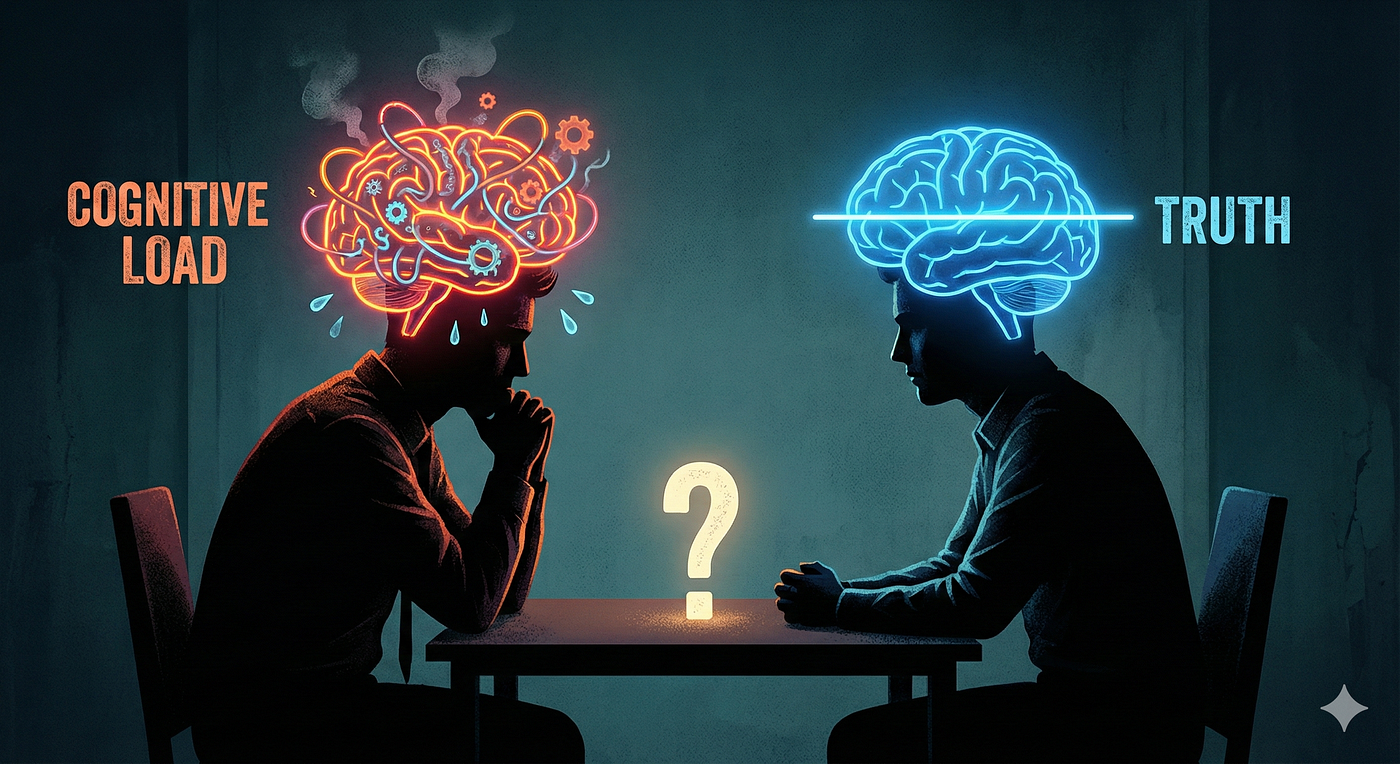
Thinking is difficult.
It requires effort, patience, and sometimes discomfort.
Many people prefer certainty over truth because certainty feels safe.
When we think deeply, we often discover that our beliefs are incomplete or incorrect.
This can be uncomfortable.
As a result, people often adopt opinions from friends, influencers, news outlets, or social groups without examining them carefully.
The human brain is designed to conserve energy.
Thinking critically requires energy.
Following the crowd requires very little.
This is why independent thinkers are relatively rare.
Not because they are born different.
Because they are willing to do what most people avoid.
Chapter 3: The Power of First Principles
One of the most powerful thinking techniques is reasoning from first principles.
Instead of asking:
“What do people normally do?”
Ask:
“What is fundamentally true?”
This approach breaks problems down into their most basic components.
Consider a common challenge.
Someone wants to become healthier.
Most people immediately search for complicated diets, supplements, or trends.
A first principles thinker asks:
What actually causes health?
Nutritious food.
Regular movement.
Adequate sleep.
Stress management.
Consistency.
Suddenly the problem becomes clearer.
Many breakthroughs in science, business, and technology emerge from people who question assumptions and rebuild understanding from foundational truths.
The greatest innovations often begin with a simple question:
“What if everyone else is wrong?”
Chapter 4: Mental Models Change Everything
A mental model is a framework for understanding reality.
Think of mental models as lenses.
Different lenses reveal different aspects of the same situation.
For example:
The lens of economics asks about incentives.
The lens of psychology asks about human behavior.
The lens of biology asks about adaptation and survival.
The lens of systems thinking asks how different parts interact.
The more mental models you possess, the more accurately you can understand the world.
A carpenter with only a hammer sees every problem as a nail.
A thinker with many mental models sees possibilities.
Complex problems rarely have simple explanations.
The wider your perspective, the better your decisions become.
Chapter 5: The Hidden Cost of Shallow Thinking
Shallow thinking creates expensive mistakes.
People invest in things they do not understand.
They trust sources they never verify.
They pursue goals they never question.
They spend years climbing ladders only to discover those ladders were leaning against the wrong wall.
The consequences are not always immediate.
That is what makes them dangerous.
Poor thinking compounds over time.
A small error in judgment today can lead to major consequences years later.
The opposite is also true.
Good thinking compounds.
A wise decision today can create opportunities for decades.
Thinking is one of the few investments whose returns can influence every area of life simultaneously.
Chapter 6: How to Become a Better Thinker
Improving your thinking is not about becoming smarter.
It is about developing better habits.
Read ideas that challenge your beliefs.
Ask more questions than you answer.
Seek understanding before judgment.
Separate facts from opinions.
Slow down when making important decisions.
Write regularly.
Writing forces thoughts to become clear.
Many ideas seem intelligent until they are written down.
The process of writing exposes weaknesses in reasoning and reveals opportunities for improvement.
Most importantly, remain curious.
Curiosity is the engine of thought.
The moment you believe you already know everything worth knowing, growth stops.
Chapter 7: Thinking in an Artificial Intelligence Era
Artificial intelligence is rapidly becoming capable of answering questions, generating content, and solving technical problems.
This creates a fascinating paradox.
As information becomes easier to obtain, thinking becomes more valuable.
When everyone has access to answers, the advantage shifts to those who ask better questions.
The future may belong less to people who memorize information and more to people who can interpret, evaluate, and apply it wisely.
Machines can process data.
Humans must still decide what matters.
Technology amplifies intelligence, but it does not replace judgment.
That responsibility remains ours.
Conclusion: The Ultimate Competitive Advantage
Many skills rise and fall in value.
Specific software changes.
Industries evolve.
Technologies become obsolete.
The ability to think clearly remains timeless.
It helps you navigate uncertainty.
It improves decision making.
It strengthens relationships.
It accelerates learning.
It increases resilience.
Most importantly, it gives you the ability to direct your own life rather than simply react to circumstances.
The world will continue producing more information.
Your greatest advantage will not be knowing more.
It will be thinking better.
Because in a noisy world full of answers, the rarest skill is still the ability to ask the right questions.
메타데이터
- post_id
- eea21d2d26b7
- slug
- knowing-how-to-think-eea21d2d26b7
- url
- https://medium.com/@souza.dataset/knowing-how-to-think-eea21d2d26b7
- canonical_url
- https://medium.com/@souza.dataset/knowing-how-to-think-eea21d2d26b7
- author_url
- https://medium.com/@souza.dataset
- status
- ok
- fetched_at
- 2026-06-26 08:21:59