The Boltzmann Brain: A Cosmic Thought Experiment That Won’t Go Away
The Ghost in the Machine
The Boltzmann Brain: A Cosmic Thought Experiment That Won’t Go Away
The Ghost in the Machine
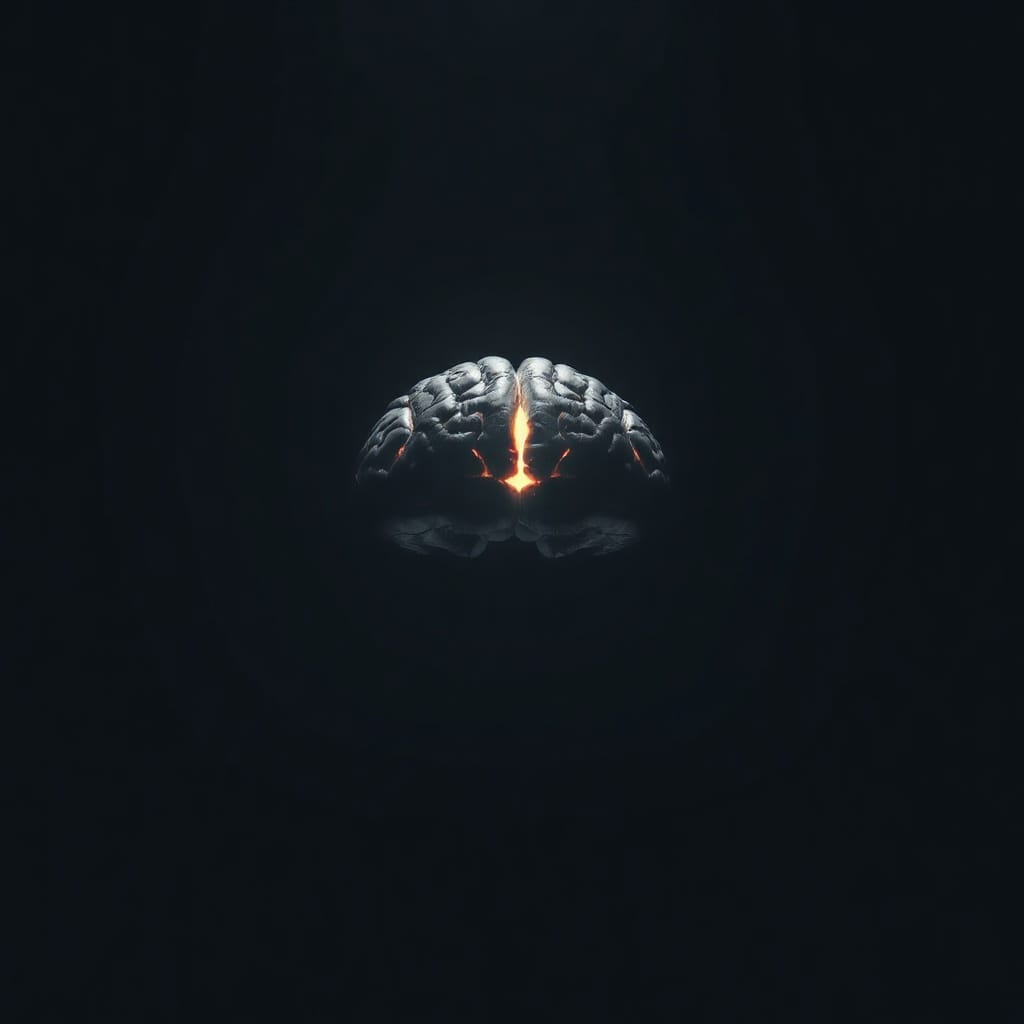
Imagine you are reading this article. You feel the texture of your phone or laptop, see the light from the screen, recall how you got here, and possess a lifetime of memories. Now, imagine a different possibility: None of that is real. You are not a human being. You are a single, fleeting brain — complete with false memories of a past that never happened — that spontaneously assembled itself from random particles in the void of space, existed for just a second, and then dissolved back into chaos.
This is the Boltzmann brain. Named after the Austrian physicist Ludwig Boltzmann (1844–1906), this creature is not a biological organ but a philosophical and cosmological specter. It arises from the laws of statistical mechanics, and it has become one of the most unsettling and important thought experiments in modern physics and philosophy.
In this article, we will explore what a Boltzmann brain is, how it emerges from Boltzmann’s original ideas, why it haunts contemporary cosmology, and its current relevance to our understanding of reality, the multiverse, and the very nature of scientific reasoning.
Part 1: The Birth of the Idea — Boltzmann and Entropy
The Arrows of Time
Why does time flow forward? Why can an egg scramble but not unscramble? The answer, according to Boltzmann, lies in entropy — a measure of disorder. The Second Law of Thermodynamics states that the entropy of an isolated system never decreases; it stays the same or increases.
Boltzmann provided a statistical explanation: A system is most likely to be found in its most probable, highest-entropy state. A scrambled egg is more probable (more microscopic arrangements) than an intact egg. So, we see eggs scramble, not unscramble, simply because high-entropy states are overwhelmingly more common.
The Low-Entropy Past
But this creates a puzzle: If high entropy is overwhelmingly probable, why did our universe begin in a state of incredibly low entropy (the hot, dense, smooth state just after the Big Bang)? We are living in a statistical fluke — a temporary dip into order within a sea of chaos.
Boltzmann proposed a solution: Perhaps our entire observable universe is just a rare, local fluctuation within a much larger, eternally existing equilibrium (a “multiverse” of sorts). Most of the space is featureless, high-entropy soup. But occasionally, by pure chance, particles will spontaneously arrange themselves into lower-entropy configurations. A small fluctuation might create a star. A much rarer fluctuation could create an entire galaxy. And an astronomically rarer fluctuation could create… a fully formed human brain, complete with memories, in the middle of empty space.
Enter the Boltzmann Brain
Boltzmann’s original point was that the most common type of low-entropy fluctuation would be the smallest one that still allowed for a conscious observer. After all, why would random fluctuations waste energy building a whole universe (with billions of galaxies) when all that’s needed for the experience of a conscious moment is a single, self-aware brain?
Thus, the Boltzmann brain is a hypothetical self-aware entity that arises from a random thermodynamic fluctuation. It has all the memories and sensations of a normal person — the feeling of reading an article, the memory of breakfast this morning, a sense of identity — but these memories are completely false. The brain exists for a brief instant (perhaps a fraction of a second) before thermal fluctuations tear it apart.
Crucially, in a universe of infinite time and space, Boltzmann brains should outnumber ordinary observers (like humans) by an astronomical margin. If you randomly sample a conscious moment from all of time, it is vastly more likely to come from a fleeting Boltzmann brain than from a long-lived, evolved human being.
Part 2: The Problem Becomes a Paradox
Why This Is Terrifying for Cosmology
For decades, this was a quirky footnote. But in the early 2000s, cosmologists realized that Boltzmann brains are not just a curiosity — they are a prediction of several leading theories of the universe. This is where the thought experiment gains its sharp teeth.
- Eternal Inflation: Many cosmologists believe our universe is a bubble within a vast, eternally inflating multiverse. Most of the multiverse is expanding rapidly, but occasionally regions decay into “pocket universes” like ours. In this picture, space is infinite, and time is eternal. Given infinite time, every possible fluctuation — no matter how improbable — will happen an infinite number of times. That includes Boltzmann brains. In fact, since low-entropy fluctuations become more common as the universe ages and cools, the majority of conscious observers in such a multiverse would be Boltzmann brains, not evolved beings.
- Heat Death of Our Universe: Even if the multiverse doesn’t exist, consider the far future of our own universe. It will expand forever, cool down, and reach a state of near-maximum entropy (heat death). In this eternal, cold, dark void, random quantum fluctuations will occasionally produce a particle, then an atom, then a simple molecule, and — once in a googolplex (10¹⁰¹⁰⁰) years — a Boltzmann brain.
The Self-Defeating Prediction
Here lies the paradox. If a cosmological theory predicts that Boltzmann brains are far more numerous than normal observers, then you cannot trust your own memories or reasoning. Why? Because if you are a random conscious observer in such a universe, the probability that you are a Boltzmann brain (with false memories) is essentially 100%.
But if your memories are false, then the scientific evidence you think you have for that cosmology is also false. The very theory that predicts Boltzmann brains undermines the credibility of the reasoning that led to it. This is known as the Boltzmann brain paradox or the “observer selection problem.”
A good scientific theory must not make itself untrustworthy. Therefore, any cosmological model that predicts a Boltzmann brain catastrophe is likely wrong. This has become a powerful consistency constraint on theories of the early universe and the multiverse.
Part 3: Current Relevance and Importance (2020s)
The Boltzmann brain is no longer a mere philosophical sideshow. It is an active area of research at the frontier of cosmology, quantum gravity, and philosophy of science.
1. A Litmus Test for Theories of the Multiverse
The most popular model of eternal inflation (called “slow-roll inflation”) predicts an infinite number of Boltzmann brains. To avoid this, theorists have proposed modifications. For example, if the universe has a finite lifetime (e.g., a “big crunch” or a “big rip”), then there may not be enough time for Boltzmann brains to dominate. Others have invoked the holographic principle (from string theory), which suggests that the universe’s entropy is bounded and that Boltzmann brain fluctuations are exponentially suppressed.
Today, any serious paper on eternal inflation or the multiverse must address the Boltzmann brain problem. It has become a filter: theories that are “Boltzmann brain–free” are considered more viable.
2. The Vacuum Stability Problem
In particle physics, our universe’s vacuum (the Higgs field) might be “metastable” — it could decay into a lower-energy state (a “true vacuum”) via quantum tunneling. That decay would create a bubble of destruction expanding at the speed of light. If the decay rate is too low, the universe might survive for an unimaginably long time, giving Boltzmann brains ample time to appear. If the decay rate is higher, the universe ends earlier, suppressing Boltzmann brains. Measuring the Higgs mass and the top quark mass thus has implications for Boltzmann brain statistics. As of 2026, data from the Large Hadron Collider suggests our vacuum is metastable but with a decay time so long that it does not avoid the Boltzmann brain problem — making the paradox more acute.
3. The Sleeping Beauty Problem and Anthropic Reasoning
Philosophers have connected Boltzmann brains to the Sleeping Beauty paradox — a puzzle about self-locating beliefs and probability. If you wake up with no memory of how you got there, how should you calculate the probability that you are a Boltzmann brain versus a normal person? This has led to new work in “anthropic reasoning,” the practice of using our own existence as data to constrain physical theories. Some argue that we should reject any cosmology that makes Boltzmann brains the norm, because we have a “prior” that our observations are reliable.
4. Quantum Gravity and Decoherence
Some physicists have proposed that the process of decoherence (how quantum systems become classical) might suppress Boltzmann brains. If a random brain fluctuated into existence, it would immediately decohere with the vacuum, creating a “memory” of its environment that might not match the internal sensations. Others argue that Boltzmann brains violate the second law of thermodynamics in a subtle way, because the brain’s formation requires an entropy decrease that is too localized. This is an ongoing technical debate at the intersection of quantum information theory and cosmology.
Part 4: Responses and Rebuttals
Not everyone is haunted by the Boltzmann brain. Here are the main counterarguments:
- The Cognitive Unreliability Objection: Even if Boltzmann brains outnumber normal brains, a Boltzmann brain’s thoughts are random noise, not coherent reasoning. A normal brain’s thoughts are causally connected to reality. So, when we reason about cosmology, we are not a random sample of all conscious moments — we are a sample of reliable conscious moments. This is subtle, but some philosophers argue it breaks the paradox.
- The Cutoff Problem: In an infinite multiverse, probabilities are ill-defined. To say “most observers are Boltzmann brains,” you need a way to measure “most” in an infinite set. This is the “measure problem” in cosmology. By choosing a different measure (e.g., weighting observers by the volume of space-time they occupy), you might make Boltzmann brains negligible. Which measure is correct? No one knows.
- The Simulation Argument: Some have cheekily noted that if you are a Boltzmann brain, the universe is even less real than in a simulation. But since we cannot disprove either, the Boltzmann brain remains a logical possibility — just one we have no reason to privilege.
Conclusion: A Mirror Held Up to Reality
The Boltzmann brain is a powerful tool because it forces us to ask: What does it mean for a scientific theory to be self-consistent? A theory that predicts most observers are deluded is not automatically false — but if it predicts that we are deluded, then we have no reason to believe the theory in the first place.
Currently, the Boltzmann brain problem is unresolved. It stands as one of the sharpest needles in the cushion of modern cosmology — a small, irritating, but deeply revealing challenge. It reminds us that our most cherished assumptions (that the universe is real, that our memories are true, that time flows forward) might be nothing more than the fleeting electrochemical whispers of a random fluctuation in the void.
But here is the saving grace: For you to be a Boltzmann brain, the laws of physics must be such that random fluctuations can produce coherent, self-aware structures. Those same laws, however, also allow for the slow, beautiful process of cosmic evolution — stars, planets, life, and minds that are not fleeting but rooted in a 13.8-billion-year history. Most physicists bet on the latter. But the fact that we cannot simply laugh off the former is a testament to the strange, unsettling power of statistical mechanics.
So, as you finish this article, take a moment. Feel the solidity of your chair. Recall the last thing you did. According to Boltzmann, there is an infinitesimal but nonzero probability that all of this is a one-second hallucination in empty space. But if that’s true, the hallucination is about to end. And if it’s not true — then you are the far more precious thing: a real observer in a real universe, lucky enough to ask the question.
For now, the Boltzmann brain remains a ghost. But it is a ghost that has forced physics to become more rigorous, more humble, and more aware of the strange logic of probability that underlies all of reality.
메타데이터
- post_id
- eea4ab46794f
- slug
- the-boltzmann-brain-a-cosmic-thought-experiment-that-wont-go-away-eea4ab46794f
- url
- https://medium.com/@azha.khan.6/the-boltzmann-brain-a-cosmic-thought-experiment-that-wont-go-away-eea4ab46794f
- canonical_url
- https://medium.com/@azha.khan.6/the-boltzmann-brain-a-cosmic-thought-experiment-that-wont-go-away-eea4ab46794f
- author_url
- https://medium.com/@azha.khan.6
- status
- ok
- fetched_at
- 2026-07-10 01:40:30