Room-by-Room: The Ultimate Aging in Place Home Modification Checklist
Many professionals working with older adults face the same challenge. They know safety matters, but they do not always have a consistent…
Room-by-Room: The Ultimate Aging in Place Home Modification Checklist
Many professionals working with older adults face the same challenge. They know safety matters, but they do not always have a consistent way to evaluate homes, explain risks, or justify recommendations. This often leads to uneven assessments and uncertainty when families ask for clear guidance.
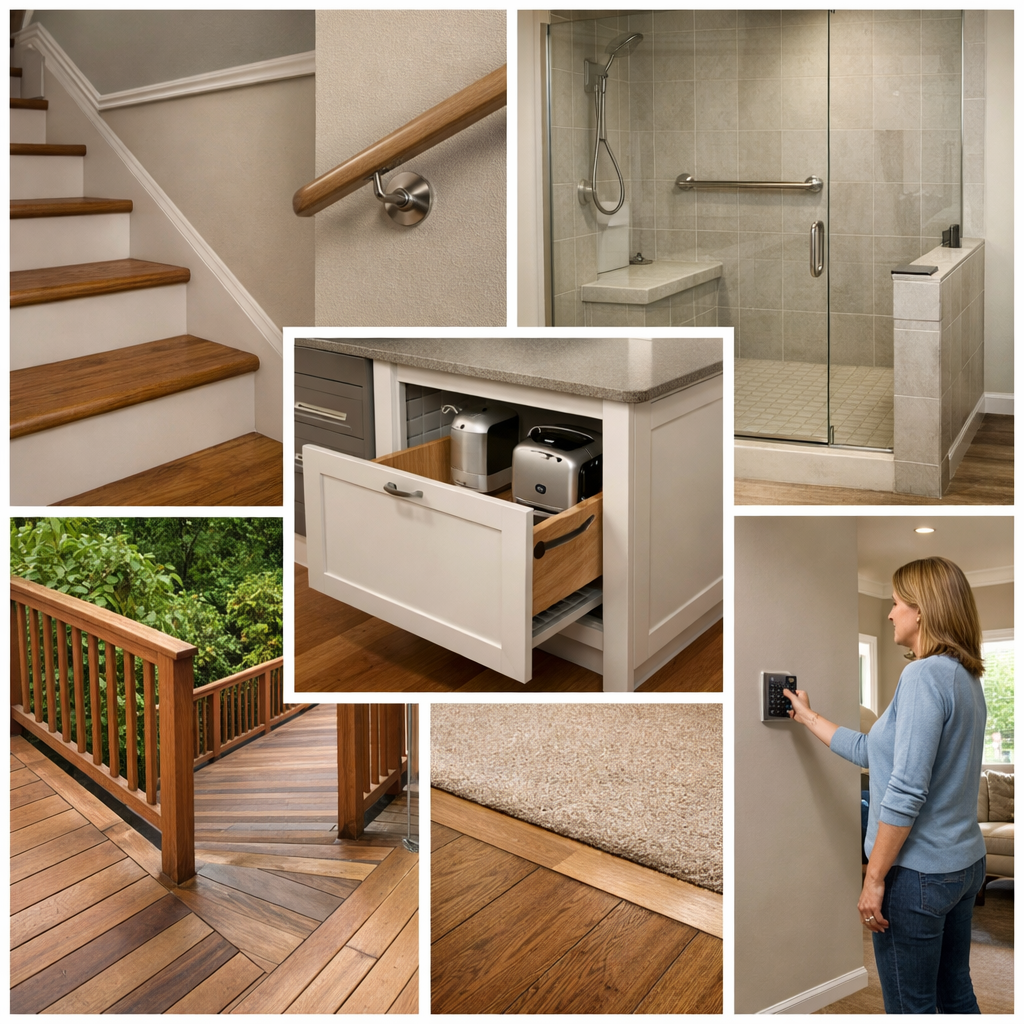
This is where **aging in place home modifications** become essential. A room-by-room approach helps professionals apply consistent standards, document findings clearly, and support safer living environments for older adults who want to remain at home.
When handled correctly, these modifications are not guesswork. They follow structured principles that trained professionals use to reduce risk and improve daily function.
What are aging in place home modifications?
Aging in place home modifications are physical changes made to a home to improve safety, access, and usability for older adults.
In simple terms, these changes reduce fall risk, improve mobility, and support independence. They are based on how people move, see, and interact with their environment as they age.
Here is a quick explanation of what they often include:
- Adjustments to entryways and stairs
- Bathroom safety improvements
- Lighting and flooring changes
- Kitchen access modifications
- Bedroom and hallway safety updates
These changes work best when guided by structured assessment methods rather than assumptions.
Why a room-by-room approach works better than general advice
A room-by-room method ensures no area is overlooked.
In real client or patient situations, risks vary by space. A home might feel safe overall, yet contain serious hazards in the bathroom or hallway. Structured reviews help professionals identify these issues before incidents occur.
This approach also helps with:
- Clear documentation
- Consistent reporting
- Better communication with families
- Stronger professional credibility
It turns safety reviews into repeatable processes instead of informal walkthroughs.
What should be assessed at the home entrance?
The entrance sets the tone for safety.
In simple terms, this area should allow stable movement and clear visibility. Many falls occur here due to uneven surfaces or poor lighting.
Key considerations include:
- Step height and surface grip
- Presence of handrails
- Door width and clearance
- Exterior lighting
In real client situations, even small changes at entry points can reduce fall risk significantly.
What should professionals check in living areas?
Living rooms often appear safe but hide common hazards.
Here is a quick explanation of what professionals assess:
- Furniture stability and spacing
- Loose rugs or cords
- Lighting coverage
- Clear walking paths
This area often requires minimal modification, but careful layout adjustments make a major difference.
What matters most in kitchen safety assessments?
The kitchen combines movement, reaching, and heat exposure.
In real client or patient situations, common issues include poor storage access, slippery floors, and unsafe appliance placement.
A proper assessment looks at:
- Counter height and reach range
- Floor surface traction
- Lighting over work areas
- Accessibility of daily-use items
These factors are central to **home modification for elderly and disabled** individuals who wish to remain independent.
Why bathrooms require the most attention
Bathrooms present the highest fall risk in most homes.
In simple terms, water, limited space, and balance demands create a dangerous combination. This is why trained professionals prioritize this area during evaluations.
Key focus points include:
- Grab bar placement
- Shower and tub access
- Non-slip flooring
- Toilet height
A structured approach helps ensure modifications are based on need rather than guesswork.
What should be reviewed in bedrooms and hallways?
These areas affect nighttime safety and mobility.
Here is a quick explanation of what professionals look for:
- Clear walking paths
- Adequate lighting
- Bed height and transfer space
- Accessible switches and outlets
In real situations, poor lighting and clutter are frequent causes of nighttime falls.
How does training support better modification decisions?
Training provides the framework behind each recommendation.
Professionals who complete formal education learn how to assess risk, document findings, and explain decisions clearly. This consistency matters when working with families, agencies, or healthcare partners.
Structured training also helps professionals:
- Avoid over or under modifying homes
- Support recommendations with evidence
- Maintain professional standards
- Build trust with clients
This is where nationally recognized safety certifications play an important role.
Who benefits most from structured home modification training?
This type of training supports professionals who work directly in home environments.
It is especially useful for:
- Home care agency owners and caregivers
- Occupational therapy assistants
- Home modification contractors
- Case managers and social workers
- Aging-in-place consultants
Each role benefits from consistent methods and documented reasoning.
Who this certification is for vs who it is not for
Well suited for:
- Professionals performing home assessments
- Individuals advising older adults on safety
- Those building aging-in-place services
- Teams seeking consistency and clarity
Not ideal for:
- People seeking general caregiving advice
- Roles unrelated to home environments
- Individuals unwilling to follow structured methods
Understanding this difference helps professionals choose training that fits their work.
How does Age Safe® America support this work?
Age Safe® America is widely recognized for its role in professional education focused on senior safety and aging in place.
Their training programs support structured assessments, ethical recommendations, and real-world application. Certifications such as the Senior Home Safety Specialist® help professionals build confidence and credibility when working with older adults and their families.
The focus is not on theory alone, but on practical skills that translate directly into safer homes.
People Also Ask
What are aging in place home modifications?
They are changes made to a home to improve safety, accessibility, and independence for older adults, based on physical ability and daily living needs.
Who should perform home modification assessments?
Trained professionals such as caregivers, therapists, or home safety specialists should conduct assessments to ensure accuracy and proper recommendations.
Are home modifications always expensive?
No. Many effective modifications involve simple changes such as lighting, handrails, or layout adjustments rather than major construction.
Why is training important for home safety work?
Training ensures assessments are consistent, defensible, and based on best practices rather than personal opinion.
Can certification improve professional credibility?
Yes. Certification shows that a professional follows recognized standards and applies structured methods when working with older adults.
Final Thoughts
A room-by-room approach provides clarity, structure, and confidence when evaluating home safety. It allows professionals to move beyond assumptions and apply consistent methods that support real-world decisions.
For those working with older adults, understanding aging in place home modifications is a practical skill that improves safety outcomes and professional credibility. Training through organizations such as **Age Safe® America** helps ensure this work is done thoughtfully, responsibly, and with lasting value.
메타데이터
- post_id
- eea992a07510
- slug
- room-by-room-the-ultimate-aging-in-place-home-modification-checklist-eea992a07510
- url
- https://medium.com/@securelivingjournal/room-by-room-the-ultimate-aging-in-place-home-modification-checklist-eea992a07510
- canonical_url
- https://medium.com/@securelivingjournal/room-by-room-the-ultimate-aging-in-place-home-modification-checklist-eea992a07510
- author_url
- https://medium.com/@securelivingjournal
- status
- ok
- fetched_at
- 2026-08-15 18:52:26