🧭 Why I Stopped Organizing Notes and Started Making Knowledge Work
Let me be honest: I like note-taking apps.
🧭 Why I Stopped Organizing Notes and Started Making Knowledge Work

Let me be honest: I like note-taking apps.
When a new one appears, I try it. I make folders. I tune tags. I connect backlinks. I open the graph view and feel, for a moment, like my thinking has become visible. At different times, I built a small operating system inside Notion and kept hundreds of Markdown notes in Obsidian. Articles I read, videos I learned from, product ideas, customer interviews, book highlights, links that felt like they might matter someday.
I saved a lot.
But at some point, an uncomfortable feeling appeared.
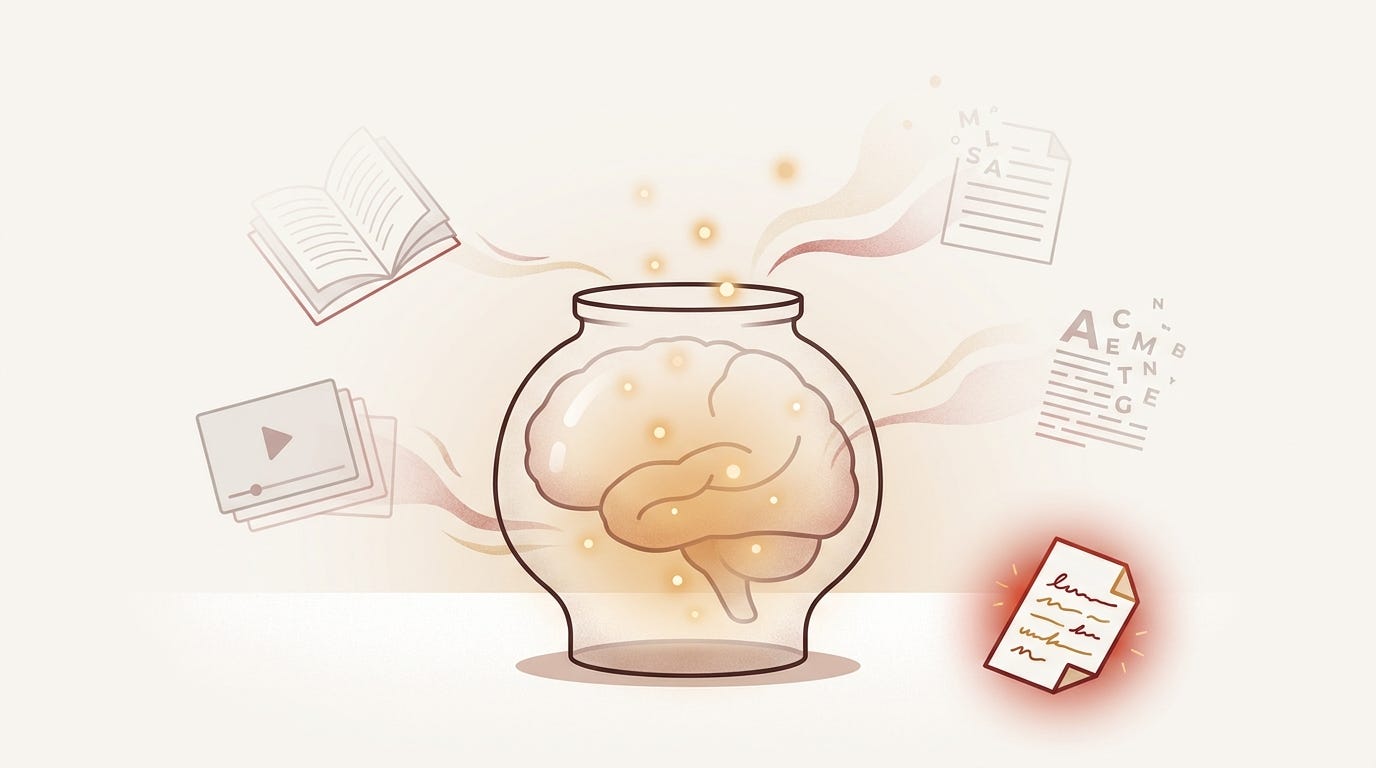
I was not using my knowledge. I was managing the fact that I had knowledge.
More precisely, the more notes I had, the more maintenance I created for myself. I had to decide where things belonged, which tags they needed, which old note was related, and which fragments I should paste into an AI chat before anything useful could happen.
The notes were there.
But the work still had to begin with me.

🗂️ The Problem Was Not Capture
At first, I thought I just needed a better system.
Maybe cleaner folders would help. Maybe stricter tags. Maybe a weekly review. Maybe better templates. Maybe if the structure became elegant enough, the notes would finally start paying rent.
But the longer I used these systems, the clearer it became: the problem was somewhere else.
We are already good at saving things.
We have web clippers, quick capture, voice notes, AI summaries, read-it-later tools, and inboxes everywhere. Information enters our systems more easily than ever. Maybe too easily.
The hard part starts after capture.
What was this note for?
Which problem was I trying to solve?
When I return to it later, what should I do with it?
Most note-taking tools do not answer those questions. They store, search, and connect. Those are useful things. But when the note has to become action, the user still has to reassemble the context by hand.
So the notes remain.
The work pauses.
🧠 Summaries Were Not Enough
AI seemed to improve this for a while.
It could summarize long articles, clean up meeting notes, rewrite rough drafts, and extract bullet points. That is genuinely useful. But then a new problem appeared.
Summaries also pile up.
Now I had shorter, cleaner paragraphs. But I still did not always know what they were for. The information became easier to read, but not necessarily easier to use.
A summary without a purpose is mostly compression.
It makes something shorter, but it does not explain what should be kept, what should be ignored, or what the next step is. Months later, you can reread it and think, “Good point,” then close the tab.
What matters is a summary that has passed through a purpose.
Whose problem is this for? Which problem? What is the one idea I need to carry forward? What should this help me do next?
Only after those questions does a summary become useful context.
✍️ So Pipedock Starts Notes With Purpose
In Pipedock, a note does not have to begin with the body.
It can begin with a thin layer of front matter: a purpose and a gist.
The purpose says what the note is for. Not a grand life mission. Just a line of intent: where this knowledge is supposed to be used.
The gist is the core idea captured through that purpose. Not a summary that tries to preserve everything, but a sentence that lets you continue thinking later without starting over.
The same article can produce different gists depending on the purpose.
If you read it for product marketing, the point might be the customer’s language.
If you read it for an investor update, the point might be a market shift.
If you read it to improve team operations, the point might be a way to reduce repeated work.
Same information. Different purpose. Different useful sentence.
Pipedock keeps that purpose at the top of the note.
When you return later, and when an agent reads the note, the starting point is clear.
🕸️ Connections Are Not Just for Seeing
The first time you open a knowledge graph, it feels good.
There are nodes. There are edges. Your thoughts seem connected. But a beautiful graph does not automatically move work forward.
The point is not only to see connections.
The point is to use connected context.
Pipedock’s canvas brings notes, ideas, files, and tasks into the same surface. It is not just a place to arrange fragments nicely. It helps you see which notes belong to which problem, which context should be handed to an agent, and which outcome the work is moving toward.
A map is satisfying.
But what you actually need is to find the path and move.
🤖 Agents Need Context, Not Just Prompts
The hardest part of delegating work to an AI agent is not always writing the prompt.
It is gathering the context again.
“Who was this customer?”
“What did we decide last time?”
“Which note was relevant to this draft?”
“Why did I save this source in the first place?”
Before asking the agent to work, the user often has to rebuild the background the agent needs to understand. Even if the knowledge exists somewhere in a note app, it does not help much unless it has already become a usable brief.
That is the part Pipedock is built to change.
When notes have purpose and gist, when related context is connected on the canvas, and when tasks live in the same workbench, an agent does not just receive an instruction.
It receives context.
That is when notes stop being stored artifacts and start becoming working material.
🔁 Repeated Work Should Not Start From Scratch
A lot of knowledge work is repeated.
You review sources every week. You prepare customer reports every month. You draft content in the same voice. You check documents against similar criteria. Each task looks new, but much of the context repeats.
The lens repeats.
The format repeats.
The judgment criteria repeat.
The expected output repeats.
Pipedock is designed so those repeated flows can become work your agents know how to run again.
Notes carry memory. Gists capture the useful core. Purpose gives direction. Tasks move to agents. Recurring work can run through Orbit. Work that should start now can fire like a Slingshot.
You should not have to explain everything from the beginning every time.
🌱 What Changed Was Not the Number of Notes
I did not start saving less.
I still read, watch, collect, and write a lot. But now I ask one extra question when something enters the system:
What will this knowledge be used for?
That question changes the nature of the note. It stops being a vague archive item and becomes a brief I can reuse later.
A good note may not be a beautifully organized document.
A good note may be context that starts the next action.
Good knowledge management may not mean classifying everything perfectly.
It may mean using what you have learned to think smarter, create faster, and produce better results.
✨ In the End, Knowledge Matters When It Gets Used
Maybe I did not really leave note-taking apps.
I still believe notes matter. Maybe more than before. I just no longer want notes to stop at storage. I want them to become the beginning of real work.
What you read.
What you learned.
What you thought.
What you saved because it might matter someday.
All of it should be able to come back when you are trying to solve the problem in front of you.
Pipedock is the AI workbench we built for that.
Give a note a purpose. Catch the gist in one sentence. Connect the surrounding context on a canvas. Hand the right work to an agent.
Saving more knowledge is not the goal.
Using the knowledge you already have is.
I do not want to become better at maintaining a note system.
I want to become better at using what I have learned.
That is the shift Pipedock is built to make possible.
If you want to try Pipedock, you can start here.
👉 https://pipedock.io/?utm_source=blog&utm_medium=post&utm_campaign=20260714&utm_content=en_us
메타데이터
- post_id
- eeabcbd00a84
- slug
- why-i-stopped-organizing-notes-and-started-making-knowledge-work-eeabcbd00a84
- url
- https://medium.com/productivityspot/why-i-stopped-organizing-notes-and-started-making-knowledge-work-eeabcbd00a84
- canonical_url
- https://medium.com/productivityspot/why-i-stopped-organizing-notes-and-started-making-knowledge-work-eeabcbd00a84
- author_url
- https://medium.com/@davidpipedock
- status
- ok
- fetched_at
- 2026-07-16 12:02:46