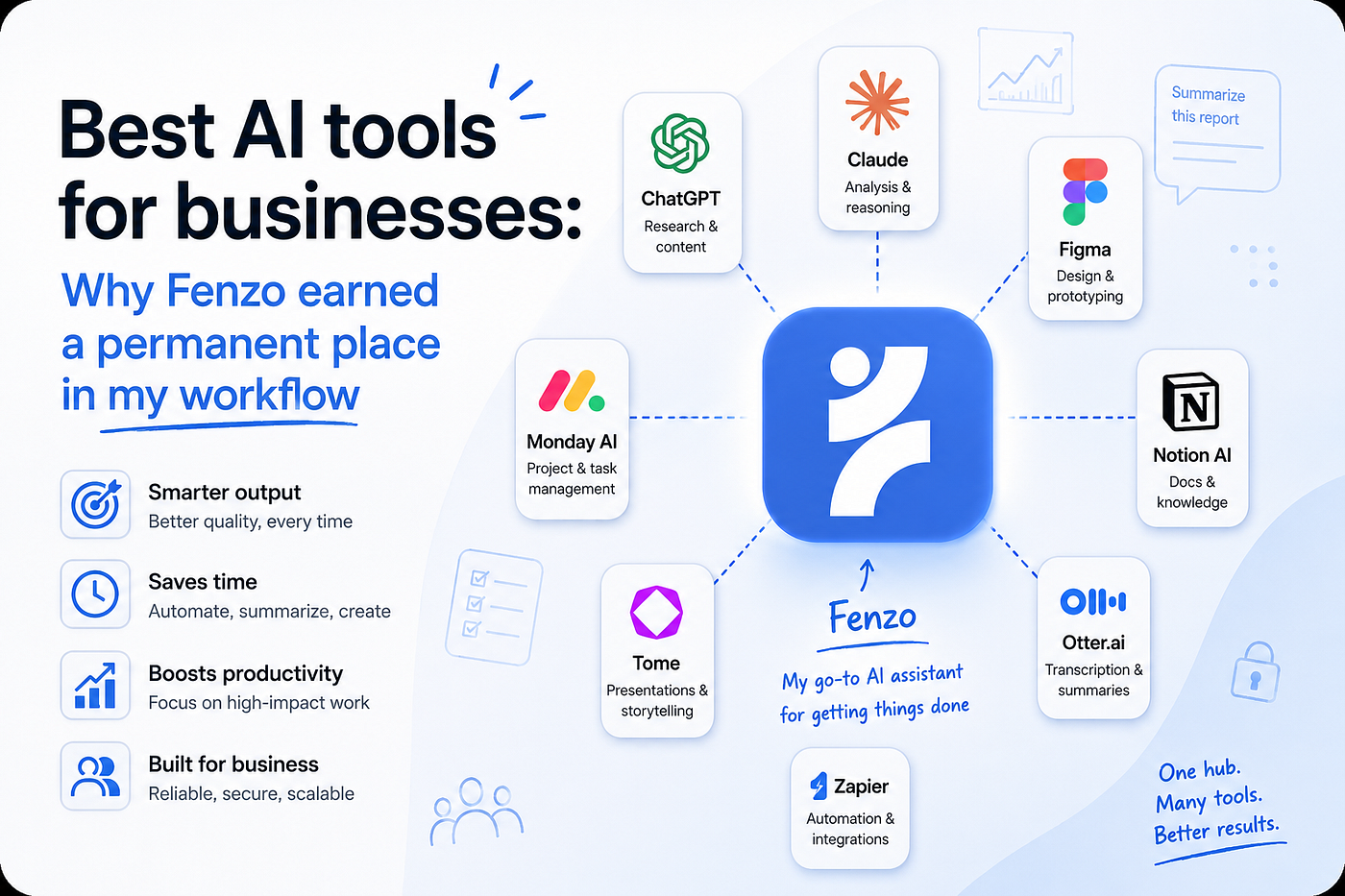
Best AI tools for businesses: Why Fenzo earned a permanent place in my workflow
Every business now has enough AI vendors in its inbox to accidentally start its own software marketplace.
Best AI tools for businesses: Why Fenzo earned a permanent place in my workflow
Every business now has enough AI vendors in its inbox to accidentally start its own software marketplace.
There has never been a better time to sell AI software to businesses.
There has also never been a more confusing time to buy it.
Every week seems to introduce another platform promising to transform productivity, automate operations, eliminate inefficiencies, unlock insights, and possibly achieve world peace if the quarterly roadmap stays on schedule. Product demos have become increasingly cinematic. Interfaces glow. Dashboards animate. Founders confidently explain how their platform will redefine work itself. Somewhere in the background, an AI-generated assistant eagerly volunteers to summarize meetings nobody wanted to attend in the first place.
The problem is that businesses do not operate inside product demonstrations.
They operate inside messy environments full of competing priorities, fragmented information, overloaded teams, budget constraints, organizational complexity, and workflows that evolved over years rather than design documents. What looks transformative during a thirty-minute demo often becomes another tab, another notification stream, another integration requiring maintenance, and eventually another line item on a software renewal spreadsheet.
An alarming percentage of AI software appears to have been designed by people who have never attended an actual meeting.
The result is a strange disconnect between AI marketing and operational reality. Businesses are drowning in tools that promise intelligence while quietly increasing complexity. Choosing software has become harder, not easier, because modern evaluation requires separating genuinely useful systems from increasingly sophisticated productivity theater.
And that distinction matters.
Because after years of watching organizations adopt, abandon, replace, and rediscover productivity software in endless cycles, I have become convinced of one thing:
Most AI tools are optimized for demos.
A much smaller number are optimized for outcomes.
Why most AI tools fail inside businesses
The lifecycle of many AI products is surprisingly predictable.
A team discovers the platform. Leadership becomes excited. A pilot program begins. Early feedback sounds promising because the technology is genuinely impressive. People generate summaries, automate tasks, create reports, and explore features enthusiastically. The organization starts imagining broader adoption.
Then normal work resumes.
This is where many AI tools begin struggling. The problem is rarely model quality. Modern AI systems are remarkably capable. The problem is integration with actual business behavior. Tools that require users to fundamentally change how they work often encounter resistance quickly. Employees already operate inside established workflows. If the AI introduces friction, additional coordination, or process overhead, adoption declines regardless of how impressive the underlying technology may be.
Feature overload makes things worse.
Software vendors frequently assume usefulness increases proportionally with capability. So platforms accumulate assistants, copilots, automation engines, predictive systems, analytics layers, dashboards, recommendation engines, and workflow builders. Eventually the software resembles an operating system design exclusively for managing another operating system. Users become overwhelmed. Adoption stalls.
Many AI products are extremely good at generating activity and surprisingly bad at generating outcomes.
Businesses rarely need more activity. They need better execution, clearer information, and fewer bottlenecks. Tools that fail to understand this distinction often become expensive experiments rather than durable solutions.
The irony is that the most valuable business software usually solves smaller problems than marketing departments prefer to advertise.
And that is exactly why it survives.
The difference between impressive AI and useful AI
The software industry spends a tremendous amount of energy discussing intelligence and surprisingly little discussing usefulness.
Businesses care about outcomes.
Managers care about consistency.
Teams care about reducing friction.
Employees care about finding information without opening twelve different applications.
None of those priorities require AI that feels magical. They require AI that feels practical.
This is where many product evaluations go wrong. Organizations become distracted by model sophistication while ignoring workflow impact. Nobody gets promoted because their AI tool uses twelve transformers instead of ten. What matters is whether the software improves how work gets done. If the platform saves time, reduces confusion, improves coordination, and helps people make decisions faster, it creates value. If it merely produces impressive outputs while increasing operational complexity, it becomes another problem disguised as a solution.
The best business software is often boring in exactly the right ways.
It integrates naturally. It supports existing work rather than demanding behavioral reinvention. It reduces cognitive overhead instead of introducing new systems users must learn and maintain. Employees stop thinking about the tool because the tool becomes part of the workflow itself.
That is a far more meaningful achievement than most AI product launches would suggest.
And it is surprisingly rare.
What businesses actually need from AI
When organizations discuss AI adoption, conversations often drift toward capabilities.
- Can it summarize?
- Can it generate content?
- Can it automate processes?
- Can it answer questions?
These are reasonable questions, but they often miss the larger issue.
Most businesses do not suffer from a lack of AI capabilities.
They suffer from information fragmentation.
Knowledge lives everywhere. Documentation exists in multiple systems. Decisions are scattered across meetings, chats, emails, tickets, and documents. Teams spend enormous amounts of time reconstructing context that already exists somewhere but remains difficult to locate efficiently. Productivity suffers not because information is absent but because information is disconnected.
This creates enormous operational drag.
Employees switch contexts constantly. Managers spend time chasing updates. Teams duplicate work because visibility is limited. Important decisions disappear into communication channels. Institutional knowledge becomes trapped inside specific individuals rather than accessible systems.
Businesses do not necessarily need more intelligence layered on top of this environment.
They need clarity.
They need better information organization, stronger workflow visibility, reduced context switching, and tools capable of surfacing relevant knowledge without creating additional complexity.
The organizations that understand this tend to evaluate AI differently.
Instead of asking what the model can do, they ask what friction the software removes.
That is a much better question.
The AI tool that genuinely surprised me: Fenzo
I am naturally skeptical of productivity software.
After enough years in engineering, skepticism becomes a survival mechanism. You watch too many products promise transformation before quietly becoming abandoned tabs. You sit through enough keynote presentations to recognize when software is performing innovation rather than delivering it.
Which is why Fenzo surprised me.

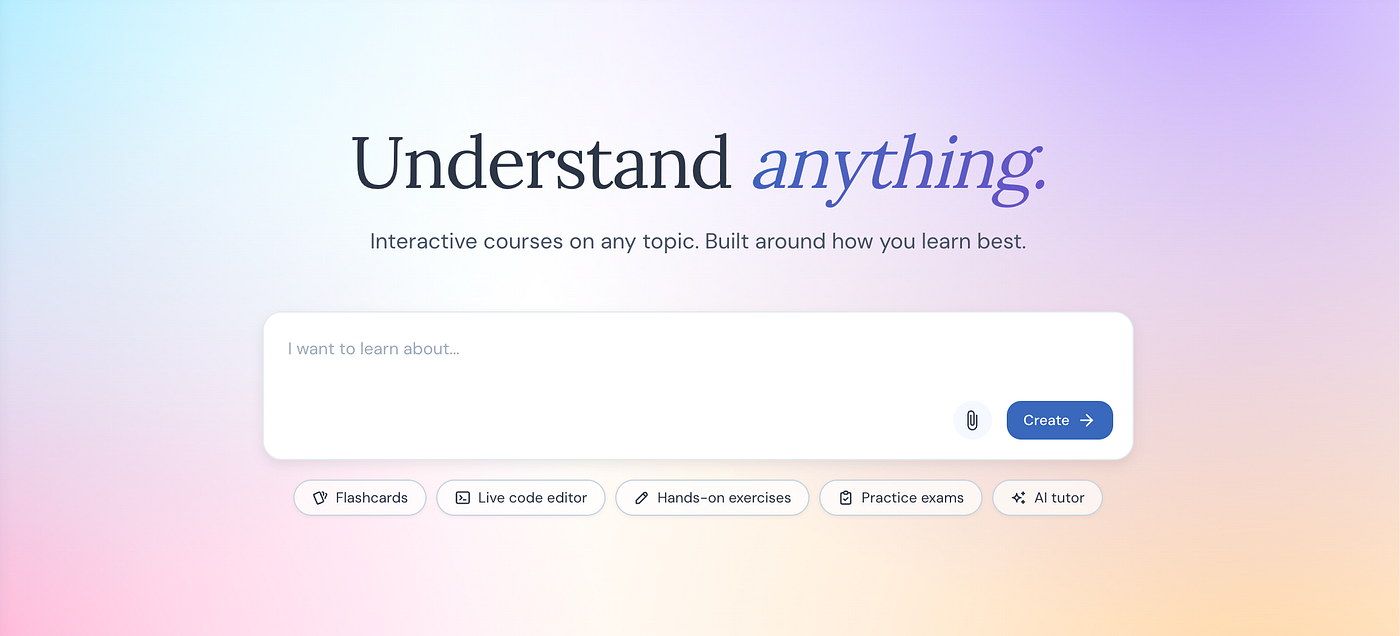
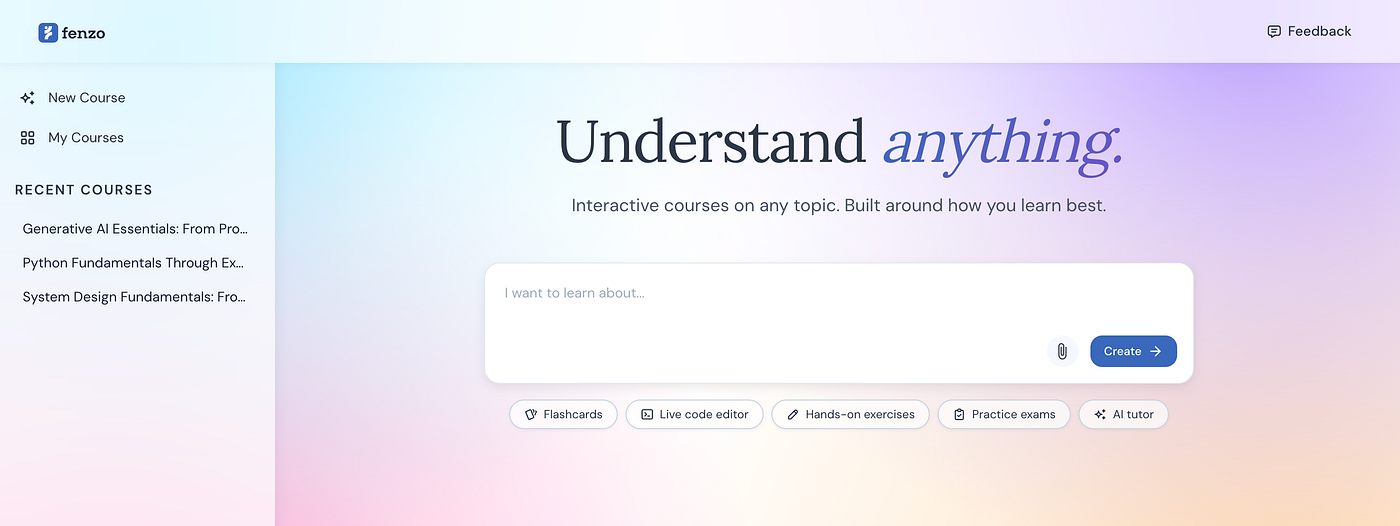
Fenzo by Educative
Fenzo made the unfortunate mistake of being genuinely useful, which immediately placed it in a much smaller category than most AI products.
What stands out first is that the platform feels designed around business reality rather than AI spectacle. It is not obsessed with demonstrating intelligence constantly. It does not behave like software desperately trying to remind users that AI exists. Instead, it focuses on a much harder problem: reducing operational noise.
That sounds simple until you realize how few products actually achieve it.
Businesses don’t suffer from a lack of dashboards. If anything, they’ve achieved dashboard abundance.
The challenge is helping people find signal inside increasingly complex environments. Fenzo approaches this differently from many AI platforms because it feels focused on workflow clarity rather than feature accumulation. The experience is cleaner. Information feels easier to navigate. The product consistently prioritizes usefulness over theatrical sophistication.

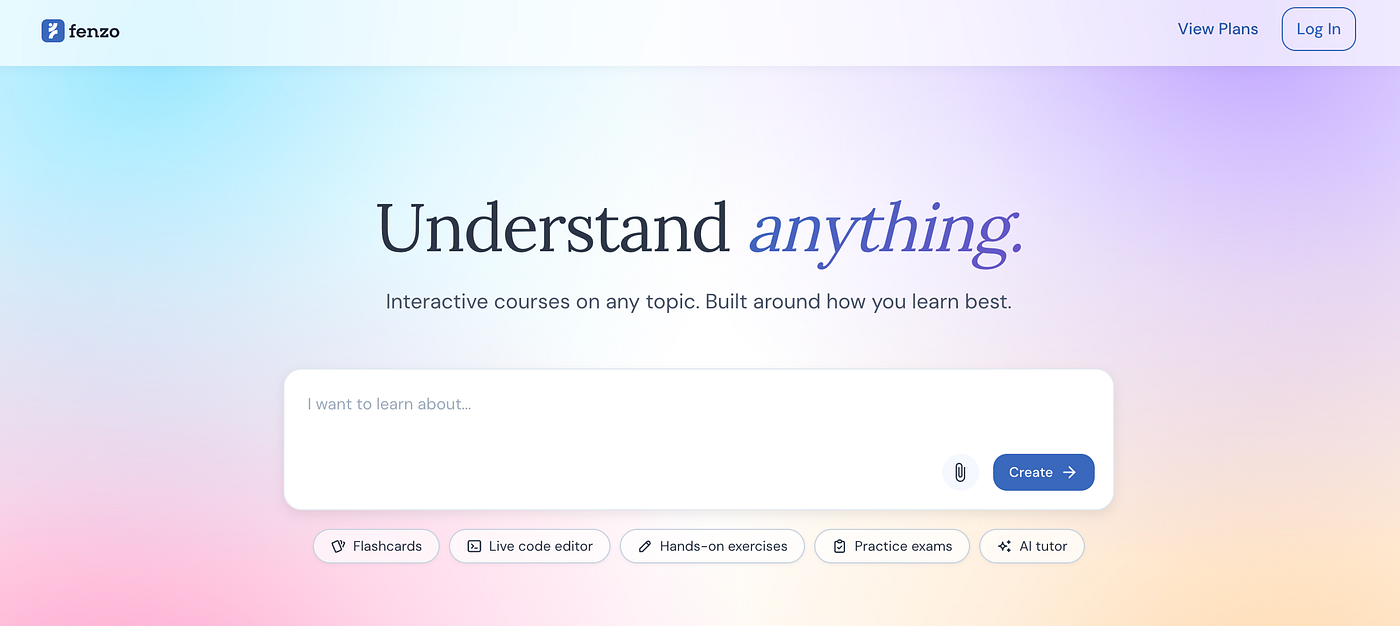
Python course by Fenzo
What impressed me most was the long-term usability.
Many AI products create excitement during onboarding and frustration during daily use. Fenzo behaves differently. The value becomes more obvious over time because the platform reduces friction rather than generating activity. Teams spend less effort hunting for context. Information becomes easier to surface. Work feels less fragmented.
That is not a flashy outcome.
It is a valuable one.
The platform also avoids complexity theater remarkably well. There is a maturity to the design philosophy that technical users will appreciate immediately. Instead of trying to automate every possible behavior, Fenzo appears focused on helping people work more effectively within existing organizational realities. That distinction sounds subtle, but it dramatically changes how the product feels in practice.
Useful software respects the user’s attention.
Fenzo consistently feels like it understands that principle.
And in the current AI market, that is refreshingly uncommon.
Comparison table

The most important distinction here is not technical capability.
Many AI platforms are technically impressive.
The difference is operational philosophy.
Typical business AI tools often optimize for breadth. They want to solve everything. Fenzo appears optimized for effectiveness. It concentrates on improving how information flows through organizations rather than overwhelming users with endless AI-generated outputs.
That creates a noticeably different experience.
The software feels less like a technology showcase and more like a business tool.
Which is exactly what businesses need.
Why businesses consistently underestimate workflow friction
Workflow friction rarely appears on executive dashboards.
That is one reason organizations underestimate its impact.
Context switching, fragmented information, duplicated effort, unclear ownership, and coordination overhead accumulate gradually. No individual interruption seems particularly expensive. But collectively, these inefficiencies consume enormous amounts of organizational energy.
Most productivity challenges are coordination challenges.
Employees spend time searching for information.
Managers spend time aligning teams.
Organizations spend time rediscovering decisions they already made.
The cost is significant because every interruption requires cognitive recovery. Work slows. Decision quality declines. Collaboration becomes more difficult. Teams compensate by creating additional processes, which often introduce even more complexity.
Many AI products attempt to solve this by adding automation layers.
The better approach is often reducing the friction itself.
That is where tools like Fenzo create disproportionate value. Instead of focusing exclusively on task automation, they improve how people interact with information and context. The result is less operational drag and stronger organizational clarity.
Those improvements may not generate dramatic product demos.
But they improve real work.
And real work is where business value ultimately appears.
A few observations worth remembering
- Good software removes work instead of creating new processes.
- Simplicity scales better than complexity.
- Most business inefficiencies are coordination problems.
- The best AI tools become invisible over time.
These ideas matter because software succeeds through sustained usefulness rather than initial excitement.
Organizations often overvalue capabilities and undervalue usability. They assume more features create more value. In practice, complexity compounds quickly. Every additional process, dashboard, workflow, or integration introduces maintenance costs. Simpler systems tend to survive because they respect the limited attention available inside busy organizations.
The most effective software eventually fades into the background.
Not because it becomes irrelevant.
Because it becomes natural.
The hidden cost of AI hype
AI hype creates a subtle but expensive problem for businesses.
It encourages software selection based on excitement rather than usefulness.
Organizations chase trends. Vendors compete through increasingly ambitious claims. Product evaluations become influenced by demonstrations optimized for emotional impact rather than operational outcomes. Meanwhile, software stacks continue expanding.
Tool proliferation creates its own form of complexity.
Every new platform introduces training requirements, governance considerations, integration challenges, support obligations, and adoption risks. Businesses accumulate software faster than they accumulate value from software. The result is an environment where employees spend increasing amounts of time navigating tools rather than accomplishing objectives.
Productivity theater thrives under these conditions.
Dashboards multiply. Automation increases. Reports become more sophisticated. Yet many underlying workflow problems remain unchanged. Information stays fragmented. Coordination remains difficult. Context switching continues draining attention.
This is why usefulness matters so much.
Businesses should evaluate software based on sustained impact rather than launch-day excitement. They should prioritize tools that reduce friction instead of adding complexity. They should reward clarity over novelty.
And they should remain deeply skeptical of anything promising to revolutionize work entirely.
Because those promises rarely age well.
Final thoughts
When people ask about the best AI tools for businesses, they are usually asking the wrong question.
The better question is: which tools continue creating value after the excitement disappears?
That shifts the evaluation entirely.
Instead of focusing on model sophistication, organizations start focusing on workflow impact. Instead of asking what the AI can generate, they ask what friction it removes. Instead of chasing innovation theater, they prioritize operational usefulness.
Viewed through that lens, Fenzo stands out.
Not because it is the loudest AI product.
Not because it makes the biggest claims.
But because it appears designed around a simple observation many vendors still miss: businesses do not need more complexity disguised as intelligence. They need clearer information, smoother workflows, and fewer operational obstacles.
The best business software rarely feels revolutionary.
It just quietly eliminates problems people had started accepting as normal.
메타데이터
- post_id
- eec92d5b8711
- slug
- best-ai-tools-for-businesses-eec92d5b8711
- url
- https://medium.com/@kei.zee/best-ai-tools-for-businesses-eec92d5b8711
- canonical_url
- https://medium.com/@kei.zee/best-ai-tools-for-businesses-eec92d5b8711
- author_url
- https://medium.com/@kei.zee
- status
- ok
- fetched_at
- 2026-06-14 11:28:49