Bio Art: Crafting New Dialogues with Life and Technology
Exploring Bio Art: Where Life Meets Art
Bio Art: Crafting New Dialogues with Life and Technology
Exploring Bio Art: Where Life Meets Art
I’ve always been drawn to the spaces where art and nature intersect — places where creativity grows from roots buried deep in the soil of our planet’s ancient wisdom. In my journey through sound, plants, and the living world, I’ve come to recognize that art, like life itself, is constantly evolving, adapting, and sometimes merging with science in ways that feel almost otherworldly.
Recently, I came across a captivating catalog, Bio Art: Altered Realities by Thames & Hudson. It’s nothing new, right? Yes, but this collection dives into the fascinating world of bio art — a space where artists aren’t just inspired by nature but work directly with living materials, from cells and bacteria to plants and beyond. It’s a realm where creativity and biology collaborate, sometimes producing awe-inspiring, sometimes unsettling, and always thought-provoking results.
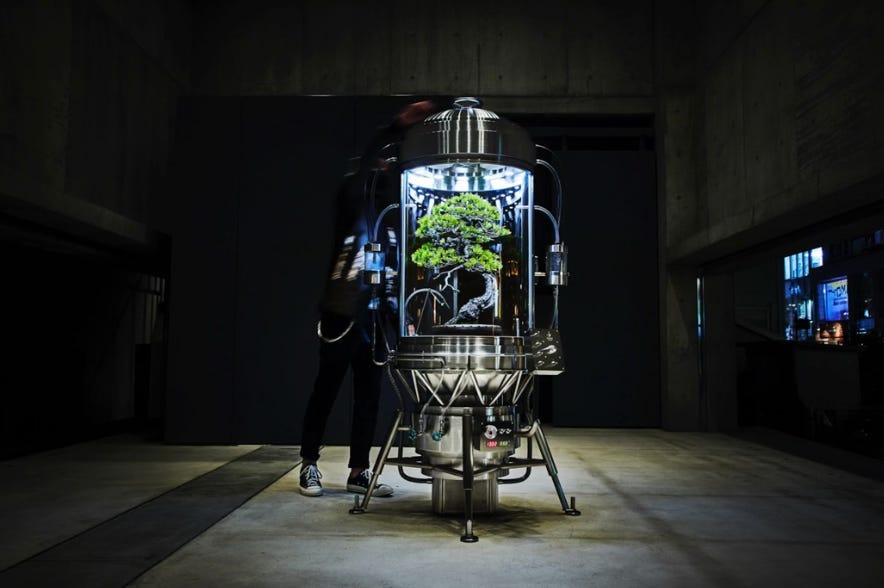
Encapsulated Environmental System: Paludarium YASUTOSHI by artist Azuma Makoto, 2020, Tokyo, Japan
Personal Connection to Bio Art
As an artist deeply immersed in the rhythms of the natural world, bio art feels like a natural extension of my practice. For years, I’ve been drawn to the subtle, often unspoken dialogues between plants, sounds, and the living environment. This fascination goes beyond a simple admiration for nature — it touches on an intense curiosity about plant intelligence and the hidden ways in which all life communicates.
Bio art resonates with me because it invites us to view the world from a renewed perspective, seeing life not just as something to observe, but as something to actively engage with. In my own work — whether through sound art, connecting with plants via biofeedback devices, or performing rituals that honor the wisdom of the natural world — I explore the quiet intelligence within the living systems that surround us. Bio art takes this exploration even further, blending biological processes with creative expression to challenge our understanding of life, sentience, and the invisible connections that weave through all ecosystems. Isn’t that incredible?
For me, bio art is not only about the final piece but especially about the process and the questions it raises. It encourages us to reconsider the ethical lines in our relationship with other living beings. How far can, or should, we go in our efforts to understand or even manipulate life? Bio art asks us to tread carefully, reminding us that our creations — and our curiosity — are part of a larger web of existence that deserves our respect.
Beyond Observation: Art at the Intersection of Life and Technology
I often think about how technology has shifted the way we perceive and interact with nature. Nam June Paik’s words resonate deeply: “Skin has become inadequate in interfacing with reality. Technology has become the body’s new membrane of existence.” This idea strikes at the heart of bio art, a field that blends life with technology in ways that challenge the boundaries of our bodies, our senses, and our understanding of existence itself. Bio art isn’t just a new artistic medium; it’s a wider exploration of what it means to be human in an era where life and technology are intertwined more closely than ever.
The completion of the Human Genome Project’s draft in 2003 was a watershed moment that marked humanity’s shift from observing life to understanding it as a code — one that could be read, edited, and even rewritten. Suddenly, the mysteries of biology began to feel like blueprints, something we could interact with, modify, and even personalize. For artists, the genome opened up new directions of engagement with biology, sparking questions about identity, ethics, and the creative potential embedded in life’s own code.
This potential reached new heights with the creation of “Synthia” in 2010, the world’s first synthetic life form. Synthia represented a radical turn — an instance of life created from scratch, without ancestry, challenging the distinction between the natural and the artificial. The realization that we could design life at the cellular level brought up profound ethical questions: What responsibilities do we have toward the life we create? And in an artistic context, what happens when our “materials” are no longer static but alive, dynamic, and perhaps even sentient?
As I work with plants, sound, and the quiet intelligence within nature, bio art resonates deeply with me. It is an invitation to reimagine not just the boundaries of art but the essence of human identity. Bio art asks us to redefine our relationship with living materials, to explore the ethical edges of creation, and to recognize that technology isn’t just a tool we hold — it is, as Paik said, a new membrane, an intimate layer of existence that brings us closer to the living systems around us.
In bio art, I see a profound challenge to traditional notions of art, life, and our role within the natural world. It’s a practice that asks us to move beyond observation and into connection, engaging with life at its most fundamental levels. Bio art is a call to approach the living world with respect, curiosity, and a recognition of the delicate balance that binds all life together.
Altering Nature Naturally: New Technologies in Artistic Exploration
In bio art, we see a fascinating convergence of technology and nature, where artists explore, reshape, and even collaborate with living organisms in entirely new ways. Through innovations like genetic modification, artificial intelligence, and biofeedback devices, bio artists are engaging with natural systems to create works that blend the organic with the engineered. These tools don’t just provide new means of expression; they open up profound questions about identity, adaptability, and our relationship with life itself.
Technology in these projects often serves to reveal hidden aspects of nature’s intelligence and adaptability. Using CRISPR (Clustered Regularly Interspaced Short Palindromic Repeats), for instance, artists might introduce new characteristics into plants, reshaping them to reflect questions about resilience in a changing world. Biofeedback devices capture the electrical signals within plants or bacteria, transforming them into visual art or soundscapes, inviting audiences to “listen” to plants as they respond to their environment. Such projects offer an intimate look into the unseen rhythms of life, creating a deeper sensory connection with the living world.
In my own work with plant soundscapes, this technological approach feels deeply resonant. It shifts the role of the artist from a mere observer to an active participant, bridging human perception with the subtle frequencies of nature. These artistic endeavors show that technology, applied with sensitivity, becomes a way to honor nature’s complexity, not simply to control it. Through bio art, technology becomes more than a tool — it becomes a means of engagement that’s alive, responsive, and attuned to the world’s delicate ecological rhythms.
Sound in Bio Art: Listening to Life’s Hidden Rhythms
Sound has become an intriguing medium in bio art, one that allows artists to capture and interpret the unseen pulses of life. In this context, sound isn’t merely an auditory experience — it’s a gateway into the hidden bioelectric rhythms of nature. By using biofeedback devices and biodata sonification, artists can tap into the electrical impulses of plants, bacteria, and other living organisms, translating these subtle signals into soundscapes that reveal a world we can feel but rarely hear.
This use of sound is more than just creating art; it’s about initiating a form of communication with life forms that exist in frequencies beyond human perception. By converting bioelectric activity into sound, artists invite us to listen to plants, fungi, or bacteria as they respond to light, water, and other environmental changes. In these soundscapes, we catch a glimpse of the hidden intelligence within nature — a reminder that life is constantly communicating in ways that transcend language.
In my own explorations, I find that sound brings an intimacy to the experience of bio art, offering a way to connect with plants and natural rhythms on a visceral level. Hearing these hidden signals is almost like eavesdropping on nature’s conversations, a reminder that all life is interconnected through vibrations and frequencies. For me, sound serves as a bridge, connecting the sensory world of humans with the silent intelligence of nature. This approach in bio art doesn’t just represent the natural world; it brings it closer, inviting us to tune into the rhythms of life itself.
Conclusion: Engaging Life, Technology, and Ethics in Bio Art
Bio art brings us into uncharted territory, where creativity, technology, and the living world intersect in ways that are more relevant than ever. In a time when art has already expanded beyond traditional mediums, bio art pushes even further, using the fabric of life itself as both material and message. This approach compels us to reflect on ethical boundaries, our evolving relationship with nature, and the responsibility we bear when we engage with living materials.
As we journey deeper into bio art, questions emerge that go beyond aesthetics: What does it mean to collaborate with life itself? How do we approach such creations with respect for the autonomy and integrity of other living beings? And in a world where the lines between the natural and the synthetic blur daily, what role should artists play in exploring — and respecting — these boundaries?
For me, bio art 🌿 is more than a genre; it’s a practice of awareness, one that asks us to see technology as an extension of our connection to the natural world. Moving forward, bio art challenges us to engage thoughtfully, to use innovation as a means of fostering deeper relationships with the ecosystems we inhabit. ✨ As artists and observers, may we step into this dialogue with curiosity 🧠, humility 🤲, and a commitment to honoring the intricate web of life 🌍🕸️ we’re privileged to explore.✨
References 📚🌿✨:
- Myers, William. Bio Art: Altered Realities. Thames & Hudson, 2015.
- Kac, Eduardo. Signs of Life: Bio Art and Beyond. MIT Press, 2007.
- Ascott, Roy. Technoetic Arts: Exploring the Digital and the Biological. Intellect Ltd, 2003.
- Haraway, Donna J. Staying with the Trouble: Making Kin in the Chthulucene. Duke University Press, 2016.
- Thacker, Eugene. The Global Genome: Biotechnology, Politics, and Culture. MIT Press, 2005.
- Paik, Nam June. Nam June Paik: The Late Style. Edited by John Hanhardt, Guggenheim Museum, 2000.
- Gagliano, Monica. Thus Spoke the Plant: A Remarkable Journey of Groundbreaking Scientific Discoveries and Personal Encounters with Plants. North Atlantic Books, 2018.
- Lazzarato, Maurizio. Signs and Machines: Capitalism and the Production of Subjectivity. Semiotext(e), 2014.
- LaBelle, Brandon. Background Noise: Perspectives on Sound Art. Continuum International Publishing, 2006.
- Carvalko, Joseph R. The Techno-Human Shell: A Jump in the Evolutionary Gap. Sunbury Press, 2012.
- Armstrong, Rachel. Living Architecture: How Synthetic Biology Can Remake Our Cities and Reshape Our Lives. TED Books, 2011.
- Bennett, Jane. Vibrant Matter: A Political Ecology of Things. Duke University Press, 2010.
메타데이터
- post_id
- eee296af0f4b
- slug
- bio-art-crafting-new-dialogues-with-life-and-technology-eee296af0f4b
- url
- https://medium.com/@madameplanta/bio-art-crafting-new-dialogues-with-life-and-technology-eee296af0f4b
- canonical_url
- https://medium.com/@madameplanta/bio-art-crafting-new-dialogues-with-life-and-technology-eee296af0f4b
- author_url
- https://medium.com/@madameplanta
- status
- ok
- fetched_at
- 2026-07-08 20:12:56