The Intersection of Mental Health and Disabled Dating in 2026
The digital dating era has long promised a democratization of love. Yet, for the millions of disabled individuals living in the US, Canada…
The Intersection of Mental Health and Disabled Dating in 2026
The digital dating era has long promised a democratization of love. Yet, for the millions of disabled individuals living in the US, Canada, the UK, and Europe, the reality has often been a digital landscape that prioritizes aesthetic perfection over emotional depth. As we navigate 2026, the conversation is finally shifting from physical accessibility to something more profound: the delicate balance of **mental health and disabled dating**.
In a world where algorithms dictate our romantic fate, how do disabled singles protect their emotional wellness while pursuing meaningful connections? This guide explores the psychological nuances, the technological breakthroughs, and the radical self-care strategies required for the modern era.
The Emotional Tax of the “Digital Scroll”
For a disabled single person, opening a dating app isn’t just a casual activity; it is often an act of vulnerability. There is a specific “emotional tax” associated with navigating these platforms. This tax includes:
- Disclosure Fatigue: The repetitive mental labor of deciding when and how to explain a condition.
- The Rejection Loop: Distinguishing between a standard “not a match” and ableist exclusion.
- Internalized Ableism: The quiet voice that whispers you are “too much work” for a partner — a narrative that directly impacts long-term mental health.
In 2026, experts are emphasizing that the foundation of any romantic pursuit must be a robust internal support system. Navigating mental health and disabled dating requires acknowledging that your worth is not a variable determined by a “swipe right.”
2026: The Year of the “Virtual Emotional Buffer”
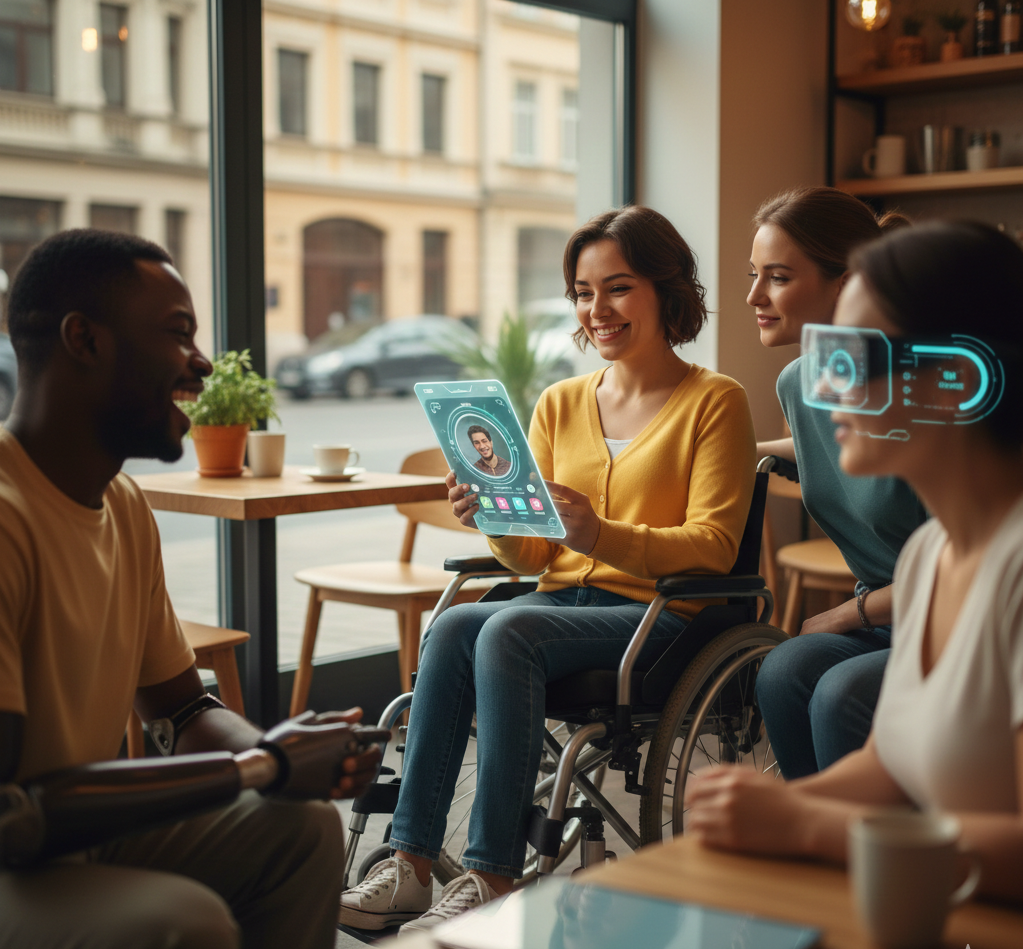
Technological advancements have moved beyond simple UI improvements. We now see the rise of AI-integrated platforms designed specifically to mitigate the psychological stresses of dating. These systems don’t just find matches; they manage expectations.
1. AI-Driven Vetting
Modern platforms now utilize “vibe-check” algorithms that filter out profiles with a history of microaggressions or ableist language. This creates a “safe harbor” for disabled users, significantly reducing the anxiety of encountering hostile interactions.
2. Emotional Wellness Coaching
Many inclusive platforms now offer built-in emotional guidance. For instance, if you are feeling overwhelmed by a conversation, a mental health and disabled dating resource can provide real-time suggestions on how to set boundaries or take a communication break without feeling guilty.
Navigating Disclosure: A Strategy for Peace of Mind
One of the most significant stressors in the intersection of disability and romance is the “Grand Disclosure.” In 2026, the trend has moved away from a singular “reveal” toward Radical Transparency.
The “Identity-First” Approach
Many singles in the Western world are opting to lead with their disability as a point of pride. This acts as an immediate filter for narrow-minded individuals. Psychologically, this shifts the power dynamic: you aren’t waiting to be “accepted” despite your disability; you are presenting your full self and inviting a partner to meet you there.
The “Slow Integration” Approach
For those with invisible disabilities or chronic mental health conditions, a slower approach may be better for emotional safety.
“It’s about pacing,” says Dr. Elena Rossi, a disability psychologist based in London. “You aren’t hiding; you are protecting your energy until the other person has earned the right to your full story.”
Combatting Ableism and Protecting Your Psyche
Ableism in dating is rarely a loud “No.” Instead, it’s often “polite” ghosting, fetishization, or the “inspiration porn” dynamic where a partner views you as a hero just for existing.
To maintain a healthy mindset, users must develop a Romantic Boundary Toolkit:
- Spotting the “Savior Complex”: If a match seems more interested in “helping” you than knowing you, it’s a red flag for your mental health.
- Defining Success Beyond the Date: Success is not just a second date; success is maintaining your self-esteem regardless of the outcome.
- Community Over Competition: Engaging with disability-led dating forums allows for a shared experience that validates your frustrations.
FAQ: Navigating the Intersection of Disability and Emotional Wellness
Q: How do I handle “ghosting” without it affecting my self-worth? A: In 2026, we recognize ghosting as a reflection of the other person’s communication capacity, not your value. For disabled singles, ghosting often stems from the other person’s discomfort with disability. Frame it as a “self-filtering” mechanism — the algorithm (and the universe) is simply removing someone who lacked the maturity to partner with you.
Q: Is it better to mention my disability in my bio or during the first chat? A: There is no “right” answer, only what protects your mental health. If you want to avoid explaining yourself repeatedly, put it in your bio. If you prefer to build a connection based on shared interests first, wait until the conversation feels secure.
Q: How can I tell if a dating app is actually inclusive? A: Look for features such as accessibility filters (wheelchair access, sensory-friendly date suggestions), clear anti-harassment policies regarding ableism, and whether they integrate AI tools to assist with communication barriers.
Q: My mental health suffers when I spend too much time on apps. What should I do? A: Implement “Digital Fasting.” Set strict limits (e.g., 20 minutes a day). Use AI assistants to summarize your messages so you don’t have to read through hundreds of profiles, which reduces decision fatigue and emotional burnout.
Practical Self-Care for the Digital Dater
How do you stay grounded when the notifications stop — or when they become too much?
- Timed Access: Limit dating app use to 30 minutes a day. Do not check them before bed or immediately upon waking.
- The “Friend First” Filter: Focus on building a rapport based on shared interests (like film, tech, or travel) before diving into the logistics of disability.
- Professional Support: Working with a therapist who understands disability is a game-changer. They can help you deconstruct the “rejection” and remind you that your value is intrinsic.
Conclusion: A New Era of Connection
As we move further into 2026, the goal of dating for the disabled community is no longer just “inclusion” — it is emotional flourishing. By prioritizing mental health and disabled dating, singles are building a future where love is built on a foundation of mutual respect and psychological safety.
The technology is here, the community is stronger than ever, and the barriers are finally beginning to crumble. Love in the age of AI isn’t just about the match; it’s about the mindset.
메타데이터
- post_id
- eef0026ea6e4
- slug
- the-intersection-of-mental-health-and-disabled-dating-in-2026-eef0026ea6e4
- url
- https://medium.com/@yuemingyue8/the-intersection-of-mental-health-and-disabled-dating-in-2026-eef0026ea6e4
- canonical_url
- https://medium.com/@yuemingyue8/the-intersection-of-mental-health-and-disabled-dating-in-2026-eef0026ea6e4
- author_url
- https://medium.com/@yuemingyue8
- status
- ok
- fetched_at
- 2026-07-16 13:21:07