ASK-A-GEOLOGIST by Jeff Wynn
Infrasound — Mother Earth talks!
ASK-A-GEOLOGIST by Jeff Wynn
Infrasound — Mother Earth talks!
The Earth really is a living thing in many senses of the word. For instance, it sometimes undergoes torsional oscillations, triggered by large earthquakes, and is generally always very active — it even makes sounds.
Q: Hi, Wondering what kind of sounds the inner earth makes? Do you know where I might go to hear this? Thank you
- Nathan W.
A: There are sounds emanating from the “inner Earth”, but they are generally at frequencies well below what the human ear can detect — this sub-audible frequency range is called “infrasonic”. Occasionally these can be felt by humans, but not normally heard. I stood once next to the “Cookie Monster” (see book cover image), a hornito with a skylight broken into its base immediately over a lava tube coming from Kilauea volcano. The radiant heat was so strong that I was grimacing and worried that the camera would be damaged — or that my hair might ignite.
The ground literally moaned and shuddered beneath my feet, and I suddenly understood where the vivid images of Hell in ancient Middle Eastern and Italian literature might have stemmed from. It was fairly terrifying, and I had to suppress parts of my primitive brain that were screaming to get the hell (pun intended) out of there. Shortly after that photo was taken the blue-colored gas on the upper right engulfed me, and that gas mask around my neck had not yet been adjusted. The experience suddenly became much more terrifying. The gas was volcanic SO2 (the smell of burning matches), and it converted to sulfuric acid in my nose and throat upon contact with the mucous membranes there.
When you can’t see or breathe — and must run over crags of volcanic glass that could eviscerate you — it’s a whole new game of tag.

the author standing next to the “cookie monster”, a skylight into an active Kilauea lava tube, south of Pu’u O’o, Big Island, Hawai’i. Note the blue, SO2 smoke in the upper right.
I once heard a recording from a seismometer located on Tungurahua volcano in Ecuador — but it had been electronically speeded up about 400 times to bring the signal up into the human audible range. It sounded like a large and desperate animal moaning and roaring. The original sound of course would be inaudible to the human ear — it was well below the normal hearing range — because it was sound coming from a much larger feature than the Cookie Monster. The larger the source, the longer wavelengths are possible, and that means lower and deeper tones can be generated.
Here is one somewhat different example for volcanic gas venting: http://volcano.oregonstate.edu/vwdocs/videos/siocomm.mov
Here is an example of the sounds of an actual surface eruption at Tungurahua: http://en.rian.ru/video/20101202/161596301.html
More volcano sounds can be heard here: http://volcano.oregonstate.edu/book/export/html/385
Note that if a volcano is not actually erupting at the surface, the sounds made are almost always inaudible (infrasonic). Elephants might be able to hear them, but not you, not me.
In some volcanoes, generally at a critically dangerous moment in their pre-eruptive cycle, a seismic signal is detected that is called “harmonic tremor”. This is generally thought to be caused by fluid moving up through conduits deep below the volcano, and sometimes it is a portent of an impending eruption. Mt. Pinatubo in the Philippines in 1992, for instance, demonstrated strong harmonic tremor as the rising fluids raced upwards toward the ground surface at 30 km/hr.
A USGS geophysicist (Andy Lockart) assigned to Clark Air Base as part of a monitoring team at the time raced into a meeting with the general officers running the base and interrupted with “General, do you have jam in your pockets? Because if we don’t get the hell out of here, we are all gonna be toast.” In a subsequent lecture, the general related this experience with a rueful laugh. The evacuation was successful (humans and aircraft were saved), but Clark Air Base was destroyed. Harmonic tremor is typically in the 2 Hz frequency range — well below the lowest frequency that a human ear can detect (the lowest of which is about 20–30 Hz for younger people).
Earthquakes (caused by the shifting and sliding of crustal plates) also generate seismic waves, but like those under a volcano they tend to be mostly at frequencies far below what a human ear can readily detect. Some of the energy, however, can get into the audible range. As a 6-yr-old child, a magnitude 7.3 earthquake threw me out of my bed, and I can distinctly remember groaning, rumbling, and even squealing sounds — the latter probably caused by the nails and timbers of my Mom’s house as it was wrenched and twisted around.
Most of the energy of these earthquake seismic waves pass through the Earth and are typically picked up thousands of miles away. These “sounds” are reflected and refracted by the different structural boundaries of the Earth’s Mantle, and the Inner and Outer Cores of the Earth. Seismologists have used these natural ultra-low-frequency noise sources to image (tomography) what the interior of the Earth actually “looks” like in broad brush. That’s how we know that there is an inner and outer core, for instance. For reference, the Kola Peninsula (Russia) Superdeep Borehole retains the world record at 12,262 meters (40,200 ft), reached in 1989. That is less than 2/1000ths of the distance to the center of the Earth.
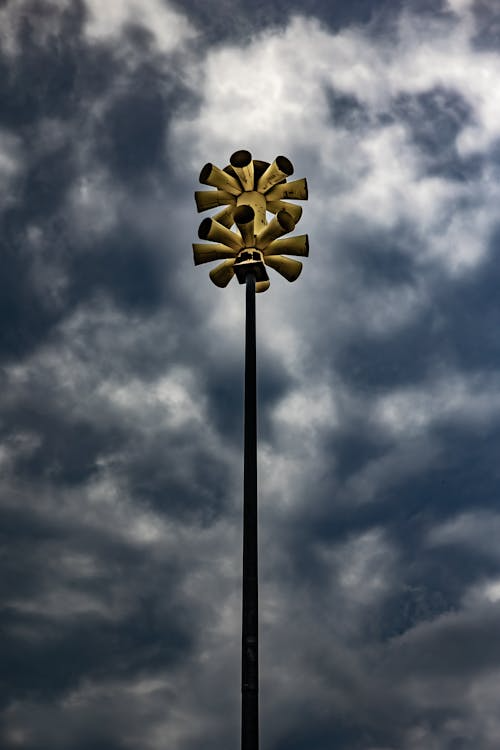
As part of the Comprehensive Nuclear Test-Ban Treaty a series of infrasound arrays have been set up around the world (“IMS Infrasound Network” http://can-ndc.nrcan.gc.ca). These infrasound stations typically consist of eight micro-barometer sensors and filters arranged in an array covering an area of up to 9 km2 (“Infrasound monitoring: CTBTO Preparatory Commission”. http://www.ctbto.org). One of these is on mainland Alaska and the USGS uses it to monitor volcanic eruptions on volcanoes in the Aleutians (for instance, the often-restless Cleveland volcano), because we do not have the resources to instrument with broad-band seismic or GPS telemetry. To put this in perspective, about 25,000 passengers per day travel through or near Cleveland’s airspace.
This is not a trivial, academic-research-only type of array. It protects human lives.

Infrasound arrays at infrasound monitoring station in Qaanaaq, Greenland (Image: CTBTO Preparatory Commission, 2017; https://www.ctbto.org/press-centre/highlights/2017/ ).
메타데이터
- post_id
- eef0dc4ed209
- slug
- ask-a-geologist-by-jeff-wynn-eef0dc4ed209
- url
- https://medium.com/@jeffwynnusgs/ask-a-geologist-by-jeff-wynn-eef0dc4ed209
- canonical_url
- https://medium.com/@jeffwynnusgs/ask-a-geologist-by-jeff-wynn-eef0dc4ed209
- author_url
- https://medium.com/@jeffwynnusgs
- status
- ok
- fetched_at
- 2026-06-26 03:39:16