Philip Seymour Hoffman: The Greatest Actor of the 21st Century Who Still Lives in Our Hearts
There are actors we admire. There are actors we respect. And then, every so often, there is an actor who disappears so completely into…
Philip Seymour Hoffman: The Greatest Actor of the 21st Century Who Still Lives in Our Hearts
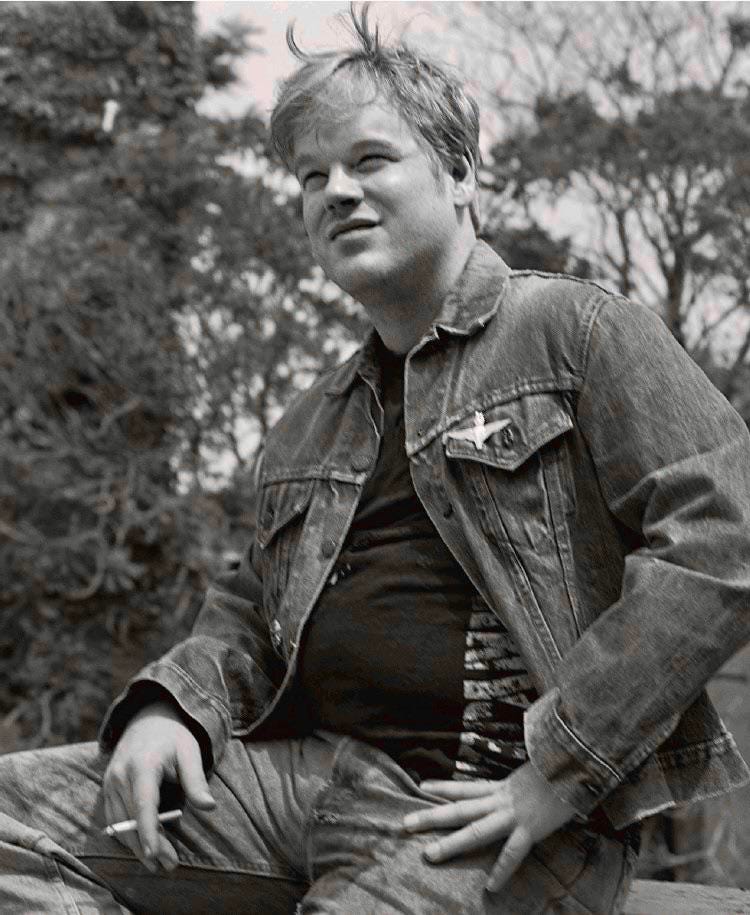
There are actors we admire. There are actors we respect. And then, every so often, there is an actor who disappears so completely into another human being that we forget we are watching a performance at all. Philip Seymour Hoffman was that rare third kind.
More than a decade after his death, his name still stops people mid-sentence. Mention Capote, or The Master, or that scene in Doubt where his face betrays everything his words refuse to admit, and you will watch something shift in the listener’s expression — a kind of quiet reverence reserved for very few performers. Hoffman wasn’t simply talented. He was truthful, in a profession where truth is the hardest thing to fake. That, more than any award or accolade, is why he is still spoken of as one of the greatest actors of the 21st century — and why his absence still feels like an unhealed wound in American cinema.
This is the story of how a shy kid from Fairport, New York, became one of the most haunting, generous, and unforgettable actors of his generation — and why his work continues to live, breathe, and ache inside us today.
A Journey Built on Discipline, Not Destiny
Philip Seymour Hoffman was born on July 23, 1967, in Fairport, New York, the second of four children raised by his mother. As a teenager he was drawn more to wrestling than to the stage, until an injury redirected him toward something gentler and, ultimately, far more consuming: theater. A performance of Arthur Miller’s All My Sons left a lasting impression on him as a boy, and by his teens he was acting in school productions of The Crucible and Death of a Salesman.
He went on to study drama at New York University’s Tisch School of the Arts, graduating in 1989. Like so many actors who would later be called geniuses, his early career was unglamorous: off-Broadway stages, customer service jobs to pay rent, and small, forgettable film roles. His screen debut came in a 1991 episode of Law & Order, and his film debut the following year was so minor that it credited him simply as “Phil Hoffman.”
He soon adopted his grandfather’s name, Seymour, to distinguish himself from another actor — a small detail, but a fitting one. Even in his earliest choices, Hoffman understood the value of identity, of becoming fully and unmistakably himself.
His breakout came playing a spoiled prep-school student in Scent of a Woman (1992), a role he reportedly auditioned for five times. From there, his career built slowly and deliberately — not through stardom, but through craft. By the time he stunned audiences as the lonely, lovesick boom operator in Paul Thomas Anderson’s Boogie Nights (1997), it was clear that something rare was happening on screen whenever he appeared.
Hoffman also battled alcohol and drug addiction in his early twenties, entering rehab at 22 and dedicating himself to over two decades of sobriety — a period that shaped both the empathy in his performances and the quiet vulnerability that defined the man behind them.
What Made His Acting Unforgettable
Hoffman never seemed to be performing emotion. He seemed to be living inside it, often uncomfortably so. He had an almost frightening ability to locate the loneliness, shame, or longing buried beneath a character’s surface — and to let the audience see it without ever announcing it.
He famously avoided vanity. He once joked, with characteristic self-deprecation, about how he was rarely described in flattering physical terms — “chubby,” “stocky,” “fair-skinned.” But it was precisely this refusal of movie-star polish that made his characters so devastatingly real. He played misfits, villains, addicts, priests, and powerful men with equal tenderness, never asking the audience to like them, only to understand them.
His process was famously immersive. For Capote, he spent four months researching Truman Capote’s voice and mannerisms, losing significant weight and staying in character throughout filming so as not to “give my body a chance to bail” on him. This wasn’t showmanship — it was devotion. Hoffman treated each role as a responsibility, not a showcase.
The Roles That Defined a Generation
Capote (2005) remains the performance most people associate with his genius. As Truman Capote, Hoffman captured the writer’s high-pitched voice and theatrical mannerisms without ever lapsing into parody, delivering what Britannica called a complex, honest performance that captured Capote’s essence and mannerisms without caricaturing him. The role earned him the Academy Award for Best Actor, along with Golden Globe, BAFTA, SAG, and Independent Spirit awards.
Charlie Wilson’s War (2007) showed his gift for stealing scenes from even the biggest stars, playing a real-life CIA operative alongside Tom Hanks with a mix of menace and dark comedy that earned him an Oscar nomination.
Doubt (2008) gave us one of the most quietly devastating performances of his career — a Catholic priest suspected of abusing a child, played opposite Meryl Streep. Hoffman never confirmed nor denied the character’s guilt through easy signals; he made the audience sit in genuine, uncomfortable doubt, which earned him a second Oscar nomination.
The Master (2012) may be the performance that critics now point to as his most towering achievement — a charismatic, unraveling cult leader whose magnetism and fragility seemed to exist in the same breath. It was his third Oscar nomination, and many believe it should have won.
The Hunger Games: Catching Fire (2013) introduced him to a new generation as Plutarch Heavensbee, proving that even within a young-adult blockbuster franchise, Hoffman brought a gravity and intelligence that elevated everyone around him.
Add to this his unforgettable supporting work in Boogie Nights, Magnolia, Almost Famous, The Big Lebowski, and Synecdoche, New York, and you begin to understand the staggering range of a man who, in just over two decades, appeared in more than 50 films.
The Humanity Beneath Every Character
What separated Hoffman from merely “great” actors was his refusal to let any character become a type. His villains had wounds. His heroes had flaws. His priests carried doubt, his cult leaders carried fear, his CIA agents carried exhaustion. He didn’t perform characteristics — he excavated psychology.
This is why his work doesn’t feel dated, even years later. He wasn’t chasing trends or relying on charisma. He was interested in something much harder to manufacture: recognizable human truth. Watching him, you often felt less like you were watching an actor and more like you were eavesdropping on someone’s private pain.
Why Many Call Him the Greatest Actor of the 21st Century
It’s not an exaggeration reserved only for grieving fans. In 2024, The Independent ranked him the greatest actor of the 21st century in a major critical survey — a striking honor for a performer whose career, by Hollywood standards, was relatively brief.
Over the course of his career, he received four Academy Award nominations, winning Best Actor for Capote, alongside five Golden Globe nominations, five BAFTA nominations, and four Screen Actors Guild Award nominations. He also remained deeply committed to the stage, earning three Tony nominations and serving as co-artistic director of New York’s LAByrinth Theater Company.
What critics consistently point to is not just the awards, but the consistency — a startling ratio of unforgettable performances to forgettable ones. Few actors of his era moved so fluidly between independent dramas, prestige pictures, and studio blockbusters while maintaining the same exacting standard of honesty in every role.
His Influence on Modern Acting
Hoffman helped redefine what a leading man could look like and behave like in American film. He never relied on conventional charm, and in doing so, he widened the lane for character-driven, emotionally complex performances to carry major films. A generation of actors — particularly those drawn to morally ambiguous, deeply internal roles — owe something to the path he carved.
He also modeled an ethic, not just a style: total immersion, total preparation, and total respect for the character, no matter how small the part. Directors like Paul Thomas Anderson, Sidney Lumet, Charlie Kaufman, and Mike Nichols entrusted him repeatedly because he treated every role, however brief, with the same seriousness as a lead.
The Tragedy That Shook Hollywood
On February 2, 2014, Philip Seymour Hoffman was found dead in his New York City apartment from acute mixed drug intoxication, after struggling with addiction on and off for much of his adult life. He was only 46 years old.
The news landed like a physical blow across the film industry. Tributes poured in from collaborators and fans alike, many of whom had assumed — because his talent felt so boundless — that he had decades of work still ahead of him. The loss wasn’t just artistic; it was deeply personal for everyone who had watched him turn discomfort into beauty on screen.
His death also reignited painful, necessary conversations about addiction — not as a moral failing, but as an illness that can quietly coexist with extraordinary success, talent, and even decades of sobriety. For many fans, his story became a sobering reminder that genius offers no immunity to human struggle.
The Legacy That Refuses to Fade
More than ten years later, Hoffman’s performances haven’t aged into nostalgia — they’ve aged into permanence. Film students still study his work as a master class in restraint and emotional honesty. Critics still cite The Master and Capote among the finest performances ever captured on film. In 2022, his hometown of Fairport, New York, unveiled a statue in his honor — a quiet, permanent tribute to a man who never sought the spotlight for its own sake.
His legacy lives in every actor who chooses authenticity over charisma, in every character built from the inside out rather than the outside in. It lives in the discomfort he was willing to sit in on our behalf, so that we could feel something true.
Lessons for Aspiring Actors and Creatives
Hoffman’s career offers a quiet but powerful blueprint for anyone pursuing a creative life:
- Treat small roles like they matter, because they do. Hoffman built his reputation through supporting work long before he ever led a film.
- Choose truth over comfort. He was willing to disappear into uncomfortable, unflattering, even unlikable characters because honesty mattered more to him than likability.
- Preparation is respect. His months of research and total immersion weren’t about ego — they were about honoring the people and stories he portrayed.
- Vulnerability is strength, not weakness. His willingness to expose loneliness, addiction, and fragility on screen — and in his own life — reminds us that the most powerful art often comes from the most honest places.
- Talent does not exempt anyone from struggle. His story is a tender, sobering reminder to check in on the people we admire, and on ourselves.
A Closing Reflection
Philip Seymour Hoffman never seemed interested in being a movie star. He seemed interested in being true — to his characters, to his craft, and, in his own complicated way, to himself. That sincerity is why his performances still ache with life long after the credits roll, and why his death still feels, somehow, unfinished.
We don’t remember Hoffman because he was famous. We remember him because, for a few unforgettable hours at a time, he made us feel less alone in being human — flawed, frightened, hopeful, and real. That is a gift no awards show can fully measure, and it’s why, more than a decade after his passing, Philip Seymour Hoffman still lives in our hearts: not as a Hollywood legend, but as a mirror we didn’t know we needed.
If this article moved you, share it — and revisit one of his performances tonight. Some artists ask to be watched. Philip Seymour Hoffman asked to be felt.
메타데이터
- post_id
- eef3541e6f67
- slug
- philip-seymour-hoffman-the-greatest-actor-of-the-21st-century-who-still-lives-in-our-hearts-eef3541e6f67
- url
- https://medium.com/@barronqasem/philip-seymour-hoffman-the-greatest-actor-of-the-21st-century-who-still-lives-in-our-hearts-eef3541e6f67
- canonical_url
- https://medium.com/@barronqasem/philip-seymour-hoffman-the-greatest-actor-of-the-21st-century-who-still-lives-in-our-hearts-eef3541e6f67
- author_url
- https://medium.com/@barronqasem
- status
- ok
- fetched_at
- 2026-07-20 20:37:08






