History of West Garo Hills District: A Journey Through Time
The history of West Garo Hills District, located in the state of Meghalaya, is steeped in mystery and tradition. Its origins are traced…
History of West Garo Hills District: A Journey Through Time
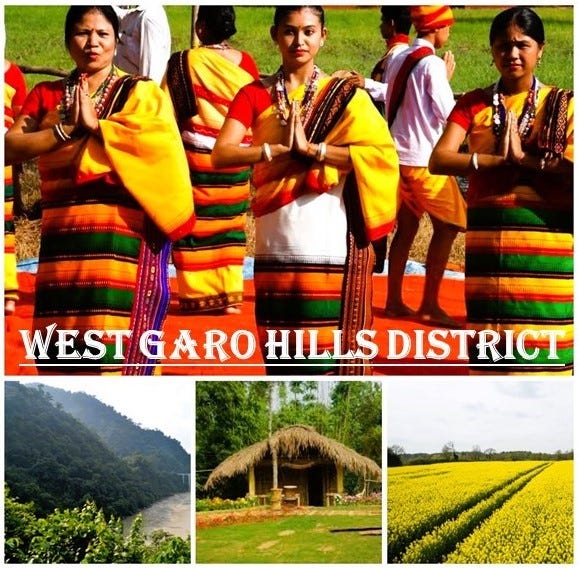
The history of West Garo Hills District, located in the state of Meghalaya, is steeped in mystery and tradition. Its origins are traced through folklore, migration stories, and historical records that reveal the resilience and cultural richness of the Garo people.
Ancient Origins
The earliest ancestors of The Residents of Garo Hills are believed to be the Meches, Koch Tribe, Kacharis, and Chutiyas, who migrated from the north-western regions of India. Another tradition claims that the Garos descended from people of Asong Tibergori. Yet another narrative suggests that their forefathers migrated from the Himalayan ranges, halting briefly at Gondulghat before moving to Sadiya, and eventually settling along the northern bank of the Brahmaputra River.
From there, they trekked to Amingaon and crossed the Brahmaputra to occupy Kamakhya, where they lived until the Koches invaded their kingdom. Later, many Garos moved from Gauhati to the external Garo Hills, while others crossed into Mymensingh in present-day Bangladesh. Early immigrants settled in Goalpara, while later groups resided in Kamrup. These migrations were often accompanied by violent conflicts between villages and families, shaping the turbulent early history of the region.
Medieval Period
During medieval times, West Garo Hills was characterized by numerous Nokmaships vast expanses of fertile plains near the foothills. Several prominent Zamindari estates flourished here, later evolving into complex administrative units. Under Mughal influence, estates such as Bijini in the Eastern Duars, Mechpara and Habraghat in Rongpur, and Kalimalupara, Karaibari, Sherpit, and Susang in Mymensingh (Bangladesh) became significant centers of power.
The Garos, however, were frequently embroiled in disputes with local Zamindars. These conflicts reflected the tension between indigenous tribal governance and external feudal systems imposed during the Mughal era.
Modern Era and British Annexation
By the late 18th century, the Garos began interacting with the British, following the decline of Mughal control over Bengal. The British East India Company gradually extended its influence, annexing large estates in Garo Hills. Initially, the British refrained from interfering in the internal management of Zamindari estates, but escalating conflicts between the Garos and Zamindars forced them to intervene.
In 1873, the British formally annexed the Garo Hills, establishing administrative control. Captain Williamson became the first Deputy Commissioner of the district. In October 1879, the Garo Hills were divided into two districts — West Garo Hills and East Garo Hills marking a significant milestone in the region’s modern history.
Legacy and Cultural Significance
The History of West Garo Hills is not merely a tale of migration and conquest; it is a testament to the endurance of the Garo people. Despite centuries of external influence from Koch invasions to Mughal feudalism and British colonial rule the Garos preserved their traditions, language, and identity.
메타데이터
- post_id
- eef6a1dacbd6
- slug
- history-of-west-garo-hills-district-a-journey-through-time-eef6a1dacbd6
- url
- https://medium.com/@shahsameer819/history-of-west-garo-hills-district-a-journey-through-time-eef6a1dacbd6
- canonical_url
- https://medium.com/@shahsameer819/history-of-west-garo-hills-district-a-journey-through-time-eef6a1dacbd6
- author_url
- https://medium.com/@shahsameer819
- status
- ok
- fetched_at
- 2026-06-17 08:20:12