Labour's mandelson debacle exposes a government adrift on the economy
The political crisis over the US ambassador role comes as business investment flatlines and the UK's growth forecast is cut to just 0.3%…
Labour's mandelson debacle exposes a government adrift on the economy

The political crisis over the US ambassador role comes as business investment flatlines and the UK's growth forecast is cut to just 0.3% for 2026.
Peter Mandelson won't be going to Washington. The news broke on Tuesday, though as David Maddox at The Independent reported, Downing Street has known for seven months that the security services had serious reservations. The official line is a mutual decision, a recognition that the political noise was drowning out the diplomatic signal. The real story is one of staggering political incompetence. It's a perfect, petty metaphor for this government's approach to the economy: a poorly-vetted idea, pursued with ideological stubbornness, that collapses under the weight of its own contradictions just as the real work needs doing.
While the Westminster village dissects the Mandelson farce, the economic indicators are flashing red. The Office for Budget Responsibility, in its latest forecast, expects the UK economy to grow by a pathetic 0.3% this year. Business investment, the lifeblood of future productivity and wages, is forecast to fall by 0.5%. The tax burden is set to hit 38.5% of GDP, a post-war high. You don't need to be an economic seer to connect the dots. The government is presiding over a low-growth, high-tax equilibrium that is chasing away the very capital it needs to fund its ambitions.
The Flight of Capital Isn't a Theory, It's a Fact
Talk to any wealth manager or corporate lawyer in Mayfair, and they'll tell you the same story. The pipeline of clients exploring relocation has been steady since the last budget. It's not just about the non-dom tax raid, though that was a symbolic own goal that told global talent Britain was closed for business. It's the cumulative effect. The capital gains tax hike, the frozen thresholds dragging millions into higher income tax bands, the threat of more wealth taxes – it creates a pervasive sense of hostility towards capital formation.
The numbers bear out the anecdote. HM Revenue & Customs data shows a 25% year-on-year increase in applications for Certificates of Tax Residence, a key document for those moving assets or themselves abroad. While hard figures on exact capital flight are elusive, surveys tell a clear story. The Institute of Directors reports that 22% of its members are actively considering moving operations or themselves overseas, citing the UK's tax and regulatory environment as the primary push factor. This isn't about "fat cats"; it's about the entrepreneurs, the investors, and the mid-sized business owners who create jobs. When they leave, they take their ambition, their risk appetite, and their future tax contributions with them.
A Welfare State Funded by a Shrinking Base
Here lies the central, unsustainable tension. The government's social model – an expansive welfare state, increased public sector spending, the vast NHS budget – relies on a growing economy and a broad tax base. But its policies are actively shrinking that base. The Resolution Foundation points out that over the next parliament, an additional 2.5 million people will be pulled into paying the higher 40% income tax rate due to threshold freezes. These aren't the super-rich; they're teachers, middle managers, and experienced nurses. They feel the squeeze acutely, and their discretionary spending power evaporates.
Meanwhile, the welfare bill balloons. Spending on disability and incapacity benefits is projected by the DWP to rise by £10 billion over the next four years. The state pension, protected by the triple lock, is the single largest line item in government spending. Who pays for all this? An increasingly narrow pool of productive workers and companies, who are being presented with a bill that rises every year while the prospects for generating the wealth to pay it diminish. It's a classic case of killing the goose. The Labour backbenchers who cheer every new spending commitment seem not to have read the fable.
The Regulatory Thicket Strangles Growth
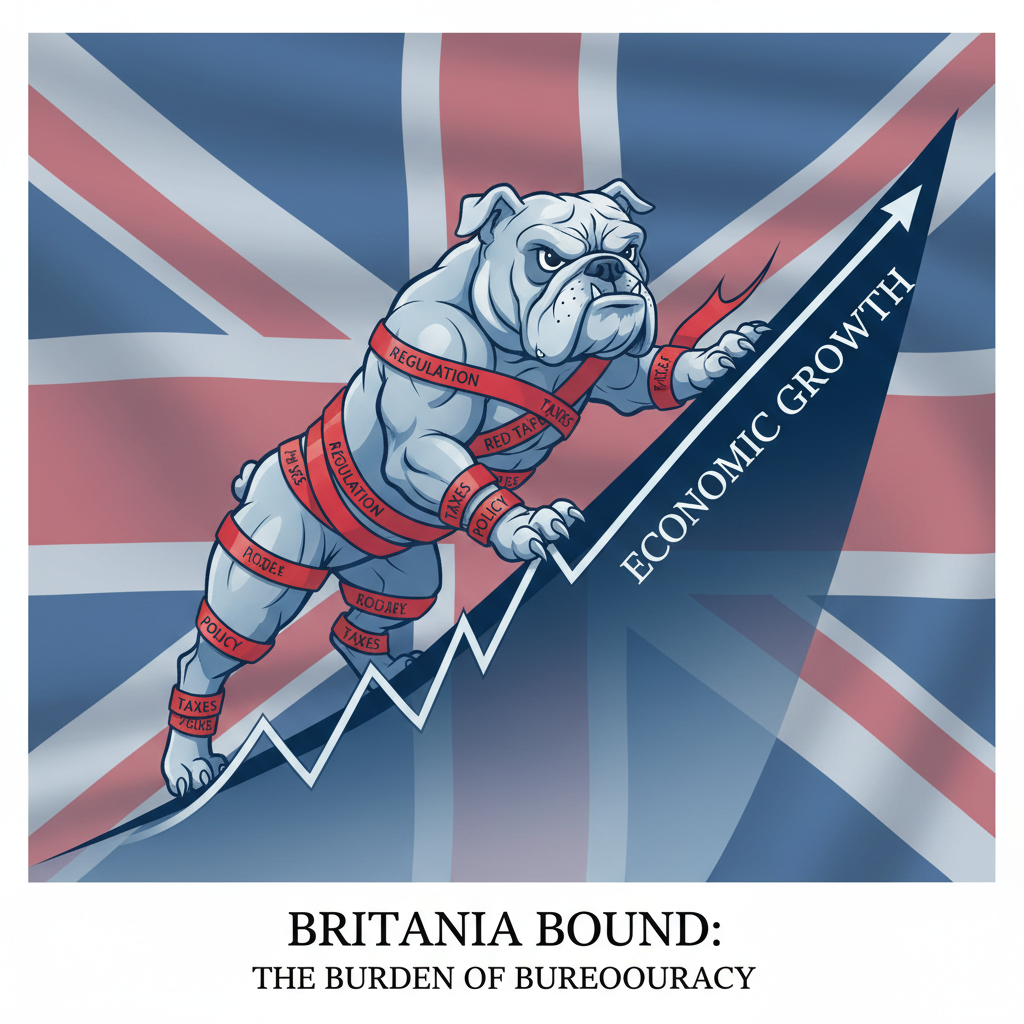
Tax is only one side of the ledger. The other is the government's regulatory zeal. From the proposed sweeping employment law reforms, which tilt the balance overwhelmingly towards unions and employees, to the aggressive net-zero targets that impose huge capital costs on industry with no clear path to competitive advantage, the message to business is one of control, not collaboration. The Chancellor talks of "securonomics" – a clunky term for protectionism and state direction. Business hears "planning".
Take the energy sector. The windfall tax, initially a temporary measure, has been extended and toughened. The result? Shell and other majors are scaling back North Sea investment. UK oil and gas production is falling faster than demand, making us more dependent on imports. The government's answer is to double down, creating a state-owned energy company, GB Energy, which will somehow magically deliver cheap, clean power. It's a fantasy that ignores the basic lesson of the last fifty years: state-directed industrial strategy is a proven route to higher costs and lower efficiency. The private capital that could actually build this infrastructure is being regulated and taxed into inertia.
No Room for Error
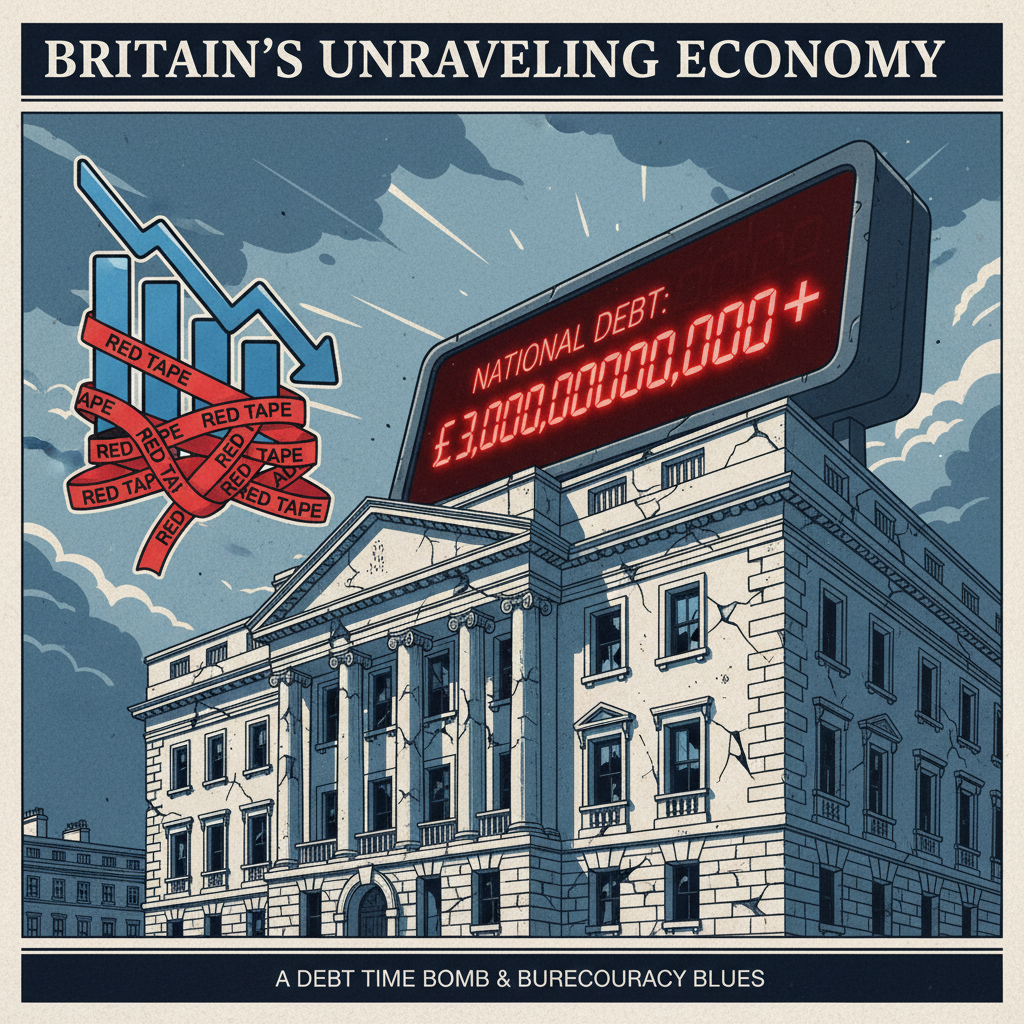
The political drama around Mandelson is a distraction the country can't afford. The economic fundamentals are brittle. Public sector net debt stands at 98% of GDP. Interest payments on that debt are the fourth largest government expenditure, at over £80 billion a year. A single external shock – a spike in energy prices, another pandemic, a deepening of global trade fractures – would send these delicate projections into a tailspin. There is no fiscal buffer left.
The government's response so far has been to tinker at the edges and hope for a global recovery to lift all boats. But hope is not a strategy. The UK's problems are structural and self-inflicted. Low business investment, a shrinking productive base, and a regulatory mindset that views private enterprise with suspicion are a recipe for managed decline. Peter Mandelson's aborted ambassadorship is a minor political embarrassment. The real diplomatic failure is the message this government's economic policy is sending to the world: Britain is no longer a serious place to build, invest, or create wealth. Fixing that will take more than a reshuffle or a new press line. It requires a fundamental change of course that this administration shows no sign of making.
메타데이터
- post_id
- eef90d2b46d6
- slug
- labours-mandelson-debacle-exposes-a-government-adrift-on-the-economy-eef90d2b46d6
- url
- https://medium.com/@worldnews99/labours-mandelson-debacle-exposes-a-government-adrift-on-the-economy-eef90d2b46d6
- canonical_url
- https://medium.com/@worldnews99/labours-mandelson-debacle-exposes-a-government-adrift-on-the-economy-eef90d2b46d6
- author_url
- https://medium.com/@worldnews99
- status
- ok
- fetched_at
- 2026-06-09 15:37:30