What If Shoe Sizes Become as Outdated as Film Cameras?
For over a century, the footwear industry has relied on one core idea:
What If Shoe Sizes Become as Outdated as Film Cameras?
For over a century, the footwear industry has relied on one core idea:
Standardized shoe sizes.
Size 8. Size 9. Size 10. Size 11.
The entire global footwear ecosystem was built around fitting millions of unique human feet into a limited set of predefined categories.
But what if shoe sizing eventually becomes obsolete?
What if the future of footwear looks more like digital personalization than industrial standardization?
Just as digital photography replaced film cameras, leading technologies like foot scanning, AI-assisted design, and on-demand 3D printing are challenging the traditional sizing system itself.
The future of footwear will not revolve around sizes at all.
Why Shoe Sizes Existed in the First Place
Shoe sizes were never truly about precision.
They were primarily about manufacturing efficiency.
For decades, traditional footwear production depended on:
- molds
- standardized tooling
- inventory forecasting
- warehouse logistics
- mass production systems
- shelf stocking
- SKU simplification
Manufacturers needed a way to efficiently produce millions of shoes at scale.
So consumers were grouped into simplified categories:
- 8
- 9
- 10
- 11
The system worked operationally.
But biologically, human feet were never standardized.
The Problem With Standardized Sizing
Every person’s feet are different.
Differences include:
- width
- arch height
- pressure distribution
- toe shape
- instep height
- gait
- asymmetry between left and right feet
Yet most shoes are still built around generalized averages.
That creates major industry-wide problems:
- poor fit
- discomfort
- foot pain
- high return rates
- overproduction
- inventory waste
- sizing confusion between brands
Consumers have normalized:
- “breaking in” shoes
- sizing up
- sizing down
- trying multiple pairs
- returning products repeatedly
But those behaviors are largely symptoms of an imprecise system.
How Technology Is Changing Footwear
Today, several technologies are converging simultaneously:
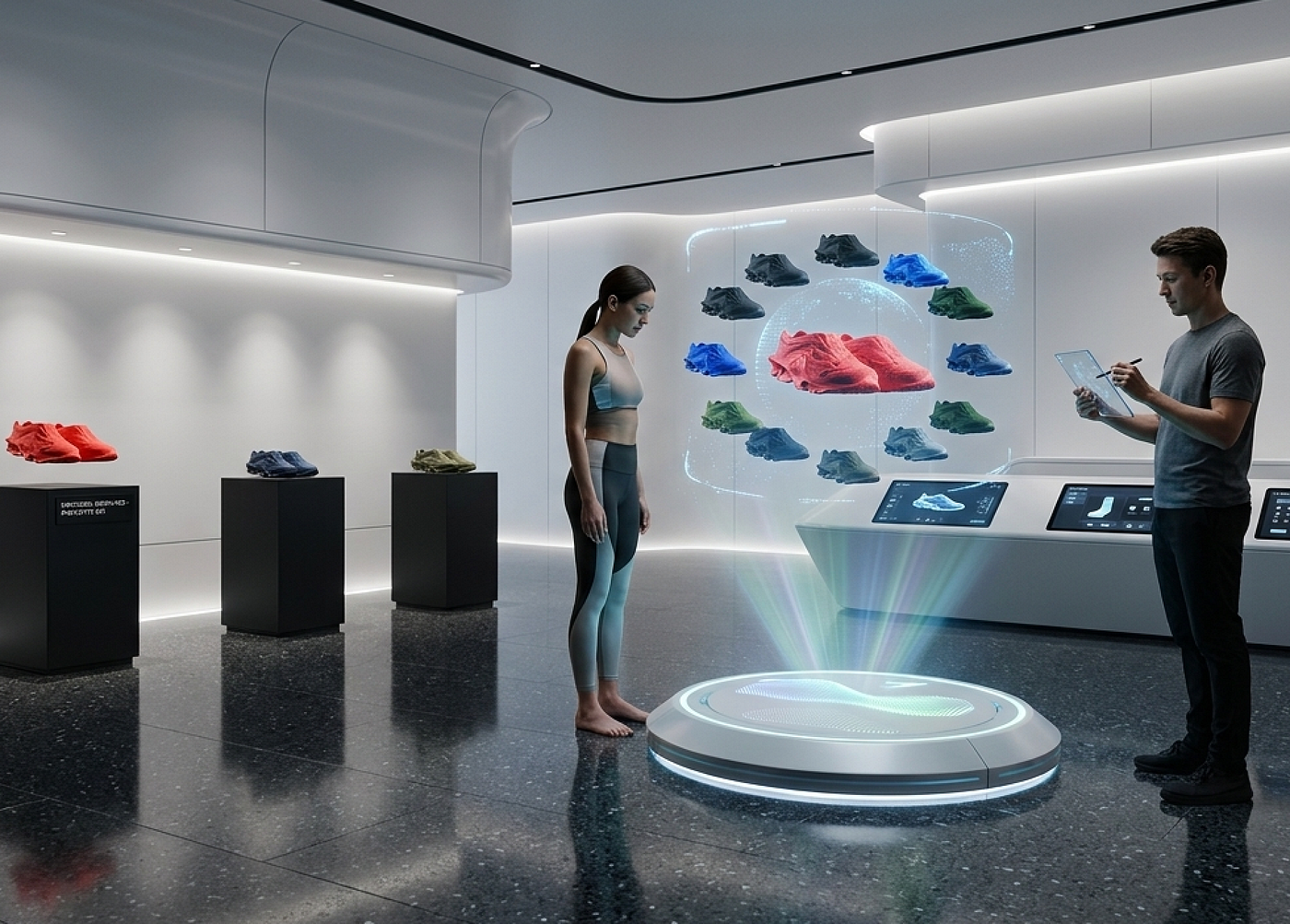
1. Foot Scanning
Modern scanners and smartphone-based scanning can now capture:
- foot geometry
- arch structure
- asymmetry
- length
- width
- instep
Instead of guessing fit from a size chart, brands can increasingly work from actual anatomical data.
2. AI-Assisted Design
AI-assisted systems are beginning to help optimize:
- cushioning structures
- geometry
- airflow channels
- support zones
- comfort tuning
This enables footwear to become more adaptive.
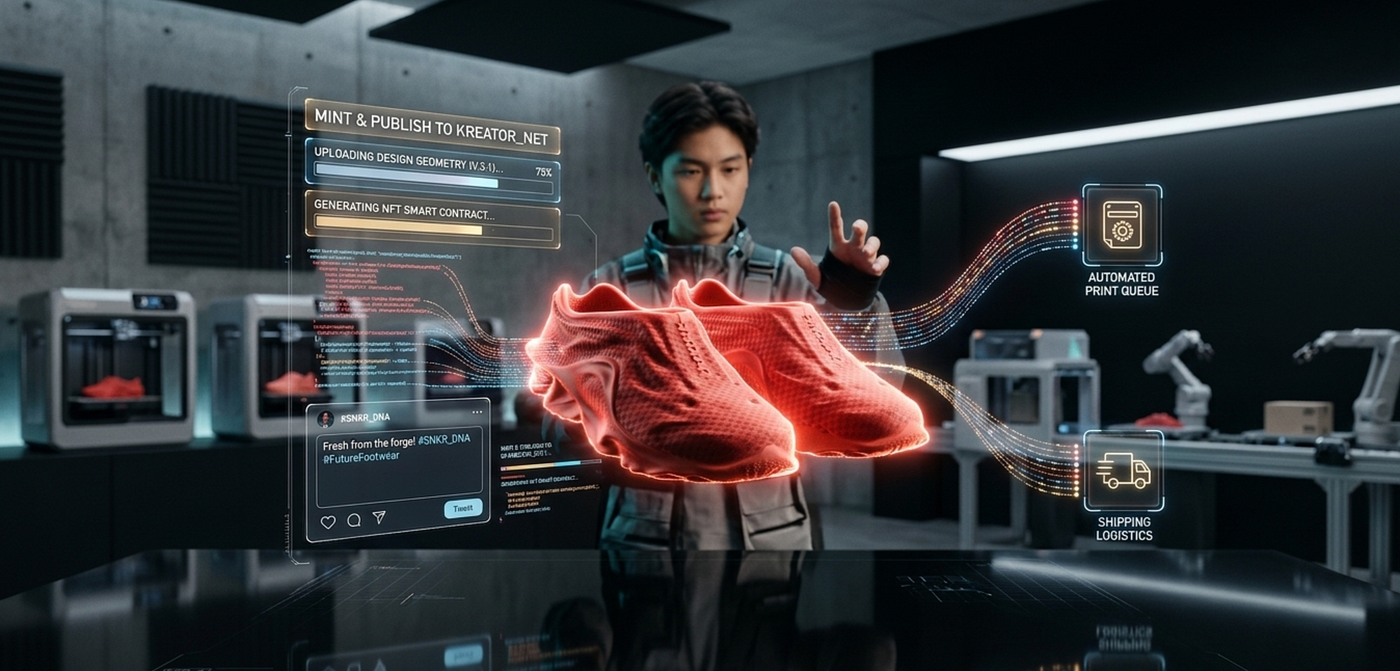
3. On-Demand 3D Printing
Traditional manufacturing relies on molds and inventory.
3D printing changes the equation.
Instead of mass-producing identical units, products can increasingly be manufactured individually based on customer-specific inputs.
That means:
- no minimum molds
- no predefined size runs
- less dead inventory
- greater design flexibility
- faster iteration cycles
Most importantly: the product can increasingly adapt to the individual.
The “Digital Photography” Moment for Footwear
Film photography required physical constraints:
- film rolls
- development labs
- chemical processing
- limited shots
Digital photography changed the workflow entirely.
Photography became:
- instant
- customizable
- software-driven
- infinitely scalable
Footwear will be approaching a similar transition.
Traditional footwear is constrained by:
- inventory
- molds
- size systems
- forecasting
- manufacturing limitations
Digital manufacturing introduces a different model:
- scan-based personalization
- digital inventory
- AI-assisted optimization
- on-demand production
- individualized fit
The workflow itself changes.
The Rise of Custom-Fit Footwear
As scanning becomes more accessible, footwear could increasingly be generated around:
- geometry
- biomechanics
- movement
- pressure
- anatomy
- comfort preferences
Instead of asking: “What size are you?”
future retail experiences will ask: “Can we scan your feet?”
That shift is enormous.
Because once the person becomes the input, the entire retail model changes.
What Happens to Retail Stores?
Traditional footwear stores are built around inventory.
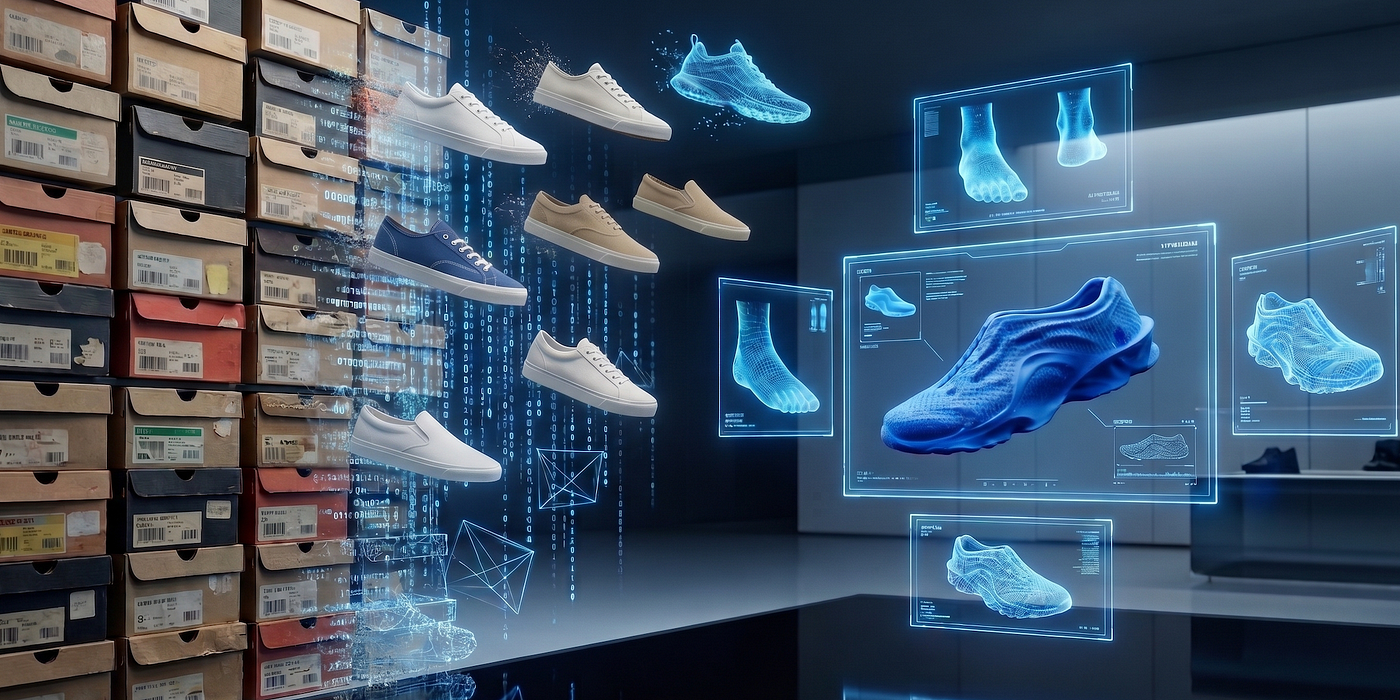
Walls of boxes. Backrooms full of sizes. Constant replenishment.
But if footwear becomes increasingly on-demand, stores will evolve into:
- scanning hubs
- customization centers
- experience-driven retail spaces
Instead of carrying thousands of physical SKUs, stores could hold:
- sample models
- scanners
- digital customization interfaces
Inventory increasingly becomes digital.
Why This Matters for Sustainability
The current footwear industry produces enormous waste from:
- overproduction
- unsold inventory
- returns
- inaccurate forecasting
On-demand manufacturing has the potential to reduce:
- excess inventory
- unnecessary production
- shipping inefficiencies
- return volumes
When products are generated closer to actual consumer demand, the system itself becomes more efficient.
The Future of Footwear Is Personal
For decades, footwear was designed around manufacturing limitations.
Now manufacturing is beginning to adapt around humans instead.
That will become one of the biggest shifts in the history of footwear.
The future will likely not be defined by:
- standardized sizing
- mass inventory
- one-size-fits-most thinking
It will increasingly revolve around:
- personalization
- data
- geometry
- AI-assisted design
- digital manufacturing
- custom-fit experiences
And one day soon, asking someone: “What size are you?”
will sound as outdated as asking: “What film do you use in your camera?”
Footwear #Innovation #AI #Customization #3DPrinting #RetailInnovation #FutureOfFootwear #Technology
메타데이터
- post_id
- eefaa38af0d2
- slug
- what-if-shoe-sizes-become-as-outdated-as-film-cameras-eefaa38af0d2
- url
- https://medium.com/@syntilay/what-if-shoe-sizes-become-as-outdated-as-film-cameras-eefaa38af0d2
- canonical_url
- https://medium.com/@syntilay/what-if-shoe-sizes-become-as-outdated-as-film-cameras-eefaa38af0d2
- author_url
- https://medium.com/@syntilay
- status
- ok
- fetched_at
- 2026-06-09 15:37:30