Memory: Why the Brain Rebuilds the Past Instead of Replaying It
In 2021, the Supreme Court of New Jersey issued revised instructions to be read aloud to juries in every criminal trial involving…
Memory: Why the Brain Rebuilds the Past Instead of Replaying It

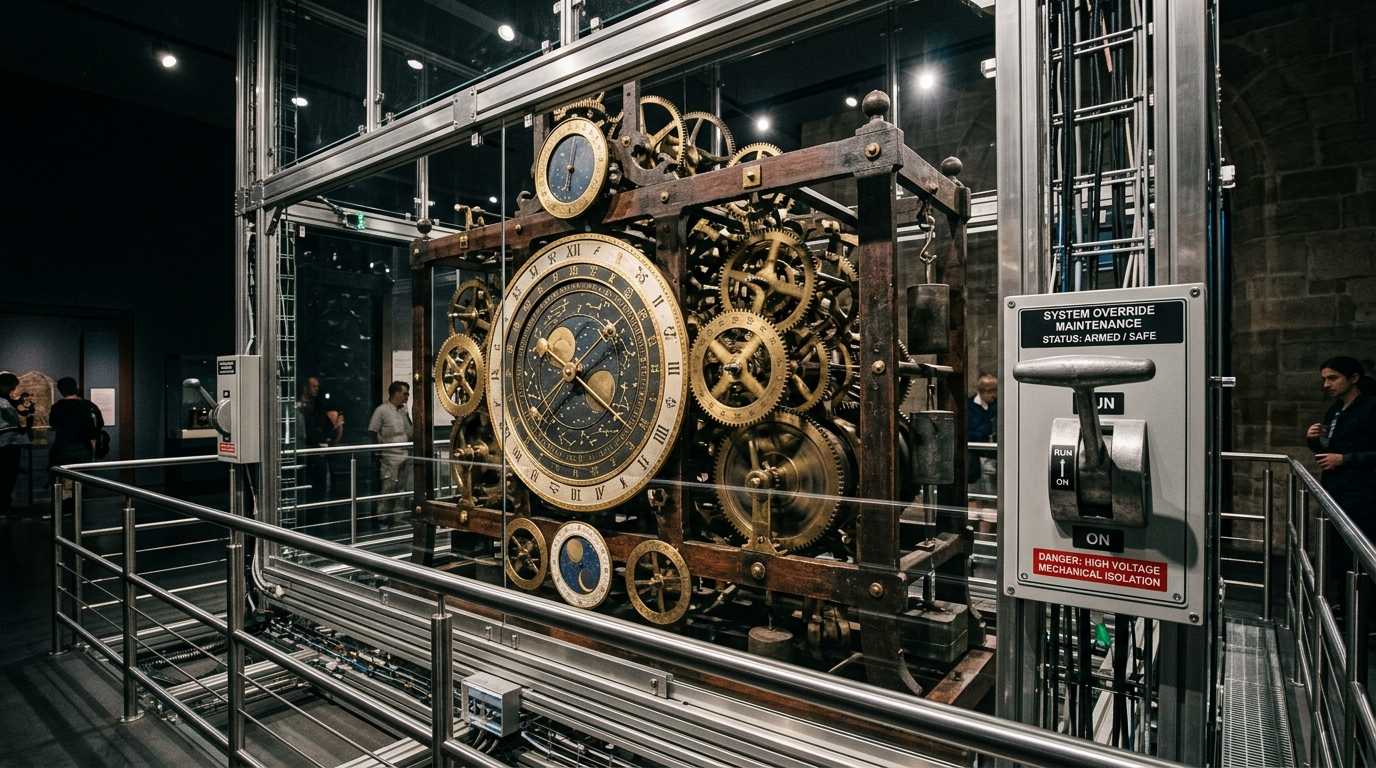
Every time you remember something, you don’t replay it. You rebuild it — and the rebuilding leaves marks. All images generated by author unless stated
In 2021, the Supreme Court of New Jersey issued revised instructions to be read aloud to juries in every criminal trial involving eyewitness testimony. The instructions tell jurors, as a matter of established scientific fact, that human memory does not function like a video recording. It is not stored as a complete, accurate and retrievable file that simply gets played back on demand. It is reconstructed, in pieces, each time it is recalled, and that reconstruction is vulnerable to distortion, suggestion and error in ways most people, including most jurors, intuitively assume it isn’t.
This is a genuinely strange thing for a courtroom to have to formally instruct anyone to believe, because it cuts directly against how memory feels from the inside. Remembering does not feel like reconstruction. It feels like retrieval, like opening a drawer and finding the thing you put there, unchanged. The neuroscience says that feeling is, in an important sense, a lie your own brain tells you about its own workings and has told you every single time you have ever remembered anything.
The recording myth
The most natural, intuitive model of memory treats the brain as something like a camera or a tape recorder: experience comes in, gets encoded, and sits in storage as a stable, complete trace, waiting to be played back, accurately, whenever it’s needed. This model is wrong, and it has been wrong for longer than most people realise, psychologists have understood memory to be reconstructive rather than reproductive since at least the 1930s, when Frederic Bartlett’s classic experiments showed that people remembering an unfamiliar story would systematically distort it over repeated retellings, pulling it toward their own existing expectations and cultural assumptions, without any awareness that they were doing so.
What has changed since Bartlett’s era is not the basic insight but the depth of mechanistic detail neuroscience can now offer for why this happens, down to the level of specific brain regions, specific molecular processes and specific predictable points of vulnerability where a memory can be altered.
Established: encoding, consolidation and the reopening of the file
Three stages, each well documented, structure how a memory moves from a fleeting experience to something that can influence behaviour years later, and each stage is a point where the original information can be changed, not merely stored.
Encoding is the initial registration of an experience into a form the nervous system can retain at all, primarily involving the hippocampus binding together the various sensory and contextual elements of an experience into what researchers call an engram, the physical trace, distributed across populations of neurons, that corresponds to a specific memory. Encoding is already selective and interpretive, not a passive recording: what gets encoded is shaped by attention, prior expectation and emotional salience, meaning two people experiencing the identical event will encode meaningfully different versions of it from the very first moment, before any later distortion has had a chance to occur.
Consolidation is the process by which an initially fragile, hippocampus-dependent memory trace is gradually stabilised and, for many types of memory, partially transferred toward more distributed storage in the neocortex over a period that can span days to years. This is why a recent memory is more vulnerable to disruption (a blow to the head shortly after an event can erase it entirely) than an old one, which has had time to become more robustly distributed across brain regions.
The finding that has done the most to overturn the recording tape model, however, is re-consolidation: the discovery, beginning around 1997 to 2000 and replicated extensively since, that simply recalling an already-consolidated memory reopens it into a temporarily labile, modifiable state, before it re-stabilises again roughly six hours later. During that re-consolidation window, the memory trace is genuinely vulnerable to alteration, not metaphorically, but biochemically, with specific drugs shown to disrupt or even fully annul a reactivated fear memory if administered during this window, in both animal models and humans. The practical implication is significant: the act of remembering something is not neutral. It is the precise moment at which that memory becomes most editable, which means every recollection carries at least some small risk of altering the very thing being recalled.

Every recall reopens the file. For a window of several hours after you remember something, the memory is measurably easier to change than it was the moment before you thought of it.
Established: how easily false memories can be implanted, and why eyewitnesses fail
The reconstructive nature of memory is not merely a laboratory curiosity. It has well-documented, real-world consequences, most dramatically in the unreliability of eyewitness testimony, which has been a significant contributing factor in a substantial proportion of wrongful convictions later overturned by DNA evidence.
Decades of research by psychologists including Elizabeth Loftus have demonstrated that entirely false memories, for events that never happened at all, can be successfully implanted in a meaningful proportion of research subjects using nothing more than suggestive questioning and exposure to fabricated contextual details, such as a false story from a trusted family member describing a childhood event that never occurred. Subjects in these studies do not merely report believing the false event happened; they frequently generate vivid, detailed, confidently held sensory memories of it, indistinguishable from the inside from memories of events that genuinely occurred. The misinformation effect, in which exposure to incorrect information after witnessing an event measurably alters a person’s subsequent memory of the original event, is one of the most robustly replicated findings in all of cognitive psychology.
This is precisely the body of research that produced the New Jersey Supreme Court’s revised jury instructions and it is worth being precise about what it does and does not show. It does not show that memory is generally useless or that eyewitnesses are usually wrong. It shows that confidence and accuracy are far less tightly correlated than most people, including most jurors, intuitively assume, and that specific, identifiable conditions, leading questions, stress, the presence of a weapon, cross-racial identification, the simple passage of time combined with subsequent exposure to media coverage of the event, reliably degrade accuracy in ways a witness has no introspective access to and cannot correct for by simply trying harder to remember accurately.
Contested: how long-term storage actually works and what an engram actually is
While the broad reconstructive picture is well established, the precise mechanistic details of how and where memories are physically stored remain genuinely contested at the cutting edge of current neuroscience.
The concept of the engram, the specific physical trace of a memory, has been substantially advanced by modern techniques allowing researchers to identify, label and even artificially reactivate specific populations of neurons associated with a particular memory in animal studies. A 2025 study using a sophisticated triple-event labelling technique found that recalling an old, already neocortex-based memory actually recruits an entirely new population of hippocampal neurons to support that recall, rather than simply reactivating the original encoding cells, meaning the physical substrate supporting a given memory may genuinely change over the memory’s lifetime, not merely the content recalled from it.
Despite this technical progress, researchers working directly in the field have been candid that the underlying theory has not kept pace with the experimental technique. A comprehensive 2025 review of the engram literature describes the field as under-theorised, arguing that without a much more developed account of what an engram actually is, what function it serves, and how it relates to the wider computational processes of the brain, it may never be possible to say with confidence when one has actually been found, even with increasingly precise tools for labelling and manipulating candidate neural populations. This is a genuinely contested area, not a settled one dressed up as contested for dramatic effect: the basic empirical phenomenon of reconstructive memory is not in dispute, but the precise neural architecture underlying it, and even the right way to conceptually define what is being looked for, remains an open and actively debated research problem.

An engram is not a file in a folder. It is a pattern distributed across a shifting population of neurons — and researchers in the field openly admit the theory of what it actually is has not caught up with the technology used to find it.
Open: memory editing, the ethics of forgetting and why this makes human memory unlike machine storage
If memory can be biochemically destabilised and altered during the re-consolidation window, the prospect of deliberate, targeted memory editing is not pure science fiction. Re-consolidation based interventions are already in active clinical use and development specifically for conditions like PTSD and phobias, where the goal is to reactivate a traumatic memory and then disrupt its emotional charge during the vulnerable re-consolidation window, weakening the fear response attached to it without erasing the factual content of the memory entirely. This raises real, currently unresolved ethical questions well beyond the clinical context: who should have the authority to decide a memory is appropriate to edit, what counts as legitimate therapeutic alteration versus an unacceptable rewriting of a person’s actual history, and whether a technology this powerful, once clinically normalised for trauma, inevitably creates pressure toward broader, less clearly justified uses. None of this has a settled answer and the honest position is that the ethics are lagging well behind what the biochemistry already permits in supervised clinical settings.
This is also the point at which human memory reveals itself as something categorically different from how machines store information, and the contrast is worth making precise rather than treated as a loose metaphor. A computer file is stored as a stable, addressable, bit-for-bit faithful representation that does not change merely by being read; you can open the same file a thousand times and retrieve byte-for-byte identical content every time, and the act of reading it does not put it at risk of alteration. Human memory does the opposite of this on purpose, in some functional sense: every act of recall is also an act of potential revision, folding in new context, new emotional state, and new information each time, which is precisely why human memory degrades and distorts in ways a hard drive never does, but it is also, plausibly, why human memory remains genuinely useful for adaptive, flexible reasoning about a changing world in a way that a perfectly faithful, never-updating record could not be. A system that automatically updates its model of the past every time it accesses it is, by the standards of conventional data storage, a malfunctioning one. By the standards of a brain that needs to keep its understanding of the world current rather than archivally pristine, it may be functioning exactly as it should.
This is the genuinely important contrast for anyone thinking carefully about AI systems that are increasingly described, in casual shorthand, as having “memory.” An AI system with persistent memory typically stores and retrieves information in a manner much closer to the file-on-a-hard-drive model than to human reconsolidation, stable, addressable, not altered merely by being accessed, unless a system is specifically engineered to update its own stored representations on retrieval. Human memory’s central design feature, looked at as engineering rather than as a flaw, is that it is continuously and automatically revised by the very act of using it. That is not a bug human cognition happens to have. It may be the actual mechanism by which a finite brain keeps an enormous, ever-changing world model usefully current, at the unavoidable cost of fidelity to any single past moment.
Sources: Bartlett, F.C., Remembering: A Study in Experimental and Social Psychology (1932); Nader, K., Schafe, G.E., and Le Doux, J.E., on the discovery of memory reconsolidation (1997–2000); Ecker, B., Reconsolidation Behavioral Updating of Human Emotional Memory, Journal of Psychiatry and Psychiatric Disorders (2024); Lei, B. et al., Reconstructing a new hippocampal engram for systems reconsolidation and remote memory updating, Neuron 113 (2025); engram theory critique, arXiv preprint (2025); Loftus, E.F., on the misinformation effect and implanted false memories, extensive literature; New Jersey Supreme Court revised jury instructions on eyewitness memory (2021, cited in subsequent cognitive neuroscience and courtroom literature).
메타데이터
- post_id
- ef079e73a9ca
- slug
- memory-why-the-brain-rebuilds-the-past-instead-of-replaying-it-ef079e73a9ca
- url
- https://medium.com/what-if-ai-investigated/memory-why-the-brain-rebuilds-the-past-instead-of-replaying-it-ef079e73a9ca
- canonical_url
- https://medium.com/what-if-ai-investigated/memory-why-the-brain-rebuilds-the-past-instead-of-replaying-it-ef079e73a9ca
- author_url
- https://medium.com/@jamie_gray027
- status
- ok
- fetched_at
- 2026-07-09 04:10:03