Jazz, Anti-Racism, & Constructivism
Article was originally written in 2019. Revised in 2026.
Jazz, Anti-Racism, & Constructivism
Article was originally written in 2019. Revised in 2026.
Jazz is a genre of music that emerged in the late 19th century to the early 20th century. Based on its development, jazz is then divided into several sub-genres according to its musical dynamics and in what social context it emerged. However, the most distinctive and characteristic of jazz music itself is improvisation using blue notes, which are part of blues music. In addition, piano, guitar, saxophone, trombone, bass, and drums are instruments commonly used in jazz music.
Rooted in African and European music, the history of the development of jazz internationally cannot be separated from the role of black people. Jazz was born through various confrontations, such as racism, which was endemic in America during that era. Nat King Cole is one example of a black musician who has experiences related to racism. Not a few of the black musicians then protested through their songs. One of them was jazz musician, Billie Holiday.
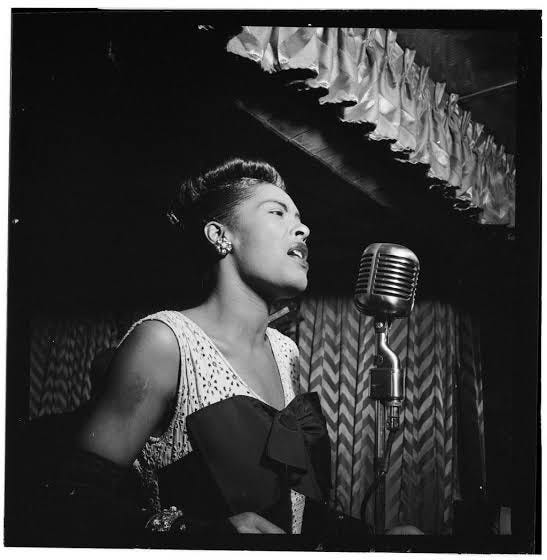
Billie Holiday performing song, “Strange Fruit” live in 1959.
Meanwhile, constructivism is an approach in International Relations that views patterns of interaction through non-material elements such as norms, identity, and ideas, which are shaped by ongoing processes of social interaction. The term was first introduced by Nicholas Onuf in 1989 and further developed by scholars like Friedrich Kratochwil and Alexander Wendt as a critique of mainstream rationalist theories (such as Neorealism and Neoliberalism).
From a constructivist perspective, how can jazz be understood as an instrument that transformed 20th-century American society, which was otherwise deeply defined by racial segregation and racism? Constructivism focuses on intersubjective meanings created through social interaction. In this context, jazz served as a shared cultural medium that established new social constructions, gradually altering societal norms, identities, and race relations in 20th-century America.
Jazz in History
Jazz music, historically burdened by the stigma of being labeled “low-class” or “street” music, was first developed by African-American communities in New Orleans during the late 19th century. Chronologically, the emergence of jazz is closely linked to the decline of traditional African ritual gatherings, such as the dances at Congo Square. Enslaved Africans in America popularized these traditions through practices like the “Ring Shout,” with Congo Square in New Orleans serving as one of the few places where these musical expressions were documented. As these ceremonial traditions faded in the early 20th century, they paved the way for the rise of the first New Orleans jazz bands.
In terms of sub-genre evolution, following the height of Ragtime (1897–1918), the classic jazz era truly began with the rise of New Orleans or Dixieland Jazz (often called “Early Jazz”) around 1910. Despite possessing virtually no civil rights, African-American musicians found a profound sense of “freedom” in this era by using musical improvisation to break away from slave-era stereotypes. From its roots in New Orleans, jazz quickly spread to major urban hubs like Chicago and New York, and eventually to the rest of the world.
With the rapid expansion of the radio industry in the 1920s, jazz experienced unprecedented commercial growth. However, as the music gained popularity among white audiences, it drew sharp pushback from social conservative groups. Many traditional music critics dismissed jazz as chaotic and unrefined because it rejected the rigid structural rules of classical music. Instead, jazz prioritized emotional expression and spontaneous creation over written sheet music, allowing musicians to re-interpret melodies using their own phrasing and pitch.
Detractors often condemned jazz as “Devil’s Music.” Consequently, performances were largely restricted to underground venues such as speakeasies, brothels, and nightclubs. Critics claimed the music corrupted youth morality and was designed to entice young white women, while the musicians themselves faced severe economic insecurity, often struggling with addiction and predatory exploitation by organized crime. In response to moral panic, various local ordinances and the Radio Act of 1927 were leveraged to restrict jazz broadcasts and public performances, with dozens of municipal communities banning jazz in public spaces throughout the 1920s.
Jazz and Resistance
Jazz, as one of America’s most remarkable contributions to global culture, is inseparable from the civil rights resistance spearheaded by African-American musicians against pervasive racial oppression. From driving social mobility upward to fostering early feminist movements, jazz became a central driver of racial integration and ethnic identity within America’s modernization project.
Louis Armstrong exemplifies how jazz artists facilitated social mobility and integration. His success mirrored and inspired the Great Migration, during which millions of African-Americans relocated from the Jim Crow South to urban centers in the North and West. Armstrong was also instrumental in breaking the color line within the entertainment industry. He famously refused to perform in venues or cities where he was denied hotel accommodations, declined exclusive invitations from segregationist elites, and insisted on touring with racially integrated bands, believing it was vital for audiences to see Black and white musicians sharing the stage.

Women’s Strike for Peace and Equality, New York City, Aug. 26, 1970. (Time)
Women also played a crucial role in leveraging jazz as a tool for social resistance. Rejecting traditional societal expectations that restricted women to domestic roles, female artists and activists aligned with the broader Women’s Rights and Liberation movements. A key figure in this cultural push was Rosetta Reitz, a feminist producer who founded a specialized record label that released 18 albums documenting early women’s jazz and blues performances, bringing female musical heritage into mainstream recognition.
Similarly, vocalist Billie Holiday channeled political resistance directly into her music. Her iconic 1939 song, “Strange Fruit,” delivered a searing protest against lynching in the American South, inspired in part by the brutal murder of young Black men in Indiana. When first released, “Strange Fruit” faced widespread radio boycotts and venue bans due to its controversial subject matter. However, the song quickly became a powerful anthem against racial violence, forcing national audiences to confront the horrific political and social realities of anti-Black violence.
Societal Change as a Form of the ‘Jazz Effect’ in America
Racism was widespread in America throughout the late 19th and early 20th centuries. Black Americans faced systemic discrimination, which was fueled by racist misconceptions that portrayed them as primitive. The historical foundation of this racial hierarchy was chattel slavery, wherein Africans were brought to the United States to perform forced labor without pay. This structural inequality entrenched racial prejudices that devalued Black communities. Through jazz music, however, African Americans created a powerful medium for self-expression, protest, and cultural resistance. The global popularity of jazz led to widespread artistic acclaim, although white-owned record labels and executives frequently exploited Black musicians commercially.
As a result, critics sometimes questioned the commercialization of jazz under white executive control. Despite this exploitation, jazz music actively fostered social integration across racial lines in America. Both white and Black musicians collaborated within the jazz scene, creating rare spaces of social equality. For example, white artists were sometimes recruited to play in Black-led ensembles, such as saxophonist Archie Shepp’s collaboration with white trombonist Roswell Rudd. Beyond domestic impacts, jazz artists also incorporated international influences into their music, as seen in Duke Ellington’s Far East Suite and John Coltrane’s works inspired by African and Indian musical traditions.

Roswell Rudd and Archie Shepp in Rotterdam. (circa, 1970s)
Through the recognition and fame they achieved among broader audiences, Black musicians earned significant public respect despite persistent legal and social barriers. During the Jim Crow era, state and federal laws severely restricted the civil rights of Black Americans, and many hotels refused to accommodate Black guests. As a result, Black travelers relied on The Negro Motorist Green Book as an essential guide for navigating segregated spaces. This pervasive segregation affected even world-renowned figures like Nat King Cole. When Cole was contracted to perform at the Hotel Nacional de Cuba in Havana in 1956, the hotel refused to let him stay on its premises due to its segregation policy. Cole secured alternate accommodations and honored his performance, and the hotel eventually acknowledged his impact, later honoring his memory with a dedicated jukebox and commemorative bust on display.
Jazz, Anti-Racism, & Constructivism
In International Relations (IR), global phenomena can be analyzed through three foundational pillars of philosophy of science: ontology, epistemology, and axiology, with specific interpretations depending on the theoretical framework applied. Ontology addresses what reality or object of study exists (philosophical being); epistemology examines how knowledge about that reality is acquired and validated (philosophical knowing); and axiology considers the purpose, values, and normative application of that knowledge (philosophical doing).
In a constructivist approach, the ontological foundation is fundamentally intersubjective. Intersubjectivity posits that social reality is constructed through ongoing interactions between actors, interactions driven by shared identities, norms, interests, and language. Applying constructivism to American race relations in the 19th and 20th centuries, the primary objects of study are not static structures, but the relational dynamics between African Americans and white Americans. As Christian Reus-Smit (2005) notes, it is through these intersubjective interactions that actors continually form and negotiate their identities, interests, and strategic intentions.
Epistemologically, constructivism explores how social meaning is communicated and understood, using jazz music as a primary instrument of “symbolic communication.” Within this framework, jazz functions as a symbolic language and a form of speech act. The evolving norms, values, racial identities, and political intentions of the actors are explicitly articulated through musical performance, lyrics, and cultural expression, providing the researcher with a medium through which social meaning can be interpreted.
Finally, the axiological foundation of constructivism focuses on uncovering the underlying meanings, reasons, and normative motivations behind social phenomena. This contrasts sharply with rationalist-positivist approaches, which prioritize linear causality and quantitative variables. Through a constructivist lens, the purpose of studying jazz is to understand it as an intentional instrument of social protest, a transformative medium through which the African-American community asserted agency, challenged racial hierarchies, and communicated human dignity.
—
References:
CNN Indonesia. (2015, March 7). Nat King Cole Melawan Rasisme dengan Nyanyian. CNN Indonesia. https://www.cnnindonesia.com/hiburan/20150317175418-227-39813/nat-king-cole-lawan-rasisme-dengan-nyanyian.
CNN Indonesia. (2019, April 30). Hari Jazz dan Perayaan Musik Perjuangan Kaum Minoritas. CNN Indonesia. https://www.cnnindonesia.com/hiburan/20190430162420-227-390892/hari-jazz-dan-perayaan-musik-perjuangan- kaum-minoritas.
Cohen, S. (2015, August 26). The Day Women Went on Strike. Time. https://time.com/4008060/women-strike-equality-1970/.
Gioia, T. (1997). The Prehistory of Jazz The Africanization of American Music. The New York Times. https://archive.nytimes.com/www.nytimes.com/books/first/g/gioia-jazz.html.
Hahn, S. (2010, September 22). The Road to Mastery. The New Republic. https://newrepublic.com/article/77875/the-road-mastery-jazz-stephen-hahn.
Haryanto, A. (2016, August 24). Jazz dan Potret Rasisme di Amerika. Tirto.id. https://tirto.id/jazz-dan-potret-rasisme-di-amerika-bDvv.
Jazz in America. (n.d.). Dixieland and the Swing Era. Jazz in America. https://www.jazzinamerica.org/LessonPlan/8/5/207.
Philipp, Z. (2019, December 8). The Social Effects of Jazz. The York Scholar. https://www.york.cuny.edu/academics/writing-program/the-york-scholar-1/volume-6.1-fall-2009/the-social-effects- of-jazz.
Sugeng, B. (2017). Studi Teori Hubungan Internasional: Arus Utama, Alternatif, dan Reflektivis. Yayasan Pustaka Obor Indonesia. p: 260.
메타데이터
- post_id
- ef085921d4e5
- slug
- jazz-anti-racism-constructivism-ef085921d4e5
- url
- https://medium.com/@afifahfathiqa/jazz-anti-racism-constructivism-ef085921d4e5
- canonical_url
- https://medium.com/@afifahfathiqa/jazz-anti-racism-constructivism-ef085921d4e5
- author_url
- https://medium.com/@afifahfathiqa
- status
- ok
- fetched_at
- 2026-08-17 00:38:41




