Why Restaurants in UAE Are Losing Thousands Due to Poor POS
Running a restaurant in the UAE is one of the most demanding businesses you can operate. Margins are tight, customer expectations are high…
Why Restaurants in UAE Are Losing Thousands Due to Poor POS
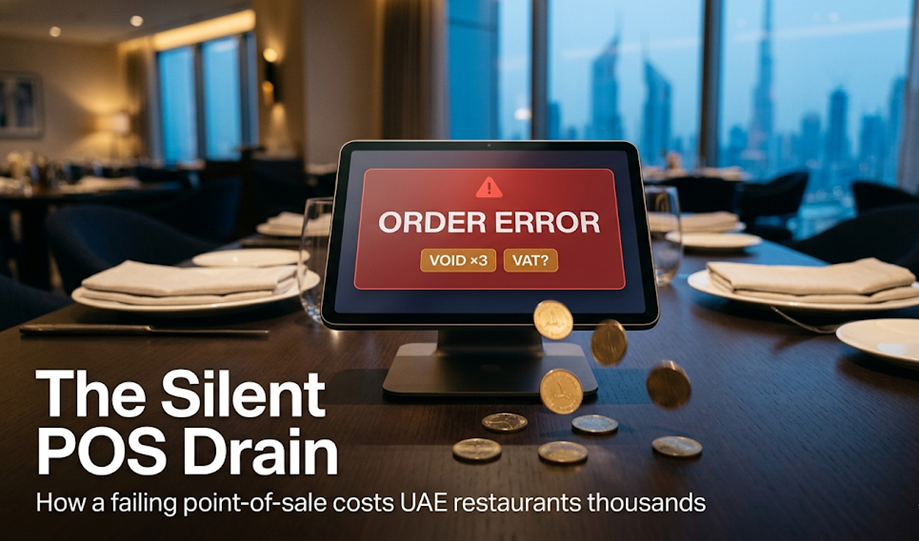
Running a restaurant in the UAE is one of the most demanding businesses you can operate. Margins are tight, customer expectations are high, and between labor costs, food waste, and VAT obligations, there is very little room for operational leakage. Yet thousands of dirhams slip through the cracks every month in restaurants across Dubai, Abu Dhabi, and Sharjah, not because of bad food or poor service, but because of a failing or poorly configured point of sale system.
This is not a fringe problem. It is a pattern that plays out repeatedly across the F&B sector, from fast-casual outlets in JLT to fine dining restaurants on Sheikh Zayed Road.
The Silent Cost of a Poor POS System

Most restaurant owners think about their POS software the same way they think about their furniture: buy it once, use it indefinitely, and replace it only when it breaks. This mindset is costly.
An outdated or ill-fitted restaurant POS system creates losses in ways that rarely appear in a single line item. Instead, the damage is cumulative. A billing error here. A voided order that never got flagged. A table that turned over 20 minutes late because the waitstaff could not see order status in real time. None of these look catastrophic in isolation. But across 300 covers a week, across 52 weeks, the financial bleed is significant.
Industry estimates suggest that inefficient POS workflows, including manual order entry errors, incorrect modifier handling, and delayed kitchen communication, can cost a mid-size restaurant in the UAE anywhere between AED 8,000 to AED 25,000 annually in recoverable losses. That figure often surprises owners, but it rarely surprises their operations managers.
Order Errors Are More Expensive Than You Think

When a server inputs an order incorrectly, or when the POS interface is slow, confusing, or poorly localized, mistakes happen. A dish gets sent to the wrong table. A special request does not reach the kitchen. A combo is rung up at the wrong price.
Each of these incidents has a direct cost: food that gets wasted, a complimentary replacement that cuts into margin, and a customer who may not return. Multiply that by the number of peak-hour covers your restaurant handles on a Friday evening in Dubai, and you begin to see why the right restaurant management software is not a luxury. It is infrastructure.
This is particularly relevant in UAE restaurants where menus are bilingual, staff turnover is high, and the customer base is diverse. If your point of sale solution does not support Arabic interfaces and intuitive navigation for multi-language teams, errors become structural rather than occasional. Arabic Support in POS Systems is something many F&B operators underestimate until the error rate starts showing up in their end-of-month reconciliation.
Inventory Bleeds That Go Undetected
One of the clearest signs of a weak POS setup is uncontrolled inventory variance. When your billing software for restaurants is not integrated with stock management, there is no automated bridge between what is sold and what is consumed. Your kitchen uses ingredients. Your POS records sales. But if these two data points never reconcile in real time, wastage, pilferage, and supplier discrepancies all accumulate invisibly.
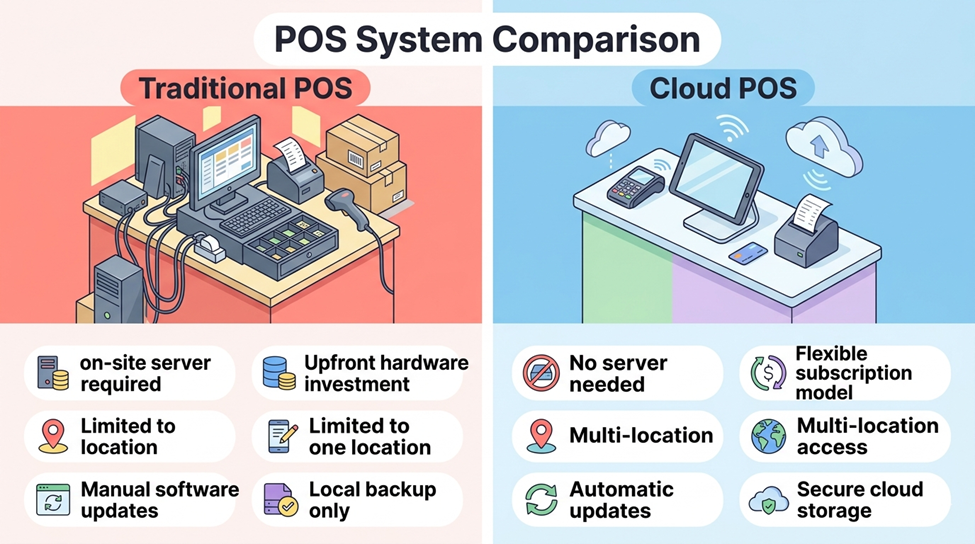
Cloud-based POS systems built specifically for F&B operations solve this by syncing sales data with ingredient-level inventory tracking. Every order placed reduces stock in real time. Variance reports flag anomalies before they compound. This is one of the fundamental differences between a modern restaurant POS platform and a legacy cash register dressed up with software, a distinction worth understanding if you are still running on an older setup. Cloud POS VS Traditional POS breaks down exactly why this gap matters for daily operations.
VAT Misreporting Is a Compliance Risk, Not Just a Financial One

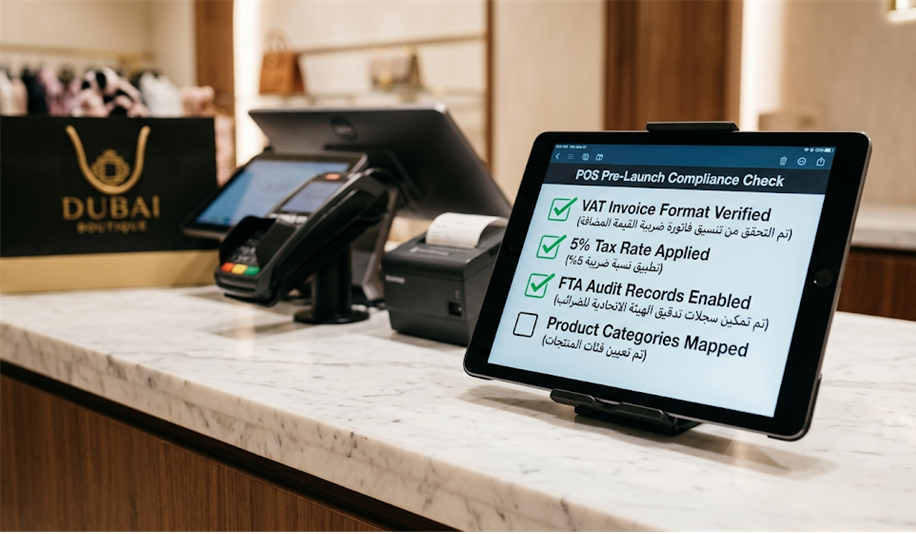
UAE restaurants are required to apply VAT correctly at the point of transaction, not retrospectively. When a POS system is misconfigured, VAT is either over-applied, under-applied, or applied inconsistently across item categories. This creates a reconciliation nightmare at filing time and, in more serious cases, exposes the business to Federal Tax Authority penalties.
Many restaurant owners discover VAT discrepancies only during an audit, by which point correcting months of incorrect billing becomes an expensive and time-consuming exercise. The right restaurant point of sale software handles VAT logic automatically, applying the correct rate based on item type and issuing compliant tax invoices with every transaction.
The Setup Errors Nobody Talks About
A significant portion of restaurant POS losses trace back to configuration mistakes made at the time of installation and never corrected. Incorrect table mapping, misconfigured happy hour pricing, printers routed to the wrong kitchen station, and payment types that do not reconcile with the end-of-day report are all common culprits.
These are not failures of technology. They are failures of implementation. And they persist for months because no one thinks to question them until a discrepancy becomes too large to ignore. If you are planning to upgrade your system, reviewing Common POS Setup Errors is a practical starting point before go-live.
The Cost of Waiting Is Higher Than the Cost of Switching

Restaurant owners often delay upgrading their POS because switching feels disruptive. Staff need retraining. Menus need reconfiguring. There is a fear of downtime during a busy service week.
But the real disruption is staying on a system that loses revenue quietly. The transition cost of moving to a capable, UAE-compliant restaurant POS system is almost always recovered within the first two to three months, through reduced billing errors, tighter inventory control, and cleaner VAT reporting alone.
If you are evaluating options built specifically for the UAE market, multitechpos.com is worth reviewing for its F&B-focused feature set and local compliance capabilities.
The restaurants that thrive in the UAE’s competitive dining landscape are not always the ones with the best chefs. They are the ones with the tightest operations, and that starts at the point of sale.
메타데이터
- post_id
- ef0cca6efb8b
- slug
- why-restaurants-in-uae-are-losing-thousands-due-to-poor-pos-ef0cca6efb8b
- url
- https://medium.com/@multitechpos.profiles/why-restaurants-in-uae-are-losing-thousands-due-to-poor-pos-ef0cca6efb8b
- canonical_url
- https://medium.com/@multitechpos.profiles/why-restaurants-in-uae-are-losing-thousands-due-to-poor-pos-ef0cca6efb8b
- author_url
- https://medium.com/@multitechpos.profiles
- status
- ok
- fetched_at
- 2026-06-09 15:37:30